You’ve probably seen charts that look like a rocket launch followed by a freefall. One day a coin is worth thousands; the next, it’s practically worthless. If you are looking at AB DEFI (ABI), you are staring at exactly that kind of volatility. This isn’t just another shiny new project promising to change the world. It is a case study in what happens when speculative hype meets thin liquidity on the Solana blockchain.
Let’s cut through the noise. AB DEFI launched in 2024 with a fixed supply of 7,500 tokens. That number sounds small, right? In crypto terms, yes. But here is the catch: for a long time, the circulating supply was reported as zero or near-zero. You cannot trade what does not exist in the open market. This creates a perfect storm for manipulation. By late June 2024, after hitting an absurd all-time high of over $10,000 per token, the price crashed to around $1.08. That is a 99.99% drop. If you bought at the top, you lost everything. If you are reading this now, you need to know why that happened before you put any money into your wallet.
The Anatomy of a Speculative Token
To understand AB DEFI, you have to look at its structure, often called tokenomics. Most serious projects distribute tokens gradually to build a community. AB DEFI did something different. According to data from CoinCarp in June 2024, the allocation looked like this:
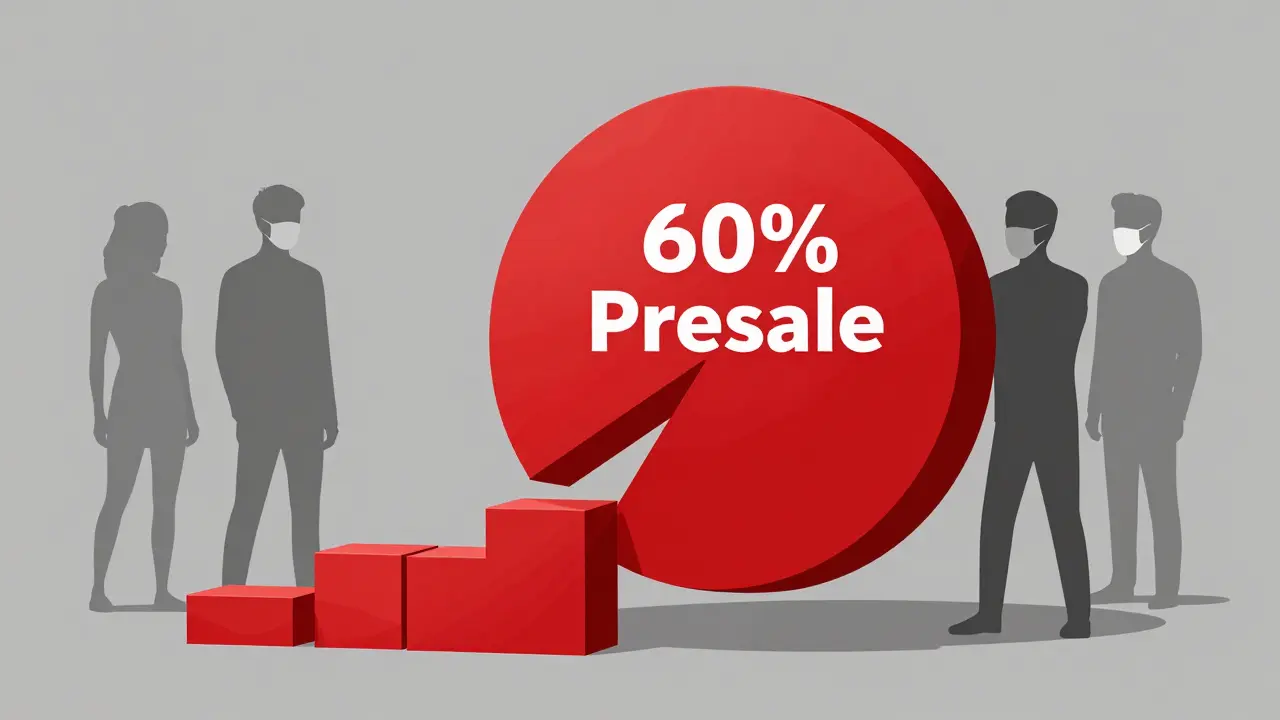
- 60% (4,500 ABI): Allocated to presale.
- 30% (2,250 ABI): Dedicated to liquidity provision.
- 10% (750 ABI): Reserved for marketing.
This distribution is highly concentrated. When 60% of the total supply goes to a presale, a very small group of people holds the majority of the assets. There is no public roadmap, no verified development team, and no clear utility beyond trading itself. Bitget noted in May 2024 that the project claimed to be "a new type of currency," but they couldn't point to any actual use cases. Without a product or service backing the token, the price moves purely on sentiment and speculation. That makes it incredibly fragile.
| Attribute | Value / Detail |
|---|---|
| Total Supply | 7,500 ABI |
| Blockchain | Solana |
| Contract Address | CSrKRU8dGbjaSiMdsSLFczN4inKRPqCBkDDutqPJpJU2 |
| All-Time High | $10,126.56 (May 16, 2024) |
| Market Rank | #12,440+ (Low Cap) |
The Price Crash: What Went Wrong?
The story of AB DEFI’s price is wild. On May 16, 2024, Coinbase recorded the token hitting $10,126.56. For context, Bitcoin was hovering around $60,000-$70,000 at that time. A single ABI token was worth more than a Bitcoin. How does a micro-cap token with no utility achieve that valuation? It doesn’t make sense mathematically unless liquidity is extremely shallow.
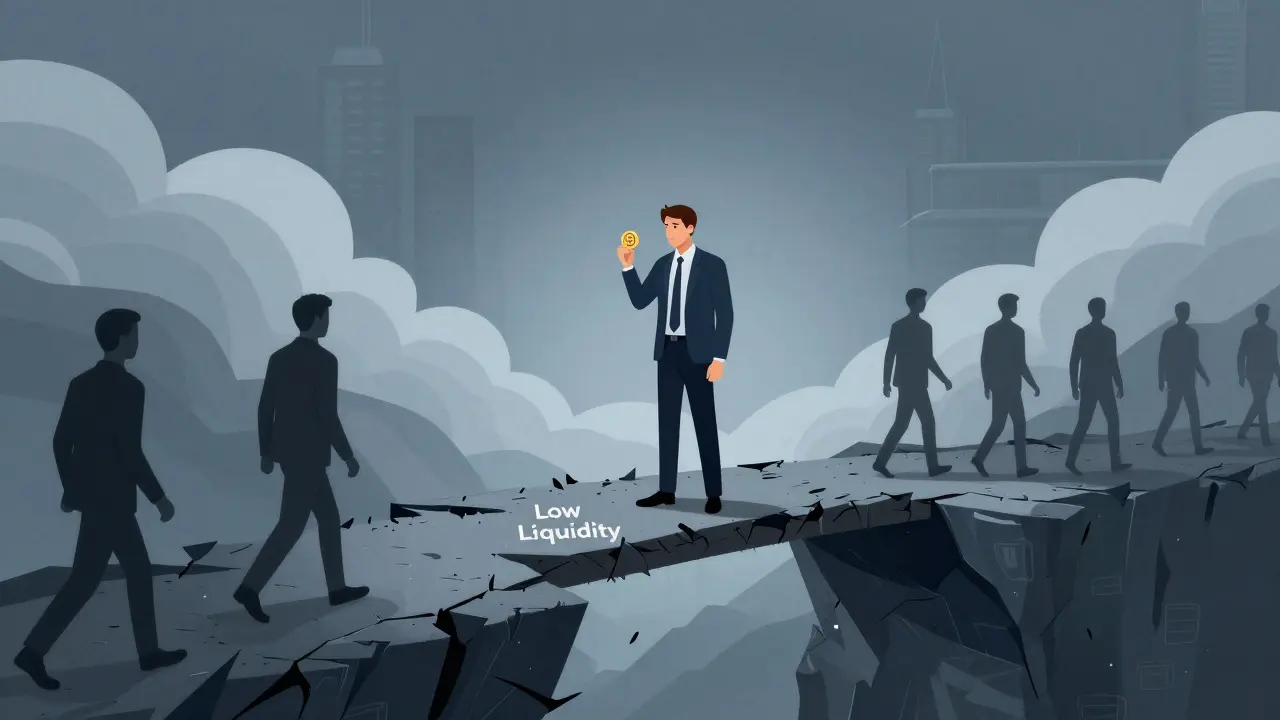
When there are only a few buyers and sellers, a single large buy order can send the price skyrocketing. This is known as a "liquidity trap." Once early investors saw those massive gains, they sold. Because there wasn’t enough depth in the order books-meaning not enough other people were ready to buy at those prices-the price collapsed. By late June 2024, it had fallen to roughly $1.08. Chainalysis’ 2024 Market Manipulation Report highlights that 78% of tokens showing similar >1,000x surges followed by >99% corrections exhibit classic pump-and-dump patterns. AB DEFI fits that profile perfectly.
Red Flags Every Investor Should Spot
If you are new to crypto, these signs might be easy to miss. But if you are doing due diligence, they should stop you cold. Here are the specific issues surrounding AB DEFI:
- Anonymous Team: No verifiable information exists about who created AB DEFI. CoinMarketCap, Binance, and Bitget documentation from mid-2024 lists no founding members. In crypto, anonymity is common, but combined with other red flags, it increases risk significantly.
- Data Discrepancies: Reliable sources disagreed on basic facts. CoinMarketCap reported 4,500 ABI in circulation among 271 wallets, while Binance reported 0 circulating supply. When major exchanges can’t agree on how many tokens exist, the data integrity is compromised.
- Minimal Liquidity: Trading volume is critical. On June 10, 2024, the 24-hour trading volume was just $150. Compare that to healthy tokens which typically see volumes equal to 5-10% of their market cap daily. Low volume means you might not be able to sell your tokens when you want to.
- Limited Exchange Presence: The token was only available on three smaller exchanges: Bitget, MEXC, and Gate.io. It was not listed on tier-1 platforms like Coinbase Pro or Kraken, which usually perform stricter vetting.
Binance’s technical assessment in June 2024 labeled AB DEFI as "extremely high risk" due to a -61% price decline in a single day and minimal trading activity. They characterized the token as having a "high probability of abandonment." That is strong language from a major exchange.
Community Sentiment and Social Proof
Where do people talk about AB DEFI? Mostly in places driven by speculation rather than analysis. Reddit discussions on r/CryptoCurrency in May 2024 featured posts from users bragging about quick profits or lamenting missed opportunities. One user, u/CryptoGambler42, described it as a "classic low liquidity trap" after seeing the price pump from $1 to $10,000 in hours.
The official Telegram group had about 1,243 members in June 2024, but conversations focused heavily on price predictions rather than development updates. There were no verified developer interactions. Trustpilot and specialized review sites had zero verified reviews. When a project has no real user base and no product feedback, the "community" is often just a group of traders hoping to exit before the music stops.
Is AB DEFI Still Worth Considering?
Let’s be direct. AB DEFI is not an investment; it is a gamble. Some prediction models, like BitScreener’s June 2024 forecast, suggested ABI could reach $2,750 by 2028. However, these models rely on mathematical extrapolation without fundamental analysis. They ignore the lack of utility, the anonymous team, and the historical precedent of collapse.
For most people, the answer is no. The risk-reward ratio is skewed entirely against you. You are betting against insiders who hold 60% of the supply. If they decide to sell, the price will drop regardless of any "potential" the token might have. Established DeFi tokens like Uniswap or PancakeSwap offer actual utility, transparent teams, and deep liquidity. AB DEFI offers none of that.
If you still choose to participate, treat it like buying a lottery ticket. Only use money you are prepared to lose completely. Never invest funds needed for rent, bills, or savings. And always verify the contract address yourself to avoid scams copying the name.
How to Protect Yourself in Low-Cap Crypto
The lessons from AB DEFI apply to hundreds of other micro-cap tokens popping up on Solana and other chains every day. Here is how to stay safe:
- Check Liquidity Depth: Look at the order book. Can you sell $1,000 worth of tokens without crashing the price? If not, walk away.
- Verify the Team: Do the founders have LinkedIn profiles? Have they built successful projects before? Anonymity is okay for privacy, but not for accountability.
- Look for Utility: Does the token do anything? Does it give you access to a service, governance rights, or revenue share? If the only reason to hold it is hope, it’s a meme coin, not a project.
- Diversify: Never put more than 1-2% of your portfolio into highly speculative assets. Even if one hits a home run, it shouldn’t ruin you if five others go to zero.
Crypto markets move fast, and narratives change overnight. AB DEFI serves as a stark reminder that price action alone is not value. Always dig deeper than the chart.
What is the current price of AB DEFI (ABI)?
As of mid-2024, the price of AB DEFI fluctuated wildly, dropping from an all-time high of over $10,000 to approximately $1.08. Prices for such volatile, low-cap tokens change rapidly and vary by exchange. Always check real-time data on reliable trackers like CoinMarketCap or CoinGecko before making any decisions.
Who created AB DEFI (ABI)?
The founding team behind AB DEFI remains anonymous. Major cryptocurrency data aggregators and exchanges have not been able to verify the identities of the developers or the organization responsible for the token. This lack of transparency is considered a significant risk factor.
Is AB DEFI (ABI) a good investment?
Most experts classify AB DEFI as an extremely high-risk speculative asset rather than a viable investment. With no clear utility, an anonymous team, and a history of massive price crashes, it carries a high probability of total loss. It is generally recommended for experienced traders only, and even then, with extreme caution.
Which blockchain does AB DEFI operate on?
AB DEFI operates on the Solana blockchain. Its smart contract address is CSrKRU8dGbjaSiMdsSLFczN4inKRPqCBkDDutqPJpJU2. Users need a Solana-compatible wallet, such as Phantom or Sollet, to interact with the token.
Why did AB DEFI's price crash so hard?
The crash was likely caused by low liquidity and speculative trading. With a small number of holders and limited buy orders, early investors could drive the price up artificially. When they decided to sell, there weren't enough buyers to support the price, leading to a rapid collapse. This pattern is typical of "pump and dump" schemes.
Where can I buy AB DEFI (ABI)?
AB DEFI has been listed on smaller cryptocurrency exchanges such as Bitget, MEXC, and Gate.io. It is not available on major tier-1 exchanges like Coinbase or Binance. Availability may change, so always verify current listing status directly on these platforms.
Steven Briggs
just lost my shirt on this. dont buy.
Ruth Williams
The sheer audacity of listing a token with zero circulating supply and no verified team is baffling to anyone with even a modicum of financial literacy. It is not an investment; it is a predatory mechanism designed to extract wealth from the uninformed. The data discrepancies between CoinMarketCap and Binance are not merely errors; they are evidence of a fundamentally broken data integrity model that should disqualify the asset from any serious consideration. To suggest otherwise is intellectually dishonest.
Brad Semp
One must consider the structural implications of such concentrated ownership. When sixty percent of the supply is held by presale participants, the market dynamics are inherently skewed towards manipulation. This is not a free market; it is a rigged casino where the house holds the majority of the chips. The lack of utility renders the token purely speculative, devoid of any intrinsic value proposition.
Curtis Johnson
i mean... look at the chart man. its wild. but yeah totally risky. i just wish people would be more careful you know? its scary how fast it went down. like literally overnight. makes me nervous about solana in general sometimes but hey thats crypto right? gotta love the volatility i guess.
Hamza k
Oh, the tragedy! The absolute carnage of it all! One day you're sipping champagne on a yacht made of ABI tokens, and the next you're eating ramen noodles while watching your portfolio bleed out into the digital void. It’s a Shakespearean play written by sociopaths, and we’re all just extras waiting for the curtain call. The liquidity trap isn’t just a term; it’s a gaping maw ready to swallow your dreams whole!
Kim Kay
hey guys just wanted to say be carefull ok? i saw some ppl losing money and it looks sad. maybe stick to btc or eth? less stress i think. hope everyone stays safe out there in the crypto jungle 🌿
Russ Fincham
You idiots really fell for this? It's obvious pump and dump. The analytics don't lie. If you can't read a basic order book you deserve to lose your money. Stop crying and learn technical analysis before you touch another shitcoin.
Josephine Finlayson
I understand why people might have been tempted by the initial hype, as human nature often gravitates towards quick gains. However, it is crucial to remember that sustainable growth requires a solid foundation. Perhaps we can learn from this experience and focus on projects with transparent teams and clear utilities in the future. Let us support each other in making more informed decisions moving forward.
Sophie Nakasako
What fascinates me is the psychological aspect of this crash. Why do we ignore red flags when greed takes the wheel? It seems we are conditioned to chase the narrative rather than the substance. The community sentiment was driven by FOMO, which is a powerful but dangerous force. We need to cultivate a mindset of critical inquiry instead of blind speculation. How can we build a culture that values due diligence over dopamine hits?
Jackie D
honestly i think the whole thing is a joke. who names their coin ab defi? sounds like a typo. and the price going to 10k? yeah right. total scam vibes. i bet the devs are laughing at us rn. dont trust anything anonymous tbh.
Winston Lacewing
😱😱😱 Can you believe these scammers?! They stole my life savings!!! I told them I needed the money for my kid's surgery and they still dumped on me!!! This is morally reprehensible!!! Everyone needs to boycott Solana until justice is served!!! #JusticeForABI 😡😡😡
John Harman
listen up noobs. if you dont know what liquidity depth is you are already dead. this coin had zero volume. you cant sell what nobody wants to buy. simple math. stop blaming the market and blame yourself for being dumb. next time check the contract address.
Korn Arrieta
The correlation between low liquidity and extreme volatility is not a coincidence; it is a mathematical certainty. Those who entered at the peak failed to recognize the fragility of the order book. It is pathetic to watch retail investors gamble their rent money on assets with no fundamental backing. The risk-reward ratio was never in your favor. Accept responsibility for your own ignorance.
Tawny Holmes
it is a rug pull. period. end of story.
Jessie Smith
the existential dread of holding a worthless token is profound. we create value through belief, yet here belief evaporated instantly. it reveals the hollowness of our digital constructs. the abyss stares back when you buy a meme coin with no roadmap. tragic really. but also kinda poetic in its destruction.