Ever tried to vote in a DAO or run a complex smart contract and felt exposed? You aren't alone. Most blockchains are transparent by design, which is great for auditability but terrible for privacy. If your voting choice or trading strategy is public, you can be manipulated. This is the exact gap Automata Network aims to fill. It isn't just another layer-1 blockchain; it's a decentralized privacy middleware protocol that uses hardware-based security to verify off-chain computations without revealing sensitive data.
Think of it as a secure envelope for your digital actions. Instead of broadcasting every detail to the world, Automata lets applications prove they did the right thing without showing exactly what they did. The native token, ATA, fuels this engine. But before you buy, you need to understand how it actually works under the hood, because "privacy" is a buzzword that often hides weak tech.
The Core Tech: Hardware Meets Blockchain
Most privacy coins rely on heavy cryptography like zero-knowledge proofs. While effective, these methods can be slow and computationally expensive. Automata takes a different route. It leverages Trusted Execution Environments (TEEs), specifically Intel SGX (Software Guard Extensions). These are secure zones within a processor where code runs isolated from the rest of the system. Even if the operating system is compromised, the data inside the TEE remains encrypted and untouched.
Here’s the catch with standard TEEs: they are centralized. If you trust one server provider, you have a single point of failure. Automata decentralizes this by creating a network of Geode Providers. These are nodes equipped with TEE-capable hardware that perform computations off-chain. They generate cryptographic proofs that their calculations were correct and private. The blockchain then verifies these proofs. This hybrid approach gives you the speed of off-chain computation with the trustlessness of on-chain verification.
| Feature | Standard Public Blockchain | Automata Network (Middleware) |
|---|---|---|
| Data Visibility | Fully Transparent (Public Ledger) | Selective Disclosure (Private Computation) |
| Security Model | Cryptographic Consensus (PoW/PoS) | Hardware-Anchored Trust + Consensus |
| Computation Location | On-Chain (Slow, Expensive) | Off-Chain via Geodes (Fast, Scalable) |
| Use Case Fit | Simple Transfers, Basic DeFi | Complex dApps, Private Voting, MEV Protection |
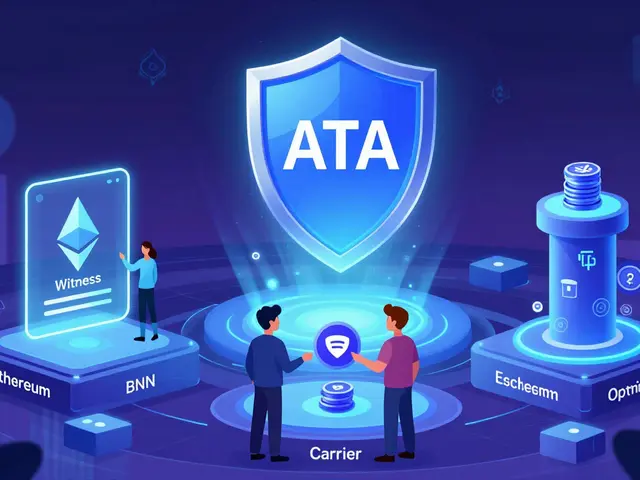
Key Products: Witness, Geode, and Carrier
Understanding the tech is one thing; seeing it in action is another. Automata doesn’t just offer abstract concepts. It ships actual tools that developers use today. Three products stand out as critical to the ecosystem’s utility.
First up is Automata Witness. This is a decentralized voting mechanism designed for dApps across multiple chains. In traditional governance, everyone sees who voted for what. This leads to bribery and social pressure. Witness allows participants to cast votes privately. The result is verifiable, but individual preferences remain hidden. It’s like a secret ballot in real life, but coded into the blockchain infrastructure.
Next is the Geode primitive. Think of a Geode as a protected sandbox environment. Developers can deploy specific logic here-like an auction bidding algorithm or a private identity check. Because it runs in a TEE, no one can peek at the inputs until the process is complete. This is crucial for high-frequency trading strategies or private NFT minting events where front-running is a major concern.
Then there’s Carrier, a cross-chain bridge powered by Wormhole technology. Unlike other bridges that track your IP address and wallet history, Carrier prioritizes anonymity. It supports over 12 popular blockchains and ensures zero user tracking during sessions. For users worried about metadata leakage when moving assets between Ethereum, Solana, or Avalanche, Carrier acts as a privacy-preserving relay.

The Role of the ATA Token
Tokens in middleware projects often struggle to find value capture. How do you monetize infrastructure that sits quietly in the background? Automata solves this by making ATA essential for three specific actions: Governance, Staking, and Resource Access.
As a governance token, ATA holders propose and vote on upgrades. This isn’t just ceremonial; changes to fee structures or supported chains require community consensus. More importantly, ATA is used for staking. Since Automata uses a Proof-of-Stake (PoS) model for its validator set, you lock up ATA to help secure the network. In return, you earn rewards. This aligns incentives: validators want the network to stay secure and profitable, so they act honestly.
The third function is resource bonding. To access premium features or reserve capacity on Geodes, users may need to bond ATA tokens. This creates demand based on actual usage rather than speculation. If more dApps integrate Witness or Carrier, the demand for secure computation environments rises, potentially increasing the utility-driven value of the token.
- Governance: Vote on protocol parameters and treasury spending.
- Staking: Lock ATA to validate transactions and earn yield.
- Bonding: Reserve resources for private computation tasks.
- Fees: Pay for services like cross-chain transfers via Carrier.
Why Hardware Security Matters Now
You might ask, why now? Why is hardware-backed privacy becoming relevant in 2026? The answer lies in the rise of autonomous agents and AI on-chain. As we move toward a web where AI bots execute trades or manage portfolios, we cannot afford to have their strategies visible to competitors. A bot buying ETH because it predicts a spike will lose its edge if everyone sees the transaction before it settles.
Automata addresses this by anchoring machine trust. When an AI agent interacts with a smart contract, Automata provides a proof that the agent executed the correct logic without revealing the internal state. This is distinct from pure software solutions. Software can be patched or hacked; hardware enclaves provide a physical root of trust. While not invincible, it raises the barrier significantly for attackers trying to manipulate off-chain computations.
Furthermore, regulatory pressure is mounting. Governments are increasingly interested in financial privacy versus transparency. Solutions like Automata allow for selective disclosure. An auditor can verify compliance without exposing every single customer’s balance. This balance is vital for institutional adoption of DeFi.

Risks and Considerations
No project is without flaws. The reliance on Intel SGX introduces centralization risks regarding hardware supply. If Intel faces production issues or vulnerabilities (like side-channel attacks), the entire network could be affected. While the team mitigates this by diversifying providers, the dependency on specific silicon architectures remains a technical bottleneck.
Additionally, competition is fierce. Projects like Oasis Network or Secret Network offer similar privacy guarantees using different cryptographic methods. Some argue that zero-knowledge proofs are more future-proof than hardware enclaves because they don’t depend on proprietary hardware. Automata bets that the performance benefits of hardware outweigh these long-term theoretical risks. Only time-and developer adoption-will tell if this bet pays off.
Market volatility also plays a role. ATA, like many altcoins, experiences sharp price swings. Its value proposition is tied to the growth of dApps that actually need privacy. If the broader market ignores privacy concerns, ATA’s utility demand may stagnate regardless of its technical merits.
Final Thoughts
Automata Network isn’t trying to replace Ethereum or Solana. It’s trying to make them safer and smarter. By providing a modular attestation layer, it allows developers to build applications that respect user privacy without sacrificing decentralization. For investors, understanding ATA requires looking beyond hype charts and focusing on integration metrics. Are dApps actually using Witness for governance? Is Carrier gaining traction among privacy-conscious traders?
If you believe that the next phase of Web3 involves complex, private interactions rather than simple asset transfers, Automata offers a compelling infrastructure play. It bridges the gap between the rigid transparency of blockchains and the flexible needs of modern applications. Just remember, in crypto, technology doesn’t always equal price appreciation. Monitor the ecosystem’s health, not just the token price.
Is Automata Network a Layer 1 or Layer 2 solution?
Automata Network is technically classified as a middleware protocol or a dedicated service chain. It does not compete directly with Layer 1 blockchains like Ethereum. Instead, it operates alongside them, providing specialized privacy and computation services that L1s and L2s can plug into. It functions as a modular attestation layer.
How does Automata ensure privacy if the blockchain is public?
It separates computation from consensus. Sensitive data is processed off-chain inside Trusted Execution Environments (TEEs). The results, along with cryptographic proofs verifying their integrity, are submitted to the public blockchain. This way, the outcome is public and auditable, but the input data and intermediate steps remain private.
Can I mine ATA tokens?
No, you cannot mine ATA in the traditional sense. Automata Network uses a Proof-of-Stake (PoS) consensus mechanism. Instead of mining, you stake your ATA tokens to participate in network validation and earn rewards. This method is more energy-efficient and aligns incentives through economic collateral rather than computational power.
What makes Carrier different from other cross-chain bridges?
Carrier focuses heavily on privacy and metadata protection. While many bridges facilitate asset movement, they often expose user IP addresses and transaction patterns. Carrier utilizes a hardware secure enclave RPC relay to ensure zero user tracking, safeguarding both data and metadata during cross-chain sessions.
Who are the main competitors of Automata Network?
Primary competitors include other privacy-focused protocols such as Oasis Network, Secret Network, and Aztec Network. Each uses different approaches to privacy-Oasis and Secret rely heavily on cryptographic techniques or parallel chains, while Aztec focuses on zero-knowledge rollups. Automata distinguishes itself through its hardware-based TEE approach.

Write a comment