You’ve probably heard the criticism: Bitcoin is too slow, too expensive, and frankly, too dirty for a modern digital economy. Enter Bitcoin.ℏ, or BTC.ℏ, which claims to fix these exact problems without ditching the core idea of scarcity. Launched in March 2024, this token isn’t just another meme coin trying to ride Bitcoin’s coattails. It runs on the Hedera Hashgraph network, promising lightning-fast speeds and near-zero energy costs. But does it actually deliver, or is it just clever marketing wrapped around a familiar name? Let’s break down what BTC.ℏ really is, how it works, and whether it deserves a spot in your portfolio.
The Core Concept: Why Another Bitcoin?
If you’re wondering why we need another cryptocurrency when Bitcoin already exists, you’re not alone. The creators of Bitcoin.ℏ argue that Bitcoin 1.0 has become bloated. It’s great for storing value, sure, but terrible for buying coffee or sending small payments daily. The fees are high, confirmation times can drag on for hours during congestion, and the energy consumption is massive. BTC.ℏ aims to be the "utility-focused" version of Bitcoin. It keeps the famous 21 million supply cap-the same scarcity model that makes Bitcoin valuable-but changes the engine under the hood. Instead of using Proof-of-Work mining, which burns through electricity like crazy, it leverages the efficiency of Hedera’s hashgraph technology. Think of it as keeping the soul of Bitcoin but giving it a Tesla motor instead of a gas-guzzling V8.
How It Works: Hedera Hashgraph vs. Traditional Blockchain
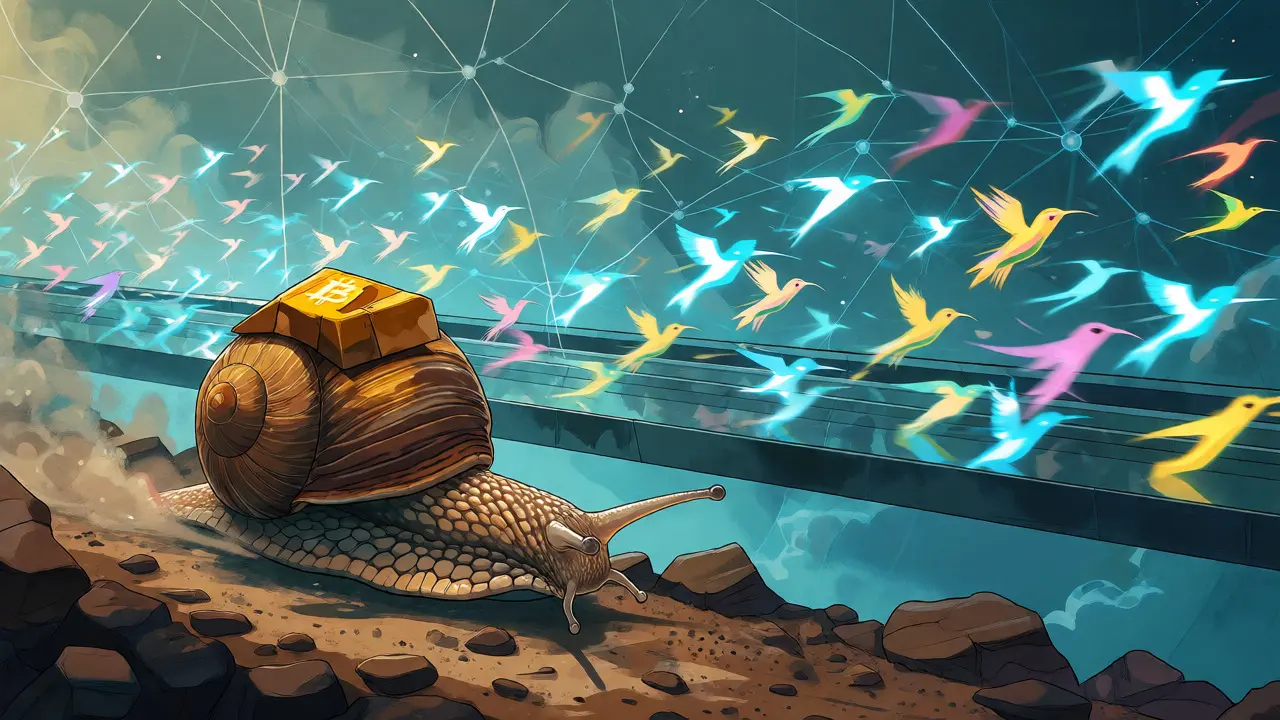
Here’s where things get technical, but stick with me-it’s simpler than it sounds. Most cryptocurrencies, including Bitcoin and Ethereum, use a blockchain. Imagine a chain of blocks where each block contains transaction data. To add a new block, miners compete to solve complex math puzzles. This process is secure but slow and energy-intensive. BTC.ℏ doesn’t do this. It operates as a token on the Hedera network, which uses a Directed Acyclic Graph (DAG) structure called hashgraph. In this system, every node talks to every other node simultaneously. There’s no leader election or long wait times for consensus. This allows the network to process up to 10,000 transactions per second (TPS). Compare that to Bitcoin’s sluggish 7 TPS, and you see the difference immediately. Transactions settle in seconds, not minutes or hours.
Energy Efficiency: The Green Angle
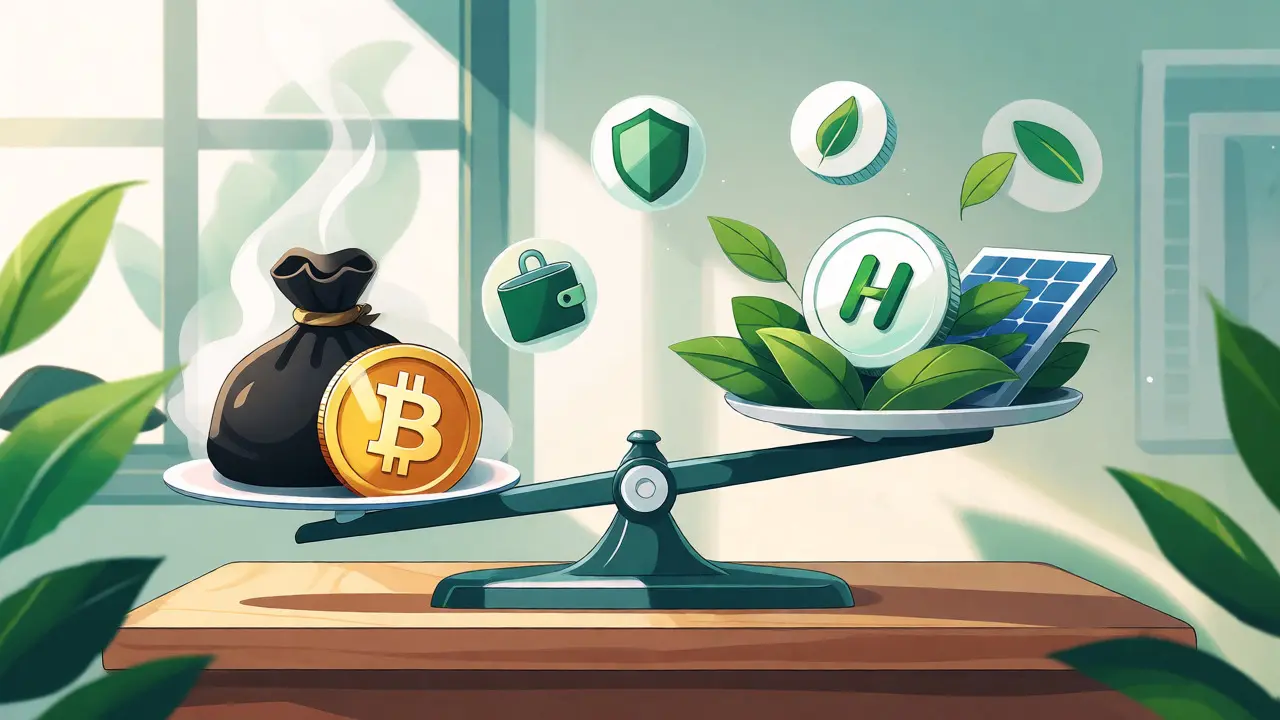
This is probably the biggest selling point for environmentally conscious investors. Critics have hammered Bitcoin for its carbon footprint, citing reports that it consumes more electricity annually than some countries. Bitcoin.ℏ attacks this problem head-on. Because it relies on Hedera’s asynchronous Byzantine Fault Tolerance (aBFT) consensus, it doesn’t require energy-hungry mining. Data suggests that a single BTC.ℏ transaction consumes approximately 0.000003 kilowatt-hours. For context, a standard Bitcoin transaction uses about 703 kWh. That’s a reduction of over 234 million percent. You could process thousands of BTC.ℏ transactions using the same amount of energy it takes to send one lonely Bitcoin payment. If sustainability is a key factor in your investment strategy, this metric alone makes BTC.ℏ worth a look.
Tokenomics and Supply Details
Let’s talk numbers. BTC.ℏ mirrors Bitcoin’s deflationary model with a hard-capped maximum supply of 21 million tokens. As of late 2024, only about 2.53 million tokens were in circulation, representing roughly 12% of the total supply. This low circulating supply creates potential for price volatility, both up and down. With a market capitalization hovering around $3 million, it’s a micro-cap asset compared to Bitcoin’s trillion-dollar empire. The current price sits near $1.20, though it has seen highs above $3.00 and lows below $0.33 in recent months. Liquidity is thin, with daily trading volumes often under $25,000. This means large buy or sell orders can significantly move the price, so you need to be careful if you’re trading larger amounts.
| Feature | Bitcoin (BTC) | Bitcoin.ℏ (BTC.ℏ) |
|---|---|---|
| Consensus Mechanism | Proof-of-Work | Hedera Hashgraph (aBFT) |
| Transactions Per Second | ~7 TPS | ~10,000 TPS |
| Energy Use Per Tx | ~703 kWh | ~0.000003 kWh |
| Average Fee | $1 - $50+ (variable) | ~$0.0001 |
| Max Supply | 21 Million | 21 Million |
Where to Buy and Store BTC.ℏ
Getting your hands on BTC.ℏ isn’t as easy as logging into Coinbase or Binance. It’s not listed on major tier-one exchanges yet. You’ll likely find it on smaller centralized exchanges or decentralized exchanges (DEXs) within the Hedera ecosystem. Some users report needing to convert USDT to HBAR first, then swapping HBAR for BTC.ℏ. This extra step adds friction and potential slippage. For storage, you can’t just use any wallet. You need a Hedera-compatible wallet like HashPack or Freewallet. Make sure you back up your recovery phrase carefully. Since liquidity is low, moving tokens out of a DEX might take longer than expected, so plan accordingly.
Risks and Criticisms
No discussion of a new altcoin is complete without addressing the risks. First, branding confusion is real. Adding “Bitcoin” to the name invites skepticism. Many in the community view it as a marketing tactic rather than a genuine technological evolution. Is it truly a replacement, or just riding the brand equity? Second, decentralization concerns exist. While Hedera is efficient, it relies on a council of nodes for governance, unlike Bitcoin’s permissionless miner network. Some purists argue this compromises the trustless nature of crypto. Finally, adoption is minimal. With only a few thousand active community members and limited developer activity, BTC.ℏ hasn’t proven it can sustain long-term interest beyond the initial hype cycle. If the project fails to attract real-world utility partners, it could fade into obscurity.
Who Should Consider BTC.ℏ?
This token isn’t for everyone. If you’re looking for a stable store of value with decades of track record, stick with Bitcoin. If you want smart contract flexibility, Ethereum or Solana might serve you better. However, if you believe that environmental impact will dictate future regulations and consumer preferences, BTC.ℏ offers an interesting speculative play. It appeals to those who want to experiment with high-speed, low-cost transactions without the guilt of a heavy carbon footprint. Just keep your position size small relative to your portfolio, given the high risk and low liquidity.
Is Bitcoin.ℏ the same as Bitcoin?
No, they are distinct assets. Bitcoin runs on its own blockchain using Proof-of-Work. Bitcoin.ℏ is a token issued on the Hedera Hashgraph network, using a different consensus mechanism designed for speed and energy efficiency.
Why is Bitcoin.ℏ cheaper to transact than Bitcoin?
Bitcoin requires miners to solve complex puzzles, consuming significant energy and leading to variable fees based on network congestion. Bitcoin.ℏ uses Hedera's hashgraph algorithm, which processes transactions in parallel with minimal computational overhead, resulting in fees averaging around $0.0001.
Can I mine Bitcoin.ℏ?
No, you cannot mine Bitcoin.ℏ in the traditional sense because it does not use Proof-of-Work. Tokens are typically acquired through purchases on supported exchanges or via specific distribution mechanisms set by the project team.
What wallets support Bitcoin.ℏ?
You need a wallet compatible with the Hedera network. Popular options include HashPack, Freewallet, and Blade Wallet. Ensure your wallet supports custom tokens on Hedera before transferring funds.
Is Bitcoin.ℏ a good investment?
It is a high-risk, high-reward speculative asset. Its value depends heavily on gaining wider adoption and proving its utility claims. Given its low market cap and liquidity, prices can be volatile. Only invest what you can afford to lose.
Write a comment