Most people think Distributed Ledger Technology is just another name for blockchain. It's a common mistake, but in reality, blockchain is actually just one specific type of DLT. Think of it like this: all blockchains are distributed ledgers, but not all distributed ledgers are blockchains. If you've ever wondered why some experts use the term DLT when talking about enterprise systems but say "blockchain" when talking about Bitcoin, this is where the distinction matters.
At its core, DLT is a digital system for recording transactions in which the data is replicated, shared, and synchronized across multiple sites, countries, or institutions. Instead of having one master database sitting on a single server-like a traditional bank-the ledger is spread across a network of computer nodes. Every single node keeps its own copy of the records, and they all work together to make sure those records stay identical without needing a boss or a middleman to tell them who is right.
How DLT Actually Works Under the Hood
To understand how this works, you have to look at the movement of data. Imagine you send some digital assets to a friend. In a centralized system, you'd tell a bank, and the bank would update its private ledger. In a DLT system, that transaction is broadcast to a peer-to-peer (P2P) network. Every node in that network receives the update and processes it independently.
But how do we know everyone agrees? That's where consensus algorithms come in. These are the sets of rules that nodes use to decide which transactions are valid. Whether it's a voting system or a complex mathematical puzzle, the consensus mechanism ensures that all nodes arrive at the same version of the truth. Once the network agrees, the transaction is permanently recorded.
This process relies heavily on cryptographic signatures. These digital fingerprints ensure that only the owner of an asset can move it and that the data hasn't been tampered with during transmission. Because every node verifies the data before adding it, the system removes the need for an intermediary, effectively cutting out the "trusted third party" that usually charges a fee to verify transactions.
The 6 Pillars of Distributed Ledgers
If you're trying to figure out if a system is truly a DLT, look for these six characteristics. If any are missing, you're likely looking at a standard distributed database rather than a ledger technology.
- Decentralized: No single entity owns the network. Every node maintains its own copy, so there's no central point of failure.
- Immutable: Once data is written and agreed upon, it's nearly impossible to change. Attempting to alter an old record would require changing every subsequent copy across the entire network.
- Append-only: You can't "edit" a transaction. If a mistake was made, you don't erase it; you add a new transaction to correct the balance, leaving a perfect audit trail.
- Distributed: The ledger is geographically spread across the globe, making it incredibly resilient to crashes or cyberattacks.
- Shared: All participants (or at least the authorized ones) have access to the same set of data, ensuring total transparency.
- Programmable: Many DLTs support smart contracts, which are self-executing scripts that trigger actions automatically when certain conditions are met.
DLT vs Blockchain: What's the Real Difference?
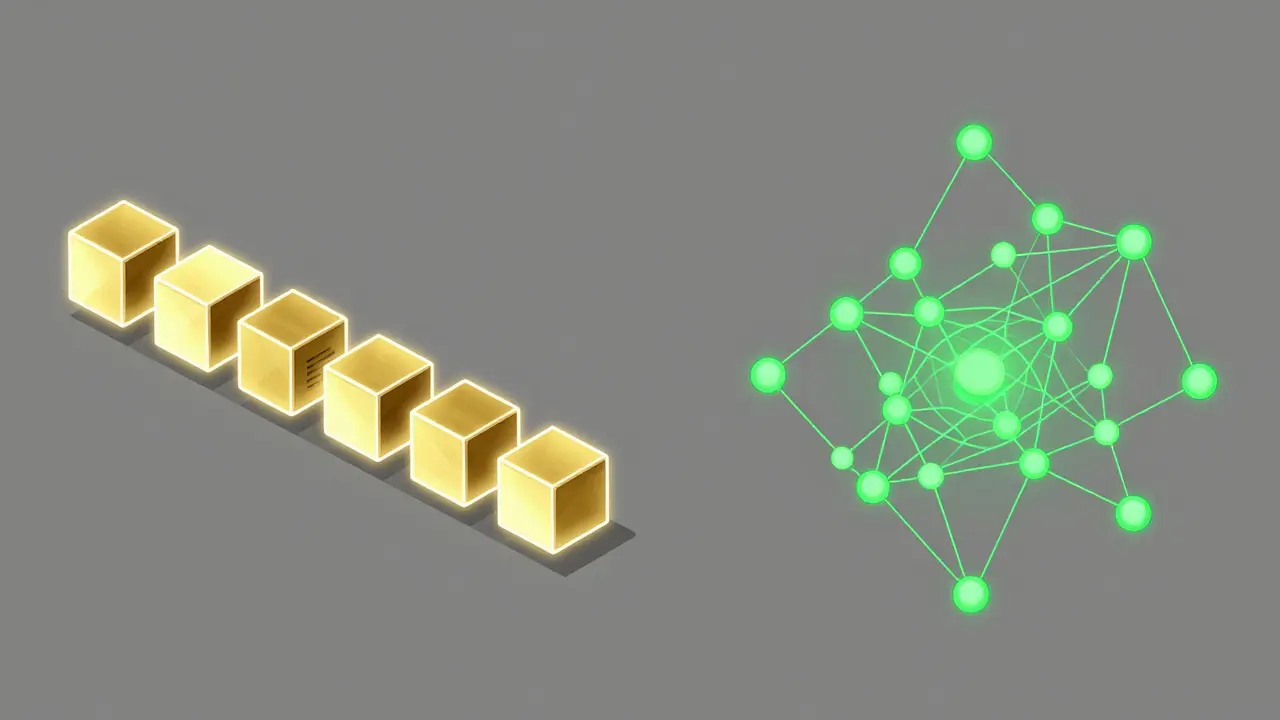
Since blockchain is the most famous version of DLT, the two are often confused. The main difference lies in the data structure and the consensus method. A blockchain organizes data into a linear chain of blocks. Each block must be verified and linked to the previous one, creating a strict chronological sequence.
However, other DLTs don't use blocks. Take Directed Acyclic Graphs (DAGs), for example. In a DAG-based system, there are no blocks. Instead, each new transaction must verify two previous transactions to be confirmed. This creates a web-like structure rather than a chain, which often allows for much faster speeds and zero transaction fees because it doesn't require power-hungry miners.
| Feature | Blockchain | Non-Blockchain DLT (e.g., DAG) |
|---|---|---|
| Structure | Linear sequence of blocks | Web/Graph of individual transactions |
| Verification | Miners/Validators per block | Transactions verify other transactions |
| Speed | Varies (can be slow due to block times) | Generally higher scalability |
| Energy Use | Can be high (e.g., Proof of Work) | Typically very low |
Real-World Use Cases Beyond Cryptocurrency
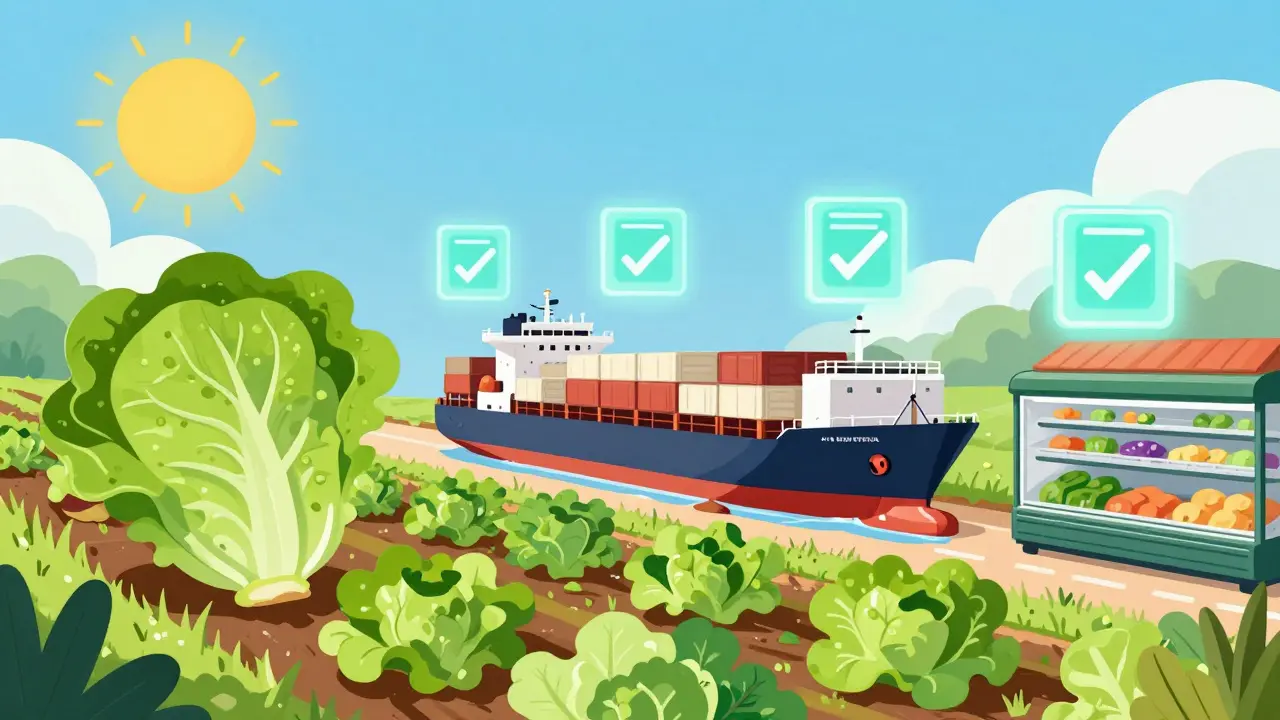
While Bitcoin introduced the world to this tech, the applications for DLT go far beyond digital coins. Imagine a global supermarket chain. Tracking a head of lettuce from a farm in Mexico to a store in New York usually involves a dozen different paper logs and emails. With a shared distributed ledger, every stop in the supply chain-the farmer, the shipper, the customs agent, the warehouse-updates the same record in real-time. If there's a contamination outbreak, the store can trace the exact batch to the farm in seconds, not weeks.
Financial services are also seeing a massive shift. The Financial Stability Board has noted that DLT can fundamentally change how we handle regulation and governance. Instead of banks spending billions on "reconciliation" (the process of making sure two sets of books match), they can use a single, shared ledger that is always in sync. This eliminates the risk of human error and drastically reduces the time it takes for international payments to clear.
The Hurdles to Widespread Adoption
If DLT is so great, why isn't every company using it? The biggest issue is infrastructure. Setting up a robust P2P network requires significant compute power and a high level of coordination between parties who may not even trust each other. You need high-speed communication protocols to ensure that a node in Tokyo and a node in London are seeing the same data at the same time.
There's also the issue of scalability. Some blockchain-based DLTs struggle to handle thousands of transactions per second because every node has to agree on every single change. While DAGs and other newer DLT structures are solving this, the transition from legacy centralized databases to a distributed model is a massive technical mountain for most corporations to climb.
Is DLT the same as Blockchain?
No. Blockchain is a specific implementation of Distributed Ledger Technology. While blockchain uses a chain of blocks to record data, other forms of DLT might use different structures, such as Directed Acyclic Graphs (DAGs), to achieve consensus and record transactions.
Can a distributed ledger be centralized?
Technically, a distributed ledger can be managed by a central authority (a private DLT). In this case, the ledger is still replicated across multiple nodes for reliability, but the central authority decides who can join the network and who can validate transactions.
What makes a ledger "immutable"?
Immutability is achieved through cryptography. Each new entry is linked to the previous one using a mathematical hash. If you change a single character in an old record, the hash changes, which breaks the link to all subsequent records. Since every node has a copy, the network would instantly reject the tampered version.
What is the role of a node in DLT?
A node is a computer that participates in the network. Its job is to store a copy of the ledger, broadcast new transactions to other nodes, and participate in the consensus process to validate that new data is accurate before it is permanently added.
How do smart contracts work with DLT?
Smart contracts are pieces of code stored on the ledger. They automatically execute an action (like releasing a payment) once a predefined condition is met (like a shipping carrier confirming a delivery). Because they live on a DLT, they are transparent and cannot be altered by either party.

Write a comment