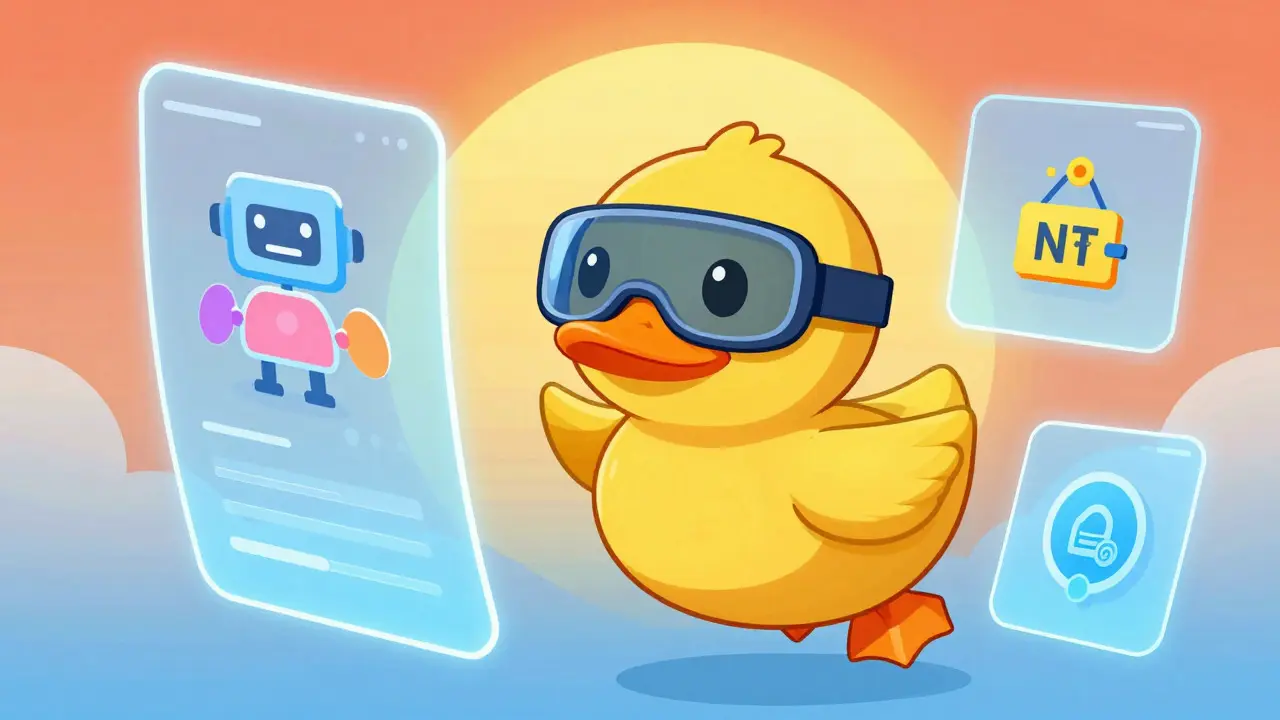
You’ve probably seen that little yellow duck in your Telegram chat history. Now, there’s a cryptocurrency named after it. DuckCoin (DUCK) is a meme token built on The Open Network (TON) blockchain. It launched in 2024 and quickly became one of the most talked-about assets in the TON ecosystem, largely because of its direct tie to Telegram’s iconic mascot.
If you’re wondering whether this is just another hype-driven coin or if it has some real staying power, you’re not alone. The answer lies in understanding how it works, where it trades, and what risks come with holding a low-liquidity asset. This guide breaks down everything you need to know about DUCK, from its basic specs to its place in the broader crypto market.
Key Takeaways
- DuckCoin (DUCK) is a meme cryptocurrency on the TON blockchain, tied to Telegram’s official duck mascot.
- It has a fixed supply of 1.2 billion tokens and currently ranks in the top 20 by market cap within the TON ecosystem.
- Trading volume is very low, making it difficult to sell large amounts without significant price slippage.
- The project is in Phase 1 of its roadmap, with future plans including Telegram bot integration and NFT utilities.
- Risks include high volatility, lack of utility beyond speculation, and potential trademark issues with Telegram.
What Exactly Is DuckCoin?
DuckCoin is a community-driven meme token that leverages the popularity of Telegram’s duck mascot to create viral engagement within the TON ecosystem. Unlike utility tokens designed to solve specific problems, DUCK is primarily a speculative play. Its value comes from narrative strength rather than technical innovation. The token operates as a standard TON Jetton, meaning it follows the same rules as other native assets on the network but doesn’t add new features like staking or governance.
The project’s main appeal is its connection to Telegram, which boasts over 800 million monthly active users. By tapping into this massive user base, DUCK aims to ride the wave of interest in TON-based assets. However, this also means its success is heavily dependent on continued enthusiasm for the TON ecosystem and Telegram’s brand recognition.
Tokenomics and Supply Structure
Understanding the supply structure helps explain why DUCK behaves the way it does in the market. Here are the core numbers:
- Total Supply: 1,200,000,000 DUCK (fixed, no inflation)
- Circulating Supply: Approximately 1.2 billion tokens (most are already in circulation)
- Decimal Precision: 9 (standard for TON Jettons)
- Allocation: ~25% for marketing/airdrops, 10% for development team, rest in liquidity pools
The fully diluted valuation (FDV) hovers around $700,000-$250,000 depending on the data source, reflecting the token’s small market size. For comparison, established meme coins like DOGE or SHIB have market caps in the billions. This gap highlights DUCK’s niche status: it’s a small-cap asset with high upside potential but also high risk.

Where Can You Buy and Trade DUCK?
Liquidity is the biggest challenge for DUCK holders. The token isn’t listed on major centralized exchanges like Binance or Coinbase. Instead, trading happens almost exclusively on decentralized exchanges (DEXs) within the TON ecosystem, primarily DeDust.
Here’s what you need to know before diving in:
- Wallet Setup: You’ll need a TON-compatible wallet like Tonkeeper or Fragment. Setup takes about 8-12 minutes for beginners.
- Funding Your Wallet: Buy TON on a major exchange, then transfer it to your TON wallet.
- Swapping for DUCK: Use DeDust to swap TON for DUCK. Be careful with slippage settings-traders report 15-20% slippage on average due to thin order books.
Low trading volume is a red flag. On any given day, DUCK might see only $1,000-$700 in total volume. That means if you try to sell a large position, you could significantly move the price against yourself. Smaller trades are safer, but even those can be tricky if the liquidity pool is shallow.
How Does DUCK Compare to Other TON Meme Coins?
The TON ecosystem has several meme coins, each with its own narrative. Here’s how DUCK stacks up against its closest competitors:
| Feature | DuckCoin (DUCK) | NOT Token | TON Diamonds |
|---|---|---|---|
| Narrative Hook | Telegram duck mascot | “Not” culture / anti-establishment | Luxury / diamond theme |
| Market Cap Rank (TON) | #19 | Top 5 | Lower tier |
| Daily Volume | ~$1,300 | ~$1.2M | Varying, generally low |
| Exchange Listings | 5 DEX pairs | Multiple DEXs + CEXs | Limited DEX presence |
| Utility Beyond Speculation | None (planned bots/NFTs) | Community voting | None |
DUCK’s unique advantage is its direct link to Telegram’s brand identity. While NOT has higher volume, DUCK benefits from a more recognizable and emotionally resonant symbol. However, this also makes it vulnerable-if Telegram ever enforces its trademarks, DUCK could face legal challenges. So far, no action has been taken, but it’s a risk worth noting.
Roadmap and Future Developments
As of late 2024, DUCK is in Phase 1 of its three-phase roadmap, dubbed “Taking Flight.” The goal here is to build community momentum and establish liquidity. Phase 2, “Soaring High,” is expected to introduce Telegram bot integration and limited NFT utilities by Q1 2025. These additions aim to give the token some practical use cases beyond pure speculation.
Recent updates include expanding liquidity pools on DeDust, increasing available trading pairs from 2 to 5. While this initially boosted volume by 300%, the spike wasn’t sustained. This pattern is common in meme coins: short-term bursts of interest followed by quiet periods. Long-term viability will depend on whether these new features attract lasting engagement.
Risks to Consider Before Buying
Meme coins are inherently risky, and DUCK is no exception. Here are the key factors to weigh:
- Volatility: DUCK has dropped 95.90% from its all-time high. Price swings can be extreme, wiping out gains overnight.
- Liquidity Issues: With daily volumes under $1,000, selling large positions can be nearly impossible without massive slippage.
- No Fundamental Utility: Currently, DUCK has no staking, governance, or real-world use case. Its value is purely speculative.
- Regulatory Uncertainty: While meme coins face less scrutiny than utility tokens, the SEC’s increased attention on crypto could impact the entire sector.
- Trademark Risk: Telegram owns the duck mascot. If they decide to protect their brand aggressively, DUCK could face legal hurdles.
Analysts rate DUCK as “high-risk, high-potential.” Some believe the Telegram connection gives it better longevity than random meme coins, while others warn that low volume signals fading interest. There’s no consensus, which is typical for assets in this category.
Is DUCK Right for You?
If you’re an experienced trader comfortable with high-risk assets and small position sizes, DUCK might fit your portfolio as a speculative bet. But if you’re looking for stability, liquidity, or long-term growth based on fundamentals, this probably isn’t the coin for you.
Before buying, ask yourself: Can I afford to lose my entire investment? Am I okay with difficulty selling when I want to exit? Do I believe in the TON ecosystem’s future? If the answers are yes, proceed with caution. Keep positions small, monitor liquidity closely, and stay updated on the project’s roadmap developments.
Is DuckCoin backed by Telegram officially?
No, DuckCoin is not officially backed by Telegram. It’s a community-driven project that uses Telegram’s duck mascot as its branding hook. However, Telegram hasn’t taken legal action against it so far, which suggests a degree of tolerance.
Where can I buy DuckCoin (DUCK)?
You can buy DUCK on decentralized exchanges like DeDust, which is part of the TON ecosystem. You’ll need a TON-compatible wallet (like Tonkeeper or Fragment) and TON tokens to swap for DUCK. Major centralized exchanges don’t list DUCK yet.
What is the total supply of DuckCoin?
The total supply of DuckCoin is fixed at 1,200,000,000 DUCK tokens. Most of these are already in circulation, with a portion reserved for marketing, airdrops, and the development team.
Why is it hard to sell DuckCoin?
Selling DUCK can be difficult because of its low trading volume and thin liquidity pools. When you try to sell a large amount, there may not be enough buyers at the current price, causing the price to drop significantly (slippage). Smaller trades are less affected, but even those can experience 15-20% slippage.
Does DuckCoin have any real-world utility?
Currently, DuckCoin has no real-world utility beyond speculation. It doesn’t support staking, governance, or payments. However, the roadmap includes plans for Telegram bot integration and NFT utilities in Phase 2, which could add some functional value in the future.
Is DuckCoin a good investment in 2026?
Whether DUCK is a good investment depends on your risk tolerance. It’s a high-risk, high-reward asset with strong narrative potential but limited liquidity and no fundamental utility. If you believe in the TON ecosystem’s growth and Telegram’s brand power, it could offer upside. But be prepared for volatility and difficulty exiting your position.

Marco Maldonado
Another american dream shattered by foreign tech. This is just another way for the TON ecosystem to bleed our dollars out of the country. We should be building our own blockchain here in the US, not relying on some Russian-backed network that might get sanctioned tomorrow.
The fact that they use a duck as a mascot is just too cute by half. It shows how childish this whole crypto space has become. Real investors look at fundamentals, not cartoons. But hey, if you want to gamble your retirement savings on a meme coin with $1000 daily volume, go ahead. Just don't expect the government to bail you out when it crashes like it did last year.
manish jha
You are all missing the point. The moral hazard here is obvious. Why do we allow such frivolous assets to exist? They distract from real work. In my village, we value labor over speculation. This DUCK token is a sin against productivity. It has no utility, only vanity. If Telegram does not regulate it, who will? The market is a chaotic beast that must be tamed by wisdom, not hype. Stop chasing ghosts and start building something tangible.
Ashley Snyder
I actually think its kinda fun! I mean, who doesn't love a little yellow duck? I got into it because I saw it in my telegram notifications and thought 'hey, free money' (okay maybe not free but low entry). I'm not holding my life savings in it, just a few bucks to see what happens. The community seems chill so far, which is more than i can say for other meme coins i've seen. Just keep expectations realistic and you'll probably have a good time. Its a game, not an investment portfolio.
Sarah Hafner
Hey everyone! :D Just wanted to add a quick technical note since the article was a bit vague on the slippage. When swapping on DeDust, always check the pool depth first. I learned this the hard way when I tried to sell 5k DUCK and ended up with a 22% loss due to price impact. The liquidity pools are really thin compared to major DEXs like Uniswap. My advice: break your trades into smaller chunks if you're moving significant amounts. Also, make sure your Tonkeeper gas fees are set correctly, sometimes the default is too low for complex swaps. Hope that helps someone avoid the pain! :)
Susan Kiley
Oh, how quaint. A duck. Truly, the pinnacle of intellectual discourse in the modern financial world. :o One expects nothing less from the masses who congregate in these digital town squares. While the common folk play with their shiny new toys, the true elite understand that value is derived from scarcity and utility, not cuteness. But then again, why would those who cannot grasp the nuance of macroeconomic trends care about the subtle legal implications of trademark infringement? Let them dance. The music will stop, and they will be left holding a bag of worthless tokens while the rest of us watch from the safety of our diversified portfolios. How delightful.
alex fordy
It’s interesting to think about the psychology behind this. 🦆 We attach meaning to symbols, right? The duck isn’t just a bird; it’s a representation of connection, of the platform we use every day. That emotional anchor is powerful. It’s similar to how we bond with pets or childhood mascots. So, while the 'fundamentals' are weak, the 'narrative fundamental' is strong. If Telegram stays neutral, this could persist as a cultural artifact within the TON community. It’s less about finance and more about social identity. What do you all think drives the long-term hold? Is it greed or belonging?
Nia Franklin
oh my gosh!! i just found this post & immediately felt a kinship!! 🌈✨ the duck is basically the spirit animal of the internet right now!! i dont know much about blockchain (still learning!) but the idea of a community rallying around a cute little guy is just... warm?? like a digital campfire!! 🔥🦆 i hope they launch those nfts soon!! imagine collecting a rare golden duck feather nft!! would be soooo cool!! anyway just vibing here!! let the quack flow!! 💖💖💖
Sonia Gomez Gomez
You need to diversify your portfolio before you regret this. :P Seriously, putting any money into a coin with under $1k volume is reckless. I checked your other posts and you seem to chase every trend. Don't let FOMO dictate your financial future. The SEC is watching closely, and if this gets classified as a security, you could lose everything. Stay disciplined. :)
SHIV SHANKAR KANTA
the soul of the market is broken. we trade in shadows. the duck is a mirror of our collective delusion. why do we seek value in the ephemeral? perhaps we are all just waiting for the final tweet. the silence after the crash is the loudest sound in history. feel the weight of your holdings. it is heavy. very heavy.
Daniel Brown
Did you consider the tax implications of holding this asset across borders? Since it's not listed on a major CEX, tracking cost basis for IRS reporting might be a nightmare. You'll need to manually log every swap on DeDust. Most people forget this until audit season. Better to stay off entirely unless you have a dedicated accountant for crypto.
Darren Moon
One observes a distinct lack of rigorous quantitative analysis in this thread. The liquidity metrics cited are, frankly, indicative of a sub-optimal market microstructure. To engage with such an instrument without accounting for bid-ask spread dynamics is, at best, naive. The correlation between Telegram's user base growth and DUCK's price action remains statistically insignificant thus far. One would expect a more sophisticated cohort to apply a proper valuation framework rather than succumbing to narrative-driven sentiment. Disappointing, really. The inefficiency of this market segment persists.