You’ve probably seen the ticker GMR pop up on a screen and wondered if it’s the next big thing in gaming. Maybe you’re looking for that one coin that lets you buy skins, join tournaments, or just hang out with other players without handing over your credit card details to a corporation. That’s exactly what GAMER (GMR) promised when it launched. It pitched itself as a community-driven space where gamers could interact, trade, and play using blockchain technology.
But here we are in August 2026, and the reality of holding or buying GMR looks very different from the hype of 2021. The token has crashed from its peak, trading volumes are thin, and there are serious questions about whether this project will ever deliver on its original vision. Before you throw money at it, you need to know what GMR actually is, where it stands today, and whether it’s worth your time.
The Origin Story: What Was GAMER Supposed to Be?
To understand where GMR is now, you have to look at where it started. Launched in 2021, during the height of the NFT and gaming crypto boom, GAMER was a cryptocurrency token designed to bridge traditional gaming with Web3 technology. The team behind it didn’t just want to make another play-to-earn game; they wanted to build an entire ecosystem. Their motto was simple: “Create. Empower. Game.”
The plan involved several interconnected parts:
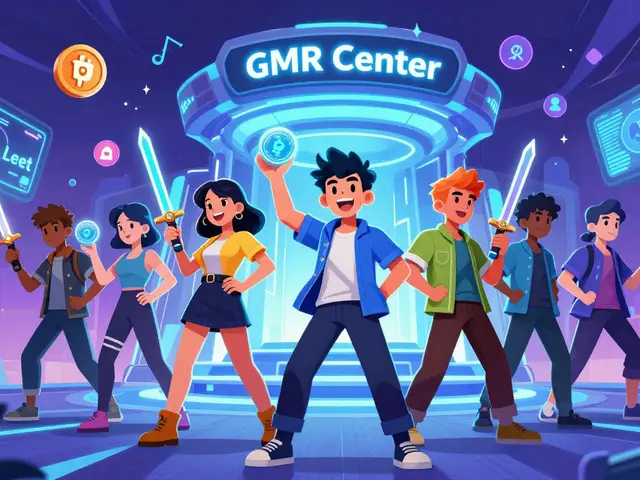
- GMR Center: Described as the nexus of gaming and crypto, this was meant to be the hub where users would manage their assets.
- Battle Leet: An arena-style game where players could fight, collect Non-Fungible Tokens (NFTs), and sell them. This was the core utility driver-giving the token actual use cases beyond speculation.
- Social Network: A Web3 social platform where gamers could chat and share knowledge without compromising personal data.
On paper, this sounded like a solid attempt to merge the social aspects of gaming with the ownership benefits of blockchain. In practice, execution proved much harder than the pitch deck suggested.
Current Market Status: The Numbers Don’t Lie
If you check the price of GMR today, you’ll notice something unsettling: the numbers vary wildly depending on which site you look at. This isn’t just a minor discrepancy; it’s a red flag for liquidity issues.
| Metric | CoinGecko | Binance | CoinMarketCap | LiveCoinWatch |
|---|---|---|---|---|
| Price (USD) | $0.0021 - $0.0022 | $0.00075 | N/A (Low Vol) | $0.000003 |
| Market Cap | ~$735K | ~$308K | ~$247K | Micro-cap |
| 24h Volume | Low | $215 | $0 | Minimal |
| All-Time High | $0.2132 (Dec 2021) | $0.2132 | $0.2526 | $0.2132 |
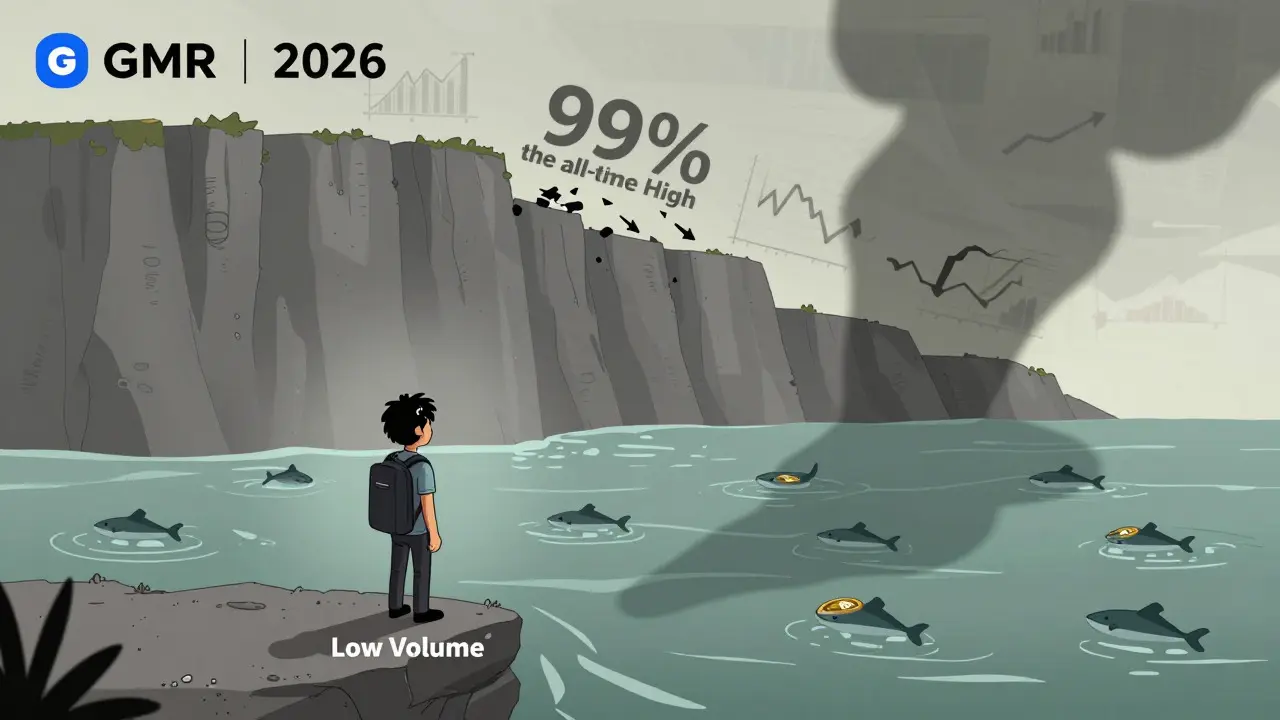
Look at that all-time high. Back in December 2021, GMR traded for over twenty cents. Today, it’s trading for fractions of a penny. That’s a drop of more than 99%. For context, even Bitcoin had better recovery phases after its bear markets. This level of depreciation means that early investors who bought in at the top are likely sitting on massive losses, and new buyers are entering a market with extremely low confidence.
The circulating supply sits around 326 million to 330 million tokens. With such a large supply and tiny market cap, the token is classified as a micro-cap asset. In crypto terms, this makes it highly volatile and risky. A single large sell order could crash the price further because there simply aren’t enough buyers to absorb the shock.
Liquidity Crisis: Why You Might Get Stuck
One of the biggest problems with GMR right now is liquidity. Liquidity refers to how easily you can buy or sell an asset without affecting its price. When volume is high, you can sell thousands of dollars worth of tokens instantly. When volume is low, you might not find anyone willing to buy your tokens at all.
Recent data shows 24-hour trading volumes as low as $215 on some exchanges, and effectively zero on others. Delta.app, a risk analysis tool, explicitly warns users about “Limited Market Activity” for this asset. What does this mean for you?
- Slippage Risk: If you try to buy a significant amount, you might push the price up artificially before the transaction completes. Conversely, selling could tank the price.
- Exit Difficulty: If bad news hits or you decide to cut your losses, there may not be enough buyers in the order book. You could end up waiting days-or weeks-to offload your tokens.
- Data Confusion: The wide variance in reported prices across platforms suggests that the token is fragmented across different pools or exchanges, making it hard to know the “true” price.
This lack of activity is common among older gaming tokens that failed to capture mainstream attention during the 2021-2022 bull run. Without active traders, the chart becomes flat, and interest fades away.
The GMR V2 Pivot: Hope or Hype?
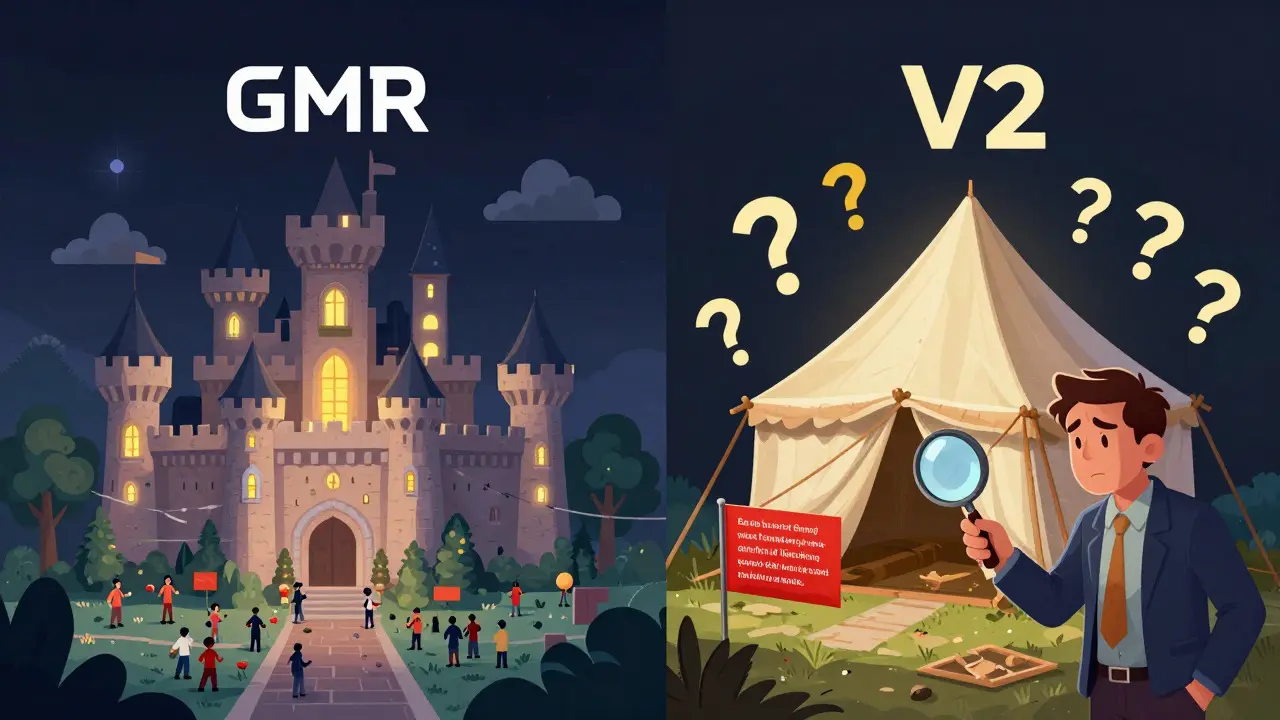
The project isn’t dead, though. The development team has been working on GMR V2, a new version of the token. The goal is ambitious: get listed on the Binance Exchange. To sweeten the deal, the project claims it was accepted into the “Binance Smart Chain Most Valuable Builder III” program, ranking in the top 20 projects within that specific ecosystem initiative.
Let’s break down what this actually means. Being part of a builder program is good-it shows the team is still active and has some relationship with Binance infrastructure. However, being a “builder” is not the same as having a token listed on the exchange. Listing requires rigorous audits, legal compliance, and sustained user growth. Many projects stay in builder programs for years without ever getting a main listing.
The shift to Binance Smart Chain (BSC) is also notable. While the original Ethereum contract address (0xADCa52302e0a6c2d5D68EDCdB4Ac75DeB5466884) is still documented, the focus seems to have moved toward BSC for lower transaction fees. This is a smart move for a gaming token, where small transactions need to be cheap. But it also creates confusion for holders of the old version. Are they migrating? Is there a swap? The documentation on this transition remains sparse, which is concerning for potential investors.
How Does GMR Compare to Other Gaming Coins?
You don’t have to pick GMR if you want exposure to gaming crypto. The sector is crowded with established players that offer more robust ecosystems and higher liquidity. Here’s how GMR stacks up against giants like Enjin (ENJ) and The Sandbox (SAND).
| Feature | GAMER (GMR) | Enjin (ENJ) | The Sandbox (SAND) |
|---|---|---|---|
| Primary Use Case | Social/Gaming Arena | NFT Creation & Minting | Virtual World Metaverse |
| Market Position | Micro-cap (#2500+) | Top 100 Crypto | Top 50 Crypto |
| Liquidity | Very Low | High | High |
| Ecosystem Maturity | Early/Developing | Mature | Mature |
| Risk Level | Extreme | Moderate-High | Moderate-High |
Enjin and Sandbox have partnerships with major brands like Adidas, Atari, and Snoop Dogg. They have real-world integrations and millions of daily active users. GMR, by contrast, relies heavily on its own internal community (“Battle Leet”) and hasn’t broken through to the broader public yet. If you’re looking for safety and stability, GMR is not the answer. If you’re a high-risk gambler betting on a comeback story, it might catch your eye-but proceed with caution.
Who Should Consider Buying GMR?
Not everyone should touch this token. In fact, most people shouldn’t. Here’s a quick decision tree to help you figure out if GMR fits your portfolio:
- Avoid GMR if: You are new to crypto, you need stable returns, or you can’t afford to lose 100% of your investment. The volatility and liquidity issues make it unsuitable for beginners.
- Consider GMR if: You are an experienced trader comfortable with micro-caps, you believe strongly in the “gamer-owned” narrative, and you have done your own deep dive into the GMR V2 roadmap. Even then, treat it as speculative venture capital, not an investment.
The project’s claim of having sold out “Non-Fungible Leets” within two weeks shows there *was* initial interest. But sustained interest is what matters in crypto. With only ~61,800 holders reported on CoinMarketCap, the community is modest at best. Compare that to top gaming tokens which often boast hundreds of thousands or millions of holders.
Red Flags to Watch Out For
Before you connect your wallet, keep these warning signs in mind:
- Inconsistent Data: As shown earlier, prices vary by orders of magnitude across platforms. This indicates poor market structure.
- Low Volume: Trading under $1,000 a day means you are swimming in a puddle, not an ocean. One whale moving funds could distort the chart entirely.
- Vague Roadmap Details: While “GMR V2” and “Binance Listing” are mentioned, specific technical whitepapers or audit reports from reputable firms are hard to find in public discourse.
- Age of Project: Launched in 2021, the project missed the prime adoption window. Reviving momentum after three years of decline is incredibly difficult.
Remember, in crypto, silence is often louder than press releases. If the team isn’t constantly engaging, updating, and delivering features, the community will drift away to newer, shinier projects.
Is GAMER (GMR) a scam?
There is no definitive evidence labeling GAMER (GMR) as a outright scam. The team has been active since 2021 and continues to develop versions like GMR V2. However, the extreme price drop, low liquidity, and vague communication about future milestones carry many characteristics of failing projects. Always do your own research (DYOR) before investing.
Where can I buy GAMER (GMR)?
GMR is available on select decentralized exchanges (DEXs) and potentially smaller centralized platforms. Because it is not widely listed on major tier-1 exchanges like Coinbase or Kraken, you may need to use a wallet like MetaMask or Trust Wallet and swap tokens via PancakeSwap (if on BSC) or Uniswap (if on Ethereum). Be cautious of fake tokens with similar names.
What is the difference between GMR V1 and V2?
GMR V1 is the original token launched in 2021. GMR V2 is a planned upgrade aimed at improving functionality and facilitating a listing on the Binance Exchange. Details on how existing V1 holders will migrate to V2 are not fully transparent, so check official channels for migration instructions before assuming your tokens will automatically convert.
Why is the price of GMR so low compared to its ATH?
The price dropped over 99% from its All-Time High due to a combination of factors: the general crypto bear market of 2022-2023, failure to gain mass adoption in the gaming sector, competition from larger projects, and loss of investor confidence. Micro-cap tokens often suffer severe corrections when hype fades.
Does GAMER (GMR) have any real-world utility?
Currently, utility is limited to its internal ecosystem, primarily the “Battle Leet” game and associated NFTs. Outside of this niche community, GMR has little practical use. Its value proposition relies heavily on future developments like the Binance listing and broader Web3 integration, which have not yet materialized.
Jack Delasquez
man this is so true i remember buying in back in the day and now its basically dust lol. just hold tight maybe it will pump again someday who knows but for now its dead money.
Harman Singh
why are you all so negative about this coin? you guys have no vision at all and honestly it makes me sick to see such lack of faith in the community. the team is working hard and you just sit there complaining instead of helping. typical retail behavior really draining my energy reading this garbage.
amy miranda
It is truly disheartening to witness the sheer negligence displayed by investors who blindly follow hype without conducting any due diligence. The moral failing here is not just financial, but intellectual. One must ask themselves if they are contributing to a sustainable ecosystem or merely feeding into a predatory cycle of speculation that benefits only the insiders. The lack of transparency regarding the V2 migration is ethically questionable at best, and outright deceptive at worst. We deserve better than vague promises and broken roadmaps from projects that vanished during the bear market.
The disparity in pricing across exchanges is not merely a technical glitch; it is a symptom of a fractured and manipulated market structure designed to confuse the average holder. When liquidity drops to such abysmal levels, the concept of fair value becomes a joke, leaving small investors holding the bag while whales exit unnoticed. It is a disgrace that regulatory bodies allow such opaque instruments to trade with minimal oversight. Until we see concrete audits and clear communication, this project remains a cautionary tale of hubris over substance.
Pernelia Wahkan
Fascinating analysis of the liquidity crisis. The fragmentation of price data across CoinGecko, Binance, and LiveCoinWatch suggests a deeper structural issue within the token’s distribution mechanism. It reminds one of the early days of obscure altcoins where order books were thin enough to be moved by a single large transaction. I wonder if the shift to BSC was primarily driven by cost efficiency or an attempt to escape the scrutiny associated with the Ethereum mainnet contract. The mention of the “Binance Smart Chain Most Valuable Builder III” program is intriguing, yet it lacks the weight of a formal listing announcement. Perhaps the developers are leveraging these builder programs as a placeholder for legitimacy while stalling on actual utility delivery. It would be enlightening to see a side-by-side comparison of the gas fees incurred during transactions on both chains to understand the true economic incentive for the pivot.
Subhash Kashyap Dm
its all a setup by the central banks to track your gaming habits. they want to know what games you play so they can control your leisure time. GMR v2 is just a honeypot to drain wallets before the real surveillance state kicks in. wake up sheeple. the liquidity is fake because bots are controlling the charts. trust no one especially not binance. they are laundering money through these micro caps. DYOR means dig deeper into the blockchain code not just the whitepaper. the smart contracts are likely malicious. stay off chain if you value freedom.
Billy Cunningham
lol yeah 📉💀 total rug pull vibes 👻
Ed Wallace
There is a certain poetic tragedy in the rise and fall of tokens like GMR. They begin as dreams of decentralized utopias, where gamers unite against corporate overlords, only to dissolve into the digital ether of forgotten charts. It makes one ponder the nature of value itself-is it inherent in the technology, or is it merely a collective hallucination sustained by hope? The drop from twenty cents to fractions of a penny mirrors the fleeting nature of attention in our hyper-connected world. Perhaps the lesson here is not about avoiding risk, but about understanding that every innovation has a lifecycle, and some ideas simply do not resonate with the zeitgeist. We should view these failures not as losses, but as necessary experiments in the grand laboratory of human ingenuity.
Joshua Hofford
Hey folks! Look on the bright side, at least we learned something about liquidity and market caps right? Every dip is a chance to learn more about how these systems work. I’m still rooting for the underdogs because innovation often comes from the fringe. Keep your heads up and keep exploring!
Marcia Albert
I just watch from the sidelines sipping my coffee. It’s wild how people get so worked up over pixels and numbers. The chart looks like a flatline anyway, might as well be a screensaver. Not gonna lie, the drama is entertaining though.
Emma Smith
let's deconstruct the epistemological framework of this tokenomics model shall we. the jargon used by the devs is clearly obfuscating the lack of fundamental utility. when you strip away the buzzwords like 'web3' and 'metaverse' you are left with a hollow shell of a protocol. it is intrusive to assume that gamers actually want their social interactions mediated by blockchain technology. most users just want to play games not manage private keys. the boundary between gaming and finance is being blurred unnecessarily here creating a cognitive dissonance for the average player. we need to question the very premise of gamified finance.
Ed Mitchell
The evidence points to a coordinated effort to suppress the price until insider accumulation is complete. The low volume is artificial, created by market makers withdrawing liquidity to force panic selling among retail holders. This is a classic pump-and-dump scheme disguised as a 'community-driven' project. Do not trust the official channels; they are compromised. The V2 upgrade is likely a mechanism to reset the ledger and erase previous holders' stakes. Stay vigilant and protect your assets from this institutional manipulation.
Michael Mostyn
Upon reviewing the comparative data presented in the article, it becomes evident that GMR suffers from a significant maturity gap relative to established competitors such as Enjin and The Sandbox. The metrics indicate a severe deficiency in daily active users and partnership integrations, which are critical drivers of long-term viability in the gaming sector. While the potential for high returns exists in micro-cap assets, the risk-adjusted profile appears unfavorable given the current macroeconomic climate. Investors should consider diversifying into more liquid alternatives to mitigate exposure to idiosyncratic project risks.
Erica Johnson
Actually, the comparison table is slightly misleading because it doesn't account for the historical performance of ENJ during similar bear markets. However, I agree that GMR is risky. 😐 The liquidity issues are undeniable. Just be careful out there. 💡
Ken G
the elites hate when you find the truth about crypto scams. they want you to buy their safe boring stocks while the real wealth is hidden in these dark pools. GMR is being suppressed by big tech to keep you poor. dont let them win. hold your bags tight and fight the system. the matrix wants you to sell low. stay strong patriots.