Have you ever looked at a cryptocurrency with a market cap smaller than your monthly grocery bill and wondered if it’s a hidden gem or just digital dust? That’s the reality for KALM, also known as the Kalmar Token. It powers the Kalmy.APP ecosystem, a decentralized finance hub offering farming, lending, swaps, and NFTs across multiple blockchains. As of late September 2026, this token trades in fractions of a cent, yet it holds a specific utility role that separates it from mere meme coins. If you are curious about how a project with roughly $6,000 in total value operates, or if you want to understand the mechanics of its bonding and locking systems, you’re in the right place.
The Core Identity: More Than Just a Coin
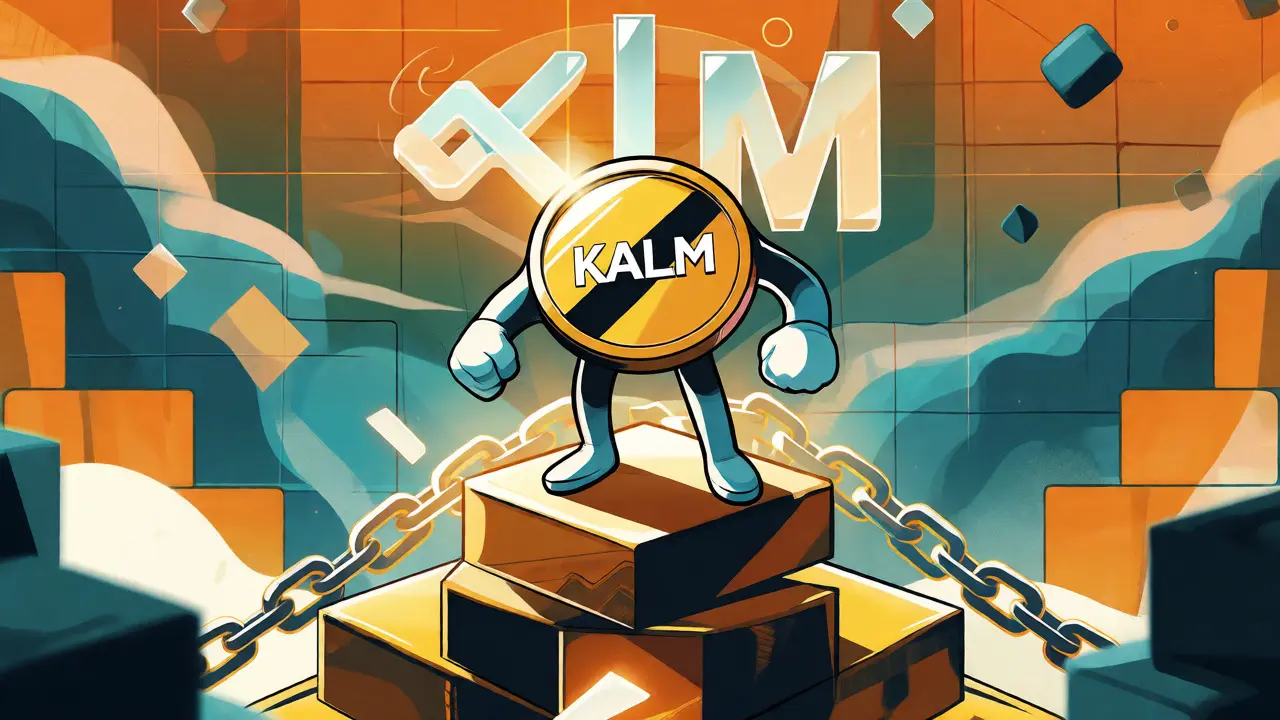
KALM is not designed to be a general-purpose payment coin like Bitcoin or Ethereum. Instead, it functions as the native utility and governance asset for Kalmy.APP. Think of it as the fuel for a machine that tries to replicate banking services-like savings accounts and loans-but on-chain. The platform aims to lower barriers for users by offering gamified interfaces and multi-chain support. While many DeFi projects focus solely on swapping tokens, Kalmy.APP integrates Non-Fungible Tokens (NFTs) and game-like rewards to keep users engaged. This "decentralized bank" concept relies heavily on KALM to function. Without the token, the voting rights vanish, the farming rewards dry up, and the liquidity pools lose their anchor.
The project traces its public tracking back to June 2021. Since then, it has maintained a presence on major data aggregators, though its footprint remains small. The team behind Kalmy.APP operates with a degree of anonymity common in early-stage DeFi projects. There are no high-profile venture capital backers listed in public documentation, which places the success of the protocol squarely on the shoulders of its community. This lack of centralized marketing means growth is organic, driven by those who actually use the products rather than hype cycles.
Economic Structure: Supply and Scarcity
Understanding the supply side is crucial when evaluating any micro-cap asset. KALM has a hard-capped maximum supply of 10,000,000 tokens. This is significantly lower than many other DeFi governance tokens that often issue hundreds of millions or billions of units. As of May 2026, approximately 8.55 million tokens were in circulation, meaning nearly 86% of the total supply is already active in the market. This high circulating percentage reduces the risk of massive future dilution, a common problem where new tokens flood the market and crash prices.
Data providers show slight discrepancies in real-time numbers. CoinMarketCap reports around 20,680 holders, while other trackers might show slightly different circulating figures due to how they account for locked or bonded tokens. Regardless of the minor variances, the consensus points to a tight supply. With only about 400 tokens per holder on average, the distribution is relatively broad for such a small project, but concentration among whales still plays a significant role in price stability.
| Metric | Value / Status | Context |
|---|---|---|
| Price Range | $0.00069 - $0.00072 | Extremely low unit price; requires large quantities for meaningful exposure. |
| Market Cap | ~$5,700 - $6,900 | Micro-cap segment; highly sensitive to small buy/sell orders. |
| Circulating Supply | ~8.55 Million | High percentage of max supply is already live. |
| Max Supply | 10 Million | Fixed cap creates scarcity potential. |
| Primary Exchange | PancakeSwap v2 (BNB Chain) | Liquidity is concentrated here; minimal activity elsewhere. |
| Daily Volume | ~$1.12 - $1.64 | Very thin liquidity; slippage can be high. |
The Kalmy.APP Ecosystem: How It Works
Kalmy.APP isn’t just a single smart contract; it’s a suite of interconnected products. The platform supports BNB Smart Chain, Fantom, and Avalanche. This multi-chain approach allows users to access the same features regardless of which network they prefer, though actual trading volume currently sits almost entirely on BNB Chain via PancakeSwap. The goal here is speed and low fees. By deploying on these networks, Kalmy.APP avoids the high gas costs associated with Ethereum mainnet, making it accessible for users with smaller balances.
The user interface is designed to look more like a traditional banking app than a complex DeFi dashboard. For beginners, this is a huge plus. You don’t need to understand the intricacies of automated market makers to start earning yield. However, beneath the simple UI lies a robust set of financial instruments. The platform offers standard features like token swaps and lending, but it distinguishes itself with gamification. Users earn rewards not just for providing liquidity, but for participating in the ecosystem’s long-term health through locking mechanisms.
Governance and Locking: The Power of Commitment
If you hold KALM, you have a voice. But how loud is that voice? It depends on how long you are willing to commit. The locking mechanism is central to KALM’s governance model. Users can lock their tokens for periods ranging from one week to four years. Here is the catch: locking doesn’t generate new KALM directly. Instead, it acts as a multiplier. If you farm rewards elsewhere on the platform, having your KALM locked increases the APY you earn. More importantly, it boosts your voting power.
For the longest lock period of four years, your voting power can be multiplied by up to 208 times. This incentivizes long-term holders over short-term flippers. It ensures that decisions about the project’s future are made by people who have skin in the game for the long haul. However, this comes with a risk. Once you lock your tokens, you cannot sell them until the period ends. If the project fails or the price crashes during your lock-up, you are stuck holding the bag. It’s a trade-off between influence and flexibility.
Bonding: A Counter-Inflation Tool
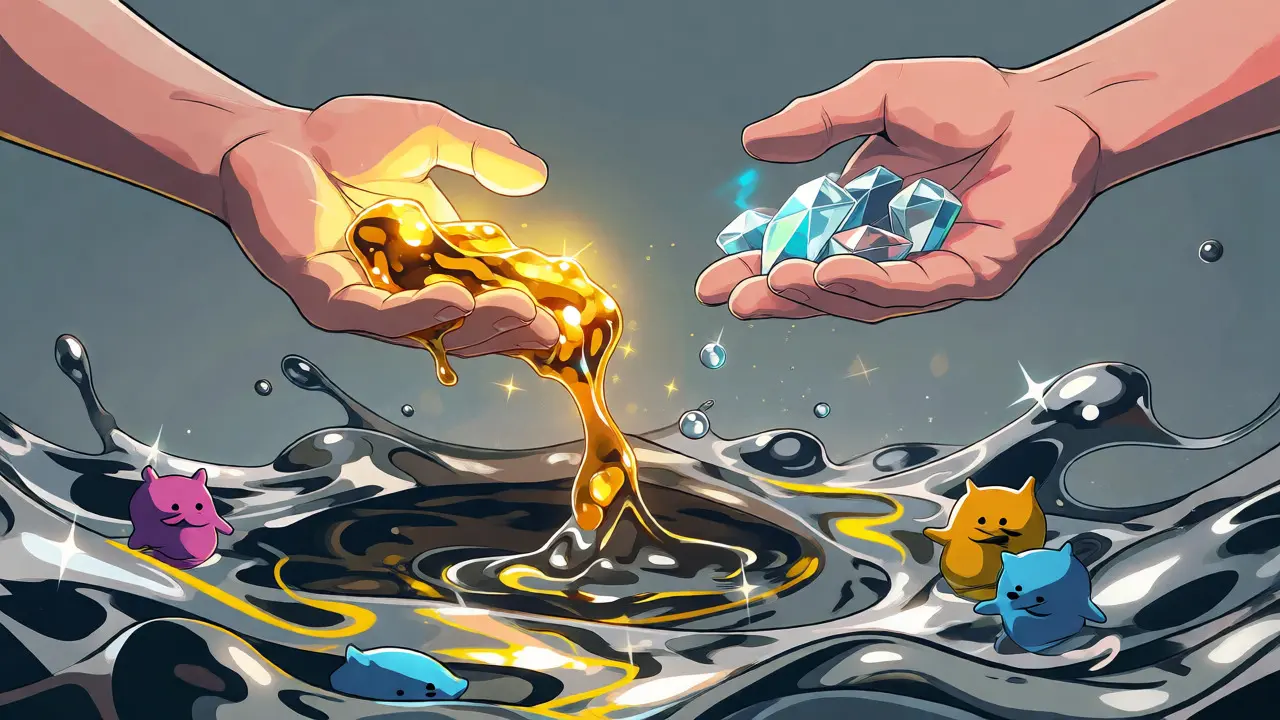
One of the most interesting features of KALM is its bonding system. This is designed to combat inflation and deepen liquidity simultaneously. When users bond, they purchase KALM using Liquidity Provider (LP) tokens at a discount, often up to 8% below the current market price. Why would someone do this? Because it’s cheaper than buying KALM directly on the open market.
But what happens to the LP tokens? They don’t disappear. The protocol takes the underlying assets from those LP tokens and uses them to bolster the KALM liquidity pool. Specifically, 70% of the liquidity acquired through bonds is permanently retained by the treasury as KALM liquidity. This creates a semi-protocol-owned liquidity model. Over time, the protocol owns more of its own liquidity, reducing reliance on external market makers. This stabilizes the price floor and ensures that there is always some depth available for traders, even if retail interest wanes.
Market Reality: Risks and Rewards
Let’s be honest about the market conditions. With a daily trading volume hovering around $1.50, KALM is incredibly illiquid. This means that if you try to sell a position worth even $50, you might move the price significantly against yourself. Slippage is a real concern. Furthermore, the token is primarily traded on decentralized exchanges (DEXs). You won’t find it on Binance or Coinbase. This limits accessibility for mainstream investors but keeps it pure for crypto-natives.
The price action reflects this thinness. In late September 2026, the price fluctuated within a narrow band of $0.000683 to $0.000699. These tiny movements aren’t driven by global news or macroeconomic trends; they are driven by individual transactions. One person buying $20 worth of KALM can spike the price by several percent. Conversely, a single sell order can dump it. This volatility is dangerous for those expecting steady returns, but it offers opportunity for those who understand market microstructure.
Risk-wise, sources label KALM as "Low Risk" with an internal score of 86.3%, but this metric should be taken with a grain of salt. Low risk usually implies stability, which KALM lacks due to its size. The real risks here are technical (smart contract bugs), operational (team abandonment), and liquidity-based (inability to exit positions).
Who Is This For?
KALM is not for everyone. It is not a safe haven asset like Gold or Bitcoin. It is a speculative play on a niche DeFi strategy. It suits users who:
- Understand how DEXs and LP tokens work.
- Are comfortable with high slippage and low liquidity.
- Believe in the gamified banking narrative of Kalmy.APP.
- Want to participate in governance without needing millions of dollars in stake.
If you are looking for passive income with guaranteed safety, look elsewhere. If you enjoy tinkering with complex DeFi mechanics and hunting for undervalued assets in the long tail of the market, KALM offers a unique sandbox.
What blockchain networks does KALM support?
KALM is deployed on BNB Smart Chain, Fantom, and Avalanche. However, the vast majority of trading activity and liquidity currently resides on BNB Smart Chain, specifically through PancakeSwap v2.
How does the KALM locking mechanism affect rewards?
Locking KALM does not generate new tokens directly. Instead, it acts as a multiplier for rewards earned from other activities like farming. Longer lock durations provide higher multipliers for both yield APY and governance voting power, with the maximum voting power multiplier reaching 208x for a four-year lock.
Is KALM available on centralized exchanges?
As of late 2026, KALM is primarily traded on decentralized exchanges (DEXs) like PancakeSwap. It is not widely listed on major centralized exchanges such as Binance or Coinbase, which limits accessibility for traditional crypto investors.
What is the maximum supply of KALM?
The official maximum supply of KALM is 10,000,000 tokens. Some third-party sites may list incorrect figures, but the project's documentation and consistent data from major aggregators confirm the 10 million cap.
How do KALM bonds work?
Users can buy KALM tokens using Liquidity Provider (LP) tokens at a discount of up to 8%. This process deepens the protocol's liquidity, as 70% of the acquired liquidity is retained by the treasury, helping to stabilize the market and reduce inflationary pressure.
Dana T.
liquidity is basically non existent so slippage will eat you alive if u try to exit with anything more than pocket change. the "low risk" label is a joke when daily volume is $1.50. its just digital dust waiting for rug.
Aman Kumar Shah
Oh wow, this is such a fascinating deep dive into the micro-cap trenches! 🚀 I absolutely love the idea of gamified banking because let's be honest, traditional finance is so boring and rigid, right? The bonding mechanism sounds like genius engineering to me because it creates that sticky liquidity without needing whales to hold everything up manually. But seriously, locking tokens for four years just to get a voting multiplier feels like a massive commitment in a market that changes every single day. It’s exciting but also terrifyingly volatile, isn't it? I’m definitely going to keep an eye on PancakeSwap activity to see if those tiny buy orders start stacking up into something meaningful. 🌟
Ana Caroline
The premise of a decentralized bank relying on community-driven organic growth rather than VC-backed hype cycles is intellectually superior to the current meta. Most investors lack the patience to understand true utility versus speculative noise. KALM represents a purist approach to DeFi mechanics where governance weight is tied directly to temporal commitment. This aligns incentives far better than the mercenary nature of modern yield farming which treats capital as disposable ammunition.
Kerry Sims
it makes you think about what value actually means in these tiny ecosystems. if nobody trades it does it exist. kinda like schrodinger's cat but with money. the anonymity adds a layer of mystery that i find appealing compared to corporate crypto projects with their shiny websites and empty promises.
Shawn Jayroe
This is a very well-structured analysis of the Kalmy.APP ecosystem. For those considering entry, please remember that the high circulating supply percentage (86%) is indeed a positive factor regarding dilution risk. However, do not underestimate the operational risks associated with anonymous teams. I recommend starting with small positions to test the slippage levels before committing significant capital. The bonding system is clever, but ensure you understand the lock-up terms thoroughly before participating.
Shruti Mala
OMG YES!! 🔥 This is exactly the kind of hidden gem we need to look at instead of just chasing the same old coins everyone else is pumping! 💎🙌 The gamification aspect is SO cool because who doesn't want their savings to feel like a video game? 🎮 And honestly, low fees are the future, especially for us in emerging markets where gas fees can kill your profits! 🇮🇳✨ Let's gooo! 🚀🚀🚀
KRISHAN LAKHIWAL
Anonymous team plus micro cap equals high probability of abandonment. No VCs means no runway. You are betting on ghosts.
Tiffany Kee
I really appreciate how this post breaks down the complexity for beginners. It’s nice to see a project trying to lower barriers for people who might feel intimidated by complex DeFi dashboards. The focus on user experience and gamification seems like a compassionate way to bring people into the space. It reminds me that technology should serve people, not confuse them. I hope the community continues to grow organically like this.
Kaitlin Ruiz
Hey guys! 👋 Just wanted to add that the multi-chain support is actually super useful if you're already using Fantom or Avalanche for other things. 🌐 It saves you from bridging constantly which is a huge pain sometimes! 😩 Also, don't forget to check the contract address on BscScan before buying because scam copies pop up all the time with these small caps. Stay safe out there! ❤️🛡️
Steve Parshall
Chill vibes here. I like the steady pace of the development. No rush to pump and dump. Just letting the community build it brick by brick. That is usually how the best projects survive the winter. Patience is key fam.
Mo Habib
Wait wait wait... did anyone else notice the price fluctuation range?? $0.000683 to $0.000699?! That is NOT a fluctuation that is barely breathing!!! 😱 One guy buys a sandwich and the chart goes vertical. How are we supposed to trade this without losing our minds??? It drives me crazy seeing these numbers move like they are asleep!!! Wake up market!!! 🤯💸
sarah lucero baer
i think its good to have options like this for people who want to tinker. respect the boundaries of the project though. dont expect moonshots overnight. just enjoy the process of learning the mechanics.
Christian Carneado
It is important to remember that while the technical structure is sound, the human element is often the weak point in anonymous projects. Supporting the community means staying engaged even when the price is flat. Your participation in governance, however small, helps shape the direction. Keep showing up.
Precious Ekwuribe
honestly the pretentiousness of calling it a 'decentralized bank' when its just another dex wrapper is annoying. but i guess the nft integration is cute if u care about that stuff. misspellings in docs usually mean bad code too. risky.
Mallika Sachdev
The locking mechanism is flawed because it penalizes flexibility which is crucial in volatile markets. If the project fails during your 4 year lockup you lose everything. That is not governance that is hostage taking. We must be critical of these structures.
Kevin Van Deusen
people ignore the fact that most of these anon teams never deliver. you are gambling on hope not tech. stop pretending its a serious investment when its a lottery ticket.