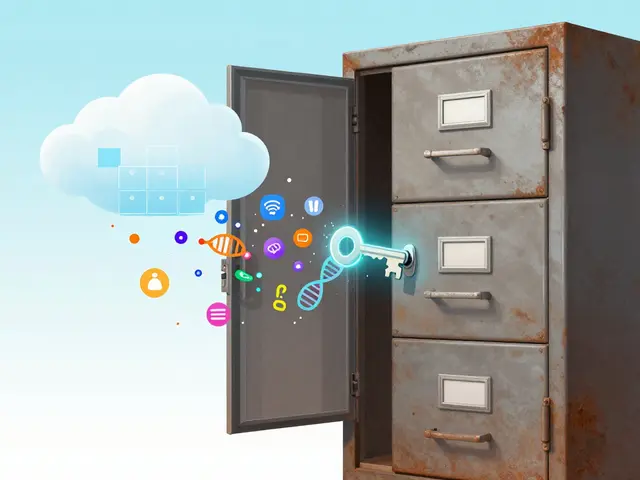
Imagine a world where your entire medical history isn't trapped in a dusty filing cabinet or locked behind a hospital's proprietary software, but is instead something you actually own and control. That's the problem Lumera Health (LUR) is trying to solve. Launched in 2025, Lumera Health (LUR) is a utility token designed to act as the fuel for a massive healthcare tech ecosystem. It's not just another speculative coin; it's built to fix the data silos and outdated systems currently plaguing a global healthcare industry worth over $10 trillion.
Quick Summary: The LUR Essentials
- What it is: A BEP-20 utility token on the BNB Smart Chain.
- Primary Goal: To decentralize health records and streamline clinical workflows.
- Key Tech: Uses a dual-consensus protocol (PoA and PoS) for high security.
- Supply: Fixed cap of 100 million tokens.
- Compliance: HIPAA and GDPR compliant, audited by CertiK and Chainforce.
How the LUR Token Actually Works
To understand LUR, you have to look at it as more than just a price chart. It's a utility token is a cryptocurrency that provides users with access to a specific product or service within a blockchain ecosystem . In this case, LUR powers a suite of healthcare tools. If you want to pay for SaaS services within the Lumera ecosystem or run a validator node to keep the network secure, you need LUR.
Technically, the project doesn't just lean on a generic blockchain. It uses a proprietary dual-consensus protocol based on a modified GoQuorum framework. By combining Proof of Authority (PoA) and Proof of Stake (PoS), the network balances the need for extreme speed and privacy (essential for medical records) with the security of a decentralized network. This architecture is specifically tuned to meet DHHS and ISO certifications, making it a rare breed of crypto that actually speaks the language of government regulators.
The Lumera Product Ecosystem
The token is only as valuable as the tools it powers. Lumera has built a "product stack" that targets everyone from the patient in the waiting room to the surgeon in the OR.
First, there's Lock™ by Lumera. This is a Personal Health Record (PHR) app. Instead of requesting records from three different clinics, you hold the keys to your own data. You can share your history with a new doctor instantly or even monetize your anonymized data for medical research.
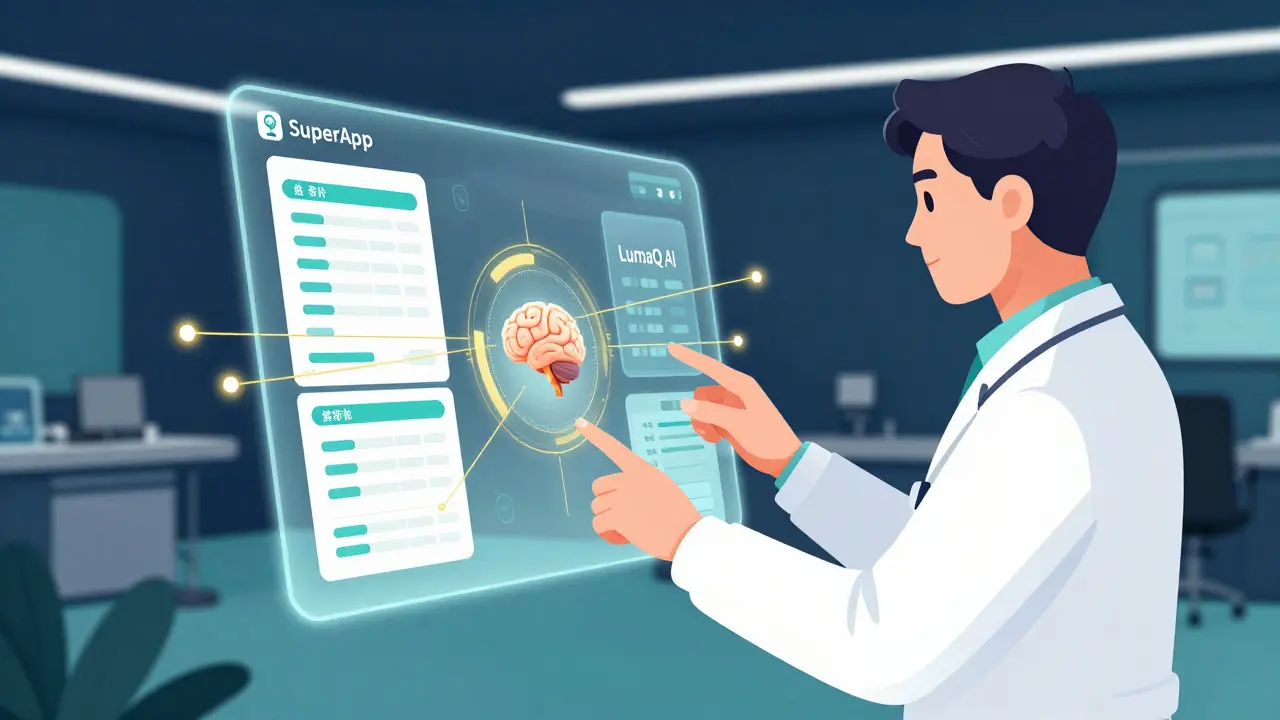
For the professionals, the Lumera SuperApp™ acts as a command center. It pulls together electronic health records (EHR), scheduling, and insurance workflows into one spot. No more flipping through five different tabs to find a patient's diagnostic report.
Keeping this all secure is the Trace™ Engine and LumaID™ system. These tools handle identity verification in a way that's fraud-resistant and compliant with HIPAA and GDPR regulations. Finally, they've integrated LumaQ AI™, a privacy-preserving AI that runs locally to give clinicians predictive analytics without leaking sensitive patient data to a public cloud.
LUR Tokenomics and Market Performance
When looking at the numbers, LUR is designed for sustainability rather than hype-driven spikes. With a hard cap of 100 million tokens, there's no risk of infinite inflation. As of April 2026, about 11.4 million tokens are circulating. The token employs low-velocity and emissions mechanisms, which essentially means it's designed to be held and used rather than just day-traded.
Price-wise, LUR has shown a fair amount of stability. It hit an all-time high of around $3.73 in July 2025. Currently, you'll see different quotes depending on where you look. For instance, Poloniex and Coinbase generally hover around the $3.73 mark, while Binance has seen it dip closer to $2.98. This variation is common in newer tokens with limited exchange availability.
| Exchange | Price (USD) | 24h Volume | Market Cap |
|---|---|---|---|
| Poloniex | $3.73 | ~$693K | $56.61M |
| Binance | $2.98 | ~$1.56M | $33.97M |
| Coinbase | $3.73 | Tracking Only | N/A |
Is Lumera Health a Safe Bet?
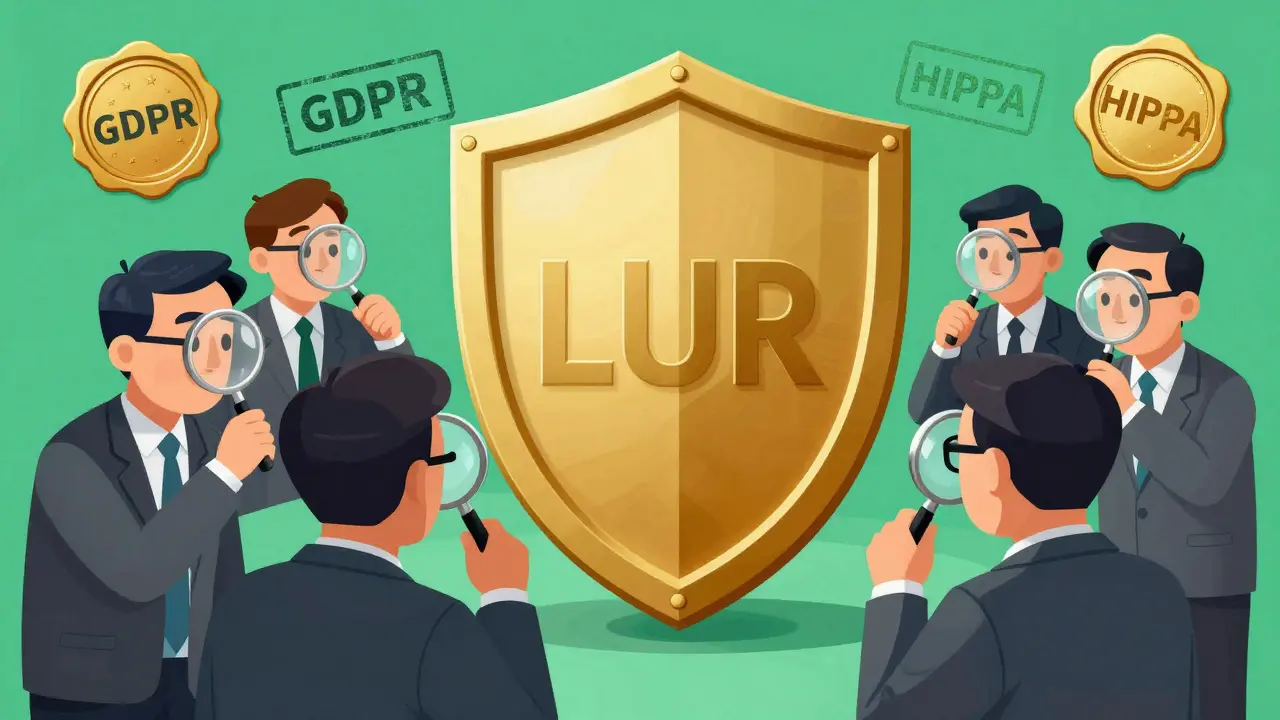
In the crypto world, "trust me" doesn't cut it. Lumera has gone through a five-year development cycle before even launching in 2025, which is a lifetime in blockchain years. More importantly, they've invited the "big dogs" of security to tear their code apart. External audits by CertiK and Chainforce provide a layer of institutional validation that most meme coins lack.
However, the real test is adoption. The healthcare industry is notoriously slow to change. While the tech is impressive and the BNB Smart Chain provides a reliable foundation, the success of LUR depends on whether hospitals and clinicians actually migrate to the SuperApp. The fact that the team consists of healthcare veterans and clinicians-not just coders-gives them a fighting chance to bridge that gap.
How to Buy LUR Tokens
If you're looking to get into LUR, you won't find it on every corner of the internet. It's not currently tradable on Crypto.com, though they track the price. Your best bet is a centralized exchange like Poloniex. Here is the basic process:
- Account Setup: Register an account and complete the KYC (Know Your Customer) process. You'll need a government ID for this.
- Funding: Deposit funds. You can use a credit card to buy USDT, use a bank transfer (which usually takes 1-3 days), or use P2P trading.
- The Trade: Search for the LUR pair (usually LUR/USDT) and place a market order for an instant buy or a limit order if you're waiting for a specific price.
- Storage: Once bought, decide if you want to keep it on the exchange or move it to a private wallet for better security.
What makes LUR different from other healthcare coins?
Unlike many projects that only offer a "vision," Lumera has a full product stack including Lock™, the SuperApp™, and LumaQ AI™. It also prioritizes regulatory compliance (HIPAA, GDPR) through its Trace™ Engine, which is critical for actually being used in a medical setting.
Is LUR a deflationary token?
Yes, the token architecture includes low velocity and emissions design mechanisms. This is intended to create deflationary dynamics, meaning the supply is managed to prevent inflation and support long-term value.
Can I use LUR for medical services?
LUR is primarily used to pay for SaaS (Software as a Service) subscriptions and features within the Lumera ecosystem, as well as for staking to run validator nodes. It is not a replacement for health insurance or direct medical payments to doctors.
Where is the LUR token hosted?
LUR is a BEP-20 token, meaning it operates on the BNB Smart Chain (BSC). This allows it to benefit from the chain's relatively low transaction fees and high speed.
What happens if I lose my LumaID?
LumaID and the Trace™ Engine are designed for secure, fraud-resistant access. Recovery processes typically involve the identity verification protocols established during the KYC/onboarding phase to ensure that medical data remains private and secure.
Next Steps for Potential Users
If you're a patient, the best way to explore this is by looking into the Lock™ app to see how you can regain control of your health records. If you're an investor, keep a close eye on the 24-hour trading volumes on Binance and Poloniex; a spike in volume often precedes a shift in price stability. For clinicians, the real value is in the SuperApp's ability to consolidate EHR and PACS data, which could save hours of administrative work every week.
Artavius Edmond
This sounds like a really cool way to actually use blockchain for something that helps people in their daily lives instead of just trading memes all day long.
Kelly Cantrell
Sure, they say it is compliant with GDPR and HIPAA, but who is actually auditing the auditors? Once your medical data is on a blockchain, even a "private" one, you're basically handing over the keys to your biological identity to some corporate entity that can be compromised by foreign actors or government surveillance programs. It's just another layer of control masquerading as "empowerment" and we should all be terrified of how easy it is to track a person's entire health history once it's digitized and tokenized.
Tracie and Matthew Hartley
lol imagine actually thinkin hospitals would change there software for a crypto token... they wont do it lol
Carroll Foster
Oh great, another BEP-20 utility token claiming to disrupt a legacy industry with a "proprietary dual-consensus protocol" because apparently we need more buzzword-laden whitepapers to feel secure about our data. I'm sure the LumaQ AI™ is just revolutionary and totally not just a wrapper for a basic LLM with a privacy filter. The sheer audacity of claiming to bridge the gap with "healthcare veterans" while riding the BNB wave is just peak 2026 crypto energy.
Rima Dinar
I truly believe that we are moving toward a future where patient agency is finally prioritized over administrative convenience, and seeing a project like Lumera Health tackle the systemic issues of data silos is so inspiring because it gives people a chance to actually advocate for their own wellness journeys. If we can just encourage a few more clinics to adopt this mindset of decentralized ownership, the ripple effect on global health outcomes could be absolutely massive, and I'm just so proud of the developers who are putting in the long-term work of five years of development instead of rushing a product to market just for a quick pump.
ssjuul z
Agreed! The long-term vision here is what matters most! 🚀 Let's keep the energy high for real utility!
Jason Davis
Actually, the GoQuorum framework is pretty solid for private enterprizes, so the tech side is legit even if the adoption is slow. Just make sure you use a hard wallet for your LUR because leavin it on Poloniex is always a bit risky in my experence.
Rebecca Violette
i just cant deal with how hard it is to buy this stuff... why is itnt on every exchange i use?? its so stressfull
Terrance Hausmann
It's a marathon, not a sprint. The healthcare sector is a beast, but slow and steady wins the race. If the product stack actually delivers, the price will eventually follow the value. Just stay patient and keep an eye on the SuperApp adoption rates.
Will Dixon
its a good start for the doctors to have a better app
Hope Johnson
When we consider the nature of ownership, we must ask ourselves if the decentralization of health records is merely a technical shift or a fundamental evolution in the human relationship with their own biology. By shifting the locus of control from the institution to the individual, Lumera is essentially arguing that our health data is an extension of our selfhood rather than a corporate asset, which is a profound philosophical pivot that could redefine the social contract between patients and providers across the entire globe if implemented with true inclusivity and ethical rigor.
Stanly Hayes
Listen, the tech is fine, but let's get real about the regulatory hurdles! You can't just slap a CertiK audit on something and expect the US government to just roll over and allow blockchain records in every hospital overnight! It's a huge climb, and anyone saying it's a "safe bet" is ignoring how bureaucratic the FDA and HHS actually are!
Prasanna Shembekar
too much drama with these prices on different exchanges lol
Jessie Tayaban
Omg the idea of owning my own records is literally a dream!!! I'm so tired of calling five diffrent offices just to get a blood test result from three years ago... its just so exhustting and this would change everythinggg!
Agnessa Dale
This sounds like such a positive step forward for patient care.