Remember when buying a sword in an online game meant spending real money on a website that might vanish tomorrow? That was the old way. Now, with Mist (MIST), you hold that asset as an NFT on the blockchain. But here is the catch: while the technology sounds exciting, the reality of this specific project in 2026 is far more complex than just "play to earn."
If you stumbled upon the ticker symbol MIST and are wondering if it’s your next big investment or just another abandoned crypto experiment, you are not alone. This token has seen wild swings, massive drops, and a quiet existence in the background of the blockchain gaming world. Let’s break down exactly what Mist is, how it works, and whether it still holds any value for gamers and investors today.
The Core Concept: An MMORPG Meets Web3
At its heart, Mist is not just a currency; it is the lifeblood of an ecosystem built around an open-world action role-playing game (RPG). Think of it like World of Warcraft or Diablo, but with a twist: every item you find, every pet you tame, and every upgrade you buy can exist outside the game server as a non-fungible token (NFT).
The project launched around May 2021, right in the middle of the first major boom in blockchain gaming. The promise was simple: play a traditional-style RPG, complete quests, fight monsters, and earn rewards. Instead of these rewards being stuck in a database controlled by one company, they were minted as digital assets on the Binance Smart Chain (BSC). This means you truly own your loot. You can sell it to other players, trade it on external markets, or use it to enhance your character.
The native currency, the MIST token, serves several critical functions within this universe:
- In-Game Purchases: Buy weapons, armor, potions, and special pets directly from vendors or other players.
- NFT Trading: Use MIST to swap rare items on integrated marketplaces.
- Staking and Farming: Lock up your tokens to earn additional rewards, similar to earning interest in a savings account.
- Repair and Upgrades: Maintain your gear and boost your character’s stats using the token.
This utility gives the token a reason to exist beyond speculation. If people want to play the game, they need MIST. However, the demand for that utility depends entirely on whether anyone is actually playing the game-and that is where things get tricky.
Technical Specs and Tokenomics
To understand the potential risks and rewards, we need to look at the numbers. Mist operates as a BEP-20 token, which means it lives on the Binance Smart Chain. This is significant because BSC transactions are generally fast and cheap compared to Ethereum, making micro-transactions in-game feasible without draining your wallet with gas fees.
| Attribute | Value / Detail |
|---|---|
| Blockchain Network | Binance Smart Chain (BSC) |
| Token Standard | BEP-20 |
| Maximum Supply | 1,000,000,000 MIST |
| Circulating Supply (Approx.) | 56,357,088 MIST |
| All-Time High Price | $0.37 (May 9, 2021) |
| Current Market Status | Low liquidity, niche trading volume |
The supply dynamics are interesting. With a max supply of 1 billion tokens but only about 56 million in circulation, there is room for inflation if developers decide to release more tokens into the economy. This is common in gaming tokens to reward new players, but it can dilute the value of existing holdings if demand doesn’t keep pace.
One crucial detail for users: you will need a compatible wallet like MetaMask or Trust Wallet to interact with the Mist ecosystem. Setting this up takes about 15-20 minutes if you are new to crypto, involving connecting to the BSC network and securing your private keys. It is a standard process, but a barrier for those who just want to click "Play" without dealing with tech setup.
The Gameplay Experience: Nostalgia vs. Reality
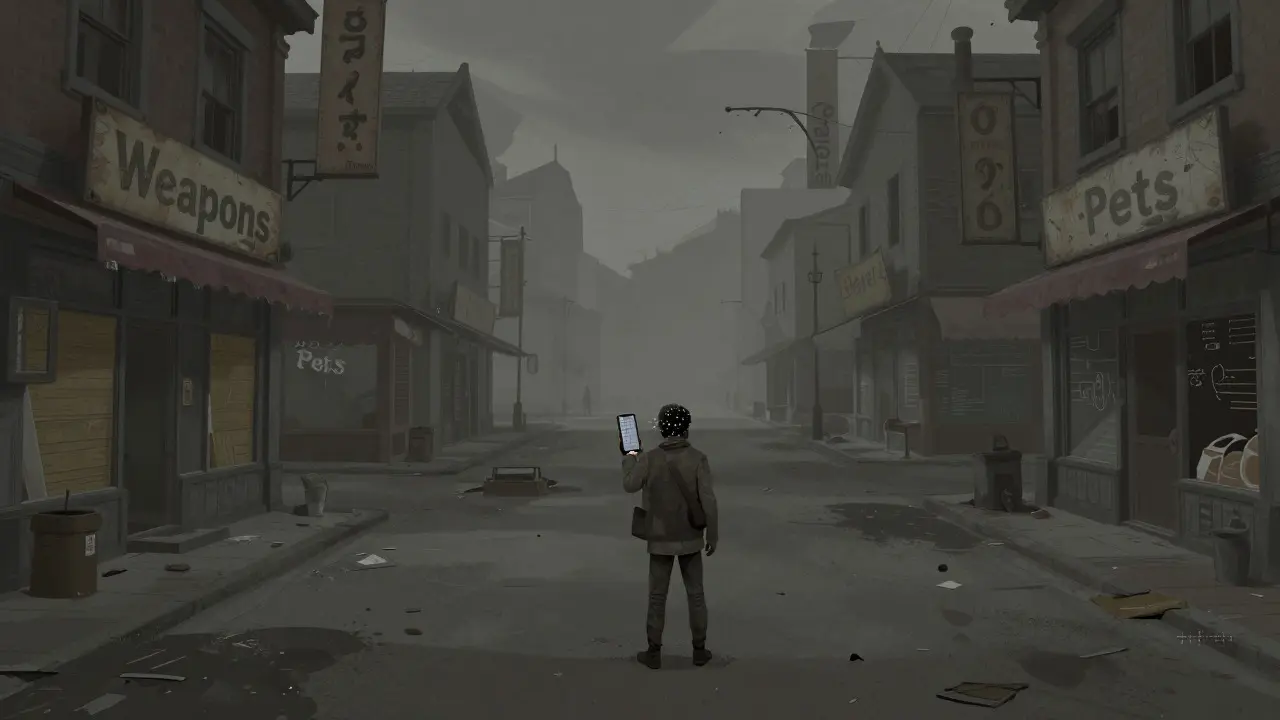
So, what does it actually feel like to play Mist? The game features five playable character classes, quests, raids, and battles. On paper, it checks all the boxes for a classic MMORPG. In practice, however, the experience is mixed.
Players often describe the graphics as "slightly outdated" or reminiscent of games from the early 2010s. If you are coming from modern titles like Guild Wars 2 or Final Fantasy XIV, the visual fidelity will likely disappoint you. The combat system is functional but lacks the depth and polish of top-tier competitors. There is no deep lore to explore, and the user interface can feel clunky.
However, for some, this simplicity is a feature, not a bug. The low system requirements mean almost any computer can run it. More importantly, the blockchain integration is optional. You don’t have to be a crypto expert to enjoy the core gameplay. You can treat it like a regular free-to-play game and only engage with the NFT aspects if you choose to. This accessibility was a key differentiator when it launched, aiming to bridge the gap between traditional gamers and Web3 enthusiasts.
But here is the hard truth: the lack of active development since mid-2022 has stalled progress. No major updates, no new content patches, and no significant community growth. For a live-service game, silence is deafening. Without fresh content, player retention drops, and with fewer players, the in-game economy slows down.
Market Performance and Investment Risks
Let’s talk money. If you bought MIST at its peak in May 2021 for $0.37, you are currently sitting on a loss of over 99%. As of late 2023 and carrying into 2026, the token has traded in the fractions of a cent, often hovering around $0.002 or lower. Its market capitalization is negligible, ranking well outside the top 1,000 cryptocurrencies.
Why such a steep decline? Several factors contribute:
- Low Liquidity: Trading volume is extremely thin. Most trades happen on smaller exchanges like Latoken or Gate.io. Trying to sell a large amount of MIST could result in significant slippage, meaning you get much less than the listed price.
- Lack of Hype: The blockchain gaming sector shifted focus to newer, higher-quality projects like Axie Infinity, The Sandbox, and Illuvium. Mist failed to capture the mainstream attention needed to sustain high prices.
- Development Stagnation: Investors look for roadmaps and execution. When GitHub activity stops and social media channels go quiet, confidence evaporates.
Analysts predict continued bearish momentum. Technical indicators like the Relative Strength Index (RSI) often show weakness, and forecasts suggest the price may remain stagnant or drop further unless there is a sudden resurgence in development. It is considered a high-risk, speculative asset with very little fundamental support from a growing user base.
How Mist Compares to Other Gaming Tokens
To put Mist in perspective, let’s compare it to giants in the space. Axie Infinity pioneered the "Play-to-Earn" model, requiring upfront investment but offering substantial rewards during its peak. The Sandbox focuses on user-generated content and virtual land ownership. Illuvium aims for AAA-quality graphics and immersive gameplay.
Mist tries to occupy a middle ground: accessible, nostalgic, and lightly integrated with crypto. But in doing so, it hasn’t fully satisfied either audience. Traditional gamers find the tech too cumbersome and the graphics too poor. Crypto natives find the returns too low and the liquidity too shallow. It is a case study in the challenges of hybrid models-trying to please everyone often means pleasing no one.
Is Mist Still Worth Your Time?
For the average investor looking for quick gains, the answer is likely no. The metrics point to a project in dormancy with limited upside potential. The risk of total obsolescence is real if the team decides to shut down servers or abandon the contract.
However, for the curious gamer or the NFT collector with a sense of nostalgia, Mist offers a unique sandbox. It is a place to experiment with blockchain mechanics without the pressure of high stakes. You can buy a cheap pet, stake a small amount of MIST, and see how the ecosystem functions firsthand. Just go in with eyes wide open: treat it as entertainment, not an investment portfolio.
The future of Mist hinges on one thing: revival. Will the developers return? Will a new community form around its low-barrier entry? Until then, it remains a ghost town in the bustling city of blockchain gaming-a reminder of the boom-and-bust cycles that define this industry.
What is the current price of Mist (MIST)?
As of recent data, MIST trades at a fraction of a cent, typically around $0.002 or lower. It has dropped significantly from its all-time high of $0.37 in May 2021. Prices fluctuate based on low trading volumes on exchanges like Latoken and Gate.io.
Is Mist (MIST) a good investment in 2026?
Most analysts consider MIST a high-risk investment due to low liquidity, minimal development activity, and a shrinking market cap. It is better suited for casual gamers interested in experimenting with blockchain RPGs rather than serious investors seeking returns.
Which blockchain does Mist (MIST) use?
Mist operates on the Binance Smart Chain (BSC) as a BEP-20 token. This allows for faster and cheaper transactions compared to Ethereum, which is beneficial for in-game microtransactions.
How do I buy Mist (MIST) tokens?
You can buy MIST on cryptocurrency exchanges that list it, such as Latoken or Gate.io. You will need a BSC-compatible wallet like MetaMask or Trust Wallet to store and transfer your tokens securely.
What is the maximum supply of MIST?
The maximum supply of Mist (MIST) is capped at 1,000,000,000 tokens. Currently, only a fraction of this (approximately 56 million) is in circulation, though this number can change based on staking rewards and developer decisions.
Can I earn money playing Mist?
Technically, yes. You can earn MIST tokens and NFTs through gameplay, staking, and farming. However, due to the low value of the token and limited demand, earnings are likely to be minimal compared to other play-to-earn games.
Write a comment