Most people think of crypto as digital coins used for trading or buying JPEGs of monkeys. But there is a deeper layer to this technology called Real World Asset (RWA) tokenization. This is where Pandora Finance is a decentralized blockchain protocol designed to bring physical and corporate assets onto a trustless blockchain network. Launched in January 2021 by Pushkar Vohra, it aims to turn things like invoices, purchase orders, and corporate assets into digital tokens that can be traded peer-to-peer without a middleman. Imagine being able to sell a piece of a corporate invoice to a stranger across the globe in seconds; that is the core promise of this project.
How the Pandora Protocol Actually Works
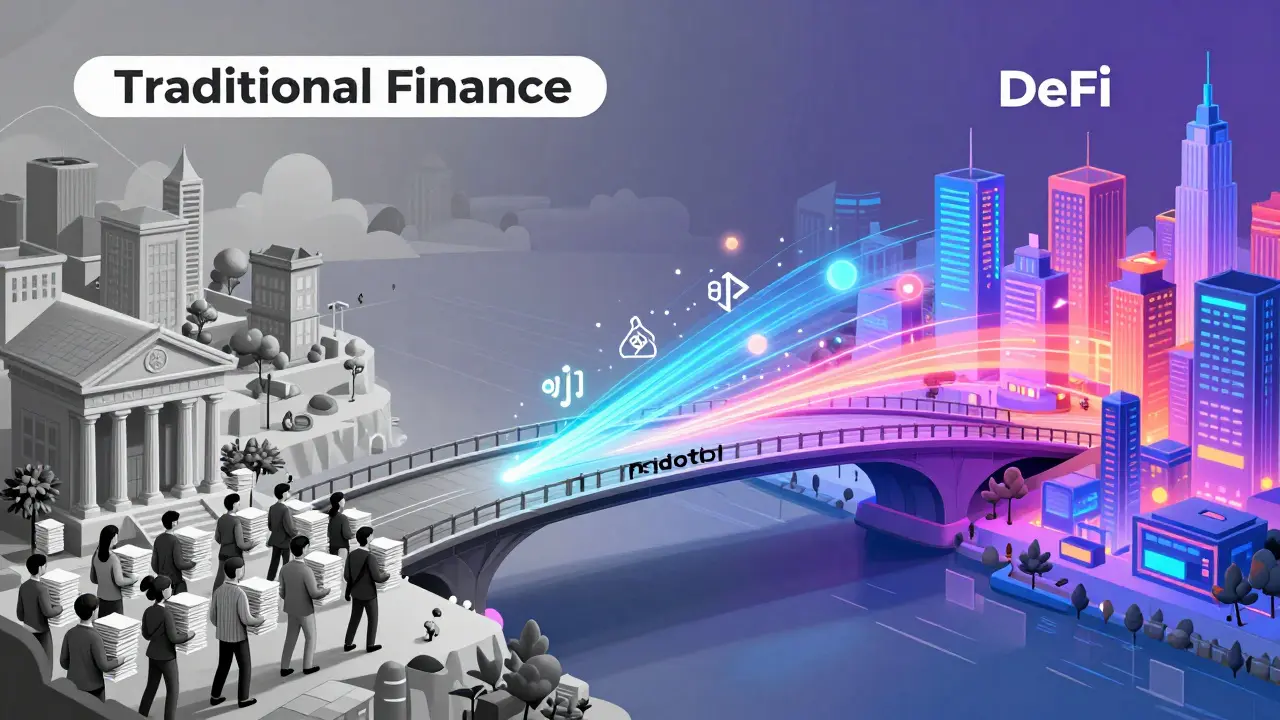
At its heart, Pandora Finance acts as a bridge. Traditional finance is slow, gated by banks, and full of paperwork. On the other hand, Decentralized Finance (or DeFi) is fast and open but often lacks connection to actual physical value. Pandora tries to merge these two worlds using a high-speed, cross-blockchain infrastructure.
The protocol uses a "plug-and-play" architecture. This means developers don't have to reinvent the wheel when they want to tokenize an asset; they can use Pandora's existing tools to get their assets on-chain quickly. Initially, the project focused its efforts on the Binance Smart Chain (BSC), leveraging its low fees and high speed to handle the frequent transactions required for asset trading.
The process generally follows a specific flow: an asset is validated for authenticity, tokenized into a digital representation, and then listed on a peer-to-peer infrastructure. By removing the need for a centralized clearinghouse, the protocol intends to make the movement of corporate capital borderless and instant.
Understanding the PNDR Token
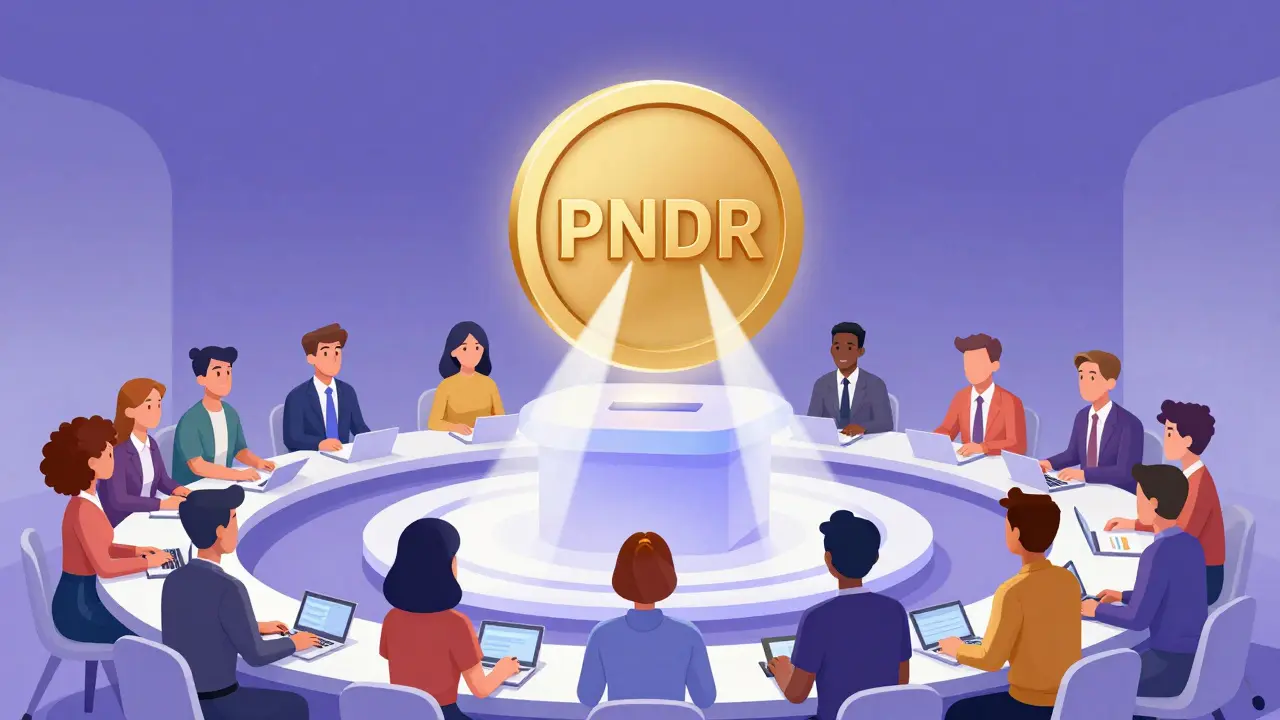
To make this ecosystem run, the project introduced the PNDR token. While many tokens are just for speculation, PNDR coin is designed with a specific utility in mind: governance. The total supply is capped at 100 million tokens, which prevents the infinite inflation seen in some other crypto projects.
The long-term goal is to transition the project into a DAO (Decentralized Autonomous Organization). In a DAO, the developers don't make the rules-the token holders do. If the protocol needs to change its fee structure or add a new supported asset class, PNDR holders would vote on the proposal. This shifts the power from a central team to the community, which is a hallmark of the Web3 philosophy.
| Attribute | Value |
|---|---|
| Maximum Supply | 100,000,000 PNDR |
| Initial Public Offering Price | $0.14 |
| Initial Fully Diluted Market Cap | $140 Million |
| Primary Use Case | Governance & Ecosystem Voting |
The Reality Check: Price and Market Performance
If you are looking at PNDR as an investment, you need to look at the hard numbers, and they are quite sobering. Like many projects launched during the 2021 bull run, Pandora Finance has seen a massive drop in value. Depending on the exchange, its all-time high (ATH) was somewhere between $0.74 and $0.81. As of April 2026, the price has plummeted to a range between $0.0018 and $0.0029.
To put this in perspective, the token has lost over 99% of its peak value. This is a common pattern in "micro-cap" coins where early hype isn't matched by immediate mass adoption. When you look at the current Fully Diluted Market Cap (FDMC), it sits around $2.91 million-a staggering drop from the $140 million valuation it had at launch.
Another red flag for cautious investors is the liquidity. While some platforms provide price data, PNDR is not actually tradable on giants like Binance or Crypto.com. It trades on a handful of smaller markets, meaning it can be very difficult to buy or sell large amounts of the coin without wildly swinging the price. This lack of accessibility often traps early investors and discourages new ones.
Is Tokenization the Future of Finance?
Despite the struggles of the PNDR token, the concept of tokenizing real-world assets remains one of the most promising areas of blockchain tech. Why? Because it solves the "liquidity problem." In the traditional world, if you own a piece of commercial real estate or a large corporate invoice, you can't just sell 1% of it on your phone to get some quick cash. Tokenization changes that by breaking a large asset into millions of tiny, tradeable pieces.
Pandora Finance is trying to build the plumbing for this movement. If they can successfully move from a centralized decision-making process to a fully functioning DAO and increase their list of validated assets, they could find a second wind. However, the gap between a great idea (tokenizing invoices) and a successful market product is huge, and PNDR is currently in that gap.
Comparing PNDR to Other Asset Tokenization Approaches
It is helpful to see where Pandora fits compared to other ways of handling assets on the blockchain. Some projects focus on stablecoins (pegging a token to the USD), while others focus on "Wrapped" assets (bringing BTC over to Ethereum). Pandora is different because it focuses on non-fungible or specific corporate assets.
| Approach | What is Tokenized? | Liquidity Level | Example Entity |
|---|---|---|---|
| Stablecoins | Fiat Currency | Very High | USDC / USDT |
| Wrapped Assets | Other Cryptos | High | Wrapped Bitcoin (WBTC) |
| RWA Protocols | Invoices, Real Estate | Low to Medium | Pandora Finance |
Potential Pitfalls and Risks
Entering the world of RWA tokens comes with risks that aren't present in "pure" cryptocurrencies like Bitcoin. The biggest issue is the "Oracle Problem." Since the assets (like an invoice) exist in the physical world, the blockchain needs a way to know if that invoice was actually paid or if it's fake. If the validation process fails, the token becomes worthless, regardless of what the blockchain says.
Furthermore, the regulatory landscape for tokenized securities is a minefield. Governments are still deciding if a tokenized purchase order counts as a "security." If a regulator decides that PNDR or its tokenized assets are unregistered securities, the project could face massive legal hurdles or be forced to shut down in certain regions.
What exactly is the PNDR coin used for?
The PNDR token is primarily used for governance within the Pandora Finance ecosystem. This means holders can vote on key decisions, such as protocol upgrades and the management of the ecosystem, as the project moves toward a DAO structure.
Can I trade PNDR on Binance?
No. While some data aggregators might show PNDR price data sourced from various points, PNDR is not listed for trading on the Binance exchange. You will need to find smaller, active markets that support the token.
Why has the price of PNDR dropped so much?
The price drop is likely due to a combination of the 2021 market bubble bursting and a lack of widespread adoption. When the initial hype fades and the project doesn't achieve rapid growth in users or utility, the price typically corrects sharply.
Is Pandora Finance a scam?
There is no definitive evidence labeling it a scam, as it has a clear founder and a defined technical goal (RWA tokenization). However, the extreme loss in value and limited liquidity make it a high-risk asset. Always do your own research before investing.
What is the maximum supply of PNDR?
The maximum supply of PNDR tokens is capped at 100 million. This limit is intended to provide a predictable supply for the governance of the protocol.
Write a comment