You’ve probably seen thousands of cryptocurrencies that promise the moon but back their value with nothing but hype. Then there’s SANGKARA MISA (MISA), a token that claims to be backed by real-world dirt-literally. It represents an 11.5-hectare cassava plantation in Central Java, Indonesia. If you are wondering what this coin actually is, how it works, and whether it’s a solid investment or just another risky experiment, you are not alone.
The crypto world is flooded with speculative assets, but SANGKARA MISA ($MISA) attempts to bridge the gap between traditional agriculture and blockchain technology. Created by PT. Mitra Sangkara Abadi (MSA), an Indonesian company founded in Jakarta, this token operates on the Binance Smart Chain (BSC). It uses the BEP-20 standard, which means if you have a wallet like MetaMask or Trust Wallet, you can technically hold it. But holding it is only part of the story. The real question is: does the physical asset backing it up provide actual security?
The Origin Story: From Digital Finance to Real Farming
To understand MISA, you first need to look at the company behind it. PT. Mitra Sangkara Abadi wasn’t always focused on tokenization. Initially established in 2017 as a financial-based digital company, it rebranded and incorporated in September 2021. Their headquarters are located in The Boulevard Office Tower in Jakarta, a hub for many emerging tech firms in Indonesia.
Why did they choose agriculture? Indonesia is an agricultural powerhouse, yet farmers often struggle with fair pricing and access to capital. PT MSA identified a niche: using cryptocurrency to fund agricultural development while giving investors a tangible claim on that growth. They positioned themselves as leaders in "Tokenization and NFT Process," aiming to modernize how physical assets are financed and traded. This isn't just about buying and selling tokens; it's about creating a new economic model where crypto funds real-world production.
How the Asset-Backing Mechanism Works
Most crypto tokens derive value from network effects, utility within a platform, or pure speculation. MISA takes a different route. Its core value proposition is tied to an 11.5-hectare productive plantation in Central Java. Here is how the mechanism is supposed to work:
- Physical Collateral: The token is backed by the land and its produce. This serves as a hedge against market volatility. If the crypto market crashes, the argument goes, the land still has intrinsic value.
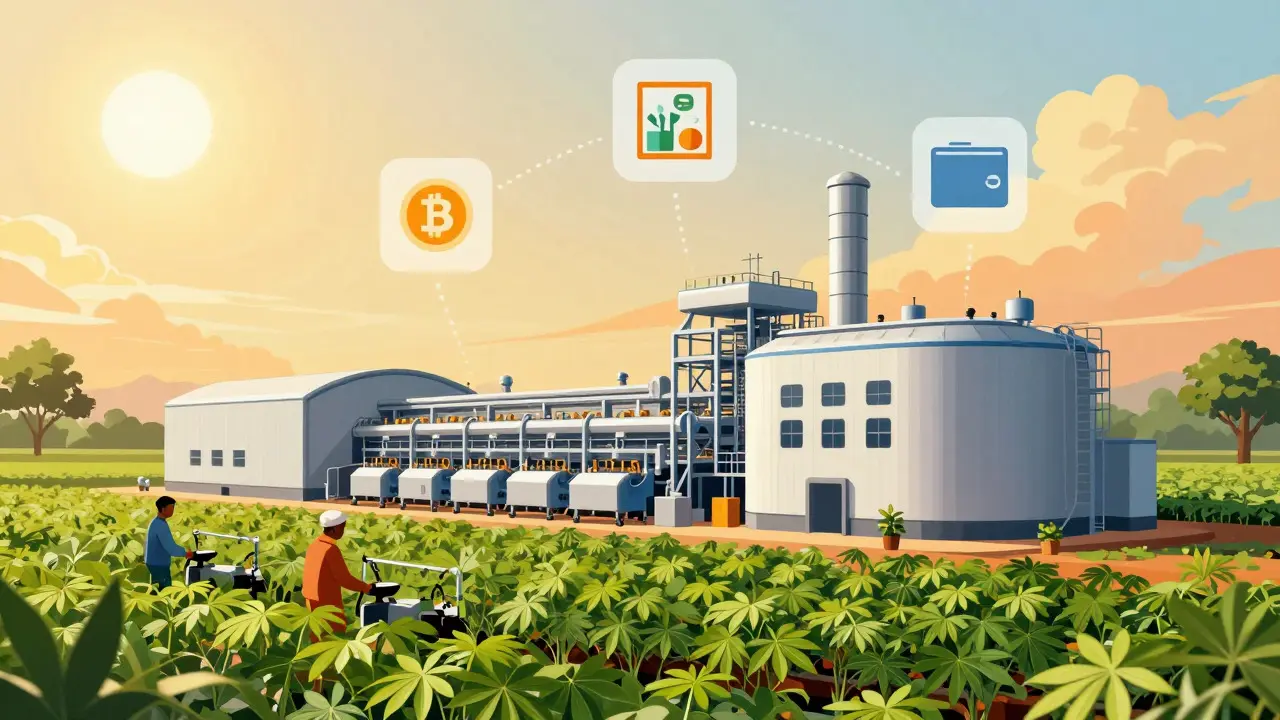
- Cassava Cultivation: The primary crop is cassava. PT MSA plans to plant superior quality seeds to meet international export demand. Cassava is versatile, used for food, starch, and biofuel, making it a stable commodity.
- Processing Factory: To add value, the company intends to build a processing factory. This facility will process raw cassava from both their plantation and local farmers, creating jobs and boosting the local economy.
- Convertibility: Token holders have the option to convert their $MISA tokens into shares of PT MSA or sell them on official exchanges once listed in Indonesia and other countries. This feature is protected by smart contracts, intended to give investors a clear exit strategy or equity stake.
This structure attempts to solve a major pain point in crypto: lack of transparency and tangibility. By linking the token to a specific plot of land and a business plan, PT MSA hopes to attract investors who want exposure to agriculture without managing a farm themselves.
Technical Specifications and Market Data
Let’s talk numbers, because that’s where things get interesting-and potentially confusing. SANGKARA MISA operates on the Binance Smart Chain, which offers low transaction fees and fast processing times compared to Ethereum. The contract address is 0x934b0633f4874ca9340341ad66ff2f6ce3124b4c. You’ll need this to add the token to your wallet.
However, the market data tells a story of extreme illiquidity and volatility. When you check major tracking platforms, you see wildly different figures:
| Platform | Price (USD) | 24h Volume (USD) | Status |
|---|---|---|---|
| CoinMarketCap | $0.0000000340 | $4.63 | Active Listing |
| CoinGecko | $0.073401 | $2.66 | Active Listing |
| Crypto.com | $0.0000001491 | $6.00 | Active Listing |
| ProBit Global | Varies (High Spread) | Minimal Depth | Primary Exchange |
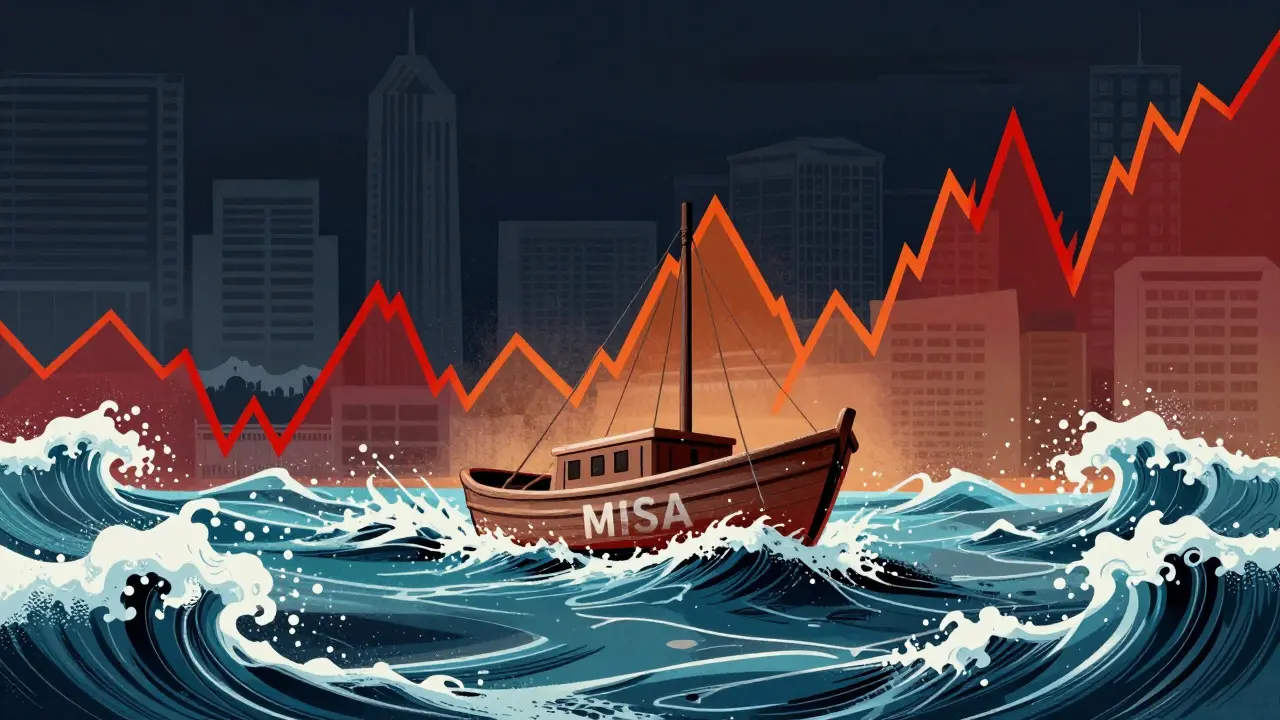
Look at those prices. One platform says it’s worth fractions of a penny; another says it’s worth seven cents. Why such a huge discrepancy? It usually points to one thing: extremely low liquidity. With trading volumes under $10 USD per day on some platforms, a single small trade can swing the price dramatically. This makes accurate price discovery nearly impossible. For an investor, this is a red flag. It means you might buy the token, but finding a buyer when you want to sell could be difficult, or you might get a terrible price due to the wide spread.
Furthermore, CoinGecko reports that the circulating supply is not available. Without knowing how many tokens exist, calculating the market cap or fully diluted valuation is guesswork. This lack of transparency is common among early-stage or micro-cap tokens but adds significant risk.
The Business Model: More Than Just Farming
PT MSA isn’t just planting cassava. They have a broader vision that includes several strategic pillars. The funds raised from MISA token sales are allocated across five main areas:
- Agricultural Development: Increasing the value of the underlying 11.5-hectare asset through better farming techniques and infrastructure.
- Cryptocurrency Exchange: Acquiring or building a domestic cryptocurrency exchange platform in Indonesia. The Indonesian crypto market is massive, with daily transaction values reaching IDR 1.5 trillion (approx. $100 million USD).
- Token Publishing: Helping startups and SMEs raise capital by publishing their own tokens.
- Conventional Investments: Investing in trusted traditional businesses.
- Digital Art & NFTs: Collaborating with Bantaya Hall to create NFTs for Indonesian artists, tapping into the growing digital art market.
The exchange ambition is particularly ambitious. Indonesia has recognized cryptocurrency as a digital asset and trading commodity, legitimized by government regulations. By establishing a local exchange, PT MSA aims to serve the growing number of Indonesians looking to invest in crypto. This creates a potential flywheel effect: the exchange lists MISA, driving demand, while also listing other tokens, generating revenue.
Risks and Challenges: What You Need to Know
No investment is without risk, and MISA comes with a unique set of challenges. Let’s break them down honestly.
Liquidity Risk: As shown in the data above, trading volume is microscopic. If you buy 1,000 MISA tokens, can you sell them quickly? Probably not without crashing the price. This illiquidity traps capital.
Data Inconsistency: The wild variance in price reporting across CoinMarketCap, CoinGecko, and Crypto.com suggests poor data feeds or lack of standardized trading pairs. This makes it hard to track performance accurately.
Execution Risk: The business plan relies on building a factory, launching an exchange, and successfully exporting cassava. These are complex, capital-intensive projects with long timelines. Delays in any of these areas could impact the token’s perceived value.
Regulatory Uncertainty: While Indonesia recognizes crypto, regulations are still evolving. Changes in policy could affect PT MSA’s ability to operate its exchange or tokenize assets. The company cites connections with high-level officials, like Vice Minister of Trade Dr. Jerry Sambuaga, which helps, but regulatory landscapes can shift rapidly.
Transparency Gaps: The lack of circulating supply data and limited independent audits make it hard for external experts to verify the token’s fundamentals. Mainstream crypto analysis platforms largely ignore MISA, likely due to its low volume and regional focus.
Who Is This Token For?
MISA isn’t for everyone. It’s not a blue-chip asset like Bitcoin or Ethereum. It’s a speculative, high-risk, high-potential-reward play on the intersection of Indonesian agriculture and blockchain.
It might appeal to:
- Local Investors: Indonesians who understand the agricultural sector and trust PT MSA’s local presence.
- Niche Crypto Enthusiasts: Those interested in real-world asset (RWA) tokenization and willing to take on high risk for potential upside.
- Impact Investors: People who want to support sustainable farming and community development in Central Java.
If you are a conservative investor looking for stability, MISA is probably not for you. The volatility and illiquidity are too high. But if you believe in the power of tokenizing physical assets and think PT MSA can execute its ambitious plan, it’s worth keeping an eye on.
How to Buy and Store MISA
If you decide to proceed, here is the practical side of things. Since MISA is a BEP-20 token, you need a wallet that supports Binance Smart Chain. MetaMask and Trust Wallet are popular choices.
- Set Up Your Wallet: Download MetaMask or Trust Wallet and secure your seed phrase.
- Add BSC Network: Ensure your wallet is connected to the Binance Smart Chain network.
- Add the Token: Import the MISA token using the contract address:
0x934b0633f4874ca9340341ad66ff2f6ce3124b4c. - Buy on an Exchange: Currently, ProBit Global is the primary exchange listing the MISA/USDT pair. Create an account, deposit USDT, and trade for MISA.
- Transfer to Wallet: Withdraw the tokens to your personal wallet for safekeeping. Be mindful of gas fees on BSC, though they are generally low.
Remember to double-check the contract address before adding any token. Scammers often create fake tokens with similar names. Always verify details from the official website, misatoken.com.
The Future Outlook
The long-term viability of SANGKARA MISA depends on execution. Can PT MSA build the processing factory? Can they launch a successful exchange in Indonesia? Can they prove that the cassava plantation generates consistent revenue? These are big questions.
The concept of asset-backed tokens is gaining traction globally. As more people seek alternatives to purely speculative crypto, models like MISA could become more mainstream. However, success requires transparency, regular updates, and tangible progress. So far, the company has conducted AMA sessions and maintains an active online presence, which is a good sign. But until we see concrete milestones-like the factory opening or significant exchange listings-the token remains a speculative bet.
For now, MISA stands as an interesting experiment in tokenizing Indonesian agriculture. It’s a reminder that crypto isn’t just about code; it’s about connecting digital finance to real-world value. Whether it succeeds or fails will depend on the team’s ability to deliver on its promises.
What is SANGKARA MISA (MISA)?
SANGKARA MISA ($MISA) is an asset-backed cryptocurrency token created by PT. Mitra Sangkara Abadi, an Indonesian company. It is backed by an 11.5-hectare cassava plantation in Central Java and operates on the Binance Smart Chain (BEP-20). The token aims to bridge traditional agriculture with blockchain technology.
Is MISA a safe investment?
Like most cryptocurrencies, MISA carries significant risk. It has extremely low trading volume, high price volatility, and inconsistent data across tracking platforms. While it is backed by physical assets, the illiquidity makes it difficult to sell quickly. It should be considered a high-risk, speculative investment.
Where can I buy MISA tokens?
The primary exchange currently listing MISA is ProBit Global, where it trades against USDT. Due to low liquidity, you may face high spreads. You can also transfer the tokens to wallets like MetaMask or Trust Wallet using the BEP-20 contract address.
What backs the value of the MISA token?
The MISA token is backed by an 11.5-hectare productive cassava plantation in Central Java, Indonesia. Additionally, token holders have the option to convert their tokens into shares of PT. Mitra Sangkara Abadi or sell them on official exchanges once listed, providing a potential exit strategy linked to the company's equity.
Why are there different prices for MISA on different websites?
The price discrepancies (e.g., $0.00000003 vs $0.07) are due to extremely low trading volume and liquidity. With minimal daily trades, small transactions can cause large price swings, and data feeds from different exchanges may not sync accurately. This indicates a lack of deep market order books.
What is the role of PT. Mitra Sangkara Abadi?
PT. Mitra Sangkara Abadi (MSA) is the Indonesian company that created the MISA token. They own the underlying agricultural assets, manage the plantation, and plan to develop a processing factory and a domestic cryptocurrency exchange. They allocate token sale funds toward these business developments.
Can I convert MISA tokens into company shares?
Yes, according to the token's whitepaper and smart contracts, holders have the option to convert their $MISA tokens into shares of PT. Mitra Sangkara Abadi. This feature is designed to provide investors with a tangible equity stake in the company alongside the digital asset.
What blockchain does MISA use?
MISA operates on the Binance Smart Chain (BSC) using the BEP-20 token standard. This allows for low-cost transactions and compatibility with popular wallets like MetaMask and Trust Wallet.
Write a comment