You’ve probably heard the phrase "GameFi" so many times it’s lost its meaning. Most blockchain games feel like spreadsheet simulators with pretty graphics-click a button, wait for a timer, collect a token. It’s boring. But what if you could actually play a proper action RPG, grind through dungeons like in Diablo, and own your loot as NFTs that hold real value? That’s the pitch behind Seraph.
Seraph isn’t just another token trying to ride the hype wave. It’s a full-blown action role-playing game (ARPG) built on the BNB Chain’s Layer-2 solution, opBNB. If you’re wondering whether this is worth your time or money, you need to understand how it mixes dark fantasy gameplay with actual economic utility. Let’s break down exactly what Seraph is, how the $SERAPH token works, and why over 1.8 million players have already jumped in.
The Core Concept: Diablo Meets Blockchain
Seraph is a Web3 action role-playing game developed by Seraph Studio that combines traditional ARPG mechanics with blockchain technology and NFT integration. Unlike many crypto games that prioritize token speculation over fun, Seraph aims to deliver a polished gaming experience first. Think of it as a spiritual successor to classics like Diablo, but with a twist: every sword, shield, and spell you find can be traded on-chain.
The game is set in a dark fantasy world called Seraphosia. You don’t just watch the story; you fight through it. The developers have designed five acts of storyline content, featuring over 50 map scenarios and 300 different monster types. This scale matters because it means there’s actual depth here. You aren’t just clicking one button repeatedly; you’re navigating complex dungeons like the Void Realms and the Trial of Seraph.
Why does this matter for you? Because most Play-to-Earn (P2E) games fail when they ignore game design. If the game isn’t fun, people quit, and the economy collapses. Seraph tries to fix this by focusing on combat performance. Your earnings aren’t based on passive staking; they’re tied to how well you actually play the game.
How the Economy Works: NFTs and Soul Spars
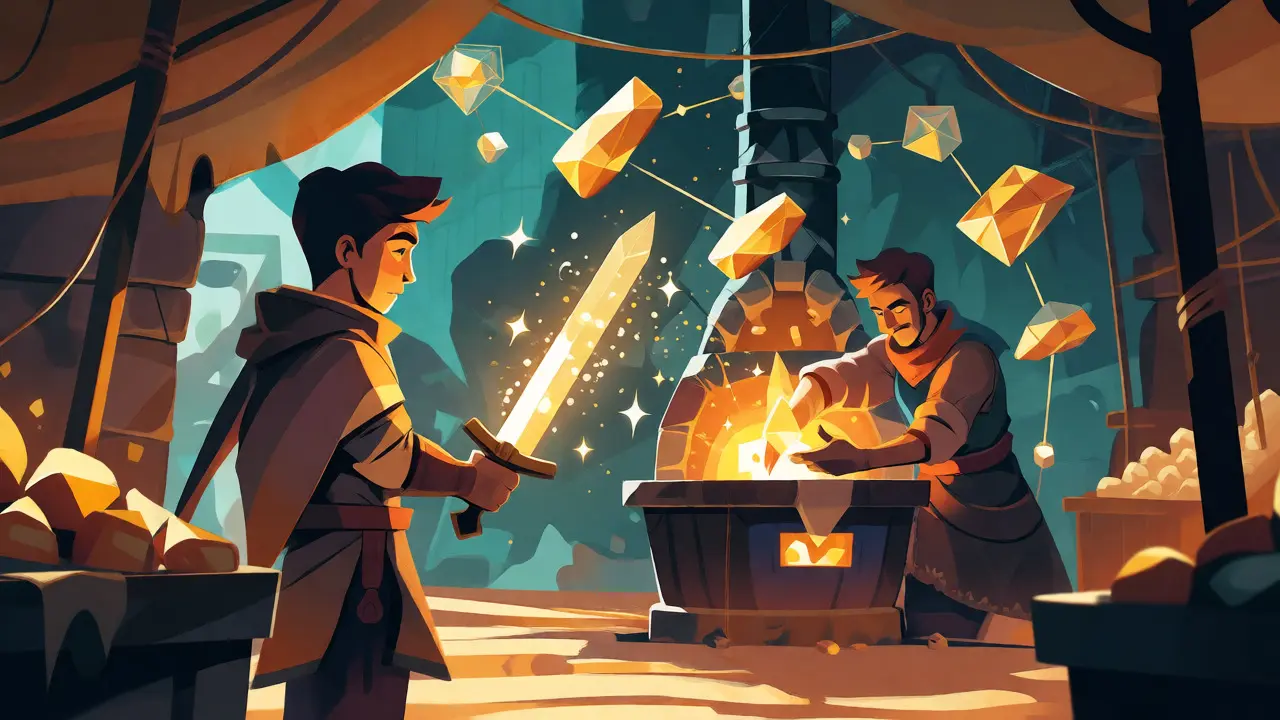
At the heart of Seraph is its economic loop, which revolves around Non-Fungible Tokens (NFTs). In traditional games, you might spend hours grinding for a rare item, only to lose it if the servers shut down or you stop playing. In Seraph, your equipment exists on the blockchain.
Here’s the basic cycle:
- Fight Monsters: You battle enemies in various dungeons.
- Loot NFT Equipment: Defeated monsters drop gear. Each piece has unique stats, including attributes like Treasure Value and Chaos Energy.
- Earn Soul Spars: By equipping specific NFT gear, you generate an in-game resource called Soul Spars.
- Convert or Upgrade: You can convert Soul Spars into new NFTs or use them to upgrade your existing equipment.
This system creates a dynamic market. If a particular sword becomes meta-strong, its price on the marketplace will rise. If you’re good at finding hidden treasures, you can sell those high-value NFTs to other players who want instant power-ups. It turns gameplay skill into tangible financial value.
The $SERAPH Token: Utility Beyond Speculation
The native cryptocurrency powering this ecosystem is the $SERAPH token. It operates primarily on the opBNB network, which allows for fast and cheap transactions compared to the main Ethereum chain. While some sources mention potential BEP-20 support on the main BNB Chain, the core activity happens on Layer-2.
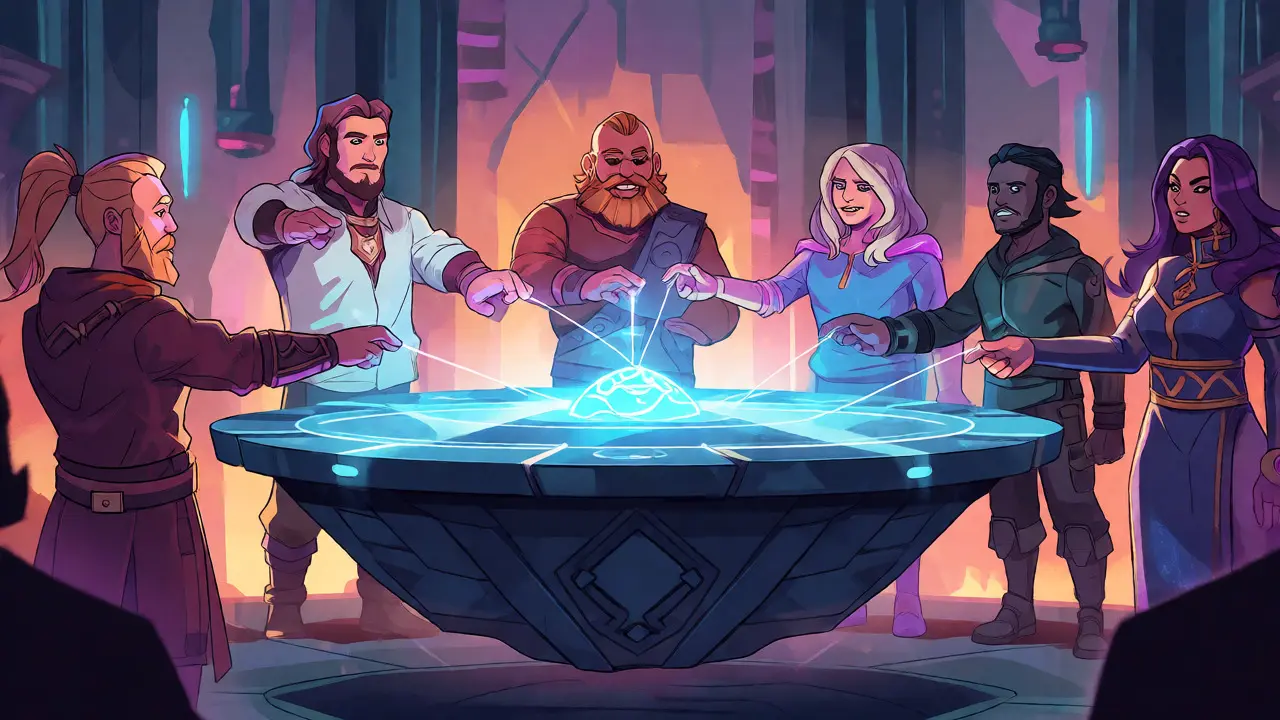
Don’t mistake $SERAPH for a simple currency you use to buy coffee. It has specific functional roles within the game’s DAO (Decentralized Autonomous Organization) structure:
| Utility Type | Description | Impact on Player |
|---|---|---|
| Governance | Voting rights on game updates and treasury spending. | Influences the future direction of the game. |
| Crafting | Required material for forging high-tier items. | Essential for end-game progression. |
| Feature Unlocking | Access to special dungeons or limited-time events. | Provides exclusive content access. |
| NFT Drops | Entry fee for participating in exclusive NFT raffles. | Chance to acquire rare assets. |
Notice that governance is listed first. This is crucial. Holding $SERAPH gives you a voice in how the game evolves. If the community feels a certain mechanic is broken, token holders can vote to change it. This decentralization helps prevent the "rug pull" fears common in smaller crypto projects.
Getting Started: Wallets and ActPass
If you’re new to crypto gaming, the idea of managing private keys and gas fees can be intimidating. Seraph addresses this with a system called ActPass. Think of ActPass as a bridge between traditional gaming accounts and blockchain wallets.
ActPass serves two main purposes:
- Wallet Functionality: It stores your $SERAPH tokens and NFTs securely.
- Marketplace Interface: It provides a user-friendly shop where you can buy and sell items without needing deep technical knowledge.
You can connect ActPass with standard wallets like MetaMask or WalletConnect. However, the integrated wallet within the game simplifies things further. For beginners, this abstraction layer is vital. It hides the complexity of smart contracts while still giving you true ownership of your assets. If you ever decide to leave the game, you take your NFTs with you to any compatible marketplace.
Performance and Market Reality
Let’s look at the numbers, because hype doesn’t pay the bills. According to recent data from KuCoin, Seraph has onboarded over 1.84 million unique players. More impressively, the platform processed more than 20 million transactions in a single 30-day period. These aren’t small-scale metrics; this indicates a highly active community.
Financially, the game generated over $2 million in revenue during one 30-day season. This proves that people are willing to spend real money on virtual goods. However, investors should note the volatility of the $SERAPH token itself. Price history shows significant swings. As of late 2025, the token traded around $0.0569, but recent data suggests prices dropped to approximately $0.003968 USD. This massive discrepancy highlights the risk inherent in altcoins. Market capitalization also fluctuates, recently hovering around $16.63 million.
Why such a drop? Crypto markets are cyclical, and early hype often corrects sharply. Additionally, ensure you are looking at the correct project. There is a separate entity called "Seraph by Virtuals," an AI agent powered by Bittensor. Do not confuse the two. They share a name but operate in completely different sectors-one is a game, the other is an AI verification tool.
Pros and Cons: Is Seraph Right for You?
No game is perfect. Here is a balanced view based on current community feedback and technical architecture.
| Aspect | Pros | Cons |
|---|---|---|
| Gameplay | Deep ARPG mechanics, multiple classes (Valkyrie, Barbarian, etc.). | Learning curve may be steep for casual mobile gamers. |
| Economy | True asset ownership via NFTs; player-driven market. | Initial cost for competitive gear can be high. |
| Technology | Built on opBNB for low fees and high speed. | Dependent on BNB Chain ecosystem health. |
| Community | Large user base (1.8M+); active DAO governance. | Token price volatility can deter long-term holders. |
The biggest pro is the shift from "pay-to-win" to "skill-to-earn." If you are good at action games, you can compete with whales who spent thousands on entry fees. The con is the barrier to entry for serious competition. While the game is free-to-play, owning top-tier NFT equipment gives a statistical advantage. You have to balance your budget against your desire to climb the leaderboards.
Final Verdict
Seraph represents a maturing phase in Web3 gaming. It moves away from the simplistic clicker models of 2021 toward substantive gameplay experiences. If you enjoy Diablo-style looters and believe in the concept of digital ownership, Seraph offers a compelling package. Just remember to do your own research on the token’s current price trends and ensure you distinguish it from the unrelated AI project with a similar name.
Is Seraph crypto free to play?
Yes, Seraph is designed as a free-to-play title. You can download the game and start playing without purchasing NFTs upfront. However, acquiring NFT equipment through gameplay takes longer than buying it on the marketplace, so paying players may progress faster initially.
Which blockchain does Seraph run on?
The primary infrastructure for Seraph is opBNB, which is a Layer-2 scaling solution for the BNB Chain. This choice ensures lower transaction fees and faster processing speeds compared to Ethereum Mainnet, making it suitable for high-frequency gaming interactions.
Can I trade my Seraph items for real money?
Yes. Since your equipment exists as NFTs on the blockchain, you can sell them on the in-game ActPass marketplace or potentially on external compatible NFT platforms. The proceeds are typically paid in $SERAPH tokens or stablecoins, which can then be exchanged for fiat currency on major exchanges.
What are the available character classes?
Seraph currently features four distinct character classes: Valkyrie, Barbarian, Sorceress, and Necromancer. Each class offers unique combat styles and skill trees, allowing for varied tactical approaches to dungeon crawling and boss fights.
Is Seraph the same as Seraph by Virtuals?
No, they are completely different projects. Seraph (the game) is an ARPG developed by Seraph Studio. "Seraph by Virtuals" is an autonomous AI agent focused on authenticity verification, powered by the Virtuals Protocol and Bittensor. They share a name but have no operational connection.
Write a comment