For years, the status of cryptocurrency in digital currency systems like Bitcoin and Ethereum in Algeria was a murky gray area. You could hear rumors of bans, see warnings from banks, but you rarely saw anyone actually arrested for holding a few coins. That ambiguity ended completely in mid-2025. If you are looking at the Algerian market today, the message is no longer just "restricted"-it is criminalized.
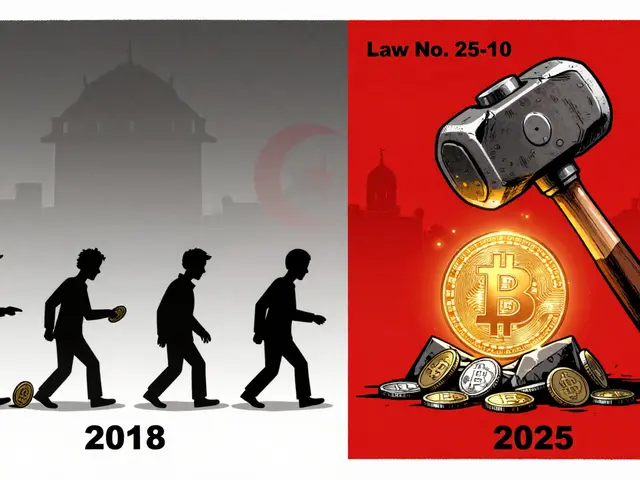
The journey didn't start overnight. It began with the Financial Law of 2018 is legislation passed by the Algerian government that first formally prohibited the use of virtual currencies without specifying clear criminal penalties. This law laid the groundwork, prohibiting the purchase, sale, and use of virtual money. But it lacked teeth. There were no specific prison sentences or fine amounts clearly attached to simple possession. This created a loophole where many Algerians continued to trade discreetly, especially as inflation rose and capital controls tightened.
From Ambiguity to Absolute Prohibition
The real shift happened on July 24, 2025. On this date, Algeria enacted Law No. 25-10 is a comprehensive legal framework published in the Official Journal that criminalizes all interactions with cryptocurrencies, including possession, mining, and promotion. Local media outlets like Algerie360 described this move as a "thunderbolt hitting cryptocurrencies in Algeria." Unlike the 2018 law, which focused mostly on commercial transactions, Law No. 25-10 casts an incredibly wide net.
This new legislation does not just target exchanges or big traders. It targets everyone. The ban explicitly covers:
- Possession: Simply holding virtual assets in a wallet is now illegal.
- Transactions: Buying, selling, or using crypto as payment.
- Mining: Using computational power to validate transactions.
- Promotion: Advertising, content creation, or even discussing investment strategies related to crypto.
- Issuance: Creating new tokens or coins.
The scope is so broad that it catches influencers, educators, and casual users alike. If you write a blog post about blockchain technology applications or share tips on how to buy Bitcoin, you are technically violating the law. This marks a stark departure from the previous era, where enforcement was sporadic and often ignored individual holders.
Real Consequences: Fines and Prison Time
What happens if you get caught? Under the old system, you might have faced bank account freezes or vague warnings. Now, the penalties are severe and clearly defined. Individuals convicted of any crypto-related offense face prison sentences ranging from two months to one year. Alongside jail time, fines range from 200,000 to 1,000,000 Algerian dinars (approximately $1,540 to $7,700 USD).
These numbers matter because they represent some of the harshest penalties globally for non-violent financial activities. Whether you are running a large-scale exchange operation or just holding a small amount of Bitcoin for savings, the maximum penalty remains the same: up to one year in prison and significant fines. This zero-tolerance approach signals that the government intends to eradicate crypto usage entirely, rather than regulate it.
| Country | Regulatory Stance | Key Legislation/Action | Penalties for Possession |
|---|---|---|---|
| Algeria | Total Prohibition | Law No. 25-10 (2025) | 2 months - 1 year prison; fines up to 1M DZD |
| United Arab Emirates | Embracing & Regulating | VARA Framework | Legal with licensing |
| Bahrain | Regulated Adoption | CBI Virtual Asset Guidelines | Legal with compliance |
| Egypt | Restricted/Banned | Central Bank Warnings | Fines and potential imprisonment (less defined) |

Why Is Algeria So Strict?
You might wonder why Algeria has chosen such an extreme path while its neighbors in the Middle East and North Africa (MENA) region are building regulatory frameworks to attract crypto business. Experts point to three main drivers behind this hardline stance.
First, there is the issue of monetary sovereignty is the government's control over its national currency and monetary policy. The Algerian Dinar is the sole legal tender, and the government views cryptocurrencies as a direct threat to this status. They fear that widespread adoption of digital assets could undermine their ability to manage inflation and control capital flows. In a country with strict state controls on foreign currency, unregulated digital money is seen as a bypass mechanism that weakens central authority.
Second, concerns about money laundering is the process of making illegally-gained proceeds appear legal and terror financing play a huge role. Algeria has aligned its policies with guidance from the Financial Action Task Force (FATF). Authorities argue that the anonymity features of some cryptocurrencies make them ideal tools for illicit activities. By banning crypto entirely, they aim to close off these potential channels for financial crime.
Third, there is the energy factor. Cryptocurrency mining consumes vast amounts of electricity. Given Algeria’s own energy infrastructure challenges and subsidies, the government sees mining as an inefficient drain on national resources. This environmental and economic concern adds another layer of justification for the ban.
Who Enforces the Ban?
It is not just one agency watching your digital wallets. The enforcement network involves multiple government bodies working together. The Bank of Algeria is the central bank responsible for overseeing the national financial system and ensuring stability leads the charge within the banking sector. They ensure that no local bank facilitates crypto transactions or allows accounts linked to crypto activities to remain open.
Alongside the central bank, the Banking Commission oversees traditional financial institutions to prevent them from indirectly supporting crypto markets. Judicial authorities handle the prosecutions, turning administrative violations into criminal cases. Meanwhile, security agencies conduct both digital and physical monitoring. They look for signs of organized crime linked to crypto, but also scan for individual violations like mining operations or online promotions.
This multi-agency approach means there are fewer blind spots. If you try to use a peer-to-peer platform, the banks might flag the fiat transfer. If you mine at home, energy anomalies or internet traffic patterns might draw attention. If you tweet about buying Bitcoin, social media monitoring could trigger an investigation.

Impact on the Local Community
Before 2025, Algeria had a growing, albeit discreet, crypto community. Many citizens used Bitcoin and other assets as a hedge against high inflation and to preserve value when the Dinar fluctuated. The 2018 law was vague enough that people operated in a "gray zone," assuming that as long as they stayed quiet, they would be left alone.
That assumption is now dangerous. The dream of borderless finance has hit a solid wall. With the new law, even educational content is risky. You cannot legally teach someone how blockchain works if it implies encouragement of asset ownership. This chills innovation and pushes any remaining activity deep underground, where users have less protection and higher risks of fraud.
Regionally, this isolates Algeria. While countries like the UAE and Bahrain are positioning themselves as hubs for fintech and digital asset innovation, Algeria is closing its doors. This may lead to a brain drain, as tech-savvy individuals seek opportunities in jurisdictions that embrace rather than punish digital finance. For international businesses, doing deals with Algerian partners becomes more complicated, as standard global payment methods involving crypto are off-limits.
What Comes Next?
Enforcing a total ban in the digital age is incredibly difficult. The law grants authorities broad powers, but can they really stop every individual from possessing a private key on a USB drive? Probably not. However, the intent is clear: to make the cost of participation too high for most people. The heavy fines and prison threats are designed to deter rather than just punish.
As global adoption continues to rise, Algeria’s position will become increasingly isolated. Other nations are refining regulations to balance innovation with consumer protection. Algeria has chosen eradication. This leaves little room for future flexibility unless the entire legislative framework is overturned. For now, the message is absolute: stay away from crypto, or face the consequences.
Is it legal to hold Bitcoin in Algeria in 2026?
No. Under Law No. 25-10, which came into effect in July 2025, simply possessing virtual assets is a criminal offense. You do not need to be trading or mining to be in violation of the law.
What were the penalties under the 2018 Financial Law?
The 2018 Financial Law prohibited the purchase, sale, and use of cryptocurrencies but did not specify clear criminal penalties or prison sentences. This lack of clarity led to inconsistent enforcement and a gray market for crypto usage.
Can I mine cryptocurrency in Algeria?
No. Mining is explicitly banned under Law No. 25-10. Authorities cite energy consumption and infrastructure strain as reasons for prohibiting the use of computational power to validate crypto transactions.
Why did Algeria ban cryptocurrency?
The primary reasons include protecting monetary sovereignty and the status of the Algerian Dinar, preventing money laundering and terror financing in line with FATF guidelines, and reducing energy consumption associated with mining.
How does Algeria's ban compare to its neighbors?
Algeria's approach is much stricter than regional leaders like the UAE and Bahrain, which have established regulatory frameworks to encourage crypto adoption. Algeria joins a small group of countries with total prohibitions, similar to China's earlier stance, though with fewer nuanced exemptions.
Are there any exceptions for educational content?
No. The law prohibits the promotion or advertising of cryptocurrencies in any form. This includes content creation and information sharing that could be interpreted as encouraging investment or usage, effectively criminalizing educational discussions about crypto assets.
Write a comment