You might have heard the buzz around Aperture Finance, a DeFi protocol that promised to change how we interact with decentralized finance through natural language commands. But for many users, the real question wasn't about the technology-it was about the APTR token airdrop. Did you qualify? How do you claim it? And what is this token actually worth in the current market?
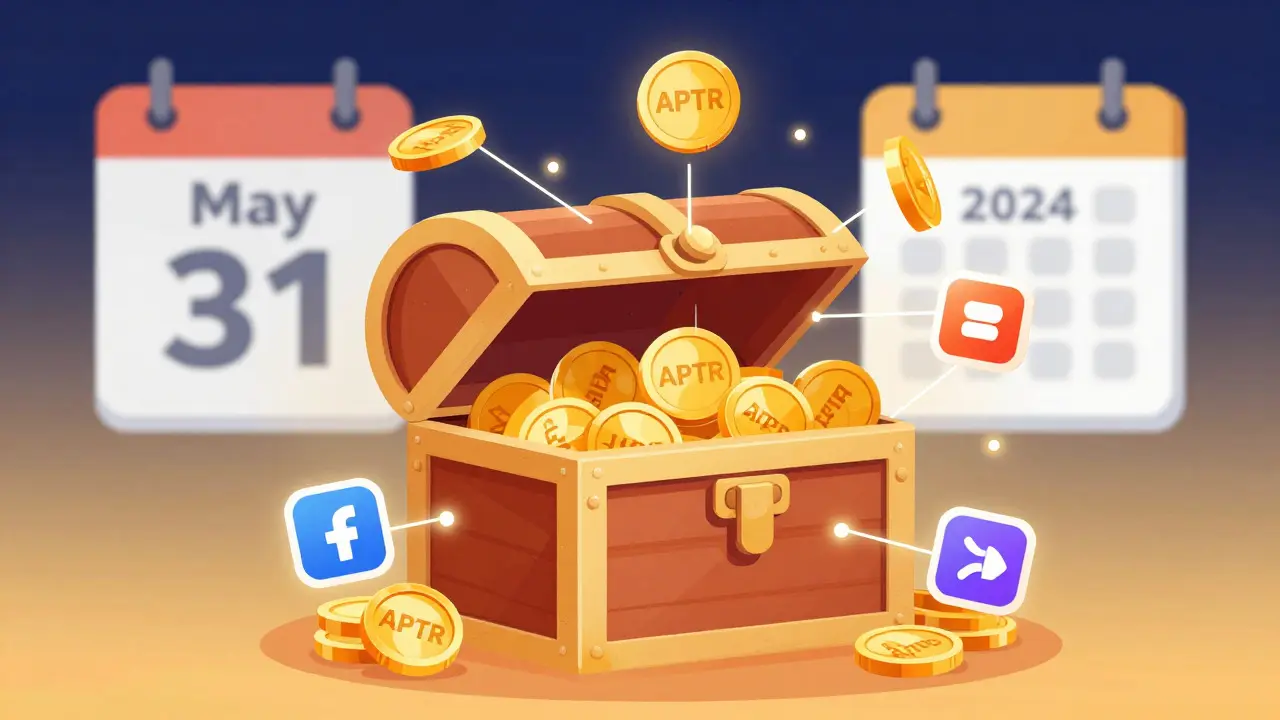
If you’ve been tracking crypto rewards, you know that timing and eligibility are everything. Aperture Finance executed its major airdrop distribution on May 31, 2024. While the initial window has closed, understanding the mechanics of this drop is crucial for anyone looking at their portfolio or considering future opportunities in the Aperture ecosystem. This guide breaks down exactly how the airdrop worked, who got paid, and what the numbers say about the token’s potential.
What Is Aperture Finance and Why Does It Matter?
To understand the value of the APTR token, you first need to understand the platform behind it. Aperture Finance is not just another yield farming site. It positions itself as a revolutionary DeFi protocol built on an "Intents" infrastructure. In plain English, this means you don’t need to manually execute complex swaps or manage liquidity positions step-by-step. Instead, you declare your goal-like "I want to earn yield on ETH while keeping risk low"-and the network finds solvers to execute that intent for you.
This approach solves a major pain point in DeFi: usability. Traditional protocols require users to understand slippage, gas fees, and exact execution paths. Aperture abstracts this away using a chatbot-like interface powered by AI. The APTR token serves as the governance and utility fuel for this ecosystem, incentivizing early adopters who helped test and validate these mechanisms.
Airdrop Eligibility: Who Qualified?
The Aperture Finance airdrop distributed 7% of the total APTR token supply to eligible participants. This wasn't a random giveaway; it was a reward for engagement. To qualify, users needed to accumulate points through specific activities during the campaign period. Here is what typically drove eligibility:
- Platform Interaction: Users who connected their wallets and engaged with the Aperture interface earned base points.
- Social Tasks: Following official channels, joining Discord/Telegram communities, and sharing content contributed to the score.
- Liquidity Providing (LP): Early testers who provided liquidity, particularly through the Uniswap V3 Private Beta program, received significant boosts.
- Referrals: Users who brought others into the ecosystem earned referral bonuses, capped at 16,666 APTR tokens per referrer.
If you were active in the DeFi space between late 2023 and mid-2024, especially on the Arbitrum network, there is a good chance you accumulated enough points to be included in the snapshot. The system verified eligibility automatically based on on-chain data and off-chain social metrics.
How to Claim Your APTR Tokens
For those who qualified, the claiming process was straightforward but required attention to detail. Since the airdrop was distributed on the Arbitrum network, you had to ensure your wallet was configured correctly. Here is the step-by-step process that was used:
- Visit the Official Portal: Navigate to the official Aperture Finance airdrop claim page. Always verify the URL to avoid phishing sites.
- Connect Wallet: Use a compatible Web3 wallet like MetaMask, Rabby, or Coinbase Wallet.
- Switch Network: Ensure your wallet is set to the Arbitrum One network. If you tried to claim on Ethereum Mainnet, the transaction would fail or incur unnecessary high gas fees.
- Authenticate: Click the "Sign" button. This verifies your identity without spending gas.
- Claim Tokens: Once authenticated, the "Claim" button becomes active. Click it to initiate the transfer of APTR tokens to your wallet.
The tokens were unlocked immediately upon claiming. Unlike some projects that lock tokens for months, Aperture Finance allowed 100% immediate liquidity for airdrop recipients. This meant you could trade, stake, or hold them right after the transaction confirmed.
Tokenomics: The Value Behind APTR
Understanding the tokenomics helps explain why the community reacted so strongly to this airdrop. The APTR token has a structured supply model designed to balance investor interests with community growth. Let's look at the key funding rounds and allocations:
| Round Type | Price per Token | Funds Raised | Vesting Schedule |
|---|---|---|---|
| Seed Round | $0.015 | $1.8 Million | 5% at TGE, 6-month cliff, 24-month vesting |
| Strategic Round | $0.035 | $3.5 Million | 5% at TGE, 3-month cliff, 18-month vesting |
| Public Round | $0.045 | $585,000 | 100% unlocked immediately |
| Airdrop Allocation | N/A (Free) | 7% of Supply | 100% unlocked immediately |
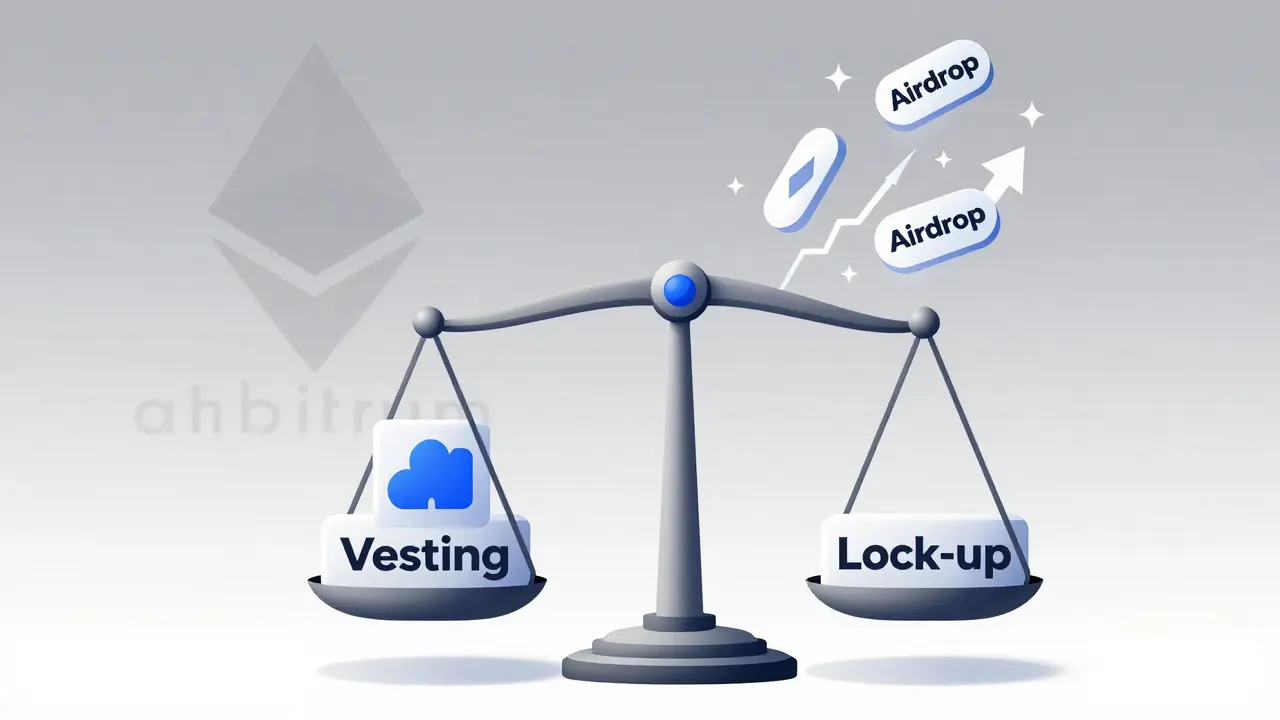
The seed round valued the project at $15 million, while the strategic round pushed that valuation to $35 million. The public round reached a $45 million valuation. For airdrop recipients, getting tokens that were effectively priced at zero creates a massive paper gain if the market price exceeds the private sale prices. This structure aligns incentives: early investors are locked in for the long term, while the community gets immediate freedom to trade.
Advanced Earning: Uniswap V3 Integration
One of the most compelling aspects of Aperture Finance is its deep integration with Uniswap V3. The platform offers specialized tools for liquidity providers, including automated rebalancing, prescheduled position closures, and auto-compounding features. These tools address the complexity of managing concentrated liquidity positions.
Participants in the UniV3 Private Beta program could earn up to 66,666 APTR tokens (valued at approximately $10,000 at peak hype) through active engagement. Additionally, content creators who produced educational material about LP strategies earned 3,333 APTR tokens. This multi-tiered reward system encouraged not just passive holding, but active contribution to the ecosystem's knowledge base and liquidity depth.
Price Predictions and Market Outlook
With any new token, speculation runs high. Analytical platforms like CoinLore have generated various forecasts for APTR. While predictions should always be taken with a grain of salt, they offer insight into market sentiment. Some optimistic models projected prices reaching $0.0720 by 2025, representing a significant percentage increase from early trading levels. Long-term projections extending to 2030 suggest potential targets around $0.1762, assuming sustained adoption of the Intents infrastructure.
However, remember that DeFi tokens are volatile. The actual price depends on real usage of the Aperture protocol, not just airdrop dumping. If users continue to use the natural language interface for trades and liquidity management, demand for APTR as a governance and fee-sharing token will grow. If interest fades, the price may stabilize near the cost basis of early investors.
Common Pitfalls and Security Tips
As with any airdrop, scams were prevalent. Here is what you need to watch out for:
- Phishing Sites: Always bookmark the official Aperture Finance website. Do not click links from unknown Telegram messages.
- Network Confusion: Double-check you are on Arbitrum. Claiming on the wrong chain can result in lost tokens or failed transactions.
- Wallet Permissions: Before signing any transaction, review the permissions. Legitimate airdrops usually only require signature verification, not infinite approval allowances for other contracts.
- Vesting Traps: Confirm your tokens are fully unlocked. Aperture’s airdrop was 100% unlocked, but some secondary programs may have different terms.
If you missed the main airdrop, keep an eye on ongoing campaigns. Aperture Finance continues to expand its solver network and integrate with additional DEXs. Future rewards may focus on liquidity provision or governance participation rather than simple social tasks.
Final Thoughts on the Aperture Ecosystem
The Aperture Finance airdrop was more than a marketing stunt; it was a distribution mechanism for a protocol aiming to simplify DeFi. By rewarding early users with immediate liquidity, Aperture created a broad base of stakeholders interested in the success of its Intents-based architecture. Whether you claimed thousands of APTR tokens or just a few hundred, the underlying value proposition remains the same: easier access to sophisticated financial tools.
For those still on the fence, monitor the platform’s TVL (Total Value Locked) and daily active users. These metrics will tell you if the "chatbot for DeFi" concept is gaining traction or fading into obscurity. In the fast-moving world of crypto, utility always wins over hype in the long run.
Did I miss the Aperture Finance airdrop deadline?
The initial major airdrop distribution occurred on May 31, 2024. If you did not claim your tokens by then, check the official Aperture Finance dashboard to see if any extended windows or secondary campaigns are available. Sometimes, unclaimed tokens are recycled or offered in later phases.
Which blockchain network does APTR operate on?
APTR tokens are distributed and traded primarily on the Arbitrum network, which is a Layer 2 scaling solution for Ethereum. Ensure your wallet is switched to Arbitrum One before attempting to claim or swap tokens.
Are APTR tokens vested or fully unlocked?
Tokens received through the airdrop allocation were 100% unlocked immediately upon claiming. This differs from investor allocations, which often have cliffs and vesting periods ranging from 18 to 24 months.
How can I earn more APTR tokens after the airdrop?
You can continue earning APTR by providing liquidity through the Uniswap V3 integration, participating in referral programs, or creating educational content about the platform. Active engagement with the Intents infrastructure also yields rewards.
Is Aperture Finance safe to use?
Like all DeFi protocols, Aperture Finance carries inherent smart contract risks. However, it leverages established infrastructure like Uniswap V3 and operates on Arbitrum, a reputable Layer 2 network. Always audit your own wallet permissions and start with small amounts to test interactions.


Write a comment