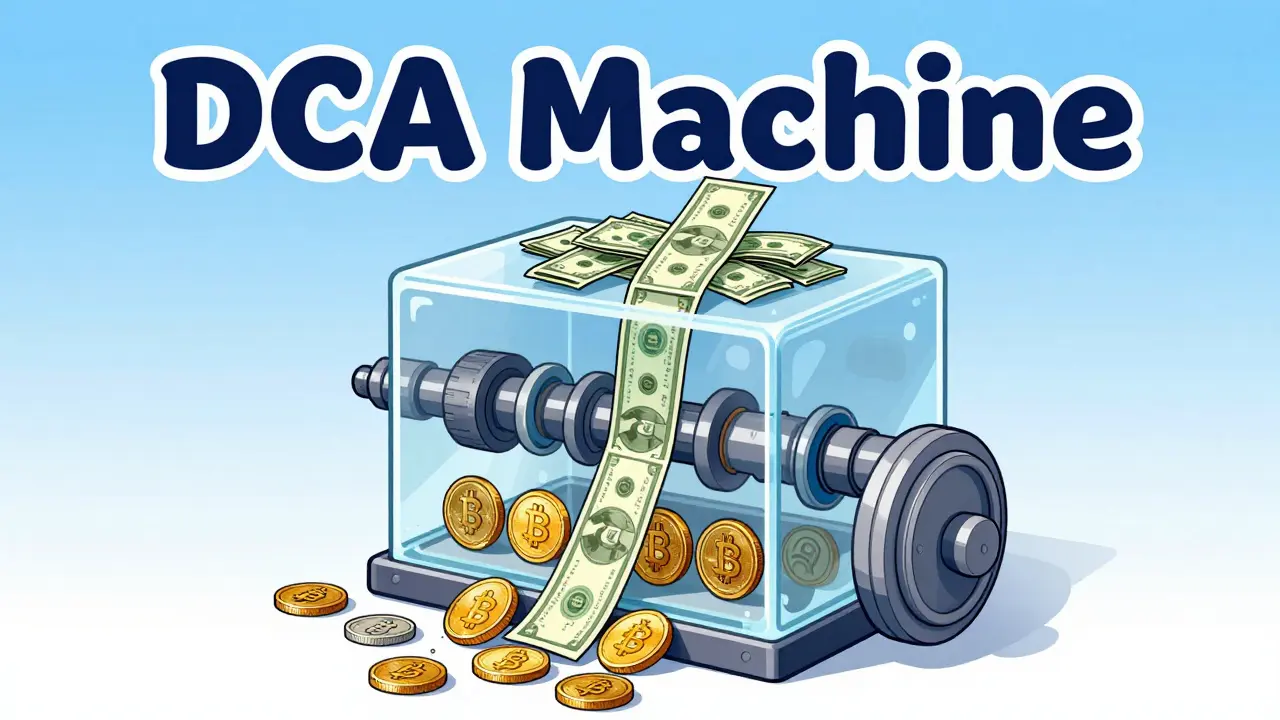
Imagine spending $50,000 on a single coin right before a 40% market crash. It's a gut-wrenching feeling that keeps many people from ever entering the crypto space. But what if you could turn that volatility into your biggest advantage? That is exactly what Dollar Cost Averaging is an investment strategy where you buy a fixed dollar amount of an asset at regular intervals, regardless of the price. Instead of guessing the "bottom," you mathematically smooth out your entry price over time.
The goal isn't to time the market-because let's be honest, almost nobody does that successfully-but to ensure you don't buy everything at the peak. By sticking to a schedule, you naturally buy more tokens when prices are low and fewer when they are expensive. This removes the emotional stress of watching every single candle on a chart and replaces it with a disciplined system.
Key Takeaways for Your DCA Journey
- Consistency beats timing: Regular investments reduce the risk of a single bad entry.
- Focus on "Blue Chips": Stick to assets with proven track records like Bitcoin and Ethereum.
- Automate your flow: Use tools to remove the temptation to skip a purchase during a dip.
- Long-term horizon: This strategy is designed for years, not weeks.
Why Certain Coins Work Better for DCA
You can't just pick any random meme coin and apply a DCA strategy. If a project has a high chance of disappearing in two years, averaging your way into it is just a slow way to lose money. For a DCA strategy to actually work, you need an asset that you believe will be significantly more valuable in five to ten years than it is today.
The best candidates are those with high liquidity, massive market caps, and a history of surviving "crypto winters." When you look at institutional adoption, firms like Charles Schwab point toward mature assets. They aren't looking for the next 100x moonshot; they are looking for sustainable growth. This is why the "Blue Chip" assets dominate this approach.
Top Assets for a Systematic Approach
Bitcoin is the gold standard for any systematic investment. Because it acts as a store of value and has the highest market cap, it typically experiences less extreme volatility than small-cap altcoins while maintaining a long-term upward trajectory. If you invest $100 every month, you're betting on the continued growth of the world's first decentralized currency.
Then there is Ethereum. Unlike Bitcoin, Ethereum is a platform for decentralized applications. By DCA-ing into ETH, you are investing in the infrastructure of the future internet (Web3). In a scenario where ETH drops from $3,000 to $2,000, your monthly $200 investment suddenly buys you significantly more tokens, lowering your average cost basis and positioning you for a larger gain when the market recovers.
| Asset | Risk Profile | Primary Value Driver | DCA Suitability |
|---|---|---|---|
| Bitcoin (BTC) | Lower (for crypto) | Store of Value / Scarcity | Highest |
| Ethereum (ETH) | Moderate | Smart Contracts / Ecosystem | Very High |
| Large-Cap Alts | Higher | Specific Utility/Niche | Moderate |
| Small-Cap/Meme | Extreme | Hype / Speculation | Low |

How to Set Up Your DCA Machine
Execution is where most people fail. They start strong in a bull market, but the moment a crash happens-which is exactly when you should be buying-they get scared and stop. To avoid this, you need a concrete plan.
- Determine Your Budget: Decide on an amount you can lose without it affecting your rent or groceries. Some people take a percentage of their monthly salary (e.g., 5%), while others divide a lump sum (like a $1,200 bonus) into $100 monthly chunks.
- Pick Your Frequency: Daily, weekly, or monthly? Weekly is often a great middle ground that captures more price swings than monthly but requires less management than daily.
- Choose Your Platform: Use an exchange that supports recurring buys. Manual buying is a chore and opens the door to emotional decision-making.
- Set It and Forget It: The magic of DCA happens when you stop checking the price every hour. The goal is to automate the process so that the purchase happens whether the news is great or terrible.
For those who want more efficiency, platforms like AlgosOne offer automated capital deployment. These tools can monitor the market 24/7 and execute buys based on logic rather than a calendar, potentially optimizing the entry points within your set budget.
The Math Behind the Magic
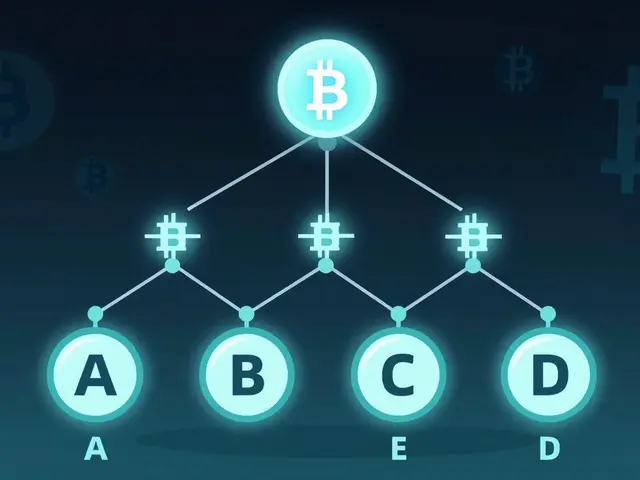
Let's look at a real-world example to see why this works. Suppose you have $50,000 to invest in Bitcoin. If you drop it all at once when BTC is $50,000, you own exactly 1 BTC. Now, imagine the market gets bumpy. You decide to invest $10,000 five times at these prices: $50k, $45k, $25k, $25k, and $55k.
By the end, you haven't just spent the same amount of money; you've accumulated roughly 1.4 BTC. Your average cost basis has dropped to $40,000. Even though the price eventually went back up to $55k, your "average" purchase was much lower than the initial peak. You basically used the volatility to buy "on sale." This is why a survey by Kraken found that nearly 60% of crypto investors prefer this method-it turns a scary market into a buying opportunity.
When DCA Doesn't Work
No strategy is a magic bullet. There are times when DCA is actually less effective than a lump sum. If the market enters a relentless "moon mission" where prices only go up and never dip, you'll find yourself buying at progressively higher prices. In a perfectly linear bull market, the person who bought everything on day one wins.
Additionally, DCA is a long-only strategy. It means you're ignoring shorting opportunities during bear markets. You aren't making money on the way down; you're simply positioning yourself for the way up. If you're looking for quick trades or short-term flips, this isn't the tool for you. DCA is for the builder, the HODLer, and the long-term believer.
Common Pitfalls to Avoid
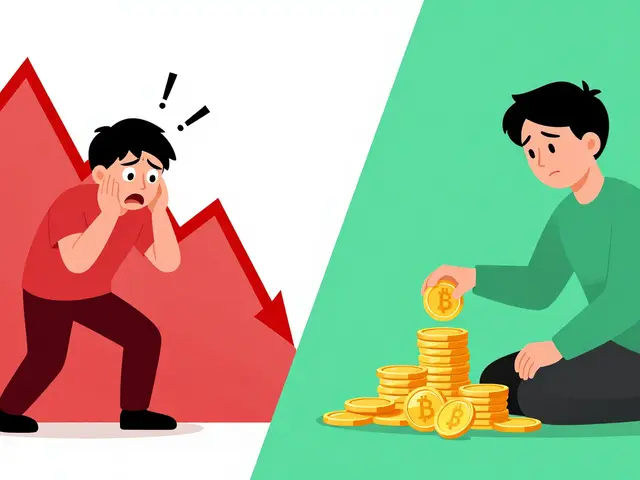
The biggest mistake is "Panic Skipping." This happens when an investor sees a massive 20% drop in one day and thinks, "I'll wait until it stabilizes before I buy more." The problem is that the bottom usually happens during the peak of the panic. If you skip your buy during a crash, you've just defeated the entire purpose of the strategy.
Another trap is "Over-Diversification." Spreading your DCA across 50 different small coins often leads to a portfolio of "zombie projects." It's better to be heavily invested in three proven assets than marginally invested in thirty gambles. Focus on network effects and real-world utility-things like transaction volume and developer activity-rather than just hoping a coin goes viral.
How long should I DCA into a cryptocurrency?
Most experts suggest a minimum window of 6 to 12 months to effectively average out volatility. However, for true wealth building, a multi-year horizon is ideal. Because crypto cycles typically last 4 years (tied to the Bitcoin halving), a long-term commitment ensures you capture both the lows and the highs of a full cycle.
Is DCA better than lump sum investing?
Mathematically, if an asset only goes up, lump sum is better. But since crypto is famously volatile, DCA is practically better for most people. It protects you from the psychological trauma of buying the top and allows you to keep your emotions in check, which is the hardest part of investing.
Can I use DCA for altcoins?
Yes, but be extremely selective. Only apply DCA to large-cap altcoins with clear utility and strong developer teams. Avoid using it for micro-cap coins, as the risk of the project failing entirely outweighs the benefit of averaging your entry price.
What happens if the price never recovers?
This is the primary risk of DCA. If you average into an asset that goes to zero, you are simply spending money on a dying project. This is why choosing established entities like Bitcoin or Ethereum is critical-they have the strongest probability of long-term survival.
How do I know when to stop DCA-ing?
Most investors stop when they hit a specific portfolio goal (e.g., "I want to own 1 full Bitcoin") or when their risk tolerance changes. Some switch to a "maintenance mode" where they only buy during significant dips (e.g., 20% drops) instead of a strict calendar schedule.
Rob Mitchell
Automating your buys is the way to go. It removes the stress.
Tracie and Matthew Hartley
everyone sayz blue chips r safe but we all know the real gains are in the trash coins lol. dca is just for people who are too scared to actually gamble
Omotola Balogun
Actually, the mathematical advantage of DCA is often overstated in bull markets. If you have a high conviction in the asset's utility, a lump sum entry is statistically superior provided the asset is in an accumulation phase. Many fail to realize that the cost of capital is ignored in these simplified examples. You're essentially trading potential gains for psychological comfort, which is an inefficient use of liquidity in a high-growth environment.
EDOZIEM MICHAEL
patience is the true currency of the digital age we just want everything now but the slow path is the only one that leads to peace
Samson Selleck
The naive obsession with "blue chips" ignores the systemic fragility of these legacy protocols. We're talking about asymptotic growth curves where the alpha is found in asymmetric bets, not in the tepid, institutionalized mediocrity of a BTC DCA. This strategy is essentially for those who lack the cognitive capacity to analyze volatility as a feature rather than a bug. It's financial sedative for the masses.
James Bone
Selleck is actually right for once. Following a calendar is just a fancy way of admitting you have no clue how the market actually moves. It's like walking in a straight line during a storm and pretending you're in control. Real wealth isn't built by "smoothing out" entries; it's built by having the guts to buy when the world is ending, not because it's Tuesday.
jennelle williams
just take it slow
it's okay to be afraid
Chidinma Sandra okafor
Oh wow, another guide telling us to buy Bitcoin. How original. I'm sure the institutional giants are just thrilled that we're all following the same basic script. Truly revolutionary advice here.
Aaliyah BROTHERS
WAKE UP PEOPLE!!! The central banks are literally engineering these "dips" to shake us out of our positions!!!! DCA is just a tool for the elites to keep us feeding the machine in small doses so we don't notice the systemic collapse coming!!! Protect your sovereignty and get your coins off the exchanges NOW!!!
Akshay Gorad
I appreciate the structured approach here. It helps maintain a disciplined mindset.
Heather Warren
I've been doing this for three years and it really takes the pressure off. Just set up a recurring transfer from your bank and you'll be surprised how much you save without even thinking about it. It's a great way to build a nest egg for the future!
Kieran Smith
im new to this but it sounds like a grate plan i just started with a little bit of eth and hope it goes up soon
Adam Auksel
Welcome to the journey! 🚀 Just remember to keep your goals in mind and don't let the short-term noise distract you. You're doing great!
william manes
USA is the only place where this actually works 🇺🇸 stop listening to people from other countries about money 💰 keep it simple 🇺🇸
Tyler Webb
I've definitely felt that panic before. It's hard to stay consistent when the red candles are huge, but looking back, those were always the best buys. :)
Alan Seiden
Absolutely rubbish. The idea that a basic mathematical average can save you from a failing asset is a joke. Only a complete idiot would think that "averaging down" into a cratering coin is a strategy. It's just gambling for people who want to feel sophisticated while they lose their shirts. Pathetic.
daniella davis
um, excuse me? the part about meme coins is so basic. everyone knows that. but the way the table is formatted is honestly tragic. i can't believe i'm reading this in 2026 and we're still talking about btc as a "store of value" like it's some kind of secret
Surender Kumar
this seems like a lapped approach to wealth building. i like how it doesn't force u to be a pro trader to make money
Lela Singh
Fantastic breakdown! Such a vibrant way to approach wealth. Let's get those gains!
Lauren Abrams
It's interesting to see how different people react to the volatility of the market. Some see it as a risk, others as a tool.