If you're a trader trying to access Bybit from the United States, you've probably run into a wall. You open the app, try to log in, and suddenly-access denied. No error message, no explanation. Just a blank screen or a popup saying you're not allowed. This isn't a glitch. It's Bybit's geofencing system in action.
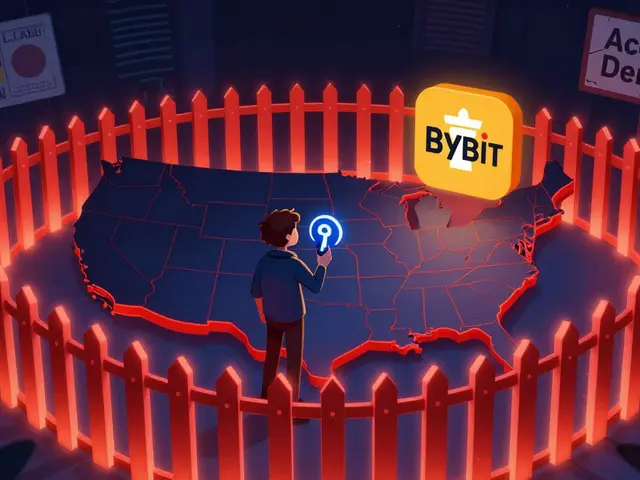
Bybit doesn't let users from certain countries trade on its platform. The U.S. is at the top of that list. Why? Because U.S. regulators like the CFTC and SEC have made it nearly impossible for offshore crypto exchanges to operate legally without a license. Bybit chose not to get one. Instead, it built a digital fence around its platform to keep U.S. users out. That fence is called geofencing.
How Bybit's Geofencing Works
Geofencing isn't magic. It's simple: Bybit checks your IP address. Every device connected to the internet has one. That IP tells the system where you are-down to the city level. If your IP shows you're in the U.S., Bybit blocks you before you even see the login page.
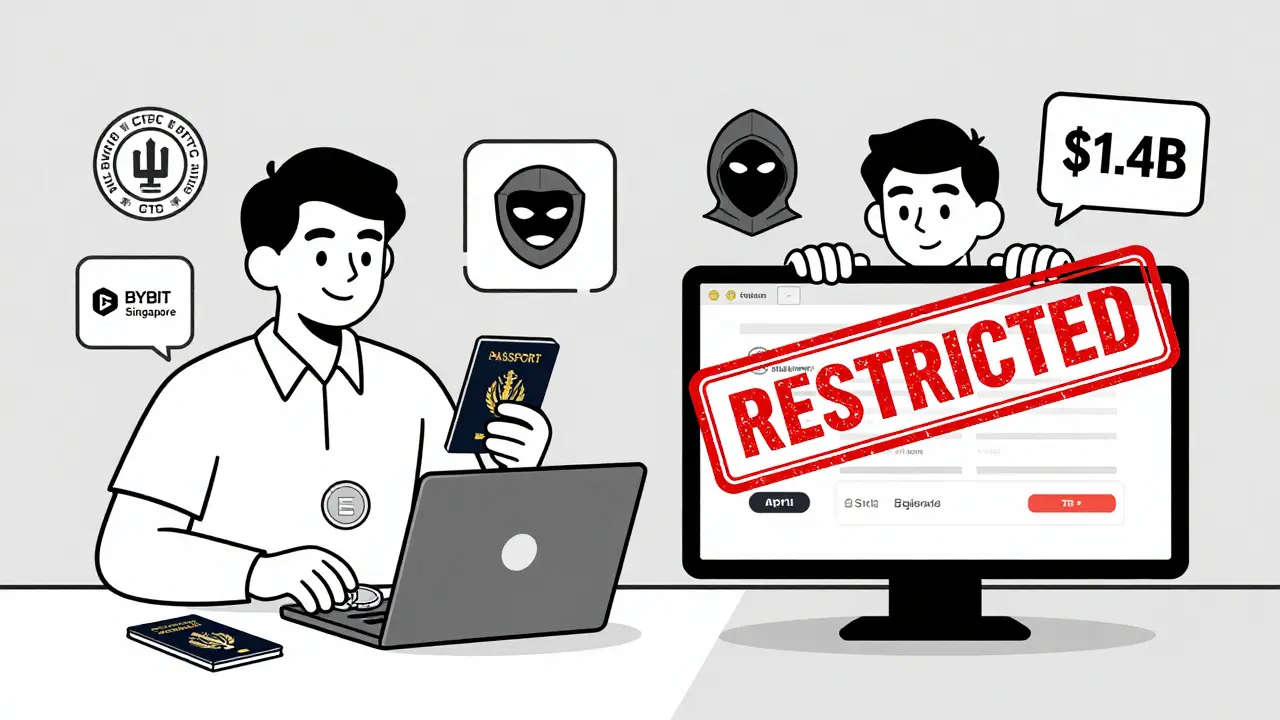
It doesn't stop there. During account creation, Bybit asks for government-issued ID. If you're from the U.S. but try to use a Canadian passport, the system flags it. Your ID country and your IP location should match. If they don't, your application gets paused. Or worse-your account gets shut down later.
This system works most of the time. But it's not foolproof. Thousands of traders still get through. How? By using a VPN.
Can You Beat Bybit's VPN Detection?
Yes. And no.
Bybit's VPN detection is basic. It looks at your IP. If it sees a connection coming from Singapore, it assumes you're in Singapore. It doesn't check if that IP belongs to NordVPN, ExpressVPN, or any other commercial service. It doesn't scan your browser fingerprint. It doesn't track how fast your connection loads or whether your device has been seen before on a different IP.
That’s the gap. A CoinDesk investigation in November 2024 showed users in Texas, Florida, and California successfully opening Bybit accounts by:
- Connecting to a VPN server in Germany or Japan
- Using a friend’s or purchased foreign ID (like a Mexican or Polish passport)
- Completing KYC without issues
Once they’re in, they stay in. Bybit doesn’t continuously monitor their location after login. That’s a loophole big enough to drive a truck through.
Some users even report that after months of trading without problems, Bybit suddenly freezes their account. Why? Maybe they switched ISPs. Maybe their IP got flagged after a system update. Maybe someone else reported them. There’s no warning. No appeal process. Just a message: “Your account has been restricted due to location violation.”
Why Bybit Doesn’t Do More
You might think: If Bybit wants to block U.S. users, why not use better tech? Why not detect VPNs properly?
The answer is cost. Advanced detection-like analyzing device fingerprints, connection timing, or behavioral patterns-costs millions. It requires engineers, AI models, and constant updates. And for Bybit? The risk isn’t worth it.
They’ve got over 40 million users globally. Most of them aren’t from the U.S. They don’t want to spend $20 million on a system that only catches 10% of violators. Better to let some slip through than burn cash chasing ghosts.
Compare that to Coinbase or Kraken. They spent years and hundreds of millions getting licensed in the U.S. They play by the rules. Bybit? They play the game differently. They say: “We’re not here for you, but if you sneak in, we won’t hunt you down.”
The Bigger Picture: Why This Matters
This isn’t just about access. It’s about control.
When Bybit blocks U.S. users, it’s not just protecting itself from regulators. It’s also protecting its business model. U.S. regulations require things like:
- Reporting every trade to the IRS
- Holding customer funds in segregated accounts
- Proving you’ve done background checks on every user
Those things cost money. They slow down trading. They turn a fast, flexible platform into a bureaucratic mess. Bybit doesn’t want that. It wants to be the go-to place for high-leverage trading, low fees, and fast execution. And that’s exactly what it is-for everyone outside the U.S.
But here’s the twist: the same features that make Bybit attractive to global traders are the same ones that make it dangerous. In 2024, hackers stole $1.4 billion from Bybit. How? They didn’t crack servers. They hacked the frontend interface of the SAFE Wallet system. They made fraudulent transactions look like normal ones. CEO Ben Zhou approved them thinking they were routine.
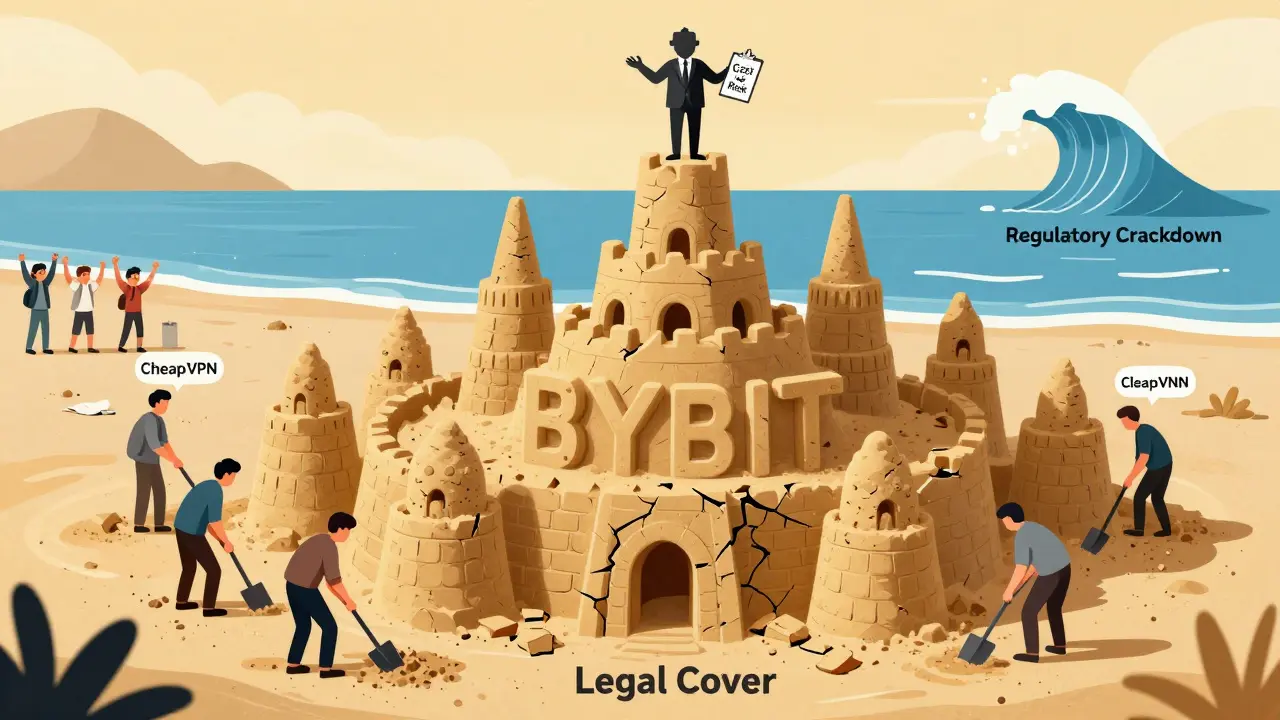
That hack exposed more than just a security flaw. It showed how fragile compliance systems can be when they’re built on assumptions. If your geofencing can be bypassed by a $10/month VPN, and your KYC can be fooled by a forged ID, then your entire security model is built on sand.
What Traders Are Saying
Reddit threads are full of it. “I’ve been trading on Bybit for 18 months. No issues.” “I used a VPN from Canada. Got approved in 3 minutes.” “My account got frozen last week. No explanation.”
There’s no middle ground. Either you’re in, or you’re out. And if you’re in through a loophole, you’re always one update away from losing everything.
Some traders argue it’s unfair. “I’m a U.S. citizen, but I live abroad. Why can’t I use it?” Others say: “If you’re breaking the rules, you’re asking for trouble.”
Truth is, most users don’t care about the rules. They care about liquidity, leverage, and low fees. Bybit gives them all three. And for now, that’s enough.
What’s Next?
Bybit won’t change its approach anytime soon. Too many users rely on it. Too many regulators are watching. If they tighten detection, they’ll lose users. If they loosen it, they risk fines, lawsuits, or worse-being forced to shut down globally.
Meanwhile, the arms race continues. Some users are switching to private, non-commercial VPNs. Others are using Tor or proxy chains. A few are even renting physical devices in approved countries.
But here’s the reality: no matter how clever you are, you’re still violating Bybit’s Terms of Service. And if they decide to clean house, they can freeze your funds, delete your account, and walk away without a second thought.
The truth? Geofencing and basic VPN detection aren’t about security. They’re about legal cover. Bybit isn’t trying to stop you. It’s trying to say, “We warned you.”
Can I use Bybit if I’m in the United States?
Technically, no. Bybit’s Terms of Service explicitly ban access from the U.S. and several other jurisdictions. If you try to sign up or log in from a U.S. IP, you’ll be blocked. Even if you bypass this with a VPN, you’re violating their rules. That means your account can be frozen at any time, and your funds may be seized without warning.
Does Bybit detect all VPNs?
No. Bybit primarily checks your IP address. It doesn’t use advanced techniques like browser fingerprinting, connection timing analysis, or device behavior tracking. That means standard commercial VPNs like NordVPN, ExpressVPN, or Surfshark can often bypass the restriction. Users have successfully opened accounts using these services with foreign IDs. But that doesn’t mean it’s safe-it just means the system is outdated.
Why doesn’t Bybit block VPNs better?
Because it’s expensive and not worth the cost. Advanced detection systems require machine learning models, constant updates, and dedicated engineering teams. For Bybit, the goal isn’t perfect compliance-it’s enough to satisfy regulators on paper. Letting a small number of users slip through is cheaper than building a foolproof system. Plus, most of their users are outside the U.S., so they don’t lose much by ignoring the loophole.
What happens if Bybit catches me using a VPN?
Your account may be frozen without warning. You won’t get a chance to appeal. Your funds could be locked indefinitely. In some cases, users report that their KYC documents were flagged and permanently banned from future use. There’s no customer support for these cases. Bybit’s stance is clear: if you violate the terms, you’re on your own.
Are there alternatives to Bybit for U.S. traders?
Yes, but they’re not the same. U.S.-licensed exchanges like Coinbase, Kraken, and Binance.US offer legal access but with heavy restrictions: lower leverage (usually 5x or less), higher fees, mandatory reporting, and slower order execution. If you want high-leverage trading, low fees, and fast execution, you’re out of luck unless you’re willing to take the risk of using an offshore platform.
Lisa Parker
I've been using Bybit for over a year with a VPN. No issues until last month. One day I just woke up and my account was frozen. No email. No warning. Just gone. My funds? Still locked. I'm not even mad anymore. Just done. This whole system is a scam disguised as a platform.
Aileen Rothstein
Honestly? I get why Bybit does this. U.S. regulations turn everything into a paperwork nightmare. I trade on Bybit because I want leverage, speed, and no KYC snooping. But I also know I'm playing with fire. If they freeze my account tomorrow, I won't cry. I'll just move on. The system is broken, not the users.
Ian Plunkett
This isn't a loophole - it's a fucking joke. 🤡 Bybit's 'security' is like locking your front door but leaving the window open with a neon sign that says 'FREE MONEY HERE'. And yet they're surprised when people walk in? The real story? They don't care. They're just happy to rake in fees from people who don't know better. Sad.
Avantika Mann
I'm from India and I've seen how traders in the U.S. are just trying to survive in a system that doesn't work for them. It's not about breaking rules - it's about finding a way to play the game when the deck is stacked. Bybit gives them tools they can't get elsewhere. Maybe the real issue isn't the users - it's that U.S. exchanges made trading feel like a tax audit with charts.
Sasha Wynnters
We live in a world where access to capital is determined by geography, not merit. Bybit doesn't hate Americans - it hates the regulatory corpse that crawls over every dollar we make. We're not thieves. We're philosophers of financial autonomy. We're the ones who still believe that money should flow like water - not be dammed by bureaucrats in suits who think blockchain is a fad. This isn't cheating. It's evolution.
Charrie VanVleet
I've been using Bybit for 2 years now with a VPN + foreign ID. Never had a problem. Then last month I switched ISPs and boom - account locked. No reason given. I reached out. Crickets. I get it - they don't want U.S. users. But if you're gonna build a system that's this half-assed, at least give people a heads-up before yanking their life savings. Chill, Bybit. You're not saving the world. You're just being lazy.
Scott McCrossan
You people are delusional. You think you're outsmarting them? You're just giving them data. Every time you use a VPN, you're feeding them your behavior patterns. They don't need to block you today - they just need to log you so they can freeze you tomorrow when the regulators come knocking. This isn't a game. It's a trap. And you're the sucker walking in with a flashlight.
Rajib Hossaim
From my perspective as someone outside the U.S., I find this situation deeply ironic. The same people who advocate for decentralization and financial freedom are now relying on forged documents and commercial VPNs to access a platform that operates outside legal frameworks. Perhaps the real solution isn't bypassing geofencing - but pushing for global regulatory harmonization. Until then, we're all just playing whack-a-mole with bureaucracy.
Beth Erickson
U.S. traders are just whining because they can't have their cake and eat it too. You want high leverage? Fine. But you also want to live under U.S. laws? That's not how this works. If you want to play in the big leagues, go get a license. Stop trying to hack your way into a system that was never meant for you. You're not a victim. You're a rulebreaker. Own it.
Ruby Ababio-Fernandez
Account got frozen. Funds gone. No appeal. That's it. Done.
Jenn Estes
You all think you're clever using a VPN? You're not. You're just the kind of person who gets scammed by crypto influencers. Bybit doesn't care if you get caught. They make money off you while you're in. And when they lock you? They keep your funds. You're not a trader. You're a revenue stream. Wake up.
Angela Henderson
I've been on Bybit since 2022. I used a Canadian passport, a VPN from Germany, and I've never had a problem. Not until last month. I was trading normally, then one day I tried to withdraw $500 and it just said 'account restricted'. I called customer service. No answer. I emailed. No reply. I even tried Reddit. Crickets. I'm not mad. I'm just... confused. Like, how do you build a platform this big and not have someone who can say 'hey, we messed up'? I don't get it. I just want my money back. That's it. Not revenge. Not drama. Just my money. I've been using it for two years. I didn't steal anything. I just used what was available. That's all.