If you're a crypto trader trying to access Bybit from the United States, you've probably run into a wall. You open the app, try to log in, and get blocked. No error message, no explanation-just a dead end. That’s not a glitch. It’s geofencing-and it’s working exactly as designed.
How Bybit Blocks Users by Location
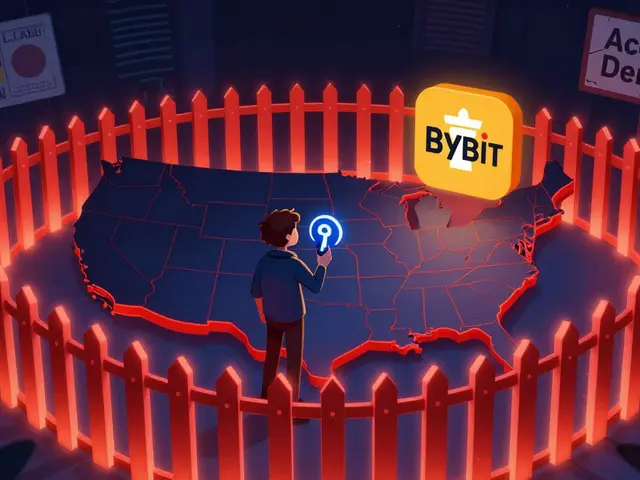
Bybit doesn’t guess where you are. It checks your IP address. Every time you connect to the internet, your device gets assigned an IP address tied to a physical location. Bybit’s system scans that IP in real time. If it shows up as coming from the U.S., Canada, Singapore, or any other restricted country, you’re locked out before you even see the login screen.
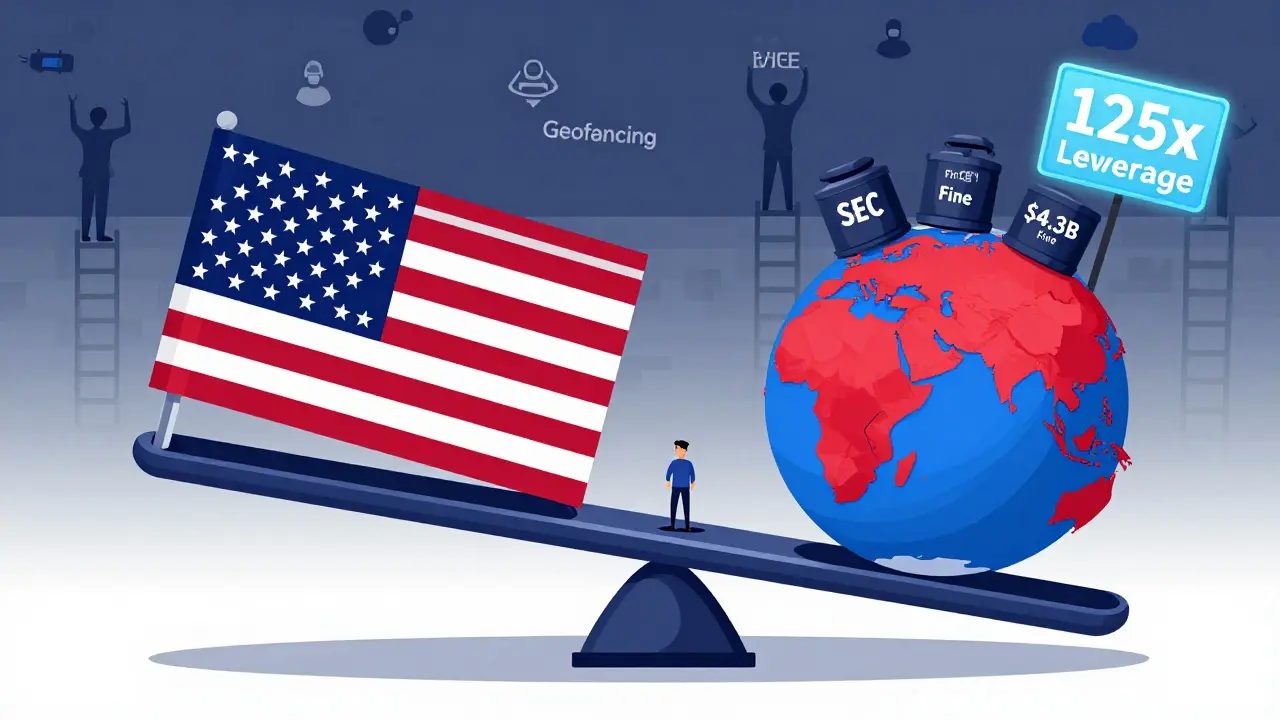
This isn’t random. Bybit’s terms of service clearly say you can’t use the platform if you’re in a jurisdiction where it doesn’t have regulatory approval. The U.S. is the biggest one. After Binance paid $4.3 billion to settle with U.S. regulators, other exchanges had to choose: leave the market, build a separate U.S. version, or block users outright. Bybit picked block.
It’s not just about U.S. users. Bybit also restricts access from countries like Iran, Syria, and parts of the EU where crypto regulations are either too strict or too unclear. The system uses a list of banned IP ranges-updated daily-based on data from geolocation providers like MaxMind and IP2Location. If your IP falls in a blocked zone, you’re out.
Why VPNs Work (For Now)
So what do people do? They use a VPN. Connect to a server in the Philippines, Thailand, or Germany. Change your IP. Log in. Complete KYC with a foreign ID. Done.
A CoinDesk investigation in late 2024 showed exactly how easy this is. Users in New York, Texas, and Florida connected to commercial VPNs like NordVPN and ExpressVPN, opened Bybit, and successfully verified their accounts using passports or national IDs from non-restricted countries. Some even used IDs belonging to friends or relatives living overseas.
Bybit’s system doesn’t check if the ID matches the IP. It checks if the ID exists and if the IP looks clean. That’s a gap. If your ID says you’re from Malaysia and your IP says you’re in Malaysia, the system says “approved.” It doesn’t ask: “Did you fly to Kuala Lumpur to do this?” or “Is this the same person who created the account?”
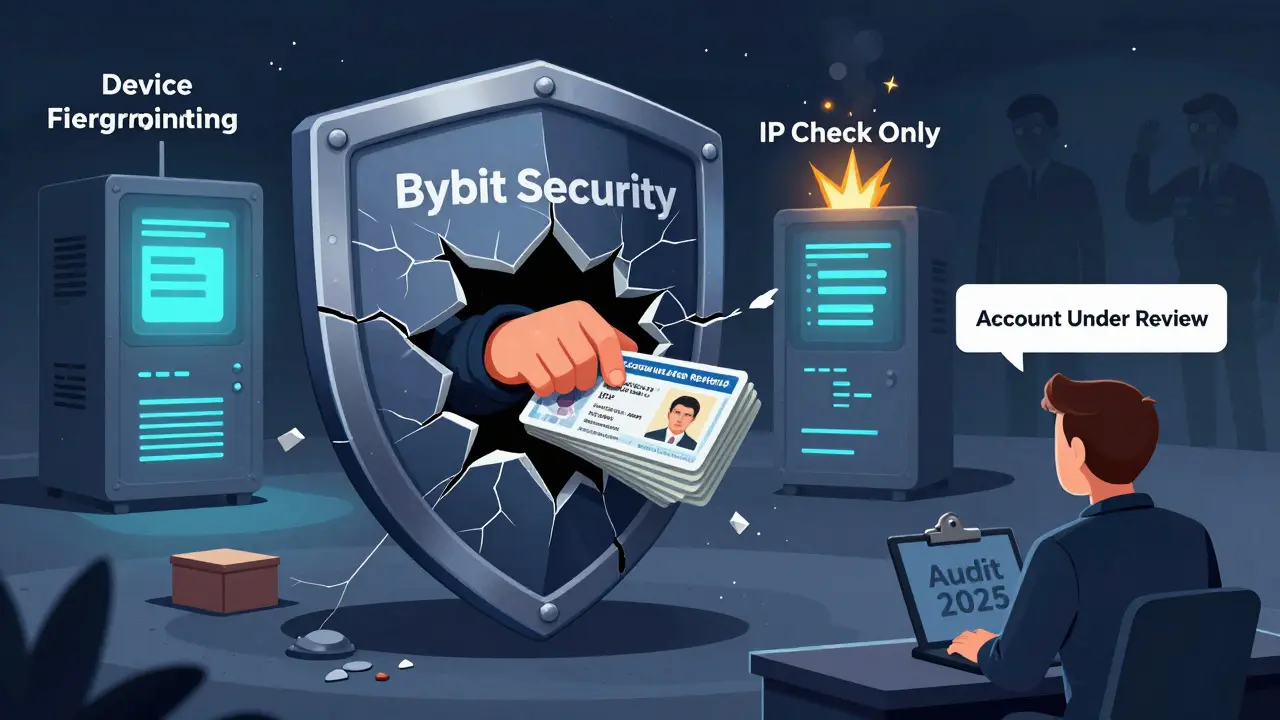
That’s why VPNs still work. Bybit relies on basic IP geolocation, not advanced detection. It doesn’t look at browser fingerprints. It doesn’t track mouse movements or typing speed. It doesn’t check if your device has been seen before on a known VPN network. Compared to exchanges like Kraken or Coinbase-which use device fingerprinting and behavioral analysis-Bybit’s approach is basic.
What Happens If You Get Caught?
Technically, using a VPN to bypass geofencing violates Bybit’s terms of service. But in practice, enforcement is patchy.
Some users report account freezes after a few months. Others get emails asking them to “confirm their location.” A few have had funds locked until they provide proof of residency. But many-especially those who use low-traffic VPN servers and avoid large deposits-never get flagged.
There’s no public record of Bybit shutting down thousands of U.S. accounts. That’s likely because doing so would trigger backlash. Traders from restricted regions are loyal. They use Bybit because it has low fees, deep liquidity, and advanced trading tools like perpetual contracts and leverage up to 125x. They’re not going to switch just because they got a warning email.
Legal experts from d&a partners confirm: most exchanges don’t actively pursue VPN users unless there’s a regulatory pressure or a major compliance audit. The cost of chasing thousands of users outweighs the risk of non-compliance-until a regulator steps in.
The Bigger Problem: Security and Trust
But here’s the real issue: geofencing and VPNs aren’t just about rules. They’re about trust.
In early 2024, Bybit suffered a $1.4 billion hack. Attackers from North Korea’s TraderTraitor group slipped malicious code into the SAFE Wallet interface-the system that handles multi-signature approvals. They tricked CEO Ben Zhou into approving fraudulent transactions by making them look like routine transfers. The system didn’t detect the fraud because it trusted the UI.
That breach exposed a deeper flaw: if a platform can’t protect its own infrastructure, how can it reliably enforce geographic rules? If hackers can manipulate the authentication system, what’s stopping them from faking IP data or bypassing geofencing entirely?
After the hack, Bybit hired Mandiant (Google’s cybersecurity arm) to rebuild its security layers. But the fix didn’t focus on geofencing. It focused on transaction signing, cold storage, and intrusion detection. The VPN loophole? Still wide open.
What’s Next for Bybit?
The crypto world is moving toward stricter controls. In August 2024, MakerDAO’s Spark Protocol blocked all VPN traffic-no exceptions. Even users in Europe or Japan got locked out if they used a proxy. That’s extreme. But it shows where the industry is heading.
Bybit is unlikely to go that far. It needs users. It needs volume. It needs to stay competitive.
Instead, expect smarter detection. Machine learning models that analyze connection patterns. Device fingerprinting that tracks hardware IDs, screen resolution, and time zones. Behavioral analysis that flags when a user logs in from Tokyo at 3 a.m. local time but has a U.S. phone number on file.
Some exchanges already do this. Kraken checks if your device has ever connected from a known proxy. Coinbase matches your login location with your billing address. These aren’t perfect-but they’re better than just checking an IP.
Bybit will likely add similar layers. But it won’t happen overnight. And until then, the system remains vulnerable.
What Should Traders Do?
If you’re in a restricted country:
- Understand the risks. Your account could be frozen. Funds could be locked.
- Don’t use free VPNs. They’re slow, leaky, and often logged. Use reputable services with strong privacy policies.
- Don’t mix U.S. documents with foreign IPs. If your ID says Canada, make sure your address, phone, and bank details align.
- Watch for emails from Bybit asking you to verify your location. Ignore them at your own risk.
- Consider switching to a licensed exchange like Coinbase or Kraken if you want full legal access.
If you’re outside the U.S. and wondering why you’re blocked: double-check your IP. Try a different network. Your ISP might be routing you through a U.S. server. Restart your router. Switch from Wi-Fi to mobile data.
Geofencing isn’t foolproof. But it’s here to stay. And as regulators tighten the screws, exchanges will have to choose: comply, lose users, or risk fines. Bybit’s current system is a bandage. Not a cure.
Can Bybit detect if I’m using a VPN?
Bybit currently detects VPNs only by IP address. If your IP shows up from a country you’re not supposed to be from, you get blocked. But if you connect to a VPN server in an allowed country, Bybit won’t know you’re using a VPN-unless it sees multiple logins from the same device across different locations, or if your payment method or ID doesn’t match your IP. It doesn’t use advanced fingerprinting yet.
Why does Bybit block U.S. users but not other countries?
The U.S. has the strictest crypto regulations. The SEC and FinCEN treat crypto exchanges like banks. They demand licenses, KYC, AML controls, and reporting-something Bybit hasn’t pursued. Other countries either don’t regulate crypto yet or have looser rules. Bybit avoids the legal risk by blocking U.S. users entirely instead of trying to comply.
Can I use Bybit with a U.S. phone number and foreign ID?
Technically, yes-but it’s risky. Bybit doesn’t cross-check phone numbers with IDs. But if you deposit from a U.S. bank or use a U.S.-based payment method, that’s a red flag. If they audit your account later, mismatched info could trigger a freeze or investigation. Consistency matters more than you think.
Is it illegal to use a VPN with Bybit?
In the U.S., using a VPN itself isn’t illegal. But violating Bybit’s terms of service by bypassing geofencing could lead to account closure or fund seizure. It’s a civil breach, not a criminal one-unless you’re using it to commit fraud, money laundering, or evade taxes. Then it’s a different story.
Will Bybit ever allow U.S. users again?
Only if it gets a U.S. license. That means registering with the SEC, implementing full AML systems, and submitting to regular audits. Bybit has shown no interest in doing that. It’s cheaper and easier to block users than to build a compliance team. Don’t expect a change unless U.S. crypto laws loosen dramatically.
Lisa Parker
I just got banned for using a VPN. No warning. No email. Just gone. My funds are stuck and I can't even contact support. This is such a scam. I trusted them because they had the best leverage. Now I'm out thousands and they don't care.
Fuck Bybit.
Aileen Rothstein
I get why they block the US, but the real issue is they don't even try to make it fair. If you're using a VPN with a foreign ID, you're not doing anything illegal-just trying to access a service that works better than the overregulated US ones. Kraken and Coinbase are fine, but they charge 5x the fees and have no real derivatives. Bybit's the only place where you can actually trade.
They should build a US-compliant version instead of just ghosting people. It's lazy and short-sighted.
Ian Plunkett
LMAO 💀 the fact that people think this is "hacking" the system is hilarious. You're not a hacker-you're a tourist with a Malaysian passport and a NordVPN subscription.
Bybit's system is a glorified gatekeeper with a blindfold. If they wanted to stop this, they'd use device fingerprinting like Kraken. Instead, they're just hoping you get bored and quit. Pathetic.
Avantika Mann
Hey everyone, I'm from India and I've been using Bybit for 2 years with a VPN. I use a German server and my ID is from Singapore. I've never had an issue. But I always keep my bank details and phone number aligned with my ID. It's not about being sneaky-it's about being smart.
Don't mix US numbers with foreign IDs. That's asking for trouble. Stay consistent, stay low-key, and you'll be fine.
Sasha Wynnters
We live in a world where a corporation can decide you're not allowed to participate in a global financial system because you were born on the wrong side of a border.
Geofencing isn't regulation-it's digital apartheid. Bybit doesn't care if you're a skilled trader. They care if your IP matches their spreadsheet. That's not security. That's cowardice wrapped in compliance.
The real criminals? The regulators who turned crypto into a gated community.
Charrie VanVleet
I’ve used Bybit for years with a VPN and never had a problem. I even helped my cousin in Texas set it up. He’s now trading 125x leveraged BTC and loving it.
Look, I get the legal stuff-but if you’re not laundering money or evading taxes, why should a company’s compliance policy decide your financial freedom?
Use a paid VPN. Don’t mix US info. Keep it quiet. You’re not doing anything wrong. 🤝
Scott McCrossan
You people are delusional. You think this is about freedom? It's about liability. Bybit doesn't want to be the next Binance. They don't want to pay $4.3B. You're not a victim-you're a liability waiting to happen.
If you're in the US, use Coinbase. It's regulated. It's safe. It's boring.
Stop trying to game a system that's designed to stop you. You're not clever. You're just asking for your funds to vanish one day.
Rajib Hossaim
I appreciate the depth of this analysis. The technical details around IP geolocation and the lack of behavioral detection are spot on. However, I would like to add that the ethical dimension is often overlooked. Many users in restricted regions rely on these platforms for income, especially in developing economies.
While compliance is necessary, a more nuanced approach-such as tiered access based on KYC depth-could balance regulation and accessibility. Blanket bans are inefficient and unjust.
Beth Erickson
U.S. users are the problem. You want to trade crypto but don't want to follow the rules. You use VPNs like it's a game. Well guess what? The system works. You're not being discriminated against-you're being blocked because you're trying to cheat.
If you want to trade, move. Or get a license. Or shut up and use Coinbase like everyone else.
Ruby Ababio-Fernandez
They block us. We use VPNs. They don't care. It's a game of cat and mouse. I've been doing this for 3 years. No issues. Stop overthinking it.
Jenn Estes
You think you're smart using a VPN? You're just giving Bybit a reason to eventually freeze every account they can. You're not winning. You're just delaying the inevitable.
One day you'll wake up and your entire portfolio will be gone. And you'll have no recourse. Because you broke the rules.
Don't say I didn't warn you.
Angela Henderson
I used to trade on Bybit all the time. I had a German IP and a Canadian passport. I even used my sister's old ID because it had a clean history. Worked fine for two years. Then one day I got an email saying they needed to verify my residency. I just ignored it. Still have my funds. Still trading.
I don't think they even look at most accounts. They only go after the big ones. If you're not depositing $100k+ every month, you're basically invisible.
Just keep it low key. Don't be greedy. And don't use your real phone number. That's the one thing that'll get you.
James Breithaupt
The real story here isn't geofencing-it's the architectural debt of crypto exchanges. Bybit built a platform optimized for liquidity and leverage, not compliance. Their API is clean, their order book is deep, their UI is buttery. But their backend? A patchwork of third-party geolocation APIs and half-assed KYC checks.
That's why they can't detect VPNs. They don't have the infra. Kraken and Coinbase spent billions on fraud detection. Bybit spent it on marketing and dev salaries.
The loophole isn't a bug-it's a feature of their business model. They're betting that regulators won't catch them before they hit $100B in volume. And honestly? They might win.