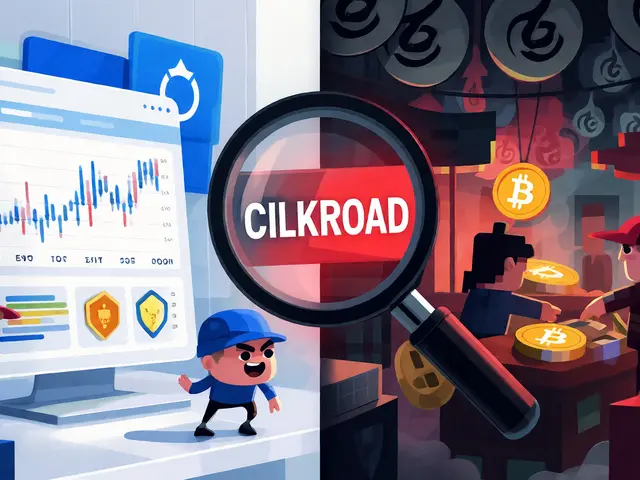
You might be searching for a CILKROAD crypto exchange because you saw it mentioned in a chat group, a shady ad, or maybe you’re confusing it with the infamous Silk Road marketplace. Here’s the hard truth: as of September 2026, there is no major, regulated cryptocurrency exchange operating under the name "CILKROAD." If you are seeing this name attached to a platform promising high returns or unique trading pairs, proceed with extreme caution. It sounds suspiciously like a typo for "Silk Road," which wasn’t an exchange at all, but a darknet black market that shut down over a decade ago.
Let’s clear up the confusion immediately. The term "Silk Road" refers to a historical online black market active from 2011 to 2013, not a modern trading venue. Meanwhile, "CILKROAD" appears to be either a very new, unverified startup, a misspelling, or potentially a fraudulent entity capitalizing on the nostalgia and mystery surrounding early crypto history. This review breaks down why you need to be skeptical, what the actual history of Silk Road entails, and how to spot a fake exchange before you deposit your money.
The Name Game: Is CILKROAD Just a Typo?
First things first: check your spelling. Did you mean Silk Road? If so, you’re looking at a piece of internet history, not a place to buy Bitcoin today. Silk Road was a hidden service on the Tor network created by Ross Ulbricht (known as Dread Pirate Roberts). It operated like an eBay for illicit goods, using Bitcoin as its sole currency. It wasn’t an exchange where you traded BTC for USD; it was a marketplace where you spent BTC to buy products. The FBI shut it down in October 2013. Today, you can’t log into Silk Road and trade.
If you definitely meant "CILKROAD," you are likely dealing with a micro-cap or newly launched platform. In the crypto world, new exchanges pop up daily. Some are legitimate projects trying to capture niche markets; others are scams designed to steal deposits. Because CILKROAD lacks significant recognition in major financial news outlets or regulatory filings as of late 2026, it falls into the "high risk" category. You need to verify if it has a license, who runs it, and whether it actually holds user funds in custody.
Why People Confuse Exchanges and Marketplaces
It’s easy to mix up these concepts if you’re new to crypto. An exchange, like Coinbase or Binance, lets you swap currencies. You put in dollars, get out Bitcoin. A marketplace, like the old Silk Road, lets you use Bitcoin to buy physical goods. The confusion often stems from the fact that early Bitcoin adoption was driven heavily by Silk Road. Many people think Silk Road *was* the reason Bitcoin became valuable, so they assume it must have been a major financial institution. It wasn’t. It was a retail store. Understanding this distinction helps you avoid platforms that claim to be "the next Silk Road" but don’t explain their actual business model.
Legitimate exchanges provide liquidity. They match buyers and sellers. Darknet marketplaces provided anonymity and escrow services for illegal transactions. When a new platform calls itself a "crypto exchange" but uses language reminiscent of Silk Road (like "private deals" or "untraceable trades"), ask yourself: are they offering trading infrastructure, or are they hiding something?
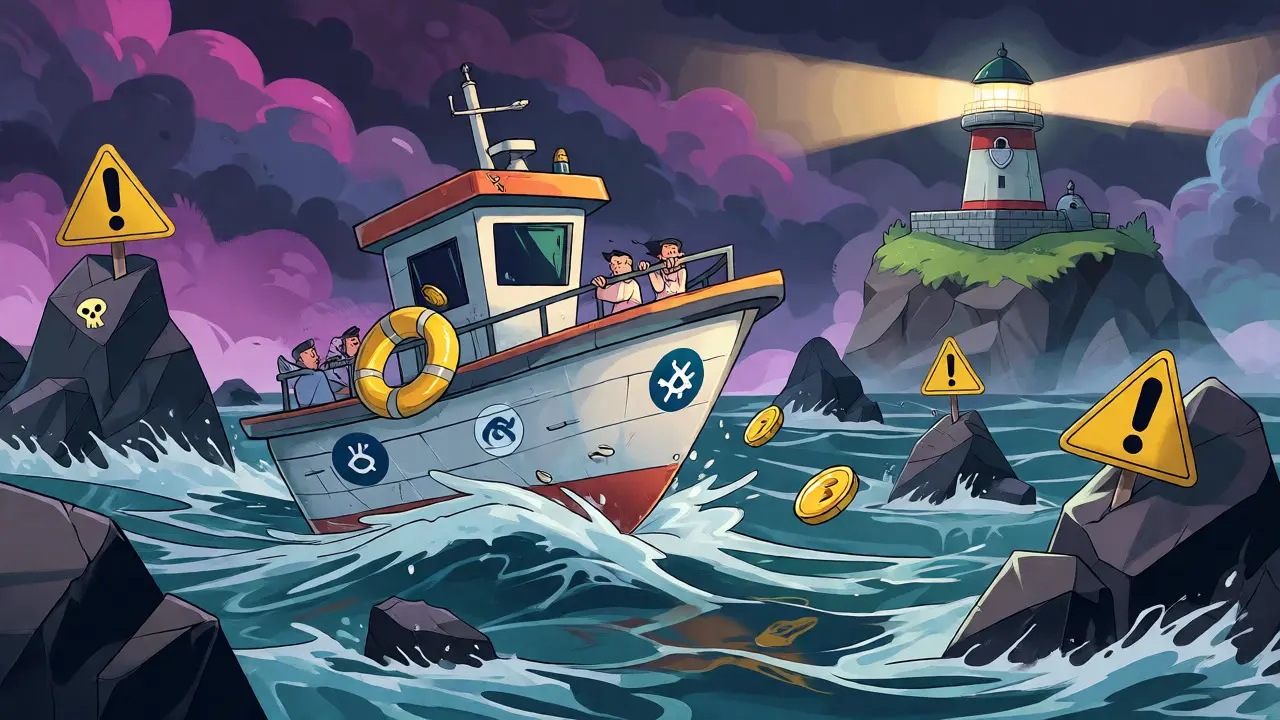
Red Flags for New or Unknown Exchanges
If CILKROAD is indeed a real, live platform you want to try, here is what you need to look for. Most reputable exchanges display their licenses prominently. If CILKROAD doesn’t list a regulator (like the SEC in the US, FCA in the UK, or ASIC in Australia), that’s a huge warning sign. Also, check for proof of reserves. Since the collapse of FTX in 2022, users expect transparency. Does CILKROAD publish Merkle tree audits? If not, you have no idea if they actually hold your coins.
- No Regulatory License: Operating without oversight means no recourse if they disappear.
- Promises of Guaranteed Returns: Exchanges facilitate trading; they don’t guarantee profits. If they promise 5% weekly interest, it’s likely a Ponzi scheme.
- Withdrawal Issues: Search Reddit or Twitter for recent complaints about withdrawals. Scams often let you deposit easily but block withdrawals until you pay a "tax" or "fee."
- Anonymous Team: Who runs CILKROAD? If the founders aren’t public figures with verifiable LinkedIn profiles, trust levels should be low.
The Historical Context: What Was Silk Road Really?
To understand why the name "Silk Road" carries such weight, we have to look at its actual impact. During its 2.5-year operation, Silk Road processed roughly $183 million in Bitcoin transactions. That sounds like a lot, but compared to modern standards, it was tiny. For context, Coinbase alone reported $1.5 trillion in quarterly trading volume in Q4 2024. Silk Road was a niche player that punched above its weight in media coverage because it represented the "wild west" of crypto.
The platform charged sellers an 8-12% commission. It used an escrow system where Bitcoin was held until the buyer confirmed receipt. This technical innovation-using smart contracts or manual escrow to build trust among strangers-is one of the few positive legacies of the site. However, its centralized nature was its downfall. When Ross Ulbricht was arrested in a San Francisco library in 2013, the entire platform collapsed within 24 hours. Modern decentralized exchanges (DEXs) aim to solve this single-point-of-failure problem, but many new "exchanges" still rely on centralized servers owned by anonymous admins.
Comparison: Silk Road vs. Modern Exchanges
Here is how the historical Silk Road compares to the type of platform you might find if CILKROAD is a legitimate attempt at a new exchange. Note the stark differences in compliance and scale.
| Feature | Silk Road (2011-2013) | Regulated Exchange (e.g., Coinbase) | Unregulated Startup (Potential CILKROAD) |
|---|---|---|---|
| Primary Function | Retail Marketplace (Goods for BTC) | Currency Trading (Fiat/Crypto) | Unknown / High Risk |
| Anonymity | Total (Tor Network) | KYC Required (ID Verification) | Often Claims "No KYC" |
| Regulation | None (Illegal) | Fully Licensed | Likely Unlicensed |
| Transaction Volume | $183 Million (Lifetime) | Trillions Annually | Minimal / Unverified |
| Security Model | Centralized Escrow | Cold Storage + Insurance | Depends on Tech Stack |
How to Verify a Crypto Exchange Before Depositing
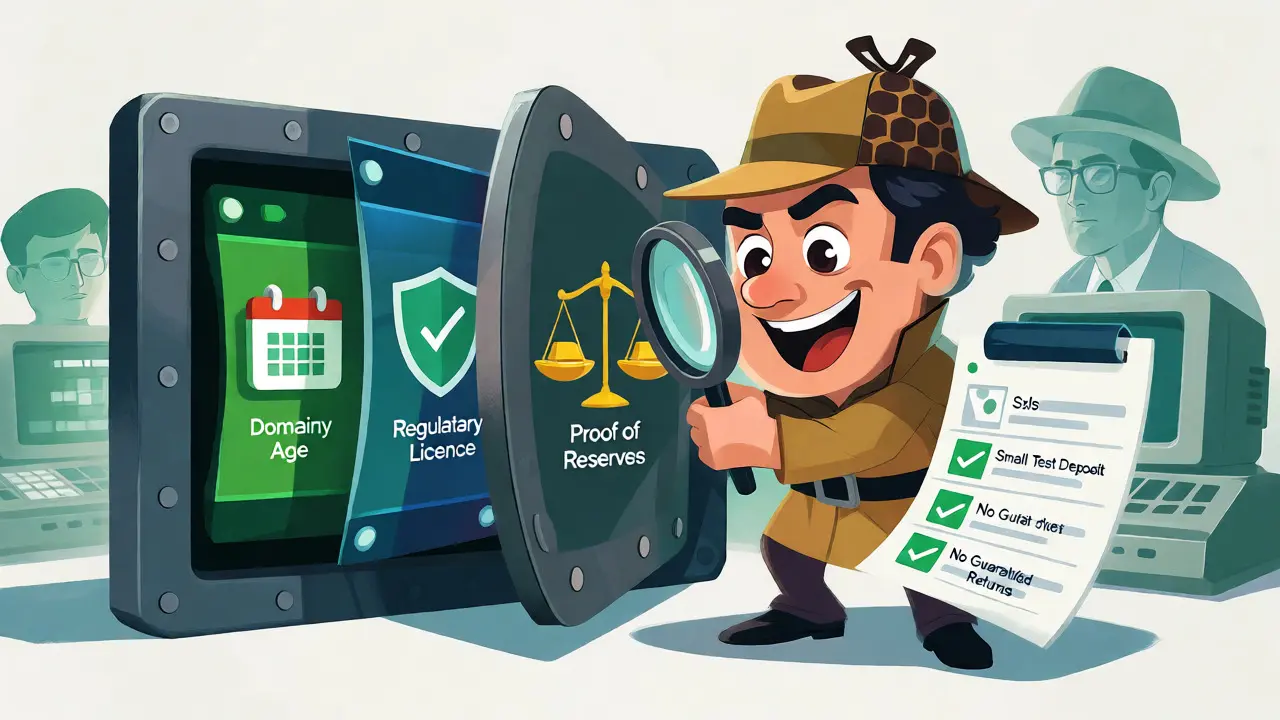
Don’t just take a website’s word for it. Use these three steps to vet any platform, including CILKROAD.
- Check the Domain Age: Go to WHO.is and type in the domain. If the site claims to be established but the domain was registered last month, run away. Scammers often buy expired domains to look older than they are.
- Search for Negative Reviews: Type "[Platform Name] withdrawal problem" into a search engine. Ignore generic five-star reviews on Trustpilot; look for specific stories about stuck funds. Real users complain when their money is locked.
- Test with Small Amounts: Never deposit your life savings. Deposit $50. Try to withdraw it after a day. If the process is smooth and fast, the platform works. If they ask for more deposits to "unlock" your withdrawal, you’ve been scammed.
The Legacy of Silk Road in Modern Crypto
Even though Silk Road is gone, its DNA lives on. The demand for privacy led to the creation of privacy coins like Monero and Zcash. The need for secure, anonymous communication drove improvements in the Tor Project, which now hosts legitimate sites like the New York Times’ mirror. Furthermore, the concept of "decentralized reputation"-where vendors are rated by peers rather than corporate ads-has influenced Web3 social networks and NFT marketplaces.
However, the regulatory backlash against Silk Road was severe. It directly contributed to the BitLicense framework in New York and stricter Anti-Money Laundering (AML) laws globally. This is why most legitimate exchanges today require ID verification. If a new platform promises "Silk Road-style anonymity" with "institutional-grade security," they are selling you a fantasy. You generally have to choose between convenience/compliance and total anonymity.
Final Verdict on CILKROAD
As of September 2026, CILKROAD does not appear in major crypto indices like CoinMarketCap or CoinGecko as a top-tier exchange. This suggests it is either extremely new, very small, or not a legitimate exchange at all. If you are considering using it, treat it as a speculative experiment, not a primary banking partner. Keep your holdings on hardware wallets or established exchanges until CILKROAD proves its longevity through multiple audit cycles and regulatory approvals.
Remember, in crypto, if it sounds too good to be true-or if the name feels oddly familiar-it probably is. Don’t let nostalgia or clever branding blind you to basic due diligence.
Is CILKROAD a scam?
There is no definitive proof that CILKROAD is a scam, but it lacks the regulatory footprint and public recognition of major exchanges. It may be a typo for "Silk Road," which was a darknet market, not an exchange. Always exercise caution with unknown platforms.
Was Silk Road a cryptocurrency exchange?
No. Silk Road was an online black market that accepted Bitcoin as payment for goods. It did not facilitate trading between different cryptocurrencies or fiat currencies like a traditional exchange.
Can I still use Silk Road today?
The original Silk Road was shut down by the FBI in 2013. While successors exist, none have achieved the same dominance, and the legal risks remain high. It is not a viable option for casual crypto traders.
What should I check before signing up for a new crypto exchange?
Verify the domain age, check for regulatory licenses, read independent user reviews regarding withdrawals, and test the platform with a small deposit and withdrawal before committing significant funds.
Why do some exchanges require KYC?
KYC (Know Your Customer) requirements help prevent money laundering and fraud. Regulations introduced after the Silk Road era forced legitimate exchanges to verify user identities to maintain banking partnerships and legal compliance.
Write a comment