Quick Summary
Here are the most critical takeaways for managing your digital asset exposure in 2026:
- Keep total cryptocurrency allocation between 1% and 5% of your overall net worth to balance risk and reward.
- Use a graduated approach based on monthly income; higher income earners can safely allocate larger sums while maintaining security.
- Structure your crypto holdings internally: 60-70% Bitcoin/Ethereum, 20-30% Altcoins, 5-10% Stablecoins.
- If you feel anxiety when checking prices, your position size is too high for your psychological tolerance.
- Implement systematic buying via Dollar-Cost Averaging rather than timing the market with lump sums.
The Core Question: How Much Should You Invest?
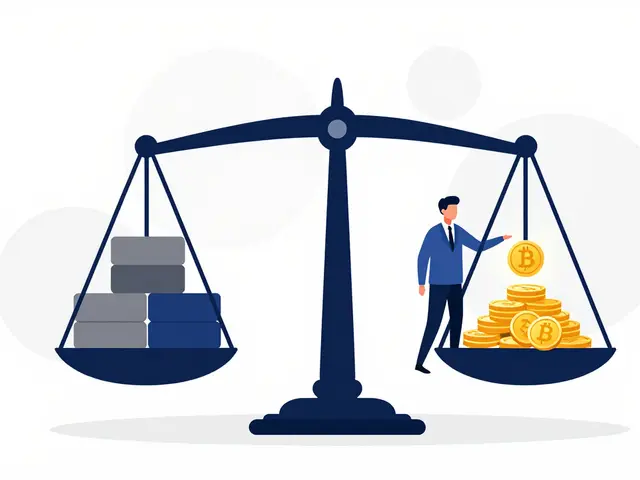
When you walk into a financial planning meeting in 2026, the conversation about digital assets has shifted. It is no longer about if you should have them, but how much. The volatility that defined the early years of the industry has smoothed out slightly, yet the risk remains real. Financial advisors and institutional researchers agree on one primary constraint: do not let crypto become your entire financial plan.
Crypto Portfolio Allocation is the strategic process of deciding what percentage of an investor\'s total assets should be held in digital currencies. Also known as Digital Asset Weighting, it determines exposure to volatility while capturing growth potential. The consensus among experts, including data from Q1 2025 research by 21Shares, suggests that modest allocations of 1-3% improve portfolio efficiency without spiking risk. This means that if you hold a traditional investment portfolio of stocks and bonds, adding a small slice of Bitcoin or Ethereum can enhance returns and diversify risk, provided you keep it controlled.
The "sleep test" remains the ultimate metric for personal safety. If checking the price chart keeps you awake at night or causes panic during dips, the allocation is simply too large for your psychological profile. This isn't just about money management; it is about emotional resilience. Many professionals recommend keeping the cap at 5% of total investable assets. For some conservative plans, even 1% is considered optimal. The goal is participation in upside potential without jeopardizing your ability to meet essential financial obligations like mortgages or emergency savings.

Income-Based Allocation Framework
Your income level dictates your capacity to absorb loss, which directly influences your recommended crypto position size. A one-size-fits-all percentage rarely works because absolute dollar amounts matter more when cash flow is tight. The 2025 Quppy analysis provides a concrete framework that many advisors have adopted for individual clients entering 2026.
If you earn approximately $1,500 per month, the recommendation is to limit your crypto spend to 1%, which equates to roughly $15. At this level, you focus strictly on established assets like Bitcoin is a decentralized digital currency created in 2009 that operates on a blockchain network. Known for its store-of-value properties, it often serves as the foundation for diversified portfolios. through dollar-cost averaging. There is no room for experimental tokens when your monthly surplus is limited.
For those earning $3,000 monthly, you can consider a 3% allocation ($90). This allows for a slight expansion into a mix of Bitcoin and Ethereum is a programmable blockchain platform enabling smart contracts and decentralized applications. As the second-largest cryptocurrency, it underpins the DeFi ecosystem.. When your monthly income reaches $5,000, a 5% allocation ($250) becomes viable, potentially introducing DeFi tokens alongside your core holdings. Finally, high earners above $8,000 monthly may allocate 10% or more ($800+), granting enough capital to employ active trading strategies alongside long-term holding.
| Monthly Income | Allocation % | Monthly Amount | Asset Focus |
|---|---|---|---|
| $1,500 | 1% | $15 | Bitcoin only |
| $3,000 | 3% | $90 | Bitcoin & Ethereum |
| $5,000 | 5% | $250 | BTC, ETH, & DeFi Tokens |
| $8,000+ | 10%+ | $800+ | Active & Long-term Mix |
Constructing the Internal Mix
Once you decide on the total size of your crypto bucket, you must decide how to distribute that amount within the sector itself. Putting 100% of your crypto budget into low-cap altcoins is speculative gambling, not investing. Institutional best practices from organizations like XBTO suggest a tiered structure for stability and growth.
The foundation consists of Core Assets. Bitcoin and Ethereum should comprise 60-70% of your crypto holding. These represent the largest, most liquid, and most widely adopted digital assets. They act as your blue-chip equivalent. Next, allocate 20-30% to Altcoins. This category includes Layer-1 protocols, Layer-2 scaling solutions, and infrastructure tokens. These carry higher risk but offer outsized return potential. Finally, reserve 5-10% for Stablecoins like USDC or USDT. These serve as cash-equivalent holdings for yield generation and provide dry powder to buy dips during volatile periods.
A hypothetical institutional split might look like 60% Core Assets, 30% Diversified Altcoins, and 10% Stablecoins. However, exact ratios should be tailored to your risk tolerance. If you are approaching retirement, you would skew heavily toward the stable and core categories. Younger investors with decades of time horizon can afford a heavier tilt toward altcoins.

Warning Signs of Overallocation
Real investor experiences reveal psychological traps that support conservative recommendations. Warning signs that your position is too heavy include mood dependency on crypto charts and panic-selling during minor corrections. If you find yourself dipping into emergency funds to buy back into crypto, you have crossed the line into dangerous territory. Feeling anxious about every market move or making impulsive decisions based on social media sentiment are red flags.
Morningstar's Role in Portfolio framework emphasizes holding for at least 10 years. They note that as Bitcoin and Ethereum become more mainstream, their correlation with traditional assets rises. This reduces their effectiveness as pure hedges, supporting lower weightings of 5% or less for many. The firm acknowledges that extreme volatility and drawdown risks necessitate caution. Many investors may want to skip cryptocurrency altogether according to this analysis, prioritizing capital preservation over speculative gains.
Implementation Strategies for 2026
How you enter the market matters just as much as how much you enter. Systematic approaches significantly reduce the impact of entry timing errors. Dollar-cost averaging (DCA) appears as the predominant recommendation across income levels. Instead of trying to catch the bottom, you buy a fixed amount at regular intervals regardless of price. MaterialBitcoin analysis shows historical validation of this approach, noting exceptional performance over the decade, though past results never guarantee future outcomes.
DCA smooths out the volatility. You buy more units when the price is low and fewer when it is high. This removes the emotional stress of trying to time the peak or trough. Beginners are advised to start with Bitcoin before gradually exploring altcoins and more experimental tokens as they gain experience. This ladder approach builds confidence and understanding of the technology without exposing your principal to unnecessary complexity.
Current market dynamics in 2026 suggest evolving risk-return profiles. Bitcoin's volatility is compressing while its price structurally rises, indicating a maturing asset class. This pattern shifts the investment question from whether to allocate to cryptocurrency to when to make the allocation. Two simultaneous trends-decreasing volatility and structural price appreciation-suggest that investors remaining on the sidelines face not just volatility risk but opportunity cost considerations. However, the fundamental principle remains constant: never compromise your ability to meet essential financial obligations.
What is the safest percentage of my portfolio for crypto?
Most financial advisors recommend keeping crypto allocations below 5% of total assets. Research indicates that 1-3% often improves portfolio efficiency without meaningfully increasing risk, offering a balance between growth potential and capital preservation.
Should I put more into crypto as I get older?
Generally, no. As you age, your time horizon shrinks and your need for liquidity increases. Experts typically suggest reducing risky asset exposure, including crypto, as you approach retirement to protect accumulated wealth from sudden market drawdowns.
Is it better to buy all at once or over time?
Dollar-cost averaging over time is the preferred strategy for most investors. Buying a fixed amount regularly reduces the risk of entering at a local maximum and helps manage the psychological stress of volatility.
Do stablecoins count towards my crypto allocation?
Stablecoins like USDC or USDT should technically remain separate from your risk allocation since they are pegged to fiat currency. They function more like digital cash reserves for rebalancing or yield generation.
What if the crypto market crashes?
If your total allocation is kept to 1-5%, a 50% drop in crypto value translates to only a tiny dent in your overall net worth. This ensures you can stay invested without selling other life-sustaining assets like your home or emergency fund.

Alex Kuzmenko
income brackets are key because budgeting changes everything for us regular folks. dont put more than you can afford to lose even if btc goes up sky high. i knw what its like to stress over charts so keep it under five percent for peace. thnks for sharing the table
Elizabeth Akers
sleep at night matters more than profits imo. the sleep test is actually accurate because anxiety kills investment logic. if you check prices hourly then maybe scale back to one percent
Alex Lo
Looking at the history of tech adoption cycles shows early volatility giving way to stability. so keeping five percent is actually conservative enough while still letting you capture massive gains without losing your house. right now I think the biggest mistake people make is trying to time the market which is impossible even for proffesionals. and I am saying this as someone who has been trding since 2018. so listen to the part about dollar cost averaging because putting money in every single month regardless of price removes the emotional panic factor. and trust me I saw many friends lose everything during the bear markets of previous years. and I did not want that for anyone reading this thread today. especially since we are moving into a regulated environment where things are finally getting safer and clearer for everyone involved in the ecosystem. I also really appreciate the breakdown on income levels because people forget that cash flow matters more than net worth sometimes. If you only have a small surplus every month then throwing it all at risky altcoins is just asking for trouble down the road. Bitcoin has become so much safer now compared to what it was a decade ago back in the day. Ethereum is also maturing nicely with all the new upgrades they keep pushing out every few months now. The stablecoin portion is smart too for holding dry powder ready for dips. You want to buy when others are panicking not when everyone is hyped. Emotional control is basically half the game these days. I know some folks get super stressed watching green candles turn red overnight. But if you stick to a plan it really helps sleep better at night. Financial planning meetings in 2026 will probably look very different than they did back in 2020 or 2021. We are seeing real correlation changes between stocks and digital assets happening slowly. Diversification is key but not having exposure is also a risk in itself. Just do not go all in on meme coins thinking it will flip your life forever. Stick to the core metrics outlined above for safety
Lisa Miller
Feeling secure is just as important as the returns. I really like how the guide mentions protecting emergency funds first. That builds a lot of confidence to hold through the dips. We can always buy more when we feel brave again. Growth happens best when we are calm during the storm. Stay positive about the long term goals
Matt Bridger
Empirical data suggests caution remains necessary in volatile markets. The proposed 1-3% range aligns with historical drawdown tolerances observed in Q1 studies. Institutional frameworks often mirror these percentages for client asset protection. Therefore adherence to strict caps is prudent. Risk mitigation outweighs potential alpha generation
Beverly Menezes
Keeping it simple helps avoid big losses. Most people just need to buy bitcoin and eth. Adding too many coins confuses the picture easily. Less is definitely more for beginners. Just follow the basic rules
Chris R
Global trends show diversification is vital. Different countries face different inflation rates so crypto balances this well. We should all move forward with shared understanding of risk. Peace of mind is a universal goal here. Everyone benefits from steady allocation plans
Markus Church
Correlation metrics indicate shifting dynamics. Traditional assets may not hedge perfectly anymore in the current climate. Observation of market behavior confirms this trend slowly. Caution is required when rebalancing portfolios quarterly
Leah Lara
General investors find this useful
Samson Abraham
Structure is essential for long term growth. The methodology here is sound but execution requires discipline. Psychological factors are often underestimated in financial modeling. Discipline leads to consistency