The Sleep Test for Your Money
Do you check your wallet balance three times a morning? Does a red candle on a chart spike your heart rate before your coffee kicks in? That’s the first sign your crypto portfolio size might be bigger than you can handle. Most people start investing without a clear plan, riding hype cycles until the market corrects and their panic sets in. In March 2026, we have years of data proving that conservative limits work better than chasing the moon.
Your financial health shouldn’t depend on whether Bitcoin breaks its all-time high today. A solid strategy relies on what fits into your life without ruining your peace of mind. If you lose sleep over your holdings, cut the allocation down immediately. It doesn’t matter if others made millions; your job is to preserve your own stability.
How Much of Your Total Assets Should Be Digital?
Financial advisors usually recommend keeping speculative assets separate from your core retirement nest egg. Back in 2025, the 21Shares research firm analyzed market performance from April 2022 through March 2025. Their findings were surprisingly positive for small positions. Allocating just 1% to 3% improved the efficiency of the overall portfolio without causing massive drawdowns. It raised the Sharpe ratio, which means better return per unit of risk taken.
This empirical evidence supports adding cryptocurrency as a diversifier. However, you shouldn’t treat it like a standard stock index fund. It behaves differently. When traditional markets crash, crypto sometimes falls harder, though correlations are shifting. Experts generally cap the allocation at 5% to 10% of your total net worth. Going above that turns a growth opportunity into a gamble.
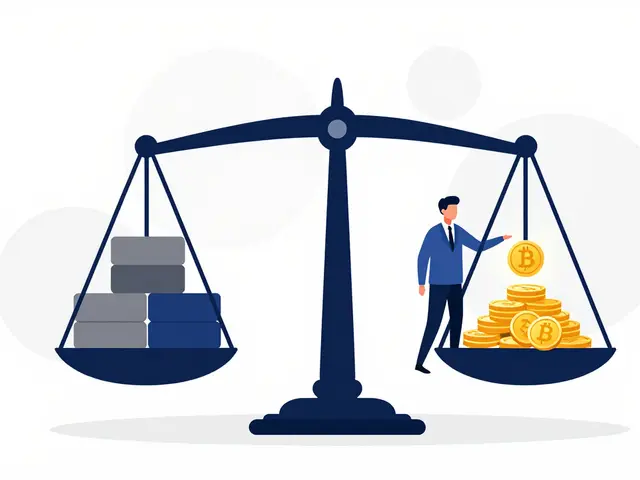
A balanced Cryptocurrency Portfolio typically consists of high-adoption assets like Bitcoin and Ethereum paired with stable instruments to mitigate risk during volatile periods.Tailoring Allocations to Your Income Level
Your monthly cash flow dictates how much you can safely park in digital assets. A framework released by Quppy in 2025 provides specific monthly breakdowns that many found useful. You need to match risk exposure to financial capacity. If you earn less, your safety margin is thinner, so your crypto percentage should stay minimal.
| Monthly Income | Recommended Allocation % | Strategy Focus |
|---|---|---|
| $1,500 | 1% | Bitcoin only via dollar-cost averaging |
| $3,000 | 3% | Bitcoin and Ethereum mix |
| $5,000 | 5% | Add DeFi tokens to core holdings |
| $8,000+ | 10% or more | Active and long-term experimental strategies |
Notice the progression here. High earners can afford to take risks because their essential needs are covered elsewhere. Someone making $1,500 cannot dip into rent money to buy a coin when the price dips. Stick to the lower end of the spectrum if your savings account isn’t thick with emergency cash. The goal is to participate in potential upside without losing access to liquidity for bills.

Building the Internal Crypto Mix
Deciding you want 5% of your wealth in crypto is step one. Step two is figuring out what goes inside that 5%. You don’t just dump it all into random memes coins. Institutional best practices from XBTO suggest a tiered approach to manage internal risk.
- Core Assets (60-70%): These are Bitcoin and Ethereum. They represent the largest, most liquid foundation. They are the blue chips of the space.
- Altcoins (20-30%): Layer-1 protocols, scaling solutions, and infrastructure tokens. This captures higher growth potential.
- Stablecoins (5-10%): USDC or USDT. Keep dry powder ready for yield generation or buying dips during crashes.
A hypothetical institutional split might look like 60% core, 30% altcoins, and 10% stablecoins. However, beginners often ignore the stablecoin portion. Keeping some cash-equivalent value lets you rebalance without selling other assets at a loss. It gives you flexibility during risk-off periods.
Psychological Risks and Warning Signs
Morningstar has noted a critical trend in investor behavior. As Bitcoin becomes mainstream, it loses some of its diversification magic because it starts moving like tech stocks. Their Role in Portfolio framework suggests holding for at least ten years. Short-term noise gets amplified when you allocate too much capital.
Real investors report common pitfalls that support conservative limits. If your mood depends on the chart, stop trading. Panic-selling during market dips destroys returns. Using emergency funds for speculation is a recipe for disaster. Feeling anxious about every market move signals the position is too heavy.
Sleep quality is the ultimate metric. If you are tossing and turning because the price dropped $1,000, reduce your exposure. Cryptocurrency should complement a financial plan rather than replace it. It requires careful budgeting around crypto, not squeezing it in during hype cycles.

Dollar-Cost Averaging Over Lump Sums
Timing the market never works. Implementation matters more than entry timing. Systematic approaches beat emotional decisions. Dollar-cost averaging (DCA) is the predominant recommendation across income levels. You invest a fixed amount regularly regardless of the price.
History validates this method. An analysis by MaterialBitcoin shows a $1,000 investment in Bitcoin ten years ago would be valued at approximately $350,000 by May 2025. While that sounds incredible, it comes with extreme volatility along the way. DCA smooths out that ride. It prevents buying the top during bubbles and ensures you accumulate more units when prices are low.
Looking Ahead in 2026
We are seeing market dynamics shift toward maturity. Volatility is compressing while structural prices rise. Long-term opportunity may outweigh near-term hesitation. Two simultaneous trends suggest that waiting on the sidelines costs you opportunity. Decreasing volatility combined with price appreciation shifts the question from “whether” to “when.”
Risk management protocols emphasize the speculative nature of these assets. We cannot pin down fundamental values easily yet. Regulatory uncertainty remains a factor. Portfolio construction should prioritize capital preservation in traditional assets while using small allocations to capture potential upside.
Should I put 100% of my savings into crypto?
No, allocating 100% creates extreme risk. Advisors recommend limiting crypto to 1-10% of total assets to prevent jeopardizing essential financial security.
Is Bitcoin better than Ethereum for beginners?
Bitcoin is generally recommended as the starting point due to its longevity and liquidity. Ethereum offers higher potential risk/reward but carries more technical complexity.
When should I rebalance my portfolio?
Rebalance quarterly or when an asset deviates significantly (e.g., 20%) from your target allocation. Selling high and buying low is the goal.
Do stablecoins count toward my 5% allocation limit?
Yes, stablecoins are part of the crypto exposure. While safer, they carry counterparty risk and regulatory considerations distinct from bank deposits.
What happens if the correlation between crypto and stocks rises?
High correlation reduces diversification benefits. In this case, you should likely lower your crypto allocation since it no longer protects against stock market downturns.

Write a comment