Money doesn't sleep, and neither does the global effort to track it. If you think moving cryptocurrency across borders is a way to slip past financial nets, you are operating under an outdated assumption. By 2026, the era of anonymous cross-border crypto transfers is effectively over for anyone using regulated platforms. International authorities have woven a tight net of surveillance, data sharing, and strict reporting requirements that make digital assets nearly as transparent as traditional bank wires.
This isn't just about catching criminals; it's about reshaping how money moves globally. From the United States to the European Union, regulators are treating Cross-border crypto monitoring is the systematic tracking and reporting of cryptocurrency transactions that move between different countries to prevent illicit finance. The stakes are high: billions of dollars in sanctions evasion, money laundering, and terrorism financing are being targeted by agencies like FinCEN, the SEC, and the UK's OFSI. If you are holding, trading, or transferring crypto internationally, understanding this landscape is no longer optional-it's essential for compliance and safety.
The Core Mechanism: The Travel Rule Goes Global
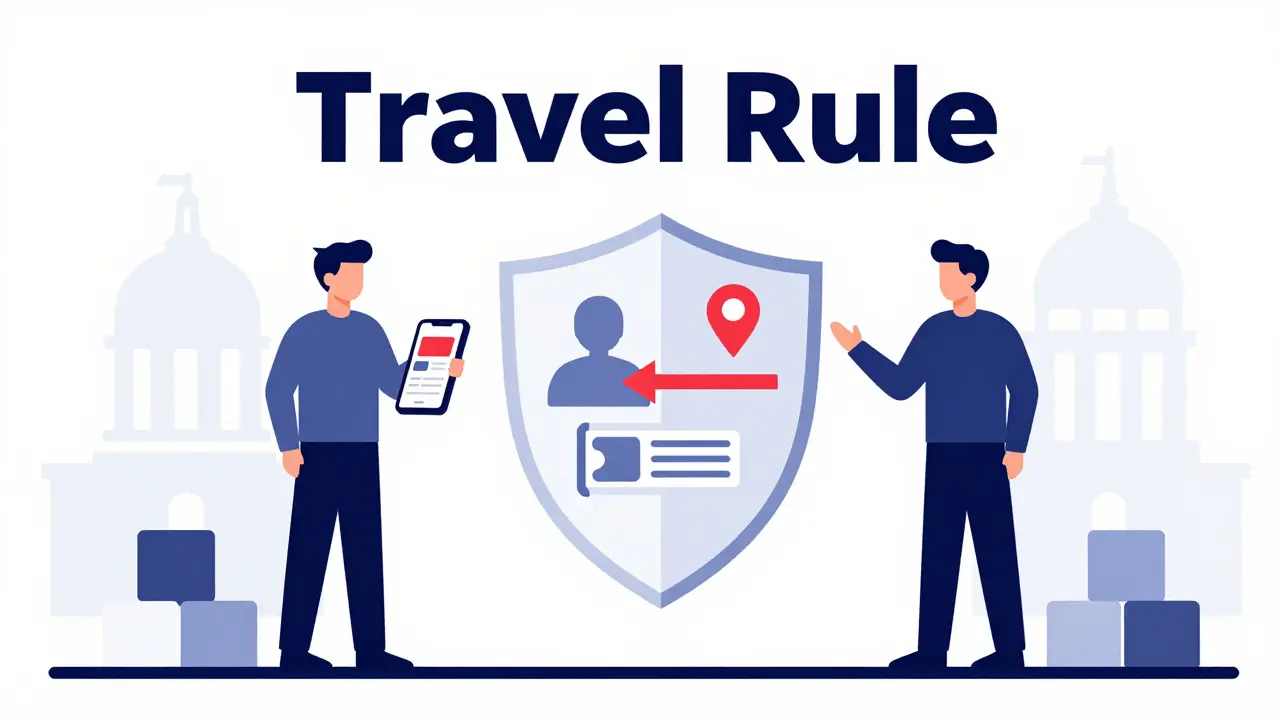
At the heart of international crypto surveillance lies the "Travel Rule." You might know it from banking, but its application to crypto is what changes everything. Under frameworks set by the Financial Action Task Force (FATF) is an intergovernmental body that sets standards for combating money laundering and terrorist financing, Virtual Asset Service Providers (VASPs)-which include exchanges, custodians, and wallet providers-must share specific user data when transactions hit certain thresholds.
In the United States, this falls under the Bank Secrecy Act (BSA). Here’s how it works in practice:
- Threshold Trigger: For transactions of $3,000 or more, VASPs must collect and transmit Personally Identifiable Information (PII).
- Data Required: This includes the name, address, and account number (or wallet address) of both the originator and the beneficiary.
- Scope: It applies to both domestic and international transfers, closing the loophole where cross-border moves were harder to trace than local ones.
This means if you send Bitcoin from an exchange in New York to one in Tokyo, both platforms are legally required to verify who you are and who is receiving the funds. The transaction hash on the blockchain is public, but the identity behind the wallet is now linked via off-chain regulatory channels. This creates a bridge between the pseudonymous nature of blockchain and the real-world identity requirements of traditional finance.
US Regulatory Framework: FinCEN and the BSA Expansion
The United States has taken an aggressive stance, expanding its definition of what constitutes a financial institution. The Financial Crimes Enforcement Network (FinCEN) is a bureau of the US Department of the Treasury responsible for safeguarding the financial system from illicit activity, leads the charge here. Recent proposals and enforcement actions have broadened the scope of oversight significantly.
Previously, regulations focused heavily on Money Service Businesses (MSBs). Now, the net casts wider to include entities regulated by the Securities and Exchange Commission (SEC) and the Commodity Futures Trading Commission (CFTC). This includes:
- Crypto Trading Platforms: Those handling security tokens or acting as Alternative Trading Systems (ATS).
- Futures Commission Merchants (FCMs): Entities involved in crypto derivatives.
- Swap Dealers: Participants in crypto swap markets.
A critical development in the US framework is the treatment of cryptocurrencies held in unhosted wallets. FinCEN has proposed rules requiring banks and MSBs to report and keep records for transactions involving convertible virtual currency (CVC) or digital assets with legal tender status (LTDA) held in these self-custody wallets. Essentially, if you move crypto from a centralized exchange to your own private wallet, especially if that wallet interacts with jurisdictions flagged by FinCEN, the trail doesn't end. The exchange must still verify your identity and report suspicious patterns. This closes a major gap where users previously thought moving funds to cold storage made them invisible.
European Union: MiCA and Risk-Averse Oversight
While the US focuses on anti-money laundering (AML) enforcement through existing financial laws, the European Union has built a dedicated legislative framework: Markets in Crypto-Assets (MiCA) is a comprehensive EU regulation governing the issuance and supervision of crypto-assets. Implemented fully by 2025-2026, MiCA represents a more holistic approach to crypto regulation.
MiCA requires licensed crypto asset service providers to maintain robust financial crime control frameworks. Unlike some earlier patchwork regulations, MiCA standardizes requirements across all EU member states. Key obligations include:
- Enhanced Due Diligence (EDD): Stricter checks on high-risk customers and complex transactions.
- Continuous Monitoring: Real-time tracking of transaction patterns for anomalies.
- Suspicious Activity Reporting: Mandatory reporting of any activity that suggests money laundering or terrorism financing.
The EU approach is often described as risk-averse compared to the US. It emphasizes consumer protection and market integrity alongside AML goals. For businesses operating in Europe, this means higher compliance costs but greater legal clarity. For users, it translates to stricter KYC (Know Your Customer) procedures at every touchpoint. You cannot simply sign up with an email anymore; biometric verification and proof of address are standard.
Bilateral Cooperation: The UK-US Transatlantic Task Force
Regulation doesn't stop at national borders. Recognizing that crypto is inherently borderless, the UK and US have formed the UK-US Transatlantic Task Force is a bilateral cooperation initiative focusing on licensing, custody, stablecoin standards, and cross-border compliance for digital assets. This partnership is significant because these two economies represent the largest capital markets for digital assets.
The Task Force focuses on aligning standards in crucial areas:
- Licensing: Ensuring that licenses issued in one jurisdiction are respected or easily verified in the other.
- Custody Standards: Defining secure practices for holding digital assets on behalf of clients.
- Stablecoin Regulations: Creating unified rules for assets pegged to fiat currencies.
- Cross-Border Compliance: Sharing intelligence on illicit flows between the two nations.
This collaboration serves as a template for global oversight. By leveraging their deep legal expertise and fintech ecosystems, the UK and US aim to shape global standards rather than react to them. For market participants, this means that compliance strategies developed for the US market are increasingly applicable in the UK, and vice versa. It reduces fragmentation and makes it harder for bad actors to exploit regulatory gaps between the two allies.
Evasion Tactics and Regulatory Countermeasures
Despite these robust frameworks, determined individuals still attempt to evade monitoring. The UK Foreign, Commonwealth & Development Office's Sanctions and Anti-Money Laundering (OFSI) 2025 threat assessment highlights several sophisticated methods used to bypass controls.
One common tactic involves using Virtual Private Networks (VPNs) to obscure the true location of individuals. Since many compliance checks rely on IP addresses to determine jurisdiction, VPNs can mask whether a user is in a sanctioned country or not. Regulators are countering this by requiring VASPs to use advanced geolocation tools and device fingerprinting that go beyond simple IP checks.
Another vulnerability lies in centralized exchanges with links to designated persons. Some crypto platforms may share infrastructure with sanctioned exchanges. To hide these connections, bad actors use intermediary wallets. These wallets separate incoming deposits from outgoing withdrawals, creating a layer of indirection that confuses automated compliance software. However, blockchain analysis firms now use heuristic clustering techniques to identify these shared infrastructure patterns, flagging them for manual review.
High-risk services, particularly instant exchange services that do not collect customer information, remain a concern. These services allow users to convert fiat to crypto without KYC. They are frequently used to move funds from sanctioned banks to specified crypto wallets. In response, regulators are pressuring payment processors and fiat gateways to block access to these non-compliant services, cutting off the entry point for illicit funds.

Technical Challenges: Layering and Mixing
The decentralized nature of cryptoassets facilitates obfuscation techniques that traditional finance rarely sees. Two primary methods stand out:
- Layering: Moving crypto through multiple accounts and jurisdictions to distance it from its source.
- Mixing/Tumbling: Using services that pool funds from multiple users and redistribute them, breaking the link between sender and receiver.
Anonymity-enhancing technologies also allow cryptoassets to be moved between different blockchain networks. For example, bridging Bitcoin to Ethereum via a wrapped token can complicate tracing efforts. Each hop adds complexity, increasing the computational cost for investigators. However, chainalysis tools have become remarkably sophisticated. They can track cross-chain movements by analyzing smart contract interactions and timestamp correlations. While not perfect, these tools provide enough visibility for authorities to follow the money trail in most cases.
For legitimate businesses, working with licensed crypto asset service providers offers a solution. These providers leverage established payment rails and have robust AML compliance in place. By partnering with them, companies can accept crypto payments without needing their own licensing, provided they conduct thorough due diligence on the partner's compliance practices. This shifts the burden of monitoring to specialized entities equipped with the necessary technology and expertise.
Market Context and Future Trajectory
The urgency of enhanced monitoring is underscored by widespread institutional adoption. As of 2026, 91% of central banks are exploring digital currencies or stablecoins. This isn't just speculation; it's a fundamental shift in how money is created and circulated. With China and the EU advancing their own digital asset frameworks, the geopolitical implications are profound. Control over financial infrastructure is becoming a key element of national power.
Non-compliance carries severe consequences. Regulators are ramping up scrutiny, and penalties for failing to adhere to Travel Rule requirements or other cross-border monitoring obligations are increasing. We are seeing a trend toward comprehensive regulatory regimes that focus on core principles: customer protection, market stability, and integrity. This includes strict rules on crypto promotion to consumers and detailed AML compliance protocols for customer due diligence.
Looking ahead, the landscape will likely become even more standardized. Initiatives like the UK-US Transatlantic Task Force will establish precedents that other countries may adopt. Enhanced technological vigilance, including AI-driven transaction monitoring and real-time reporting mechanisms, will further close loopholes. The integration of blockchain technology with traditional financial oversight is an ongoing evolution. Authorities are learning to balance innovation with security, ensuring that the benefits of digital assets are realized without compromising the integrity of the global financial system.
What is the Travel Rule in crypto?
The Travel Rule is a regulatory requirement that mandates Virtual Asset Service Providers (VASPs) to share sender and receiver information for transactions above a certain threshold (typically $3,000 in the US). This includes names, addresses, and account details, aiming to prevent anonymity in cross-border transfers.
How does FinCEN monitor crypto transactions?
FinCEN monitors crypto by requiring exchanges and other VASPs to file Suspicious Activity Reports (SARs) and Currency Transaction Reports (CTRs). It also enforces Know Your Customer (KYC) rules, ensuring that user identities are verified before transactions occur, and tracks flows involving unhosted wallets.
Is my crypto anonymous if I use a private wallet?
Not entirely. While private wallets offer more privacy than exchanges, interacting with regulated entities (like buying/selling on an exchange) requires identity verification. Furthermore, blockchain analysis tools can trace transaction histories, linking wallet addresses to known identities if they interact with centralized services.
What is MiCA and how does it affect crypto users?
MiCA (Markets in Crypto-Assets) is an EU regulation that imposes strict licensing, disclosure, and anti-money laundering requirements on crypto service providers. For users, this means stricter KYC processes, greater transparency from issuers, and enhanced consumer protections within the European Union.
Can I avoid monitoring by using mixing services?
Using mixing services is highly risky and often illegal. Regulators actively target these services, and many exchanges blacklist addresses associated with mixers. Attempting to launder funds through mixers can lead to frozen assets, legal action, and permanent bans from compliant platforms.


Write a comment