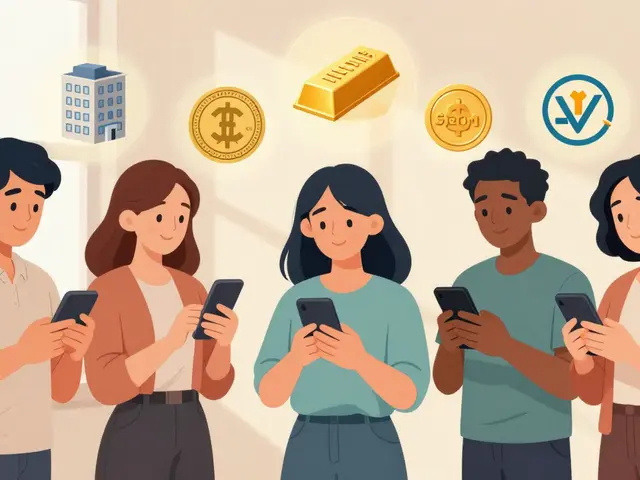
Security tokens aren’t just another crypto trend-they’re security tokens, legally recognized digital shares of real assets like real estate, company stock, or even fine art. Unlike speculative cryptocurrencies, these tokens are backed by tangible value and regulated by financial authorities. In 2026, investing in them is no longer for Wall Street insiders only. With clearer rules, better platforms, and lower entry points, regular people can now own fractions of prime commercial buildings, startup equity, or gold reserves-all from their phone. But if you’re new to this, it’s easy to get lost. Here’s how to actually do it, without the jargon or the hype.
Understand What Security Tokens Really Are
Security tokens are digital versions of traditional investments. Think of them like shares in a company, but instead of paper certificates, they live on a blockchain. When you buy a security token, you’re not buying a meme coin-you’re buying a legal claim to something real. Maybe it’s 0.5% of a Manhattan apartment building. Maybe it’s a slice of a tech startup’s equity. Or maybe it’s a share in a portfolio of farmland in Iowa.
These tokens follow strict financial rules. They’re registered with regulators like the SEC in the U.S. or ESMA in Europe. That means they can’t be traded freely like Bitcoin. There are rules about who can buy them, when you can sell them, and how dividends are paid. But that’s also what makes them safer. If a company issuing security tokens goes under, you still have legal rights as an investor-unlike with many utility tokens that vanish when the team disappears.
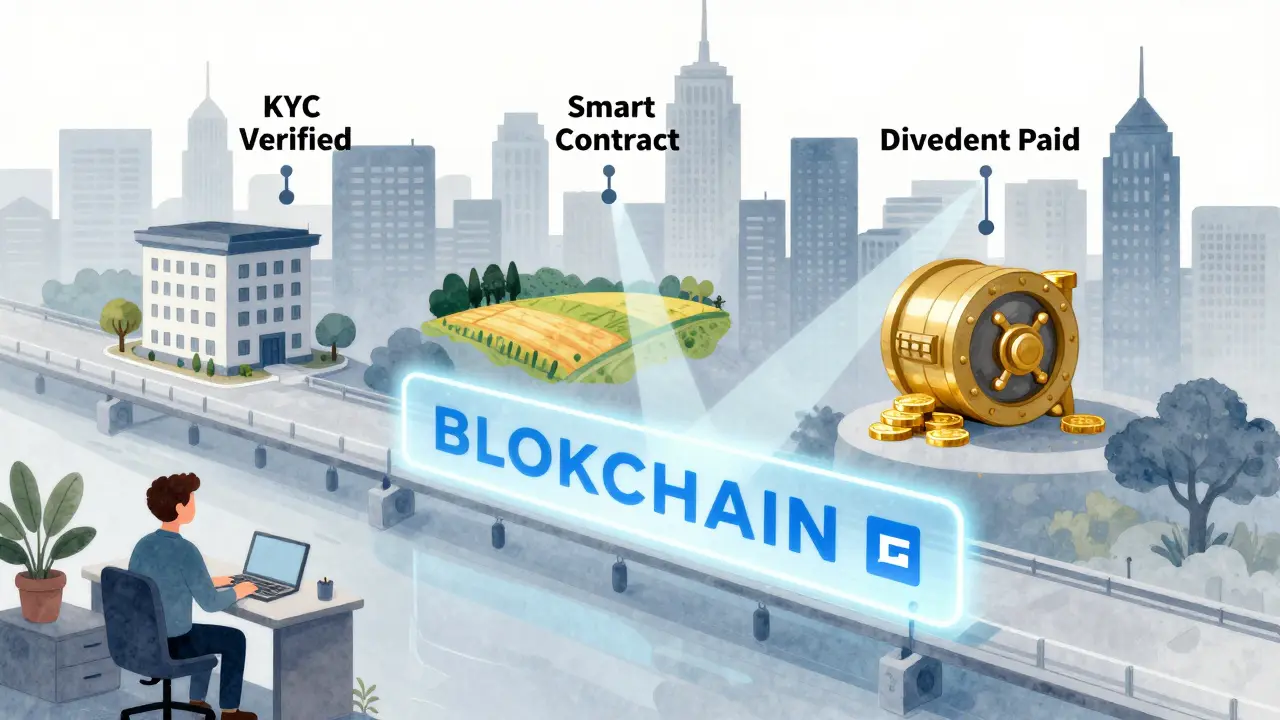
Most security tokens run on Ethereum because it supports smart contracts that automatically enforce compliance. These contracts can block transfers to unverified investors, pause trading during blackout periods, or distribute dividends directly to your wallet on schedule. No middlemen. No delays. No paperwork.
Check Your Eligibility
Not everyone can buy every security token. Your ability to invest depends on where you live and what kind of offering you’re looking at.
In the U.S., most security token offerings (STOs) are limited to accredited investors. That means you need either:
- An annual income of $236,000 (or $354,000 jointly with a spouse) for the last two years, with the same expected this year
- A net worth of $1.2 million or more, excluding your primary home
But not all STOs are like this. Some use Regulation A+ or Regulation CF exemptions, which let non-accredited investors participate-though there are limits. For example, under Reg CF, you can invest up to $5,000 if your income or net worth is under $124,000. If you’re over that, you can invest up to 10% of your income or net worth, whichever is higher.
In the EU, Singapore, or the UAE, rules are often looser. Retail investors can buy tokenized real estate or bonds more easily, as long as the issuer is licensed locally. Always check the offering’s legal documentation before investing. It will say exactly who can participate.
Choose a Regulated Platform
You can’t buy security tokens on Binance or Coinbase Pro. They’re not designed for regulated securities. You need a platform built for compliance.
Top platforms in 2026 include:
- Securitize - Used by major firms like BlackRock for tokenized funds
- Polymarket - Focuses on real estate and private equity
- Blockchain Capital’s Tokeny - Popular in Europe for corporate equity
- Bakkt - Backed by NYSE parent company, offers institutional-grade custody
These platforms do three things you can’t ignore:
- Verify your identity with KYC/AML checks
- Enforce investor eligibility rules automatically
- Hold your tokens in secure, regulated custody
Don’t skip the KYC. It’s not a hassle-it’s the reason these investments are legal. Platforms that skip it aren’t trustworthy. Look for platforms that are licensed as broker-dealers or investment platforms in their home jurisdiction. That’s your safety net.
Fund Your Account
Once you’re verified, you need money to invest. Most platforms accept:
- Bank transfers (ACH or wire)
- Credit/debit cards (limited to some regions)
- Cryptocurrency (ETH, USDC, or other stablecoins)
Stablecoins like USDC are popular because they’re pegged to the U.S. dollar and avoid crypto volatility. If you’re using crypto, make sure the platform supports the token you’re holding. Some only accept ETH because it’s the standard for smart contracts.
Minimum investments vary. Some real estate tokens start at $100. Corporate equity offerings might require $1,000 or more. Always check the minimum before you fund your account.
Select Your Asset
Now you browse. Platforms list available tokens like a stock market. You’ll see:
- Real Estate - Apartment buildings, warehouses, commercial offices. Returns come from rent and appreciation.
- Equity - Shares in startups or private companies. Potential upside if the company grows or gets acquired.
- Commodities - Gold, silver, or even oil reserves tokenized into digital units.
- Revenue Shares - Tokens tied to future cash flow from businesses, like a restaurant chain or SaaS company.
- Art & Collectibles - Fractional ownership of high-value paintings or rare items.
Read the offering documents. They’ll tell you:
- What asset you’re buying
- How returns are calculated
- When distributions happen (quarterly? annually?)
- What fees you’ll pay
- How and when you can sell
Don’t just chase high yields. A token promising 15% annual returns on raw land in a remote area? That’s a red flag. Look for assets with proven cash flow, clear management teams, and third-party audits.
Buy and Hold (or Trade)
Once you pick an asset, you click “Buy.” The platform handles the rest. Your tokens appear in your wallet on the platform. You don’t need a MetaMask or hardware wallet-most platforms keep custody for you.
Some tokens are locked for 6-12 months. Others can be traded immediately on secondary markets. Platforms like Securitize and Tokeny have built-in exchanges where you can sell your tokens to other verified investors.
Trading is faster than traditional markets. Settlements happen in minutes, not days. And because it’s 24/7, you’re not stuck waiting for the NYSE to open.
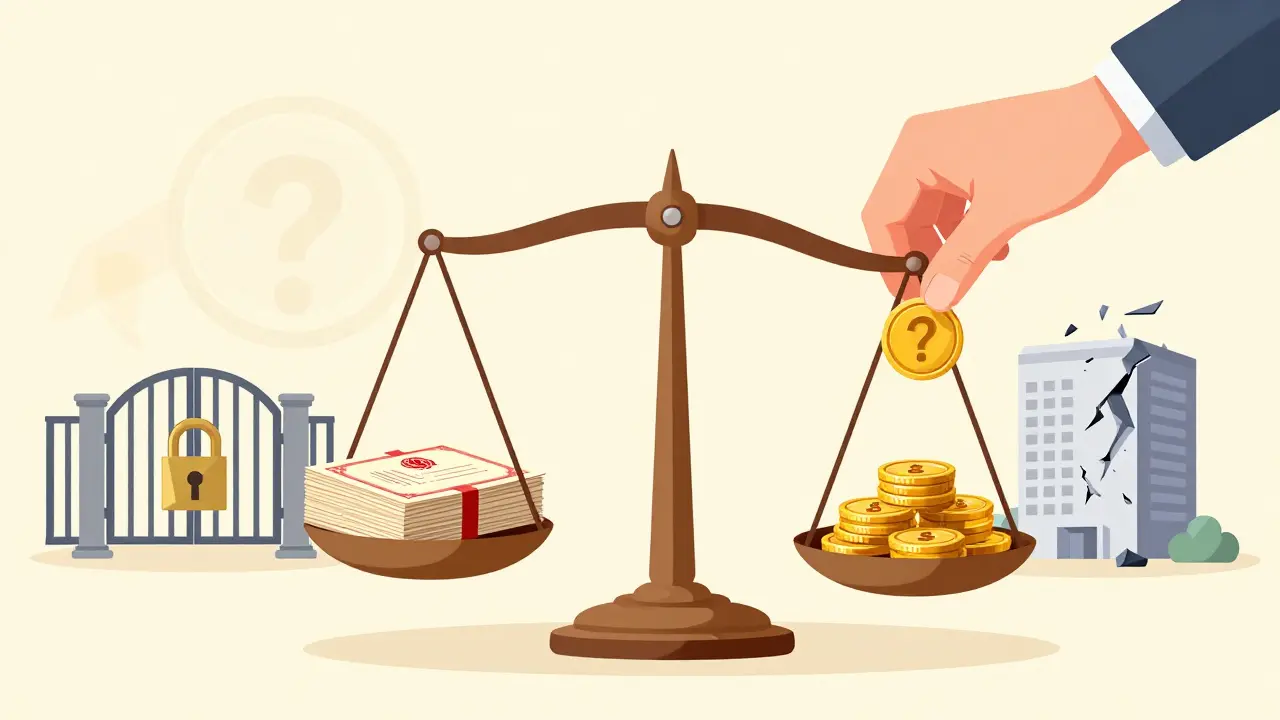
But remember: liquidity isn’t guaranteed. If no one else wants to buy your token, you might have to wait. Don’t treat these like stocks on Robinhood. They’re more like private equity-illiquid by design.
Track Your Returns
Dividends or profit distributions are automatic. If the building you own a share of generates rent, the platform sends your cut directly to your account-usually in USD or USDC. You’ll get statements showing your ownership percentage, income earned, and any fees deducted.
Some platforms let you reinvest your earnings into new tokens. Others let you withdraw to your bank. You can also monitor your portfolio’s value in real time. If the price of the underlying asset rises (say, a commercial property in Austin appreciates), your token’s value goes up too.
Keep records. You’ll need them for taxes. Security tokens generate taxable events-dividends, capital gains, even token transfers between wallets. Talk to a tax professional who understands digital assets.
Watch the Risks
Security tokens are safer than unregulated crypto-but they’re not risk-free.
- Liquidity risk - You might not be able to sell quickly.
- Regulatory risk - Rules can change. A new law could freeze trading or limit who can invest.
- Platform risk - If the platform goes under, your access might be disrupted (though your tokens usually remain on-chain).
- Asset risk - The real estate could sit vacant. The startup could fail. The gold could be overvalued.
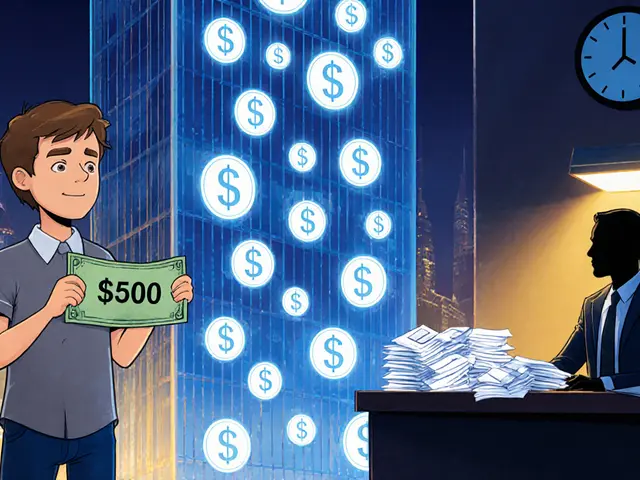
Diversify. Don’t put all your money into one token. Spread it across asset types and geographies. Even $500 in a New York apartment, $300 in a European startup, and $200 in a gold-backed token is a start.
The Bigger Picture
Security tokens are changing how money works. They’re blending the trust of traditional finance with the speed of blockchain. Right now, they’re still a niche. But by 2027, analysts expect over $1 trillion in assets to be tokenized globally.
Big names are getting involved. BlackRock, JPMorgan, and the Swiss Exchange are building infrastructure. Governments are creating legal frameworks. The pieces are falling into place.
If you’re looking to invest in something real-not just speculation-security tokens offer a rare bridge between the old financial world and the new. Start small. Learn the rules. Choose regulated platforms. And remember: you’re not buying a coin. You’re buying a piece of something that matters.
Ryan Depew
Security tokens are just Wall Street’s way of repackaging junk as ‘regulated’ so they can charge you 5% fees and call it innovation.
Nathan Drake
It’s fascinating how blockchain is forcing traditional finance to confront its own inefficiencies. The real revolution isn’t the token-it’s the removal of intermediaries who’ve spent decades profiting from opacity.
Andy Simms
Don’t forget to check the jurisdiction of the issuer. A token issued under EU regulations might not be accessible to U.S. investors even if the platform says it’s open to everyone. Always read the legal fine print-no shortcuts.
Shamari Harrison
If you’re new to this, start with real estate. It’s tangible, has cash flow, and the platforms are more mature. Pick one with a track record, not just a flashy website. And never invest more than you can afford to lock up for a year.
Melissa Contreras López
You’re not late to this game-you’re just waking up to a future that’s already here. The fact that you’re reading this means you’re already ahead of 95% of people who still think crypto is just memes and moon shots. Keep going.
Catherine Hays
Why are we letting foreigners dictate our investment rules? If you’re not accredited in the U.S. you should be banned from even looking at these tokens. This is American wealth being diluted by global loopholes
Nadia Silva
Anyone who thinks this is accessible to regular people is delusional. The $100 entry points are bait. The real assets are locked behind $10k minimums and 20-page compliance forms only lawyers understand.
Kevin Pivko
LOL. You think BlackRock is letting you own part of a building? Nah. They’re using your $100 to buy more leverage and charge you 3% management fees. You’re the product.
Bonnie Sands
They’re using blockchain to track your money so the Fed can freeze your account if you buy the ‘wrong’ asset. This isn’t freedom-it’s financial surveillance with a fancy UI.
Julene Soria Marqués
Did you know some platforms auto-report your holdings to the IRS? You didn’t sign up for that. They trick you into compliance. You’re being watched.
Margaret Roberts
Same old story. They promise transparency but hide the real risks behind legalese. Next thing you know, your ‘tokenized gold’ is backed by a warehouse in Kazakhstan with no audit. Wake up.
Darrell Cole
Regulation is a myth. The SEC hasn’t even defined what a security token is legally. Every platform is operating in a gray zone. You’re not investing-you’re gambling with paperwork
Ashok Sharma
For beginners in India, start with tokenized gold. It’s stable, regulated locally, and you can buy with INR through licensed platforms. No need to jump into U.S. equity yet.
Roshmi Chatterjee
I bought $200 in a tokenized coffee farm in Colombia last month. Got my first payout in USDC last week. It’s small but real. No broker, no delays. Just me and my blockchain share.
Jonny Lindva
Man I tried this last year. Got locked in for 18 months on a startup token. No dividends. No updates. Just silence. Don’t be like me. Only go in if you’re cool with waiting.
tim ang
just bought my first tokenized apartment in Atlanta for $150. feels weird but also kinda cool? like owning a tiny piece of the future. no idea what im doing but hey its fun
katie gibson
They’re calling this innovation but it’s just another way for rich people to get richer while you pay fees to watch your $100 sit there. I’d rather buy gold bars and hide them under my bed
HARSHA NAVALKAR
Security tokens are good for the wealthy. For people like me in India, the barriers are too high. We need local platforms that accept UPI and don’t require a passport scan.
MICHELLE REICHARD
Everyone’s acting like this is the future. But what happens when the SEC suddenly reclassifies all real estate tokens as unregistered securities? Poof. Your ‘investment’ becomes a digital ghost.
Mike Stay
The evolution of capital formation is underway. What we are witnessing is not merely the digitization of assets, but the reconstitution of ownership itself-decentralized, programmable, and transparent. The institutional adoption by firms such as BlackRock and JPMorgan signals a structural shift in global finance that transcends mere technological novelty. The regulatory frameworks being established across jurisdictions, while fragmented, are laying the groundwork for a new paradigm in asset liquidity, investor access, and fiduciary accountability. This is not a trend. It is the redefinition of financial inclusion in the 21st century.