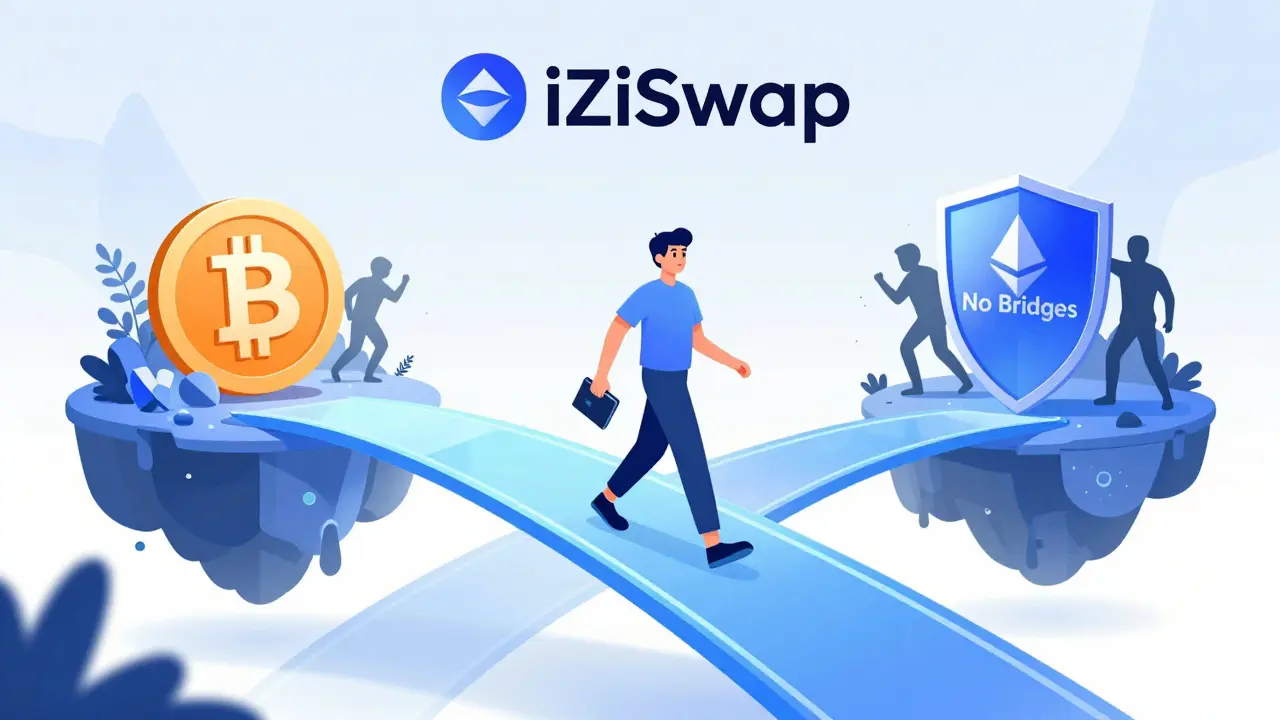
Have you ever tried to move Bitcoin into an Ethereum DeFi protocol? It’s a headache. You usually have to wrap the asset, pay bridge fees, and hope the security of that bridge holds up. That friction is exactly why iZiSwap, built on the ZetaChain ecosystem, has been generating buzz since its launch in 2024. It promises to let you swap assets across different blockchains without wrapping them or using risky third-party bridges. But does it actually work for your daily trading needs?
I’ve spent time testing the platform, analyzing its liquidity, and comparing it against giants like Uniswap. Here is the honest truth about iZiSwap: it is a promising experiment in true omnichain interoperability, but right now, it is not ready to be your primary trading hub. If you are an advanced DeFi user looking to test new tech with small amounts, it might intrigue you. If you want deep liquidity and reliability, you should look elsewhere.
What Is iZiSwap and How Does It Work?
To understand iZiSwap, you first need to understand ZetaChain. ZetaChain is an omnichain blockchain layer that allows smart contracts to interact directly with multiple existing blockchains like Bitcoin, Ethereum, and BNB Chain. Most exchanges today are siloed. Uniswap lives on Ethereum; PancakeSwap lives on BNB Chain. To trade between them, you need a bridge. Bridges are notoriously vulnerable to hacks.
iZiSwap changes this model. It operates as an automated market maker (AMM) directly within the ZetaChain infrastructure. When you swap ETH for BTC on iZiSwap, the transaction happens natively through ZetaChain’s messaging protocol. You don’t get a "wrapped" version of Bitcoin (wBTC); you interact with the actual asset logic via ZetaChain’s smart contracts. This eliminates the trust assumption required by traditional bridges.
However, this technical elegance comes with trade-offs. As of late 2024 and early 2025, the platform supports only a limited number of chains-primarily Ethereum, BNB Chain, and Bitcoin mainnets. While ZetaChain aims to expand, the current utility is narrow compared to established multi-chain aggregators.
Liquidity and Trading Experience: The Real Bottleneck
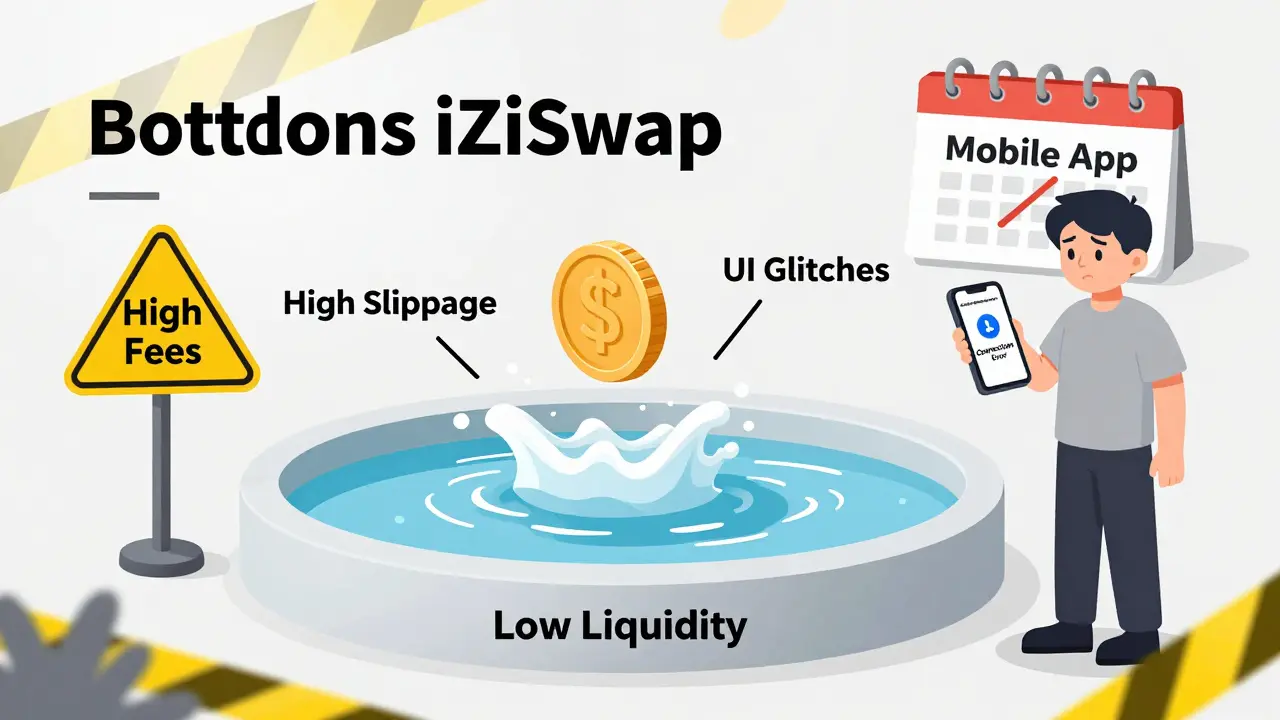
Let’s talk numbers, because that’s where iZiSwap struggles. In the world of decentralized exchanges, liquidity is king. Without deep liquidity pools, you face high slippage, meaning you get less crypto than you expected when you trade.
| Metric | iZiSwap | Uniswap V3 | PancakeSwap |
|---|---|---|---|
| 24h Volume | ~$1.2 Million | ~$1.8 Billion | ~$750 Million |
| Taker Fee | 0.30% | 0.05% - 0.30% | 0.25% |
| Maker Fee | 0.25% | 0.01% - 0.05% | 0.20% |
| Slippage (1 ETH Trade) | 0.85% | <0.10% | 0.35% |
| Cross-Chain Native Support | Yes (Direct) | No (Requires Bridge) | No (Requires Bridge) |
As you can see, iZiSwap’s volume is a fraction of what leaders like Uniswap handle. CoinGecko data from October 2024 showed that 71% of iZiSwap’s trading volume was concentrated in just three ZETA-related pairs. If you try to swap something obscure, you will likely fail or lose significant value to slippage. One Reddit user reported experiencing 12% slippage on a modest 0.5 ETH swap despite setting an 8% tolerance limit. That is unacceptable for serious trading.
The fee structure also puts iZiSwap at a disadvantage. With taker fees at 0.30%, it is more expensive than Dotswap (0.25%) and significantly more expensive than optimized routes on Uniswap. Unless you are providing liquidity to earn rewards, trading costs here will eat into your profits faster than on mature platforms.
User Interface and Technical Reliability
If you are used to the slick, polished interfaces of major DEXs, iZiSwap will feel rough around the edges. User reviews on JustScreener highlight a stark contrast: while users praise the concept (4.2/5 for cross-chain reliability), they rate the user interface poorly (2.8/5).
Here are the common pain points I observed:
- Wallet Connection Issues: Many users report frequent disconnections from MetaMask or other Web3 wallets. You often have to reconnect multiple times before a transaction goes through.
- Steep Learning Curve: Setting up ZetaChain requires configuring specific network parameters (ChainID: 7000) and acquiring ZETA tokens for gas. This process takes 25-45 minutes for experienced users and can be frustrating for beginners.
- No Mobile App: As of mid-2026, there is no native iOS or Android app. You must use the web interface, which is not optimized for mobile browsing. A mobile app was promised for January 2025, but delays are common in crypto development.
- API Instability: For algorithmic traders, the API uptime hovers around 87%. Three outages exceeding four hours were documented in Q3 2024 alone. If you rely on bots, this is a dealbreaker.
The lack of educational resources exacerbates these issues. If you aren’t familiar with ZetaChain’s architecture, troubleshooting a failed cross-chain transaction can take hours. The official documentation suggests waiting 15-20 minutes for finality, but users often panic and spam transactions, leading to further errors.
Security and Trust: Should You Worry?
Security is the biggest selling point of iZiSwap’s underlying technology, but the execution raises questions. By removing bridges, iZiSwap theoretically reduces the attack surface for hackers who target wrapped assets. ZetaChain’s consensus mechanism processes blocks every 5 seconds, offering relatively fast finality.
However, the platform’s overall Trust Score on CoinGecko sits at a low 3.5/10. This score reflects its nascent status and limited audit transparency. While standard smart contract audits are claimed, specific audit firms and dates are not prominently displayed in public marketing materials. In the world of DeFi, opacity regarding security audits is a red flag.
Furthermore, the project’s viability is tightly coupled with the success of the ZETA Token. The native utility token of the ZetaChain ecosystem, used for gas fees and governance. If ZetaChain fails to gain widespread adoption, iZiSwap becomes a liquidity desert. The ZETA token itself has been volatile, fluctuating between $0.10 and $2.85 since launch. Regulatory uncertainty also looms large, as cross-chain protocols create complex jurisdictional challenges that regulators are still figuring out.
Who Is iZiSwap Actually For?
Based on my analysis, iZiSwap is not for everyone. Here is how you should decide if it fits your needs:
Use iZiSwap if:
- You are a DeFi enthusiast who wants to support and test early-stage cross-chain infrastructure.
- You specifically need to swap between Bitcoin, Ethereum, and BNB Chain without using a centralized exchange or a separate bridge service.
- You are comfortable with high slippage and potential UI glitches.
- You hold ZETA tokens and want to utilize them within the ecosystem.
Avoid iZiSwap if:
- You are a beginner. The setup complexity and lack of hand-holding will lead to lost funds.
- You are trading large volumes. The shallow liquidity will result in poor prices.
- You need reliability for day trading. The API instability and wallet connection issues make it unsuitable for active strategies.
- You prefer lower fees. Established DEXs offer better rates due to higher competition and volume.
Final Verdict: Wait for Maturity
iZiSwap represents a fascinating technological leap. The idea of native cross-chain swaps without wrapping assets is the future of DeFi. ZetaChain’s infrastructure is robust, and the vision is clear. However, the product itself is not yet mature enough for mainstream use.
The combination of low liquidity, high fees, and a clunky user experience makes it difficult to recommend over competitors like Uniswap or even specialized bridges like Thorchain. Until iZiSwap expands its supported chains beyond the big three, improves its API stability, and deepens its liquidity pools, it remains a niche tool for early adopters.
If you decide to try it, start with small amounts. Treat it as a research expense rather than a primary trading venue. Keep an eye on their roadmap-they promise five additional chain integrations by Q2 2025. If those land successfully, the narrative could change quickly. For now, proceed with caution.
Is iZiSwap safe to use?
iZiSwap uses non-custodial wallets, meaning you control your keys, which is safer than centralized exchanges. However, the platform has a low Trust Score (3.5/10) and lacks transparent public audit details. The underlying ZetaChain technology reduces bridge risks, but smart contract bugs are always possible. Use only funds you can afford to lose.
How do I connect my wallet to iZiSwap?
You need MetaMask or the ZetaChain native wallet. First, add ZetaChain to your wallet settings using ChainID 7000. Then, ensure you have ZETA tokens for gas fees. Connect your wallet to the iZiSwap web interface. Note that connection issues are common, so you may need to refresh and reconnect multiple times.
What are the fees on iZiSwap?
iZiSwap charges a 0.30% taker fee and a 0.25% maker fee. Additionally, you must pay gas fees in ZETA tokens for every transaction. These fees are generally higher than those on established DEXs like Uniswap or PancakeSwap.
Can I trade Bitcoin on iZiSwap?
Yes, iZiSwap supports Bitcoin mainnet integration through ZetaChain. You can swap BTC for ETH or BNB natively without wrapping. However, liquidity for BTC pairs is currently shallow, so expect higher slippage compared to trading on centralized exchanges.
Why is iZiSwap's volume so low?
iZiSwap is a new platform launched in 2024. It suffers from a chicken-and-egg problem: low liquidity discourages traders, and low trading volume discourages liquidity providers. Most users prefer established DEXs with deeper pools and better UIs, leaving iZiSwap with a small niche of early adopters.
Does iZiSwap have a mobile app?
No, as of mid-2026, iZiSwap does not have a native iOS or Android application. It is accessible only via web browser. A mobile app was scheduled for release in January 2025, but availability should be verified on their official channels as delays are common.

Write a comment