Imagine finding a new cryptocurrency exchange that promises total freedom from registration and KYC checks. It sounds like the holy grail of privacy for many traders. But what happens when you look closer? You find conflicting data, missing security audits, and virtually zero community discussion. That is exactly where Libre Swap stands today.
Launched in 2023 and incorporated in Panama, Libre Swap positions itself as an open-source, permissionless swap protocol built on its own native infrastructure. On paper, it looks like a typical entry into the crowded Decentralized Finance (DeFi) space. However, digging past the marketing reveals a platform that is still in its infancy, with significant gaps in transparency, liquidity, and user verification. Before you connect your wallet or deposit funds, you need to understand exactly what you are getting into-and more importantly, what is missing.
The Reality Behind the Numbers: Volume and Liquidity Confusion
When evaluating any exchange, liquidity is king. If there isn't enough volume, you cannot trade efficiently, or worse, you might not be able to exit a position at all. Libre Swap presents a confusing picture here. Data aggregators like CoinGecko report a 24-hour trading volume of $0.00, yet simultaneously list a BTC/LIBRE pair with over $54,000 in volume. Meanwhile, CoinMarketCap labels the project as an "Untracked Listing," citing specific review criteria failures.
This inconsistency is a major red flag. In the world of crypto, reliable data feeds are essential for price discovery and risk management. Major platforms like Uniswap or Symbiosis Finance provide clear, real-time metrics because they have deep liquidity pools and consistent transaction history. Libre Swap’s placement in the 4th percentile for volume among exchanges suggests it is barely moving needles in the broader market. For a trader, this means high slippage risks and potential inability to execute larger orders without significantly impacting the price.
| Feature | Libre Swap | Uniswap / Symbiosis |
|---|---|---|
| Supported Chains | Libre Blockchain only | Ethereum, Polygon, Arbitrum, etc. |
| Trading Pairs | Limited (BTC/LIBRE primarily) | Thousands of ERC-20 tokens |
| Volume Transparency | Conflicting/Untracked | Real-time, verified |
| Security Audits | Not Publicly Documented | Multiple independent audits |
| User Community | Virtually non-existent | Large, active forums and socials |
Technical Limitations: A Niche Ecosystem
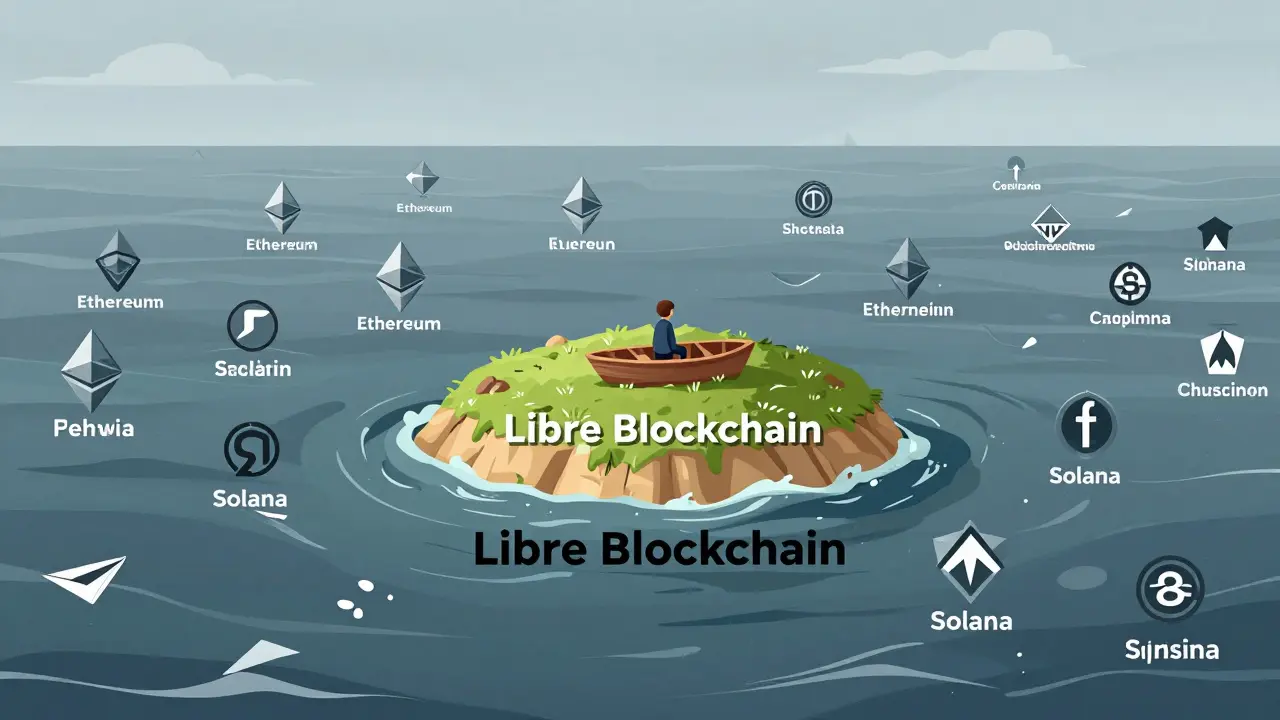
Libre Swap operates exclusively on the Libre blockchain. While being "blockchain-native" can offer speed and lower fees within that specific ecosystem, it creates a massive limitation for users who want diversification. Unlike cross-chain giants such as 1inch or Symbiosis Finance-which allow you to swap assets between Ethereum, Solana, BSC, and others seamlessly-Libre Swap locks you into one island.
If the Libre blockchain struggles with adoption, faces technical issues, or loses value, your ability to move your assets out quickly becomes complicated. You would likely need to bridge your funds to another chain first, adding layers of complexity and potential risk. In 2026, the standard expectation for a competitive DEX is interoperability. Libre Swap’s single-chain focus makes it a niche tool rather than a comprehensive trading solution.
Furthermore, the asset selection is incredibly thin. Reports indicate support for only one primary cryptocurrency pair (BTC/LIBRE). Compare this to Kraken, which supports over 450 cryptocurrencies, or even smaller but robust DEXs that offer hundreds of pairs. With so few options, Libre Swap fails to meet the basic needs of most crypto traders who look for exposure to altcoins, stablecoins, or emerging tokens.
The Black Box: Security and Team Anonymity
In decentralized finance, trust is established through code transparency and rigorous third-party audits. We know Libre Swap was built by teams from Costa Rica and Argentina, with frontend development handled by "Libre Tech." However, specific team members, their backgrounds, or their credentials are not publicly disclosed. This anonymity is common in early-stage crypto projects, but it raises questions about accountability.
More critically, there is no public record of smart contract audits for Libre Swap. Established platforms proudly display audit reports from firms like CertiK, OpenZeppelin, or Trail of Bits. These audits help identify vulnerabilities before malicious actors can exploit them. Without these documents, users are essentially trusting the code blindly. Given the history of hacks in the DeFi space, entering a platform without verified security protocols is a gamble you should rarely take.
The lack of customer support documentation is another gap. If something goes wrong with a transaction-perhaps due to a bug in the interface or a network issue-who do you call? On centralized exchanges like Uphold or Coinbase, you have ticket systems and live chat. On mature DEXs, you have active Discord communities and Telegram groups where developers respond to issues. Libre Swap lacks visible user discussion threads, review platform presence, or social media engagement. This silence makes it impossible to gauge real-world user satisfaction or learn from others' mistakes.
Regulatory Ambiguity and Panama Incorporation
Libre Swap is incorporated in Panama. This jurisdiction is often chosen by crypto companies seeking regulatory flexibility. While this can mean fewer hurdles for launching, it also means less consumer protection for users. If the platform were to cease operations or if legal issues arose, recourse for international users could be extremely difficult.
The "permissionless" nature of the platform means anyone with a Libre account can add liquidity or trade. This is a feature for privacy advocates, but it also complicates compliance. As global regulations tighten in 2026, exchanges that operate in gray areas may face sudden restrictions or bans in certain countries. Users in strict jurisdictions might find themselves locked out of features or unable to withdraw funds if local laws change overnight.
Who Should Actually Use Libre Swap?
Given the current state of affairs, Libre Swap is not suitable for the average investor looking for reliable trading conditions. It is best suited for:
- Early Adopters of the Libre Ecosystem: If you already hold LIBRE tokens and believe deeply in the long-term vision of the Libre blockchain, you might use this swap to manage holdings within that closed loop.
- Developers Testing Liquidity Protocols: Those interested in how permissionless AMMs work on newer chains might use it for educational purposes, using only negligible amounts of capital.
- Privacy-Focused Traders with Low Capital: Individuals who prioritize anonymity over convenience and are willing to accept high counterparty risk with small sums.
For everyone else, the risks outweigh the benefits. The lack of liquidity, undefined fee structure, and absence of security audits make it a poor choice for serious trading.
Better Alternatives for Secure DeFi Trading
If you are looking for the benefits of decentralized trading-no KYC, self-custody, and broad asset selection-but with proven reliability, consider these established alternatives:
- Uniswap: The gold standard for Ethereum-based swaps. Huge liquidity, thousands of pairs, and a track record of security.
- Symbiosis Finance: Excellent for cross-chain swaps. It aggregates liquidity across multiple blockchains, offering better rates and wider access.
- 1inch: Uses smart routing to find the best prices across dozens of DEXs simultaneously, saving you money on gas and slippage.
- Kraken or Uphold: If you prefer centralized exchanges with customer support and higher regulatory oversight, these remain top-tier choices for beginners.
These platforms have survived years of market volatility, undergone numerous audits, and have active communities that can help you troubleshoot issues. They offer the stability and transparency that Libre Swap currently lacks.
Final Verdict: Proceed with Extreme Caution
Libre Swap represents the wild west of crypto innovation. It has the technical ambition to create a seamless, permissionless trading experience, but it falls short on execution and transparency. The conflicting volume data, lack of security audits, and minimal community presence suggest it is still in a developmental phase rather than a production-ready environment.
As a reviewer, I cannot recommend Libre Swap for general trading purposes. The risks associated with unverified smart contracts and low liquidity are too high. Wait for the platform to publish audit results, clarify its fee structure, and build a trackable history of volume. Until then, stick to exchanges that have earned their reputation through consistency and security.
Is Libre Swap safe to use in 2026?
Safety is questionable due to the lack of publicly available smart contract audits and unclear security protocols. While it is decentralized (meaning you control your keys), the underlying code has not been independently verified by reputable firms. Use only if you fully understand the risks of unaudited DeFi platforms.
What cryptocurrencies can I trade on Libre Swap?
Currently, the platform is heavily restricted. Primary data sources indicate support mainly for the BTC/LIBRE pair. There are conflicting reports about pBTC/pUSDT pairs, but overall, the selection is extremely limited compared to major DEXs that support thousands of tokens.
Why is Libre Swap's trading volume reported as $0 on some sites?
This discrepancy arises from how different data aggregators track activity. CoinGecko shows $0 volume while listing a pair with $54k volume, and CoinMarketCap lists it as "Untracked." This suggests the platform does not consistently feed data to major APIs or has very sporadic trading activity, making it unreliable for volume-dependent strategies.
Does Libre Swap require KYC (Know Your Customer)?
No. Libre Swap is designed as a permissionless, decentralized protocol. This means you do not need to provide personal identification documents to trade. However, this also means there is no customer support or recovery option if you lose access to your wallet or encounter fraud.
Who owns or developed Libre Swap?
The platform was developed by teams from Costa Rica and Argentina, with frontend work by Libre Tech. However, specific individual identities and credentials are not publicly disclosed, which is common in anonymous DeFi projects but adds a layer of risk regarding accountability.

Michelle Bonahoom
another panama shell company trying to sell vaporware
the audacity is breathtaking
people actually believe this trash
Matt Davis
You are all missing the point entirely. The lack of audits is a feature, not a bug, because it proves they don't need external validation. You plebeians cling to your 'security' like security blankets while I embrace the chaos of the new world order. Libre Swap is for those who understand that trust is obsolete.
Albert Lee
I hear you Matt but honestly it feels really risky out there
we should probably just stick to what works
no need to stress over unproven tech when we have solid options
Kimberly Herbstritt
actually i think its fine
why do you always assume everything bad
maybe its just different
Sharada Vakkund
Let's look at this from a broader perspective. While the risks are real, innovation often comes from unexpected places. We should encourage experimentation while remaining cautious. Perhaps Libre Swap will find its niche in privacy-focused communities. It is important to remain open-minded yet critical.
Sudarshan Anbazhagan
one must consider the fundamental principles of decentralized finance which dictate that true freedom cannot be achieved without the willingness to accept absolute risk and the absence of regulatory oversight which serves only to stifle the creative potential of the individual trader who seeks to operate beyond the constraints of traditional financial institutions and their archaic methods of control
it is imperative that we recognize the philosophical underpinnings of such platforms as essential steps toward a more liberated economic paradigm where the user is sovereign and the code is law regardless of the perceived deficiencies in liquidity or transparency which are merely superficial concerns for the uninitiated masses who fail to grasp the deeper implications of permissionless architecture
John Gonzalez Bentham
lol everyone here is so scared
i put my money in yesterday and nothing happened yet
probably gonna moon soon
typical normies cant handle the heat
Ellie Riddell
how quaint
you people treat crypto like its a casino instead of a tool
libre swap is just another failed experiment in greed
but sure keep buying the dip on zero volume
Destiny Kilby
i feel like we are ignoring the human element here
trust is hard to build
without faces behind the code it is scary
please be careful with your funds
Jerry CUNNINGHAM SR
It is crucial that we respect the boundaries of our own financial safety. Engaging with unaudited protocols is a personal choice, but one must acknowledge the inherent dangers. Let us maintain a respectful discourse regarding these risks without demonizing those who choose to participate, provided they do so with full awareness of the potential consequences.
Shelby Cantu
just dont use it
too risky
stick to safe bets
Tobias Gjerlufsen
you idiots think audits matter?
audits are for sheep
real alpha ignores the rules
this platform is pure genius because it has no rules
stop crying about liquidity
liquidity is a myth created by banks
libre swap is the future of anarchy
wake up sheeple
Ruben Michel
The notion that one might trade on a platform with such negligible infrastructure is quite amusing. It demonstrates a profound ignorance of market dynamics. Only the truly discerning investor would avoid such a venture. One must appreciate the elegance of established systems rather than chasing the novelty of the broken.
Gavin Wonnacott
I bet you guys are too poor to try it anyway
why do you care?
it's not your problem
stop being so sensitive
i'll take all your money if i want
Samara McCallum
is it really that bad though
or are we just scared of change
maybe the silence means something good
like quiet confidence
who knows right
Sheldon Friesen
Look! On one hand! You have the thrill of the unknown! On the other hand! You have the very real possibility of losing everything! Isn't that exciting? Just kidding! Don't do it! Unless you enjoy drama!
Tricia Alach
i think its cool that they try
even if it fails
failure is part of life
so lets support them
maybe thry will learn
Jan Gilmore
I know exactly how this ends. They rug pull. Everyone loses. It's basic economics. If it sounds too good to be true, it is. Always check the contracts. Always verify. Never trust anonymous devs. This is elementary knowledge for anyone serious about DeFi.