Imagine trying to buy a cup of coffee with Bitcoin, only to wait ten minutes for the transaction to clear while your coffee gets cold. That was the reality for many Bitcoin users just a few years ago. The main blockchain is secure but slow, often charging fees that make small payments impractical. This is where the Lightning Network is a layer-2 payment protocol built on top of the Bitcoin blockchain designed to enable near-instant transactions with minimal fees comes into play. It solves the speed and cost problems without compromising the security you trust in Bitcoin. If you are looking to move Bitcoin quickly or make small payments, understanding this technology is no longer optional-it is essential for modern crypto usage.
What Exactly Is the Lightning Network?
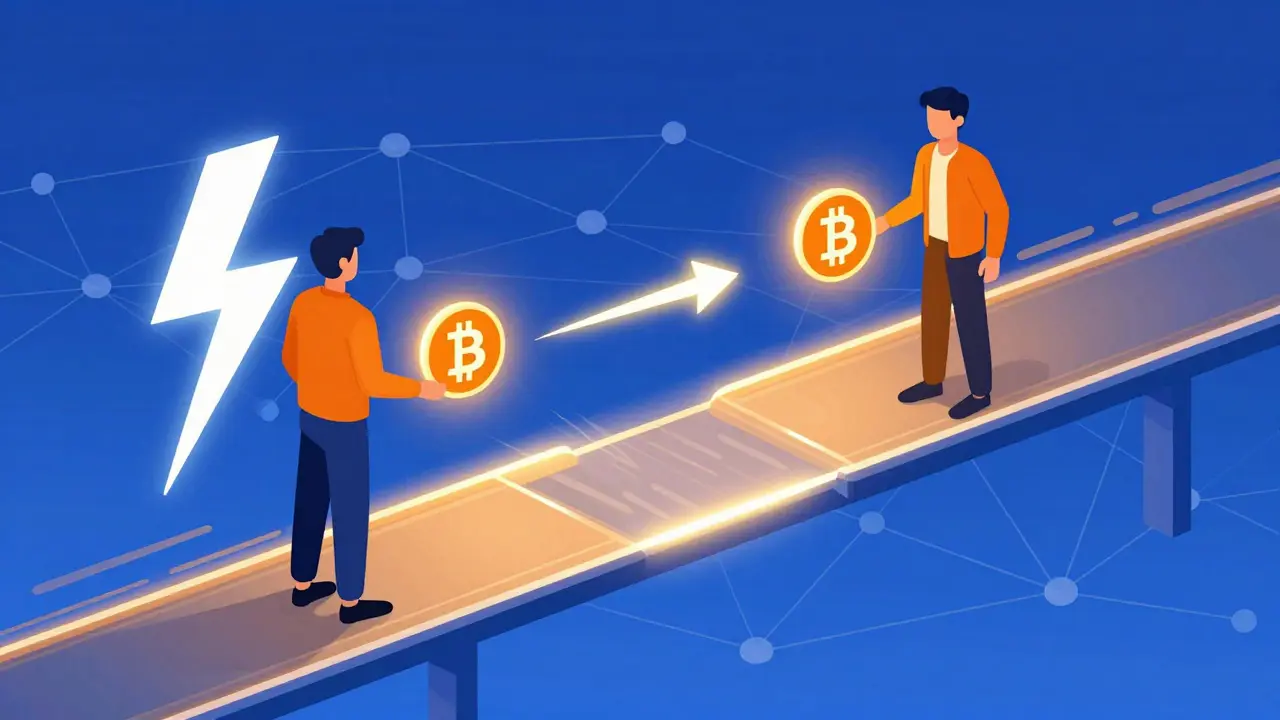
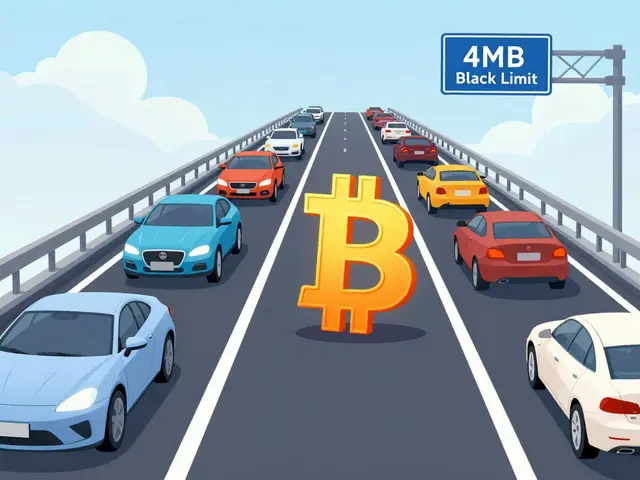
At its core, the Lightning Network acts as a second layer sitting on top of the existing Bitcoin blockchain. Think of the main Bitcoin blockchain as a highway that is safe but often congested. The Lightning Network is like a network of private side roads that allow traffic to move much faster without clogging the main highway. Originally proposed in 2016 by Joseph Poon and Thaddeus Dryja, the concept gained real momentum after the Bitcoin Segregated Witness (SegWit) upgrade in August 2017. This upgrade was crucial because it allowed the specific technical changes needed for Lightning to function securely.
Unlike other cryptocurrencies that require their own tokens, the Lightning Network operates directly with bitcoin (BTC). You do not need to swap your coins for a new token to use it. Instead, it leverages the native scripting language of Bitcoin to create smart contracts. These contracts allow users to open payment channels where they can transact back and forth instantly. The beauty of this system is that only the opening and closing of these channels are recorded on the main blockchain. Everything in between happens off-chain, keeping the main ledger clean and fast.
How Payment Channels Work
To understand how this achieves instant speed, you need to look at the mechanics of a payment channel. When two parties want to transact using Lightning, they create a bidirectional payment channel. This starts with a funding transaction recorded on the Bitcoin blockchain. This transaction creates a two-of-two multi-signature address. In simple terms, this means both parties must sign off on any movement of funds from that address. This ensures that neither person can steal the money without the other's permission.
Once the channel is open, the magic happens off-chain. You and the other party can exchange Bitcoin as many times as you want. Each transaction updates a private balance sheet between you two. These updates are cryptographically signed but not broadcast to the public network. This is why the transactions happen in milliseconds to seconds. When you are done transacting, you close the channel. The closing transaction is sent to the Bitcoin blockchain, reflecting the final balance of funds between the two parties. All the intermediate trades are consolidated into that single on-chain record.
This system scales massively because it doesn't require a direct channel between every user. If User A has a channel with User B, and User C has a channel with User B, funds can still move from A to C through User B. This is called multi-hop routing. The network finds the best path for your payment automatically. According to official documentation, the network has demonstrated theoretical scalability capable of handling millions to billions of transactions per second. This is vastly superior to legacy payment systems and the base Bitcoin layer.
Speed and Cost Advantages
The most immediate benefit you will notice is speed. Standard Bitcoin transactions rely on block confirmations, which take an average of ten minutes. During peak congestion, this can stretch much longer. Lightning Network payments settle in milliseconds to seconds. If you are paying for a digital download or tipping a content creator, you do not want to wait. The instant settlement makes Bitcoin usable as actual digital cash for everyday transactions.
Then there is the cost factor. On-chain Bitcoin fees can be volatile. During high demand periods, fees have reached as high as $50 per transaction. For a small purchase, this is absurd. Lightning Network fees are typically fractions of a cent. This makes micropayments viable. You can pay 1,000 satoshis (approximately $0.50 at certain price points) for a single article or API call without the fee eating up the entire value. This opens up new business models where charging per click or per second becomes economically feasible.
Privacy is another significant advantage. On the main Bitcoin blockchain, every transaction is public and permanent. Anyone can trace your funds. With Lightning, individual transactions within a channel are not broadcast to the public blockchain. Only the final channel closure is visible. This adds a layer of privacy that is difficult to achieve on the base layer alone. While not completely anonymous, it makes tracking individual small payments much harder for observers.
Choosing the Right Wallet
Getting started requires a compatible wallet. Your choice here depends on how much control you want over your funds. You generally have two options: custodial and non-custodial wallets. Custodial wallets, such as Strike, Blue Wallet, or Wallet of Satoshi, manage the private keys for you. This simplifies the user experience significantly. If you lose your phone, the provider can often help you recover access. However, you must trust the provider with your funds.
Non-custodial wallets, like Muun, Breez, Phoenix, or Zap, give you full control of your private keys. This aligns with the core philosophy of Bitcoin: "Not your keys, not your coins." However, this requires greater technical knowledge. If you lose your recovery phrase, your funds are gone forever. For beginners, custodial solutions offer a smoother entry point. Mobile wallet users on platforms like Blue Wallet report surprisingly simple experiences for basic transactions. For those willing to learn, running a full node using solutions like RaspiBlitz or Umbrel offers the highest level of privacy and network participation.
Once you have a wallet, you need to fund it. This involves moving Bitcoin from an on-chain wallet into the Lightning Network. This is done by opening a payment channel. You specify the capacity of the channel and broadcast an on-chain transaction. After that transaction confirms, your Lightning balance is active. From there, you can make payments instantly. Some services like Simplex provide fiat on-ramps to help you buy Bitcoin directly into your Lightning wallet.
Limitations and Challenges
Despite the benefits, the technology is not without hurdles. The most common issue is liquidity. To send a payment, you need sufficient funds in your channel to cover the amount. If you send too much money to one person, your channel becomes unbalanced. You might have funds on the other side of the channel that you cannot access without rebalancing. This requires sending funds back to yourself through the network, which can be complex for new users.
Another constraint is uptime. To receive instant payments, your node or wallet usually needs to be online. If your device is offline, incoming payments may fail or be delayed until you reconnect. This is different from the main blockchain where you can send funds anytime, and they will sit in the mempool until miners pick them up. For businesses, this means maintaining reliable internet connections and server uptime is critical.
There is also a learning curve. While basic wallet usage can be mastered in under 30 minutes, operating a full node requires networking knowledge. You need to manage liquidity, monitor channel health, and troubleshoot payment failures. Community support is available through forums and the r/LightningNetwork subreddit, which has tens of thousands of members. However, technical troubleshooting can be frustrating for those used to the simplicity of standard banking apps.

Adoption and Future Outlook
Market adoption has grown steadily since the 2017 Mainnet launch. By late 2023, the network capacity reached 5,500 BTC across more than 75,000 nodes. Enterprise adoption is accelerating. Companies like Strike have enabled Lightning-powered payment rails across El Salvador's Chivo wallet ecosystem. Twitter integrated Lightning payments for Bitcoin tips, allowing users to tip content creators instantly. These integrations signal a shift from viewing Bitcoin solely as a store of value to a practical medium of exchange.
Current developments are addressing the limitations we discussed. The implementation of 'taproot' channel updates enhances privacy and efficiency. Trampoline routing is growing, which simplifies multi-hop payments by hiding the intermediate nodes in the path. This makes it harder to trace transactions and reduces the risk of routing failures. Infrastructure providers like Voltage continue to develop business-focused solutions through their API platforms, making it easier for merchants to accept Lightning payments without running their own nodes.
Future roadmap items include 'splicing' technology. This allows for dynamic channel capacity adjustments without needing to close and reopen the entire channel. This solves a major liquidity management headache. Industry analysts project continued growth as mobile wallet integrations become more seamless. The goal is mass-market penetration where the user never knows they are using Lightning; it just works as a fast payment rail behind the scenes.
Frequently Asked Questions
Is the Lightning Network safe to use?
Yes, it inherits the security of the Bitcoin blockchain. Your funds are secured by multi-signature contracts. However, you must choose a reputable wallet and manage your private keys carefully to avoid loss.
Can I lose money on the Lightning Network?
You can lose funds if you lose your private keys or if you use a custodial service that goes bankrupt. The network itself does not allow theft, but human error or poor security practices can lead to loss.
How do I convert Lightning Bitcoin back to regular Bitcoin?
You can close a payment channel. This sends the remaining balance to your on-chain Bitcoin address. Some wallets also offer instant swaps to convert Lightning BTC to on-chain BTC for a small fee.
What are the fees for using Lightning?
Fees are typically fractions of a cent. They are paid to the nodes that route your payment. Fees are significantly lower than on-chain Bitcoin transaction fees, especially during network congestion.
Do I need to run a node to use Lightning?
No, you do not need to run a node. Mobile wallets allow you to use the network without running infrastructure. Running a node is optional and recommended only for advanced users who want maximum privacy and control.


Mohammed Tahseen Shaikh
the speed is absolutely vital for adoption without this layer the network remains a digital gold bar stuck in the mud people need to move value without waiting for miners to wake up it is about freedom of transaction flow
Kevion Daley
Honestly only the elites understand this tech properly. Most people are too dumb to grasp the cryptographic implications. 😒 But I guess the masses will figure it out eventually.
Sarah Terry
This technology is a game changer for small businesses.
Jackie Crusenberry
i dont really see the point of all this tech stuff. feels like a waste of time honestly.
Anna Lee
so many people are scared to try new wallets but you really shouldnt be i made a mistake once but learned fast and now its easy just go for it guys!
Shayne Cokerdem
america needs this tech to stay on top of the crypto game other countrys are trying to copy us but we made this dont let the commie countries steal our innovation
Tammy Stevens
The HTLC mechanism ensures atomic swaps are secure across different chains. Liquidity management via splicing will reduce channel closure friction significantly.
vu phung
While splicing is interesting, the routing fees can still accumulate during high congestion periods. It is a tradeoff between privacy and cost efficiency mostly.
Shelley Dunbrook
One must assume that the developers are merely selling a dream to retail investors. The security model relies on assumptions that have yet to be stress tested.
Alicia Speas
The security model is actually quite robust due to the underlying consensus. It is important to distinguish between protocol risk and implementation risk here.
Aman Kulshreshtha
i think its cool how you can tip creators instantly. makes sharing content feel more rewarding than before.
kavya barikar
The infrastructure is ready for wider adoption now.
aravindsai pandla
Your assessment of the infrastructure readiness is accurate and well stated. The node count growth supports this observation effectively.
namrata singh
The implications for financial sovereignty are profound when you consider the global south. Many people live without access to traditional banking systems entirely. This technology offers a bridge that does not require permission from any central authority. It empowers individuals to hold their own value securely. The fees are negligible compared to what remittance companies charge families. Speed is not just a convenience factor but a necessity for daily commerce. Waiting for confirmations is a barrier that excludes the poor from the economy. We must recognize that this is more than just a payment system. It is a fundamental shift in how value moves across borders. Privacy features protect users from surveillance capitalism tactics. The network effect will grow as more merchants accept these payments. Education is the key to unlocking this potential for everyone. We need to spread the word about how simple it can be. The future of money is looking brighter with these developments. It is truly a tool for liberation in the digital age.