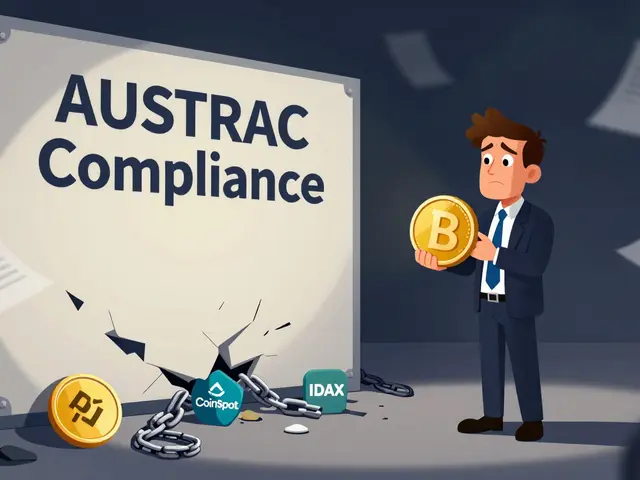
Australians can still own privacy coins like Monero, Zcash, and Dash - but trading them on local exchanges is effectively blocked. Since early 2025, every major Australian crypto platform has removed these assets from their listings. It’s not because the government outlawed them. It’s because exchanges chose to cut ties to avoid fines, license cancellations, and legal battles. For most users, this means you can’t buy or sell privacy coins through Binance Australia, CoinSpot, or Independent Digital Assets Exchange (IDAX). And starting March 31, 2026, that restriction will become official policy - not just a compliance choice.
Why Did Australia Target Privacy Coins?
Privacy coins aren’t illegal to hold. But they’re designed to hide transaction details. Monero uses ring signatures and stealth addresses. Zcash relies on zero-knowledge proofs. Dash mixes transactions through its PrivateSend feature. These tools make it nearly impossible for exchanges to track who sent money to whom - or how much was transferred. That’s a problem under Australia’s Anti-Money Laundering and Counter-Terrorism Financing Act 2006. Regulators at AUSTRAC require exchanges to identify every user and trace every transaction. If a coin can’t be tracked, it can’t be compliant. So exchanges had two choices: remove the coins or risk losing their license. Most picked removal. In 2025, 73 global exchanges delisted privacy coins - up from 51 in 2023. Australia didn’t lead the charge, but it followed the trend hard. Binance dropped Monero and Zcash from its US and EU platforms in February 2025. Kraken did the same in Canada in March. Poloniex removed Monero globally in April. Australia’s exchanges didn’t need a new law. They just needed pressure.Who’s Enforcing This?
Two agencies are behind the scenes. ASIC watches financial services under the Corporations Act 2001. AUSTRAC handles money laundering risks under the AML/CTF Act. Together, they’ve created a system where exchanges must prove they can monitor every transaction - or lose the right to operate. ASIC has already taken action against companies like Qoin, Block Earner, and Finder Wallet for offering unlicensed financial products. In 2022, it stopped Holon Investments from distributing crypto funds. These aren’t random crackdowns. They’re warnings: if you touch crypto, you’re in the financial system - and you must follow the rules. AUSTRAC is even more direct. It has canceled registrations, suspended operations, and refused applications from exchanges that failed AML checks. In 2024, it shut down two digital currency ATMs for failing to verify users. By March 31, 2026, its authority will expand to cover all digital asset service providers - including wallets, staking platforms, and decentralized exchanges that interact with Australian users.What Happens If You Try to Trade Privacy Coins?
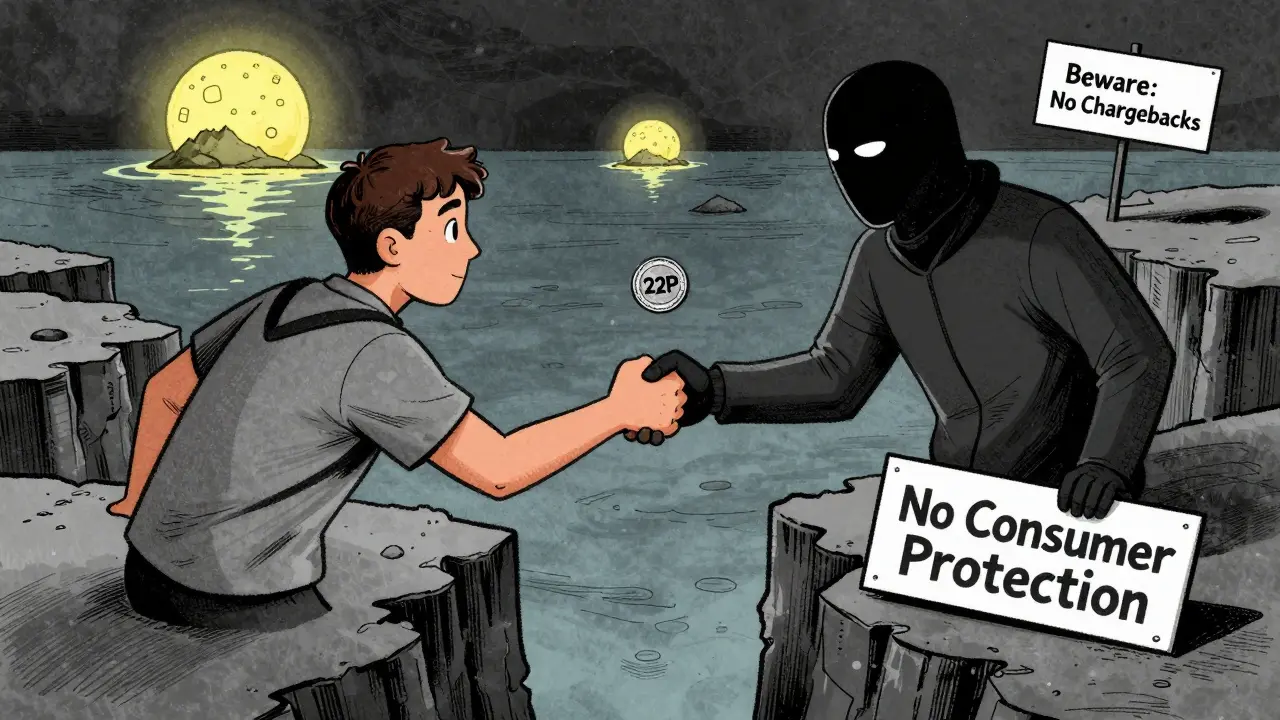
If you’re an Australian trying to buy Monero on CoinSpot or Swyftx? You won’t find it. The option is gone. You can’t deposit or withdraw Zcash. You can’t trade Dash. Even if you already own some, you can’t sell them through these platforms. Some users turned to peer-to-peer (P2P) markets like LocalMonero. Activity there rose 19% after global delistings. But P2P trading is risky. You’re dealing with strangers. You might get scammed. You might pay inflated prices. And if law enforcement investigates, you have no legal protection. There’s no dispute resolution. No chargebacks. No consumer rights. One Reddit user in Melbourne described buying Monero from a stranger via bank transfer. “I sent $800. They vanished. I have zero recourse.” That’s not uncommon. And it’s exactly what regulators feared: untraceable transactions leading to untraceable crime.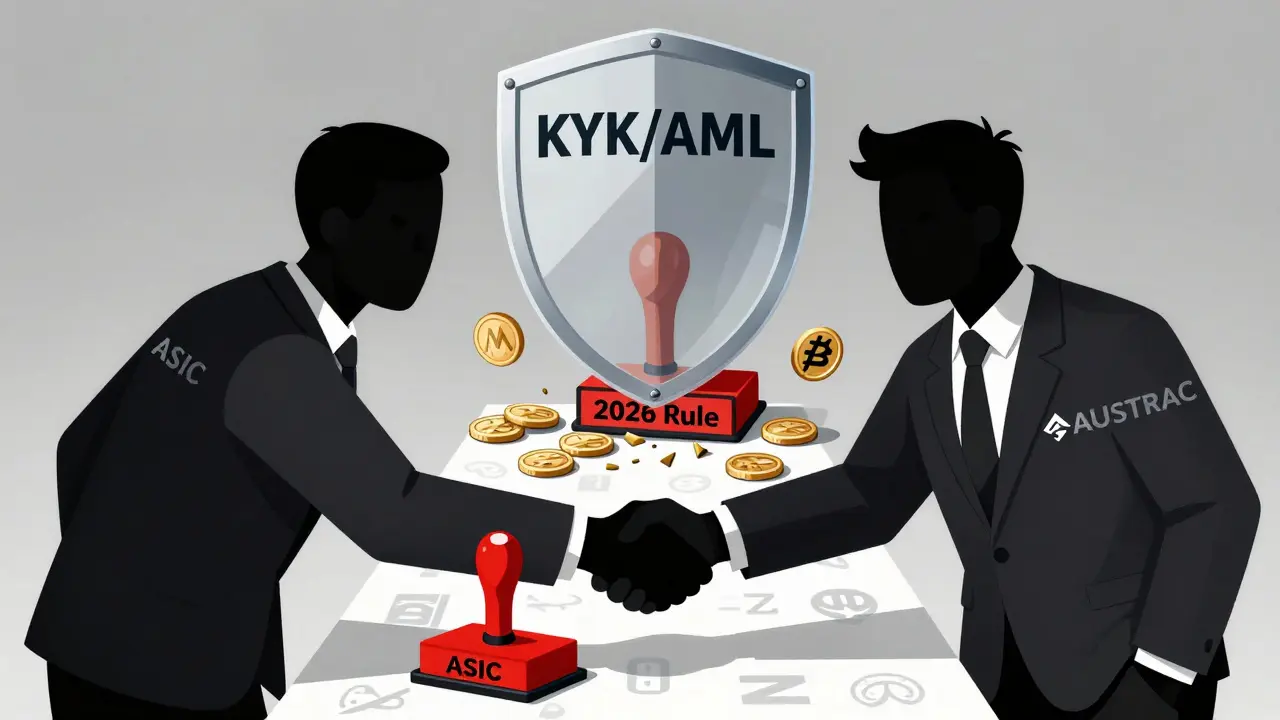
How Does Australia Compare to Other Countries?
Australia’s approach is middle-of-the-road. Japan banned privacy coins outright in 2018. Dubai did the same. The EU will fully ban them by July 2027. But Switzerland and Liechtenstein still allow privacy coins - as long as exchanges follow strict KYC rules. The difference? Australia didn’t pass a law. It used existing ones. Exchanges voluntarily removed privacy coins to stay compliant. That’s smarter politically - less backlash - but just as effective. Major global platforms like Bittrex, Kraken, and Huobi delisted these coins worldwide because of pressure from the U.S. Treasury and EU regulators. Australia didn’t need to act alone. The U.S. Internal Revenue Service even offered $625,000 in bounties to anyone who could break Monero’s privacy. That’s how serious they are. If the world’s most advanced crypto network can’t be tracked, it’s seen as a threat - not a feature.What’s Next? The March 2026 Deadline
On March 31, 2026, AUSTRAC’s expanded rules kick in. Every digital asset service provider - even ones that don’t have offices in Australia - must comply if they serve Australian users. That means:- Exchanges must identify every user before allowing any transaction
- Every deposit and withdrawal must be traceable
- Privacy coins, by design, cannot meet this standard

Christina Young
This is exactly why privacy coins are a regulatory nightmare. No amount of 'personal freedom' justifies enabling untraceable flows that fund crime. The system isn't broken-it's working as intended.
Austin King
I get the concern, but honestly? If you're holding Monero, you're not doing anything illegal. You're just being cautious. That's not a crime.
nalini jeyapalan
Stop pretending this is about 'compliance.' It's about control. They don't want you to have financial privacy. They want to know every dollar you touch. This is surveillance dressed up as regulation.
Drago Fila
Hey, if you still have privacy coins, don't panic. You can still hold them. Just move slowly. Use trusted P2P platforms. Learn how to self-custody. It's a learning curve, but it's doable. You're not alone.
Nash Tree Service
The irony is thick here. Regulators claim they're protecting consumers... yet they're forcing people into riskier, unregulated channels. That's not safety. That's negligence dressed in a suit.
Leah Dallaire
They're not banning privacy coins. They're banning the idea that you have a right to financial anonymity. This is the first step toward mandatory blockchain surveillance. Wake up.
Bryanna Barnett
So let me get this straight... you can own a gun but not a coin that hides your transactions? The hypocrisy is stunning. Also, 'compliant privacy' is an oxymoron. Like 'honest politician.'
Josh Moorcroft-Jones
Let's be real: the entire argument hinges on a false equivalence between 'privacy' and 'illegality.' Monero isn't used by criminals more than Bitcoin. The data doesn't support it. But emotion wins over evidence every time. AUSTRAC isn't solving crime-they're solving PR problems for banks.
Rachel Rowland
If you're worried about losing access to your assets, you're already behind. The future is self-custody. Learn how to use hardware wallets. Set up a non-KYC node. Stop relying on centralized platforms. They're not your friends.
Datta Yadav
Let’s not sugarcoat this: Australia didn’t ban privacy coins. They weaponized bureaucracy. They didn’t need new laws because existing ones were vague enough to be abused. This is regulatory capture in action. Exchanges didn’t 'choose' to delist-they were blackmailed into it. And now, because they’re scared of fines, ordinary people are being punished for wanting financial privacy. This isn’t about crime. It’s about power. It’s about institutions that can’t tolerate anything they can’t monitor. And if you think this stops at privacy coins, you’re naive. Next up: anonymous staking. Then decentralized lending. Then private wallets. They’ll come for your DeFi. They’ll come for your DAO. They’ll come for your right to transact without permission. And they’ll call it 'compliance.'
Shawn Warren
The market has spoken. Privacy coins are incompatible with modern finance. If you want to trade, use regulated platforms. If you want anonymity, go offshore. But don't cry when the rules change. This isn't personal. It's systemic.
Jackson Dambz
Why are people still defending this? It's not about freedom. It's about enabling tax evasion, drug deals, and ransomware. You think your 'privacy' matters more than preventing a child from being kidnapped for ransom? Wake up.
James Burke
I get both sides. I really do. But if you're holding privacy coins, you're not a criminal. You're just someone who values autonomy. That's valid. The system's flawed, but that doesn't mean you have to abandon your assets. Just adapt. Stay informed. Stay safe.
Steven Lefebvre
I just bought my first Monero in 2024. Thought it was a long-term play. Now I'm stuck. But you know what? I'm not giving up. I'm moving to a non-AU wallet. Learning how to use a VPN with a hardware wallet. It's a hassle, sure. But freedom isn't free.
prasanna tripathy
I live in India. We don't have this ban yet. But I see the writing on the wall. If Australia can do this, it'll spread. The real question isn't 'can you trade it?' It's 'can you keep your money private at all?' I think the answer is no. Not anymore. And that's sad.