Imagine holding millions in cryptocurrency, only to watch half of it vanish into capital gains taxes the moment you cash out. For years, this was the reality for most investors. But a new wave of high-net-worth individuals is changing their address to change their tax bill. This strategy, known as tax residency changes, involves moving your legal domicile to jurisdictions with favorable cryptocurrency laws. It’s not about hiding money; it’s about legally structuring your life so that governments with lower or zero crypto taxes claim your income instead of those with steep rates.
However, the window for easy arbitrage is closing fast. With the IRS introducing Form 1099-DA and the OECD rolling out global data sharing frameworks, the days of anonymous offshore accounts are over. Today, optimizing your crypto taxes requires navigating complex physical presence rules, avoiding costly "exit taxes," and proving genuine ties to a new country. Let’s break down how this works, where the best spots are, and what could go wrong if you get it wrong.
How Tax Residency Actually Works
Many people confuse citizenship with tax residency. You can be a U.S. citizen but live in Dubai, paying no U.S. federal income tax on your foreign earnings (though you still file returns). Conversely, you might be a British citizen living in Malta, becoming a Maltese tax resident after spending enough time there. The key difference is that tax residency determines *where* you pay taxes, while citizenship determines *who* you are.
Most countries use one of two methods to determine residency:
- The Physical Presence Test: You become a tax resident by spending a specific number of days in the country each year, typically 183 days. This is common in places like Malaysia, Singapore, and many European nations.
- The Domicile/Centre of Vital Interests Test: Residency is based on where your permanent home, family, and economic interests are located, regardless of exact day counts. The U.S. and some Commonwealth countries lean toward this, making it harder to simply "move" without severing old ties.
For crypto investors, the goal is usually to establish residency in a jurisdiction that treats cryptocurrency holdings as non-taxable assets for individuals, rather than business income. This distinction is critical. If you trade occasionally, you might be considered an investor. If you trade daily, you’re likely a business-and businesses are taxed almost everywhere.
Top Jurisdictions for Crypto Tax Optimization in 2026
Not all low-tax countries are created equal. Some offer zero capital gains tax but high corporate taxes. Others have great tax laws but strict entry requirements. Here are the top contenders as of mid-2026:
| Jurisdiction | Crypto Capital Gains Tax | Residency Requirement | Key Caveats |
|---|---|---|---|
| Dubai, UAE | 0% | 30 days/year (for visa purposes) | No personal income tax at all. Requires establishing a local entity or free zone license for professional activities. |
| Malta | 0% (occasional traders) | 183 days/year | Frequent trading (>€50k turnover) may be taxed as business income up to 35%. EU membership adds regulatory stability. |
| Puerto Rico (USA) | 0% (under Act 22) | 183 days/year + renounce state residency | You remain a U.S. citizen. Must establish bona fide domicile. Strict compliance audits apply. |
| Singapore | 0% (investors) | 183 days/year | Active trading is taxed as business income up to 24%. High cost of living and strict immigration controls. |
| Malaysia | 0% (casual investors) | 182 days/year | Mining and staking are often taxed as ordinary income up to 30%. Affordable cost of living. |
Dubai stands out because it has no personal income tax period. Whether you make money from stocks, real estate, or Bitcoin, you keep it. However, you need a valid visa, which often means setting up a company. Malta offers a hybrid approach: casual investors pay nothing, but if you’re actively trading, the tax rate jumps significantly. Puerto Rico is unique because it allows U.S. citizens to access these benefits without leaving the United States, provided they give up their state residency and spend enough time on the island.
The Hidden Trap: Exit Taxes
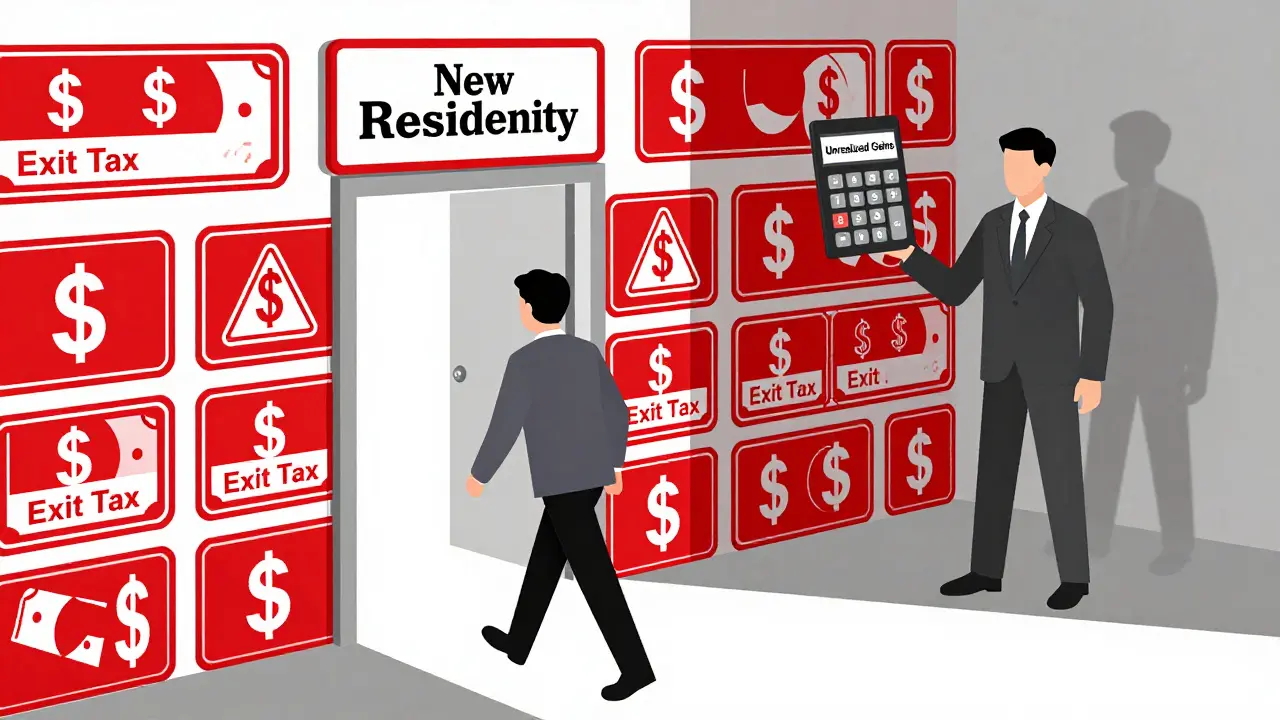
Before you pack your bags for Dubai, check if your current country charges an "exit tax." An exit tax is a levy on unrealized capital gains when you leave a country. Think of it as the government saying, "If you want to leave, pretend you sold everything today and pay us the tax on the profit."
Countries like France, Germany, Italy, and Spain impose these taxes. For example, Germany applies a 25% exit tax on unrealized crypto gains exceeding €60,000. If you hold $1 million in Bitcoin that you bought for $100,000, leaving Germany could trigger a tax bill of roughly $225,000-even though you haven’t sold a single coin.
This is where planning matters. Some countries allow deferral of exit taxes for several years if you maintain certain ties. Others waive them entirely if you move to a country with a double taxation treaty. Ignoring this step can wipe out any savings you hoped to gain from your new residency. Always consult a cross-border tax attorney before submitting your resignation letter or booking your flight.
The End of Secrecy: New Reporting Rules
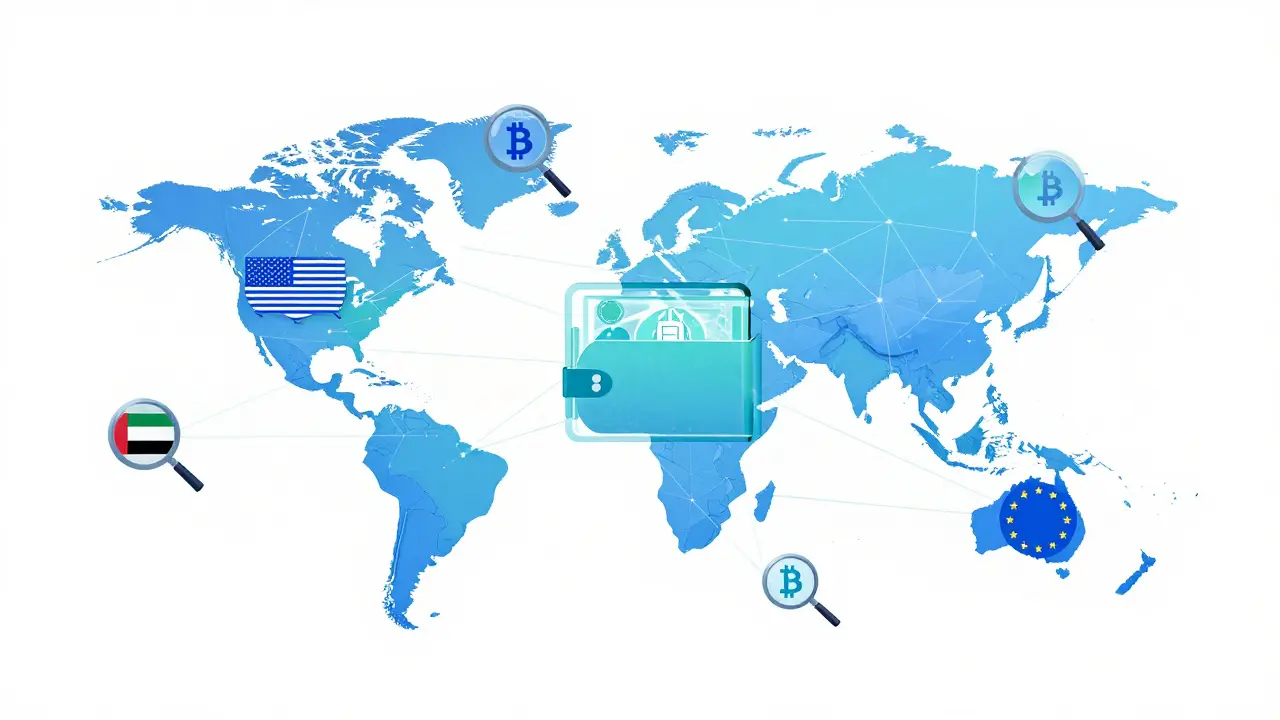
The era of keeping crypto transactions off the grid is officially over. In 2024, the IRS announced the implementation of Form 1099-DA, which requires exchanges to report acquisition dates, cost basis, and proceeds for all crypto transactions starting with the 2025 tax year. There is no minimum threshold. Even small trades will be reported.
But the U.S. isn’t acting alone. The OECD’s Crypto-Asset Reporting Framework (CARF) is set to launch in 2027. This framework mandates automatic exchange of crypto transaction data between over 100 participating jurisdictions. Imagine this: you move to Dubai to avoid taxes, but your crypto exchange shares your data with the UAE authorities, who then share it with your home country under CARF. The result? Your home country knows exactly how much you made and whether you paid the correct tax.
Dr. James H. Anderson, a professor of international taxation, warns that CARF will "significantly reduce the effectiveness of tax residency changes" by creating a global web of transparency. This doesn’t mean tax optimization is dead-it means it must be done correctly. You can’t just hide; you have to qualify. Legitimate residency changes will survive scrutiny. Fake ones will not.
Step-by-Step: How to Change Your Tax Residency
Changing your tax residency is not a paperwork exercise; it’s a lifestyle change. Tax authorities look for "bona fide" residence. Here’s how to do it right:
- Choose Your Destination Carefully: Align the country’s tax laws with your activity. Are you a passive holder or an active trader? Does the country tax mining or staking?
- Sever Ties with Your Old Country: Close bank accounts, sell property, cancel memberships, and update your driver’s license. Keep records of every closure. If you keep a U.S. apartment and a U.S. phone number, you’ll fail the domicile test.
- Establish Physical Presence: Rent or buy a home. Get a local bank account. Open a utility bill in your name. Spend the required days (usually 183) in the new country. Keep passports stamps, hotel receipts, and flight itineraries as proof.
- File the Correct Forms: In the U.S., you may need to file Form 8854 to expatriate tax status. In other countries, you’ll file residency declarations. Work with a local accountant to ensure accuracy.
- Maintain Compliance: Continue filing returns in your old country until you officially lose residency. Then, start filing in your new country. Never stop filing entirely unless you’re a true stateless person (which brings its own legal nightmares).
The process takes 6 to 18 months. Rushing it leads to mistakes. One Reddit user shared losing €22,000 in unexpected exit taxes because they didn’t properly document their departure from Germany. Another saved €47,000 by meticulously proving their Maltese residency. The difference was preparation.
Common Mistakes to Avoid
Even experienced investors stumble here. Here are the biggest pitfalls:
- Assuming All Crypto Income Is Tax-Free: Many countries exempt capital gains but tax income from mining, staking, or DeFi yields. Check the local definition of "income" vs. "gain."
- Neglecting State Taxes: If you’re a U.S. citizen moving to Puerto Rico, you escape federal tax but must renounce your state residency. If you forget to notify California or New York, they’ll still send you bills.
- Using Nominee Structures Without Substance: Setting up a shell company in a tax haven without real employees, office space, or decision-making power is illegal in most jurisdictions. Authorities look for "economic substance."
- Ignoring FBAR and FATCA: U.S. persons must report foreign bank accounts over $10,000 (FBAR) and foreign assets (FATCA). Failing to do so carries penalties far higher than any tax savings.
The cost of professional help ranges from $15,000 to $50,000 for legal and accounting services. Add potential investment requirements, like Portugal’s Golden Visa (€500,000 in real estate), and the total price tag rises. But compared to a 37% marginal tax rate plus penalties, it’s often worth it for large portfolios.
Is It Worth It in 2026?
The short answer: yes, but only if you have significant assets and a long-term plan. PwC’s 2025 Global Crypto Tax Outlook suggests that the "window for significant tax optimization through residency changes will narrow substantially after 2027" due to global data sharing. Countries with constitutional prohibitions against capital gains taxes, like Singapore and the UAE, will remain attractive longer than those relying on temporary exemptions.
If you’re a casual investor with less than $100,000 in crypto, the hassle and cost of moving likely outweigh the benefits. Focus on harvesting losses and using tax-advantaged accounts instead. But if you’re a whale with millions at stake, relocating to a crypto-friendly jurisdiction is a legitimate strategic move. Just remember: transparency is the new norm. Play by the rules, document everything, and work with experts who understand both crypto and international tax law.
Can I change my tax residency without physically moving?
Generally, no. Most countries require physical presence (e.g., 183 days) or proof of domicile (home, family, economic ties). Simply opening a bank account or buying a second home elsewhere rarely qualifies you as a tax resident. Tax authorities scrutinize "paper moves" heavily.
What is Form 1099-DA and how does it affect me?
Form 1099-DA is a new IRS form requiring crypto exchanges to report all transactions, including cost basis and proceeds, starting with the 2025 tax year. This increases transparency, making it harder to hide unreported gains. You must ensure your personal records match the exchange reports to avoid audits.
Do I have to pay exit taxes if I move from the U.S.?
The U.S. does not have a general exit tax for residents moving abroad. However, if you are a "covered expatriate" (meeting certain asset or tax liability thresholds), you may face an exit tax on unrealized gains. Most regular taxpayers do not trigger this, but high-net-worth individuals should consult a specialist.
Is staking income taxed differently than capital gains?
Yes. In many jurisdictions, staking rewards are treated as ordinary income at the time of receipt, not as capital gains when sold. This means they are taxed at higher marginal rates. Countries like Malaysia tax staking as ordinary income up to 30%, even if capital gains are 0%.
How long does it take to establish new tax residency?
It typically takes 6 to 18 months. You need to gather documentation, meet physical presence requirements, and file necessary forms. Rushing the process can lead to rejection or future audits. Plan for a gradual transition to ensure compliance.


Write a comment