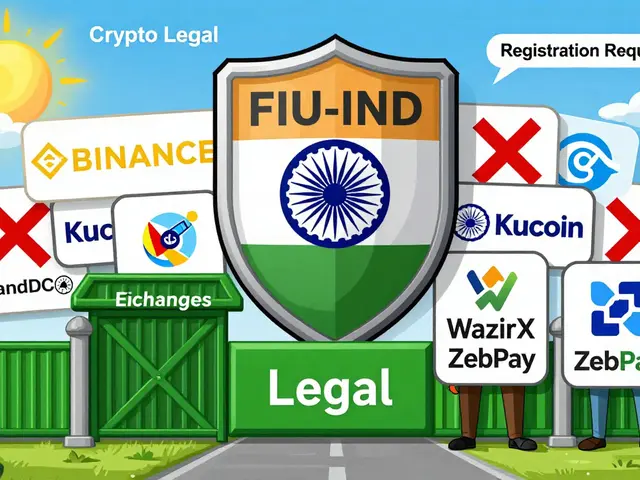
India never banned cryptocurrency itself. But if you tried to trade on Binance, KuCoin, or Coinbase after early 2024, you probably couldn’t log in. That’s not because crypto is illegal-it’s because crypto exchanges that didn’t register with India’s Financial Intelligence Unit (FIU-IND) got blocked. This isn’t about stopping trading. It’s about control. And it changed everything for Indian crypto users.
Why Did India Start Banning Exchanges?
It started with a rule no one talked about until it hit hard. In 2018, the Reserve Bank of India (RBI) told banks: don’t handle crypto transactions. That shut down most exchanges overnight. People couldn’t deposit INR. Withdrawals froze. Trading stopped. But in 2020, the Supreme Court overturned that ban, saying the RBI had no right to block crypto outright. That should’ve been the end. But instead, the government quietly created a new system: register with FIU-IND or get banned. The FIU-IND isn’t a typical regulator. It’s part of India’s financial crime unit, focused on tracking money laundering. So now, every exchange serving Indian users must prove they’re keeping records of every trade, every deposit, every withdrawal-back to 2020. And they have to share that data with Indian authorities. Exchanges that refused? Their websites got blocked. Their apps were pulled from Google Play and Apple App Store. Their Indian bank accounts were frozen. No more INR deposits. No more withdrawals. For users, it meant losing access to funds or getting stuck with coins they couldn’t sell.Which Exchanges Got Banned?
The list of blocked exchanges is long, but the big names are clear:- Binance - Paid over $100 million in penalties in 2023 for not registering. Its Indian website and app were blocked in January 2024.
- KuCoin - Blocked in early 2024. No FIU registration. No access for Indian users.
- Coinbase - Never fully launched in India, but its services were restricted after the crackdown. No registration, no access.
- Bybit - Faced penalties and was blocked from serving Indian customers.
- Gate.io, Huobi, OKX - All blocked for non-compliance.
Which Exchanges Are Still Legal?
The only exchanges you can use legally in India right now are the ones that registered with FIU-IND. These are mostly Indian companies:- CoinDCX - First to register. Now India’s largest exchange by volume.
- WazirX - Acquired by Binance but fully restructured to comply with FIU rules.
- Mudrex - Grew 300% in users after foreign exchanges were blocked.
- ZebPay - One of India’s oldest exchanges. Fully compliant since 2023.
- Unocoin - Registered early. Still operates with full FIU access.
- CoinSwitch Kuber - Rebranded from CoinSwitch. Now FIU-registered and offering tax reports.
- BuyUcoin - Added user bonuses to attract traders from banned platforms.
What Happens If You Use a Banned Exchange?
Some people still try. They use VPNs. They trade on decentralized exchanges (DEXs). They send crypto through peer-to-peer (P2P) channels. But here’s the real risk:- No legal protection - If your account gets hacked or frozen, Indian authorities won’t help. You’re on your own.
- No tax reporting - FIU-compliant exchanges auto-generate tax reports. Non-compliant ones don’t. That means you have to track every trade manually. Miss a file? You could owe up to 60% in penalties.
- Bank account trouble - If your bank notices large transfers to Binance or KuCoin, they may freeze your account for “suspicious activity.”
- Future liability - The 2025 rule says FIU can demand records going back to 2020. If you traded on a banned exchange and kept records, you could be forced to hand them over.
How Did This Change the Market?
Before 2024, Binance handled 60% of Indian crypto trading. By late 2024, CoinDCX and WazirX handled 85% combined. That’s not because they’re better. It’s because they’re the only ones left. CoinDCX saw deposits jump over 2,000% in just three months. Mudrex added 10,000 new users in three weeks. ZebPay restarted services after a two-year pause. These platforms didn’t outmarket the giants-they out-registered them. The result? Indian crypto trading is now dominated by local players with government-backed compliance. Global liquidity is gone. New coins rarely list on Indian exchanges. Trading volumes are down 40% from 2023 highs. But for the government? It’s working. They now have a clear paper trail for every rupee traded.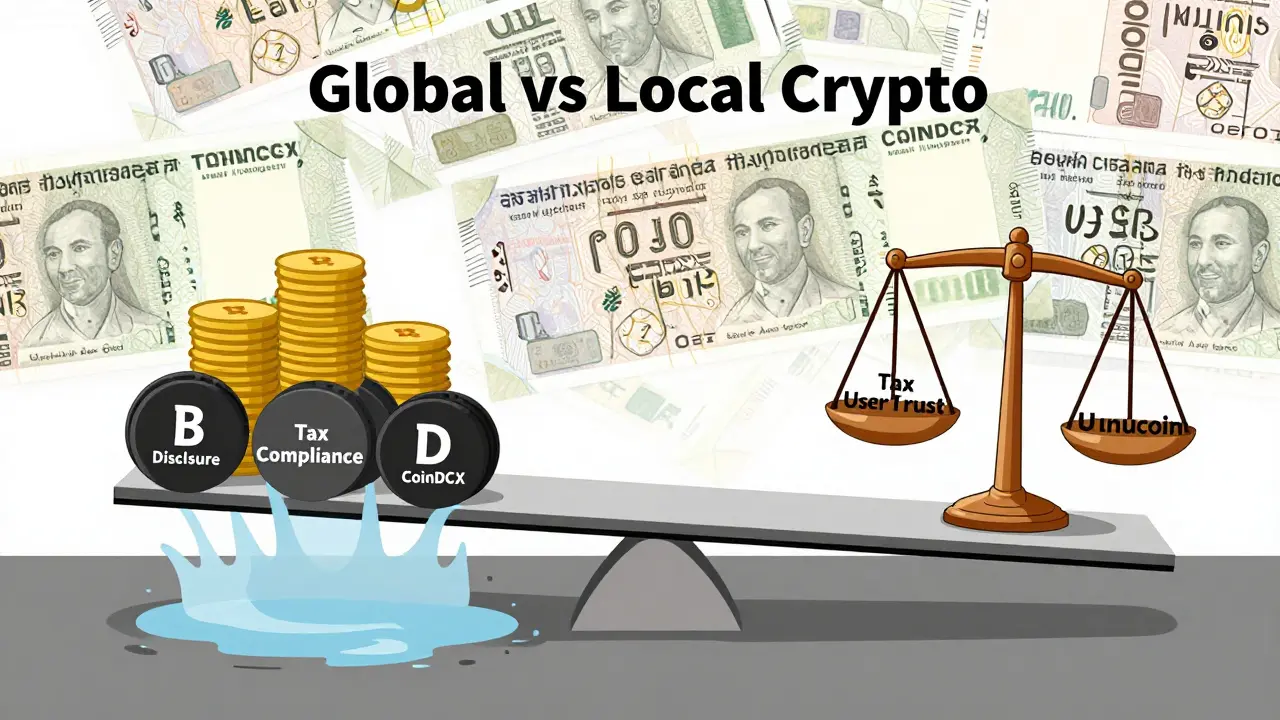
What About Taxes?
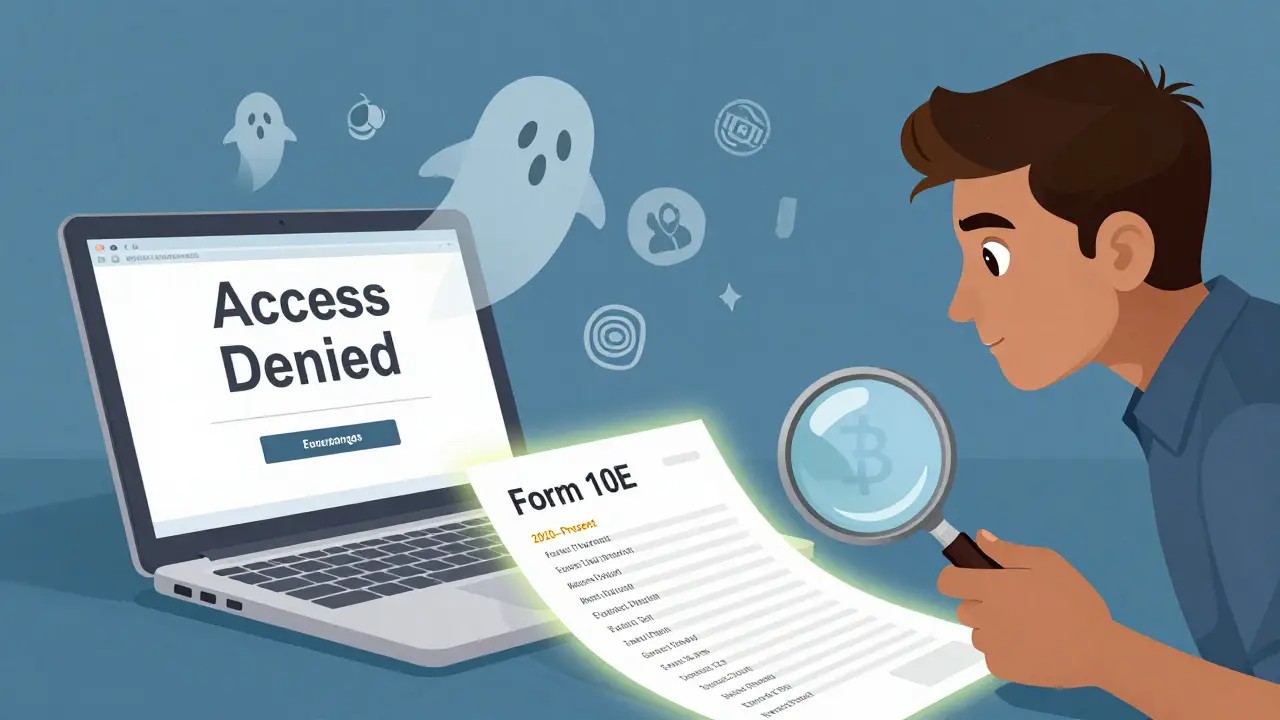
Crypto gains are taxed at 31.2% in India-no deductions, no offsets. That’s higher than most countries. But here’s the catch: only FIU-registered exchanges can give you the transaction data needed to file taxes correctly. If you used a banned exchange, you’re on your own. You need to download every trade history, convert everything to INR, track every wallet address, and manually calculate gains. One missed transaction? You could owe thousands in penalties. FIU-compliant exchanges now auto-generate Form 10E (India’s crypto tax form). They keep records for six years. That’s a burden for them-but a huge relief for users.Will This Change?
The government has not said it will lift the bans. In fact, the 2025 Finance Bill made compliance even stricter. Now, even if an exchange registers tomorrow, it must report every trade since 2020. That’s a dealbreaker for many global platforms. Some experts think Binance or Coinbase will eventually register. But it would mean handing over user data, accepting Indian tax rules, and giving up control over their platform. So far, none have. For now, the rule is simple: if it’s not on the FIU-IND list, it’s banned in India. And the list only grows with Indian companies.Trading crypto in India isn’t illegal. But using the wrong exchange? That’s where the risk lives.
Are crypto exchanges completely banned in India?
No. Only exchanges that don’t register with FIU-IND are blocked. Indian-based platforms like CoinDCX, WazirX, and ZebPay are fully legal and operational. The ban targets foreign exchanges that refuse to comply with Indian financial reporting rules.
Can I still use Binance or Coinbase in India?
Not legally. Both Binance and Coinbase have been blocked from serving Indian users since early 2024. Their websites and apps no longer work in India, even with a VPN. Attempting to use them risks bank account freezes and tax complications.
What happens if I trade on a banned exchange?
You won’t be arrested, but you’ll face serious risks: no legal recourse if funds are lost, no tax reports (meaning you must manually track every trade), and your bank may freeze your account for suspicious activity. You could also be audited later if the FIU demands your trading history.
Is crypto trading legal in India?
Yes. Buying, selling, and holding cryptocurrency is legal. The government does not ban crypto itself. The ban only applies to exchanges that fail to register with FIU-IND and comply with financial reporting rules.
Do I have to pay tax on crypto in India?
Yes. All crypto gains are taxed at 31.2% flat rate. Only FIU-registered exchanges provide tax reports that match government requirements. If you use a banned exchange, you must manually calculate and file your taxes-or risk penalties up to 60% of the unreported amount.
Will banned exchanges ever return to India?
Only if they register with FIU-IND and agree to share all past transaction data since 2020. So far, no major global exchange has done this. The cost and loss of control make it unlikely unless Indian regulations change significantly.

Patty Atima
Just use CoinDCX or WazirX. Easy. Done.
rajan gupta
Bro, I lost 2 BTC because Binance got blocked 😭
Now I’m stuck with Dogecoin I can’t sell.
FIU-IND is just another way to control us.
They don’t care if we profit or lose.
They just want to see every rupee move.
I used to trade at 3 AM, now I’m stuck with ZebPay’s clunky app.
At least Binance had futures.
Now I’m doing P2P with strangers and sweating every transaction.
And don’t get me started on taxes - I’m manually logging 400 trades.
Who has time for this?
India wants crypto, but only if it’s on their terms.
It’s like saying, "You can drink alcohol, but only if you pour it from this one glass."
And guess what? That glass is owned by CoinDCX.
They’re not the hero. They’re the gatekeeper.
And we’re all just begging for scraps.
Ross McLeod
The entire premise here is a red herring. This isn’t about regulation - it’s about sovereignty. India recognized that global exchanges were treating its citizens as a cash cow, extracting fees, offering zero local support, and leaving users stranded when compliance became inconvenient. The RBI’s 2018 ban was knee-jerk. The FIU-IND framework is calculated. It’s not that these exchanges were "banned" - they were given a choice: integrate with India’s financial infrastructure or exit. Binance chose profit over principle. They’d rather pay $100M in penalties than hand over data. That’s not victimhood - that’s corporate arrogance. And now, Indian users are being forced into a domestic oligopoly, which ironically creates new risks: less liquidity, fewer assets, and centralized control. But let’s be clear - if you want to trade crypto in India, you accept Indian law. That’s not oppression. It’s citizenship.
Billy Karna
For anyone still confused - yes, crypto is legal. Yes, you can hold it. Yes, you can buy/sell via P2P. The issue is only with centralized exchanges that refuse to comply with India’s AML/KYC reporting requirements under the FIU-IND. Think of it like this: if you run a bank in the U.S., you report to FinCEN. If you run a bank in Germany, you report to BaFin. India’s FIU-IND is no different. The problem isn’t regulation - it’s that global platforms like Binance and KuCoin built their business model on ignoring jurisdictional boundaries. They treated India like a loophole. Now the loophole’s closed. The Indian exchanges? They’re not "better" - they’re just the only ones legally allowed to touch INR. The trade-off? Fewer coins, slower UI, but full tax reporting and legal protection. For most retail traders, that’s worth it. The real losers? People who thought crypto was a tax-free, regulation-free playground. It never was. And now India’s making that painfully obvious.
Lucy de Gruchy
This is textbook authoritarian overreach. "Register or get blocked"? That’s not regulation - that’s digital colonization. The FIU-IND has no business demanding transaction history back to 2020. That’s retroactive surveillance. And the fact that only Indian companies are allowed to operate? That’s economic nationalism dressed up as compliance. You think CoinDCX is "compliant"? They’re just a front for the state. Every trade is monitored. Every wallet is tracked. Every tax form is a trap. And don’t even get me started on how they’re using this to crush innovation. Global exchanges had DeFi integrations, staking, lending - all gone. Now you’re stuck with a glorified INR-to-BTC converter that can’t even handle NFTs. This isn’t about money laundering. It’s about control. And if you’re okay with that, you’ve already lost.
Gene Inoue
People are acting like this is some tragedy. Bro, you’re using an unregulated offshore platform that doesn’t report to anyone. You think you’re some crypto rebel? You’re a walking tax evasion risk with a MetaMask wallet. The government didn’t ban crypto - you did, by choosing to trade on a platform that doesn’t give you tax docs. Now you’re mad because you have to do math? Get a spreadsheet. Hire an accountant. Or stop pretending you’re a pioneer. You’re just a guy who thought the rules didn’t apply to him. And now they do. Welcome to reality.
Ricky Fairlamb
Let’s not mince words: this is a surveillance state masquerading as financial reform. The FIU-IND is not a regulator - it’s a data harvesting operation. Requiring exchanges to hand over transaction logs dating back to 2020? That’s not compliance - that’s digital entrapment. And the fact that only Indian firms are permitted to operate? That’s not protection - it’s market manipulation. Binance didn’t refuse to comply because they’re evil - they refused because they refuse to become a puppet of the Indian government. They won’t surrender user privacy, and they won’t accept retroactive reporting. That’s called integrity. Meanwhile, CoinDCX and WazirX? They’re just glorified tax collectors with a crypto front. You think you’re trading crypto? No. You’re trading INR with a blockchain veneer. And if you’re not paying attention - you’re already on the government’s watchlist. Every trade. Every wallet. Every second. This isn’t the future of finance. It’s the future of control.
Arlene Miles
I know it feels like you’ve been left behind - but this is actually a win. You’re not being censored. You’re being protected.
Think about it: before, you were trading on platforms that could vanish overnight. No customer support. No legal recourse. No tax help. Now? You have a regulated exchange that auto-generates Form 10E. You have banks that won’t freeze your account for "suspicious activity." You have a clear audit trail. You’re not losing freedom - you’re gaining security.
Yes, the UI is simpler. Yes, there are fewer coins. But you’re not gambling anymore - you’re investing.
And if you’re still mad because you can’t trade Shiba Inu on margin? Maybe crypto isn’t your thing. Maybe you just liked the chaos.
But if you actually want to build wealth? This is the path. Slow. Safe. Sustainable.
You’re not being locked out. You’re being guided.
And honestly? You needed it.
Jessica Beadle
There’s a fundamental misperception here. The FIU-IND isn’t a regulatory body - it’s a financial intelligence node embedded within India’s national security architecture. The requirement for historical data back to 2020 isn’t bureaucratic overreach - it’s forensic necessity. Cryptocurrency, by design, obfuscates provenance. The Indian state, facing rising illicit capital outflows and hawala networks, had no choice but to impose a data retention mandate. The fact that global exchanges refused to comply speaks volumes about their operational ethics. They prioritized market share over legal integrity. Meanwhile, CoinDCX and WazirX, though imperfect, have internalized the regulatory burden and now serve as compliance conduits. The 40% volume drop? That’s not a failure - it’s a natural attrition of speculative noise. What remains is a more mature, tax-compliant, institutionally integrated market. The real tragedy isn’t the ban - it’s the refusal of retail users to acknowledge that decentralization without accountability is just anarchy with a blockchain UI.
Lauren J. Walter
So let me get this straight… I can’t use Binance, but I can use CoinDCX?
Wait - isn’t that like saying I can’t use Netflix, but I can use "IndianNetflix" that only has 3 shows?
And the tax reports? Oh wow, they auto-generate them now.
How… thoughtful.
Meanwhile, my P2P guy just asked me to send him 50k INR in cash because "the app is down."
Thanks, government. You really made this easier.
Carol Lueneburg
Hey everyone - I know this feels scary, but we’re gonna be okay 💪
Yes, Binance is gone. Yes, it’s frustrating.
But look at what’s growing: Indian exchanges are hiring local devs, adding more coins, and even offering educational workshops!
I used to be scared of taxes - now I get auto-generated reports. No more panic before April.
And guess what? My cousin in Pune just made his first profit on Mudrex. He’s 19. He didn’t need a VPN. He didn’t need to risk his bank account.
This isn’t the end of crypto in India - it’s the beginning of something real.
Less chaos. More clarity.
Less gambling. More building.
And honestly? That’s what we needed all along. ❤️
Brenda White
wait so coinbase was never even here??
so why are people acting like it was a big deal??
i thought it was like a thing??
and why do all the indian apps look like they were made in 2015??
also can i still use trust wallet??
plz help
Tobias Wriedt
Finally someone tells the truth. 🚫
Stop pretending this is about freedom.
It’s about control.
And if you’re okay with that?
You’re already sold out. 🤡
Marie Vernon
I love how this whole thing turned into a cultural clash. The U.S. and EU say "decentralization," India says "compliance."
But honestly? I get it.
When I lived in India, I saw how easily people got scammed by fake crypto platforms.
Now, with FIU-registered exchanges, at least there’s a paper trail.
And yes - the UI sucks.
And yes - there are fewer coins.
But my aunt finally understood crypto because she got a tax report that made sense.
That’s not control.
That’s education.
And honestly? I’m proud of that.
Cheri Farnsworth
It is imperative to recognize that the Indian government's approach to cryptocurrency regulation, while seemingly restrictive, is rooted in a profound commitment to financial integrity and the prevention of illicit capital flows. The FIU-IND framework does not prohibit innovation; rather, it mandates transparency, which is a cornerstone of any mature financial ecosystem. The displacement of global platforms is not a failure of policy, but a necessary recalibration toward accountability. To lament the loss of unregulated access is to misunderstand the very nature of financial sovereignty. In this context, compliance is not surrender - it is the foundation upon which sustainable participation is built.
Tony Weaver
Let’s be honest - this isn’t about crypto.
It’s about who controls the money.
Binance didn’t get banned because they were bad.
They got banned because they were too good.
Too fast. Too global. Too independent.
India didn’t want a crypto market.
They wanted a financial pipeline - one that feeds directly into their tax system, their banks, their control.
And now? Every rupee you trade? It’s tracked.
Every profit? Taxed.
Every wallet? Monitored.
They didn’t stop crypto.
They just made it boring.
And honestly? That’s the real win.
Because boring means stable.
And stable means power.
Arlene Miles
Replying to @2138 - you’re right that it’s about control, but you’re missing the bigger picture.
Control doesn’t have to mean oppression.
Think of it like seatbelts.
They don’t stop you from driving.
They just make sure you don’t die when you crash.
Before, people were losing life savings on fake platforms.
Now, if something goes wrong, there’s a regulator to call.
Yes, it’s slower.
Yes, it’s less flashy.
But it’s safer.
And for most people? That’s worth more than a 100x moon.