You bought the token. You watched the chart spike 400% in a day. Your friends on Discord were screaming "moon." Then, you tried to sell. The button didn't work. Or worse, it worked, but your balance went to zero instantly. The developers vanished. Twitter was silent. That sinking feeling in your stomach? That’s a rug pull a type of exit scam where project developers abandon a cryptocurrency project and abscond with investors' funds.
If you’ve been in crypto for more than five minutes, you’ve likely heard this term. But understanding what it actually means-and how to avoid becoming a statistic-is crucial. According to Solidus Labs, rug pulls are the most common crime in crypto, affecting nearly two million investors globally. It’s not just bad luck; it’s often a calculated trap.
The Anatomy of a Rug Pull
Think of a rug pull like a magician pulling a tablecloth out from under a full dinner set. The plates (your money) stay there, but the support vanishes. In crypto terms, this happens when developers create a new token, hype it up to attract buyers, and then suddenly withdraw all the liquidity or sell their massive holdings, crashing the price to near zero.
Why does this happen so often in decentralized finance (DeFi a financial system built on blockchain technology without central intermediaries like banks)? Because anyone can launch a token. On platforms like Uniswap or PancakeSwap, you don’t need permission to list a new coin. This freedom is great for innovation but terrible for security. There’s no gatekeeper checking if the team behind the token is real or if the code is safe.
The term itself comes from the idiom "pulling the rug out," meaning to suddenly destabilize someone’s position. In crypto, that instability is total loss. Unlike a stock market crash where companies might recover, a rug-pulled token usually never recovers because the backing assets are gone.
Hard vs. Soft: Two Ways to Get Rugged
Not all rug pulls look the same. They generally fall into two categories: hard and soft. Knowing the difference helps you spot them earlier.
| Feature | Hard Rug Pull | Soft Rug Pull |
|---|---|---|
| Mechanism | Malicious smart contract code prevents selling or drains liquidity directly. | Developers simply stop working, remove marketing, and dump their tokens gradually. |
| Selling Ability | Often impossible for regular users (honeypot). | Possible, but price crashes due to lack of demand and developer dumping. |
| Detection Difficulty | Easier to detect via code audits or transaction history. | Harder to detect; looks like a failed startup rather than a scam. |
| Speed of Loss | Instantaneous (seconds to minutes). | Gradual decline over days or weeks. |
A hard rug pull involves technical trickery. Developers embed malicious code in the smart contract self-executing contracts with the terms of the agreement directly written into code. For example, they might add a function that only allows the owner to sell. If you try to sell, the transaction fails. Meanwhile, the developer sells everything and walks away with the pool’s ETH or BNB. The famous $SQUID token incident in 2021 is a classic case where holders couldn’t sell while insiders dumped millions.
A soft rug pull is sneakier. The code is clean. Anyone can buy and sell. But the developers never build the product. They spend all the raised money on influencers and ads. Once the hype dies down, they quietly sell their own tokens, which makes up a huge chunk of the supply. The price drifts downward until nobody cares anymore. It feels less like a theft and more like investing in a company that just went bankrupt. But the result is the same: your investment is worthless.
Red Flags: How to Spot a Scam Before You Buy
You don’t need to be a coder to spot most rug pulls. Scammers are lazy, and their mistakes show up in public data. Here is what you should check before connecting your wallet.
- Anonymous Teams: If the website doesn’t list real names, LinkedIn profiles, or past experience, be wary. Legitimate projects want accountability. Anonymous teams have nothing to lose by running away.
- Unlocked Liquidity: Check if the liquidity pool is locked. Use tools like Unicrypt or Team Finance. If the liquidity isn’t locked, the developer can withdraw the backing funds at any time, leaving you with worthless tokens.
- High Developer Ownership: Look at the token distribution. If the top 5 wallets hold more than 20-30% of the supply, one person can crash the price by selling. Healthy projects distribute ownership widely.
- No Audit: Did a reputable firm like CertiK or OpenZeppelin audit the contract? If not, ask why. Audits find bugs and malicious functions. No audit is a major red flag.
- Unrealistic Promises: Does the whitepaper promise 10,000% APY or guaranteed returns? Crypto is volatile. Guaranteed high returns usually mean the yield is paid from new investors’ money-a Ponzi structure.
Also, watch the social media activity. Are the comments genuine, or do they look like bots posting identical phrases? Scammers often pay for fake engagement to create a sense of FOMO (Fear Of Missing Out). If everyone is shilling the token but nobody is talking about the actual utility, run.
The Technical Side: What Happens on the Blockchain?
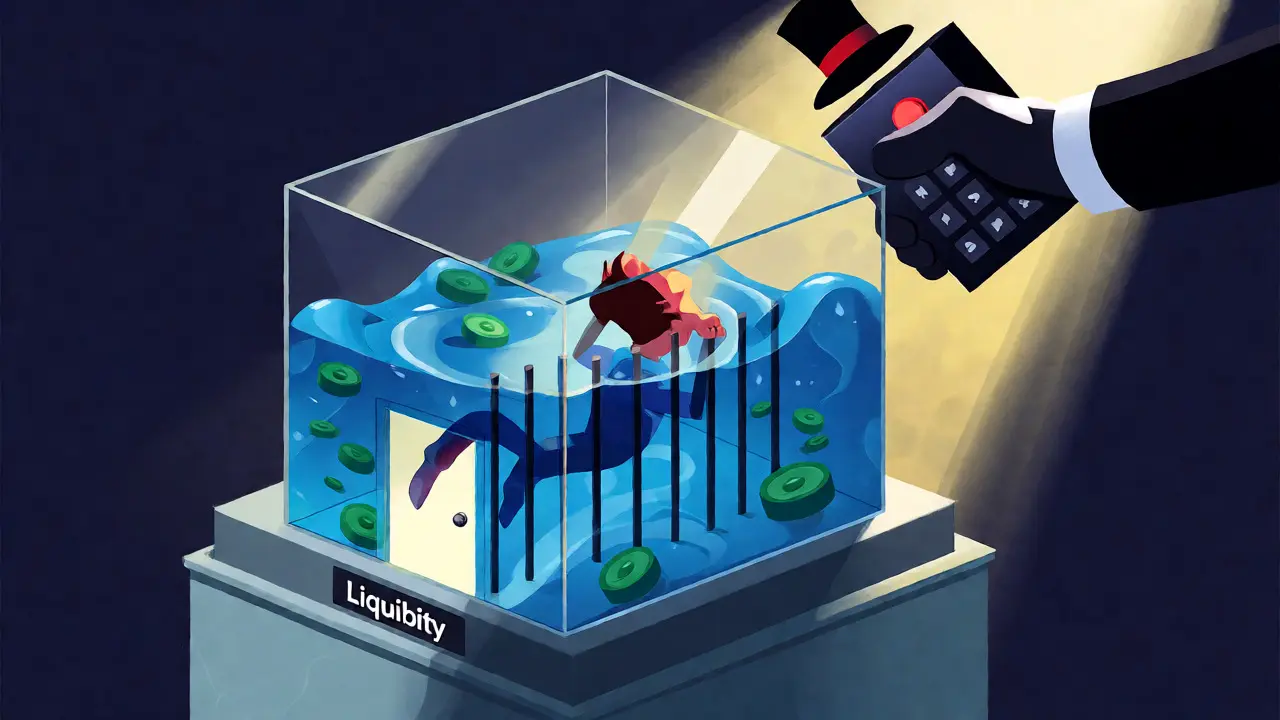
To really understand why you lose money, you need to grasp how liquidity works on decentralized exchanges (DEXs). When you buy a token on Uniswap, you aren’t buying it from another user directly. You’re swapping your ETH for the token using a liquidity pool a smart contract containing two types of tokens used to facilitate trading on DEXs.
Imagine a box with 50 ETH and 50 TOKENS. The price is determined by the ratio. If you put in 1 ETH, you get some TOKENS based on that ratio. Now, imagine the developer owns 90% of the TOKENS and contributed all the ETH to the box. If they suddenly withdraw their ETH share and take their TOKENS out, the box becomes empty. The remaining TOKENS in circulation have no backing value. Their price collapses because there’s no ETH left to swap back into.
In a hard rug pull, the developer might also use a "mint" function. They can create infinite new tokens and dump them into the pool, diluting the value of every other holder. Since the code lets them mint unlimited tokens, they can drain the pool’s ETH by selling these newly created tokens. Regular investors see the price drop and panic-sell, accelerating the crash.
Real-World Examples: Lessons from History
History repeats itself in crypto. The Squid Game token ($SQUID) is perhaps the most notorious example. Launched during the Netflix show’s peak popularity, it skyrocketed. But investors found they couldn’t sell. The contract had a "sell tax" that increased as the price rose, eventually making it impossible to exit. The developers pulled $3.38 million and disappeared.
Another case is Thodex, an exchange that wasn’t exactly a token rug pull but operated similarly. Users couldn’t withdraw funds, and the CEO fled to Albania. While technically an exchange collapse, the mechanism-taking deposits and vanishing-mirrors the rug pull psychology.
These examples teach us that hype is dangerous. The faster a token rises, the higher the risk of a sudden fall. If a project relies entirely on viral marketing rather than technical development, it’s likely a short-term play by insiders.
How to Protect Yourself: A Practical Checklist
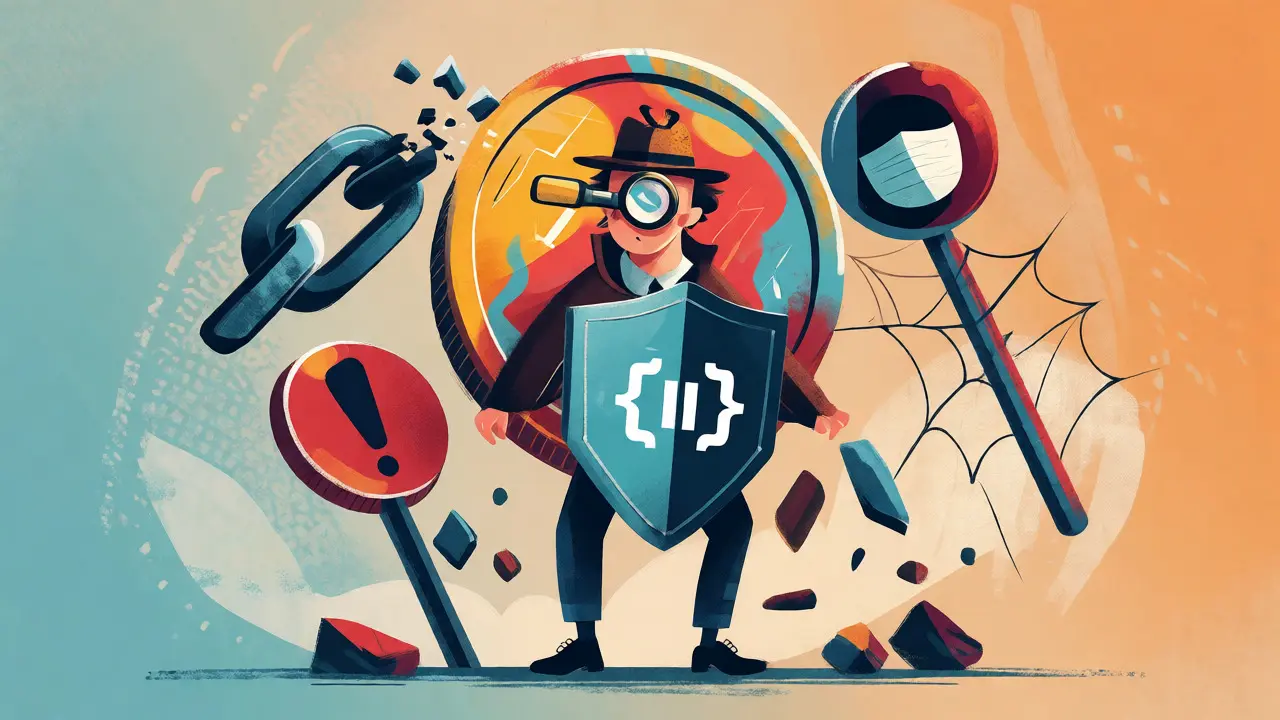
You can’t eliminate risk entirely, but you can reduce it significantly. Here’s a step-by-step approach to vetting a new project.
- Check the Contract Address: Copy the token’s contract address from CoinMarketCap or CoinGecko. Never trust links from random Telegram groups.
- Use Verification Tools: Paste the address into tools like Token Sniffer, Go+ Security, or RugDoc. These services scan for honeypots, hidden taxes, and ownership renouncement.
- Analyze Holder Distribution: Use Etherscan or BscScan. Look at the "Holders" tab. If one address holds 50% of the supply, that’s a single point of failure.
- Verify Liquidity Locks: Ensure the LP tokens are sent to a locker contract (like Unicrypt) for a reasonable period (at least 6 months to 1 year).
- Read the Code (or Find Someone Who Can): If you’re serious about a large investment, hire an auditor or join a community Discord where devs discuss technical details. Listen for transparency.
Remember, if a deal sounds too good to be true, it probably is. In crypto, "too good" usually means "unsustainable." High yields come with high risks. Don’t invest money you can’t afford to lose, especially in early-stage projects.
The Future of Rug Pulls
Are rug pulls going away? Probably not soon. As long as DeFi remains permissionless, scammers will find ways to exploit it. However, the landscape is changing. Regulations like the EU’s MiCA framework are starting to require more disclosure from projects. Major exchanges are implementing stricter listing criteria, demanding audits and locked liquidity before allowing new tokens.
We’re also seeing better technology. Automated liquidity locking protocols are becoming standard. Community-driven verification networks allow users to flag suspicious projects quickly. While we won’t reach a zero-rug-pull world anytime soon, the bar for entry is rising. The days of launching a meme coin with zero code and getting rich overnight are fading. Today, investors are smarter, tools are better, and the cost of being fooled is lower-if you know where to look.
Is a rug pull illegal?
It depends on the jurisdiction and intent. In many places, if developers intentionally deceive investors and hide their identities, it can be considered fraud. However, proving intent in court is difficult, especially when teams are anonymous. Regulatory bodies like the SEC are increasingly cracking down on clear cases of fraudulent exit scams.
Can I recover my money after a rug pull?
Rarely. Once the liquidity is withdrawn and the tokens are worthless, there’s usually no asset left to claim. Some victims pursue legal action, but recovering funds from anonymous offshore entities is complex and expensive. Prevention is far more effective than recovery.
What is a honeypot in crypto?
A honeypot is a specific type of hard rug pull where the smart contract allows you to buy tokens but blocks you from selling them. Only whitelisted addresses (usually the developers) can sell. This traps investors in a losing position while insiders cash out.
Does a locked liquidity guarantee safety?
No. Locked liquidity prevents the developer from withdrawing the backing funds immediately, which is good. But it doesn’t prevent them from selling their own tokens (dumping), abandoning the project, or having malicious code that affects trading. It’s one important factor, but not a silver bullet.
How do I check if a token is a scam?
Use automated scanners like Token Sniffer or Go+ Security to check for basic issues. Manually verify the team’s identity, check the liquidity lock status on block explorers, and review the tokenomics for excessive developer allocations. Always cross-reference multiple sources before investing.
Emily Sue
ugh i got rugged on that one memecoin last year and it still hurts
Zayda Hayes
I completely agree with the sentiment expressed in this article, as it provides a thorough and well-structured overview of the phenomenon known as "rug pulls" within the cryptocurrency ecosystem. It is imperative for investors to understand the distinction between hard and soft rug pulls, because the mechanisms differ significantly, yet the outcome for the retail investor remains devastatingly similar. Furthermore, the emphasis on checking liquidity locks is paramount, since unlocked liquidity represents an immediate and severe risk to capital preservation. One must also consider the importance of smart contract audits, which serve as a critical layer of defense against malicious code hidden within the token's architecture. Without such due diligence, participants are essentially gambling rather than investing, exposing themselves to unnecessary volatility and potential total loss. The inclusion of real-world examples like the Squid Game token serves as a poignant reminder that hype often precedes a precipitous decline in value. Additionally, the advice regarding verifying developer identities cannot be overstated, as anonymity frequently correlates with higher scam probability. We should encourage new entrants to utilize tools like Token Sniffer or Go+ Security before committing any funds to a new project. These automated scanners provide valuable insights into contract safety, though they should not replace human judgment entirely. Ultimately, education is the most powerful tool we possess in navigating these turbulent financial waters. Let us all strive to make informed decisions rather than emotional ones driven by fear of missing out.
Gary Schneeberger
Oh, look at you all pretending you didn't just throw your life savings at a dog coin because some influencer tweeted about it.
The article says check the audit? Please. Most "audits" are just rubber stamps from firms that get paid whether the code is garbage or gold. You think a CertiK stamp means anything when the dev can just change the contract parameters after the audit? It’s theater. Pure theater for people who want to feel safe while standing on thin ice.
And don’t get me started on "locked liquidity." I’ve seen devs lock liquidity for a month and then dump their personal holdings so hard the price goes to zero anyway. The lock protects the pool, not your bag. If the top wallet holds 40% of the supply, who cares if the ETH is locked? They just sell their tokens into the pool until the ratio breaks.
You guys are treating this like a science experiment when it’s basically a casino with better graphics. If you need a checklist to figure out if something is a scam, you’re already too late. The only true red flag is that you’re buying something nobody has ever heard of that promises 100x returns in a week. Everything else is noise.
Jennifer Phipps
Hey everyone! 🌟 Just wanted to jump in and say that Gary makes a valid point about the limitations of audits, but let's not throw the baby out with the bathwater! 💖
Think of it like wearing a seatbelt. It doesn't guarantee you won't get hurt in a crash, but it definitely improves your odds of survival compared to jumping out of the car without one! 🚗💨 When you see a verified contract and a locked LP, you are filtering out the absolute worst offenders-the ones who didn't even bother to hide their theft properly.
I always tell my friends: Start small! 🐣 Don't put your rent money into a shiny new token. Treat it like a lottery ticket. If you lose $50, you shrug it off. If you win, amazing! But never bet more than you can afford to burn. 🔥
Also, community vibes matter! 👯♀️ If the Discord is full of bots saying "LFG" and no one is asking technical questions, that's a huge warning sign. Real projects have real conversations. Keep learning, keep smiling, and stay safe out there! ✨🙌
Heather Butcher
OMG YES!!! 🙌 This is exactly what I needed to read today! I was literally staring at a chart wondering if I should ape in or sit this one out, and now I feel so much more confident making the right choice!
It’s scary how fast things move, but knowing what to look for changes everything. Like seriously, checking those holder distributions is such a game changer. I used to just look at the price action, but now I’m digging into Etherscan like a detective! 🕵️♀️
We’ve got this! Every time we spot a red flag, we’re protecting our future selves. And honestly, seeing others share their stories helps me realize I’m not alone in feeling anxious about this stuff. We are building this knowledge base together, brick by brick!
Let’s keep supporting each other in finding the gems and dodging the disasters. You are doing great work sharing this info! Keep shining bright! ✨🚀💪
Lakshmi Sailaja Devarakonda
It is truly amusing, if not slightly pathetic, to witness the Western world’s collective inability to grasp basic economic principles despite having access to the entirety of human history at their fingertips. You speak of "rug pulls" as if they are some novel invention of the decentralized web, yet here in India, we have been watching Ponzi schemes collapse for decades, long before Satoshi Nakamoto ever dreamed of a blockchain. The arrogance of assuming that technology alone can solve human greed is precisely why these scams continue to thrive; you believe that because the ledger is transparent, the intent behind the transaction must also be pure, which is a laughably naive assumption. While you obsess over smart contract audits and liquidity locks, the fundamental issue remains unchanged: people are desperate for easy money and will ignore every single warning sign if the narrative sounds sufficiently enticing enough to distract them from reality. It is almost poetic how the same mistakes are repeated across different eras and geographies, proving that intelligence is not correlated with financial literacy, nor does education prevent one from falling for the oldest trick in the book. Perhaps if you spent less time arguing about the nuances of DeFi mechanics and more time studying the history of financial bubbles, you might realize that nothing under the sun is new, and certainly nothing involving anonymous developers promising exponential returns is trustworthy. Your reliance on "community verification" is merely a digital echo chamber where the blind lead the blind, all marching confidently toward the cliff edge while cheering about the view. It is exhausting to watch you reinvent the wheel, only to discover it is square, and then blame the road for being uneven instead of admitting your own lack of foresight. Until you accept that trust is earned through regulation and track record, not Twitter threads, you will remain prey for predators who know exactly how to exploit your optimism.
Manoj Ramachandran
I wish to express my sincere appreciation for the comprehensive nature of this analysis, as it addresses several critical aspects of cryptocurrency investment risks that are often overlooked by novice traders. From an Indian perspective, where regulatory clarity is still evolving, the emphasis on self-custody and independent verification resonates deeply with our current market conditions. It is important to note that while technological safeguards like smart contracts offer protection, they cannot fully mitigate the behavioral risks associated with herd mentality among investors. I would suggest adding a section on tax implications, as sudden losses from rug pulls can complicate annual filing requirements significantly. Furthermore, the psychological aspect of FOMO is indeed potent, and perhaps incorporating mindfulness techniques could help investors maintain discipline during volatile periods. Overall, this resource serves as a valuable guide for those seeking to navigate the complexities of decentralized finance with greater prudence and awareness.
Adam Barrett
Hey Manoj, totally hear you on the complexity of taxes. It’s a headache for sure.
I think the key takeaway for everyone is just to breathe. Crypto moves fast, but you don’t have to. Taking a step back to verify facts instead of reacting emotionally saves so much stress.
Let’s focus on what we can control: our research and our risk management. That way, even if things go sideways, we’re not blindsided. Peace to everyone navigating this wild ride!
Samantha Du-Cell
Listen up, because I’m tired of seeing Americans act like victims when they refuse to do five minutes of homework.
This whole "anonymous team" thing? In Europe, we have KYC laws for a reason. We value accountability. You lot treat crypto like the Wild West because you love the idea of no rules, but then cry foul when someone shoots you in the back.
If you buy a token from a team hiding behind cartoon avatars, you deserve to lose your cash. Simple as that. We built systems for a reason. Stop whining about getting rugged when you knowingly jumped into a swamp without boots. Get a grip and start demanding transparency like civilized societies do, instead of chasing moonshots like lemmings.
Elizabeth Floyd
Hi Samantha! 👋 Thanks for sharing your perspective. I think you're right that accountability matters, but sometimes the tech allows for new kinds of communities that don't fit traditional models. 😊
It’s tricky though, isn’t it? Balancing freedom with safety. I try to use tools like RugDoc to help bridge that gap. It helps me feel a bit more secure without needing full KYC on every tiny project. 🛡️
What do you think about the balance between privacy and security? I’d love to hear more thoughts! 🤔✨
Tish Dalton
Hey Heather, I loved your energy in the earlier comment! 🌟 It’s so helpful to remember that we are all learning together.
I wanted to add a little tip for anyone feeling overwhelmed by the technical jargon mentioned in the post. You don’t need to be a coder to start. Just start with the basics: Is the liquidity locked? Who owns the biggest wallets? Is there a website with real info?
That’s enough to filter out 80% of the bad actors. Take it slow, ask questions in communities, and don’t be afraid to say "I don't know" if something seems fishy. We support each other here. You’ve got this! 💪❤️