You want exposure to Microsoft Corporation, a tech giant with a market capitalization of over $3 trillion, but you don't have a traditional brokerage account. Or maybe you do, but you want to trade 24/7 and use your assets in decentralized finance (DeFi). That is exactly the gap that Microsoft tokenized stock (xStock), known by the ticker MSFTX or MSFTx, aims to fill.
MSFTX is not a new cryptocurrency like Bitcoin or Ethereum. It is a tracker certificate-a digital token that mirrors the price movement of Microsoft's common stock. It lives on blockchains, specifically Solana as an SPL token and Ethereum as an ERC-20 token. This dual-chain approach means you can access this asset regardless of which blockchain ecosystem you prefer.
How MSFTX Works: The Mechanics of Tokenized Equity
To understand MSFTX, you need to separate the idea of "owning" a company from "tracking" its value. When you buy shares of Microsoft on NASDAQ, you become a shareholder. You get voting rights, you receive dividends directly, and your name is on the corporate register. With MSFTX, none of that happens.
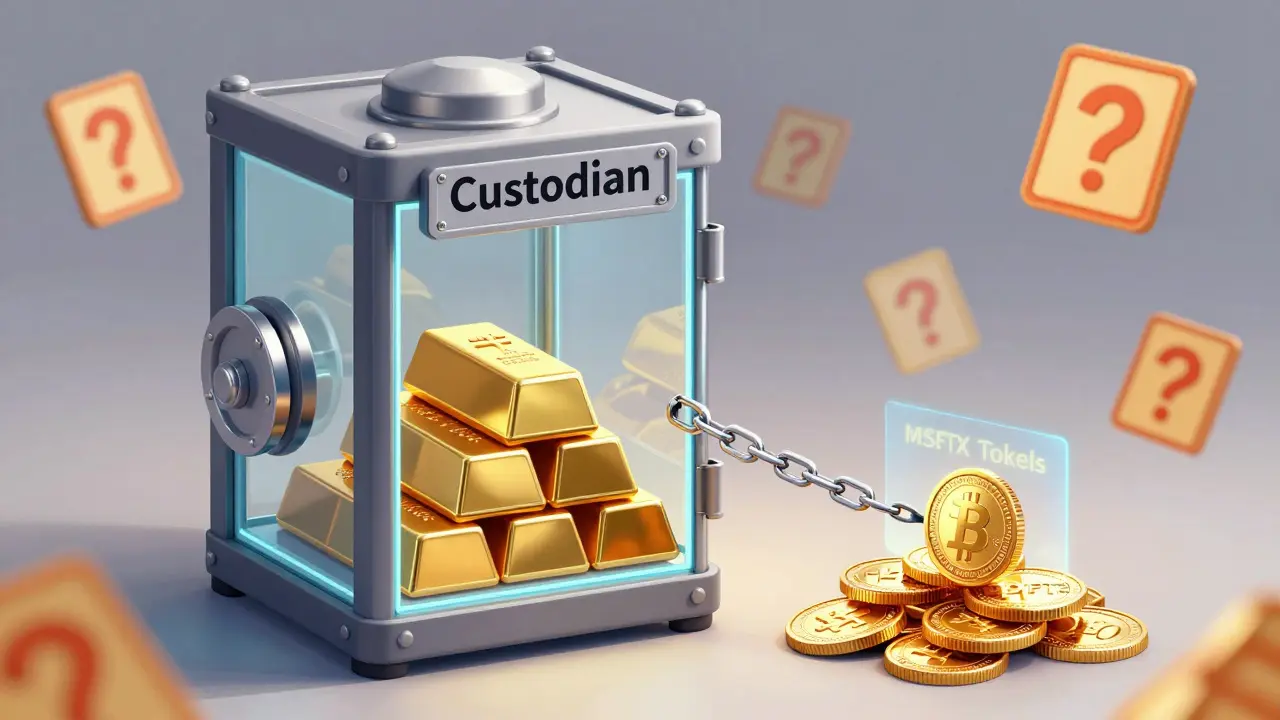
Instead, MSFTX operates on a 1:1 backing model. For every single MSFTX token in circulation, there is one share of real Microsoft stock held by a third-party custodian. This custodian acts as the legal owner of the underlying shares. You, the token holder, have a contractual claim to the economic value of that share. If Microsoft's stock price goes up, the value of your MSFTX token goes up. If it drops, your token loses value.
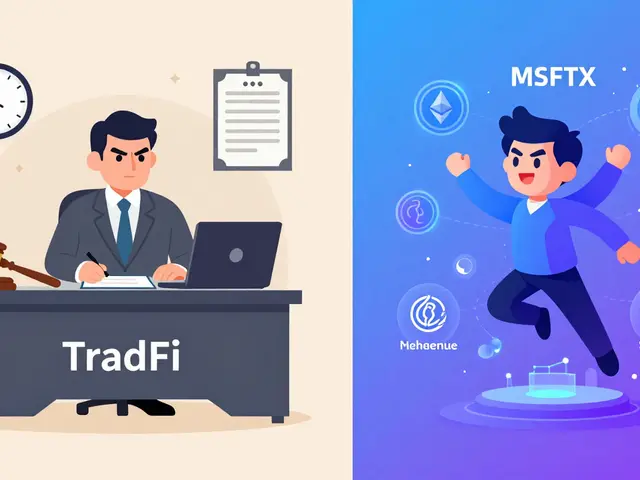
This structure creates a bridge between traditional finance (TradFi) and decentralized finance (DeFi). Because MSFTX is a standard token on Ethereum and Solana, it is composable. This means you can theoretically use your MSFTX tokens as collateral for loans, provide liquidity in DeFi pools, or transfer them instantly across borders without waiting for bank clearing times. Traditional stocks are locked in brokerage accounts; tokenized stocks move like cash on the blockchain.
Key Differences: MSFTX vs. Real Microsoft Stock
| Feature | MSFTX (Tokenized) | Traditional MSFT Shares |
|---|---|---|
| Ownership Rights | No shareholder rights (no voting) | Full shareholder rights (voting, proxy) |
| Dividends | Indirect economic benefit only | Direct dividend payments |
| Trading Hours | 24/7/365 | Market hours only (Mon-Fri) |
| Settlement Time | Near-instant (on-chain) | T+1 or T+2 days |
| Accessibility | Non-US users, EU-compliant | Global (with local brokerages) |
| DeFi Integration | Yes (collateral, liquidity pools) | No |
The most critical distinction is the lack of voting rights. Kraken, a major exchange listing these assets, explicitly states that holding MSFTX does not constitute ownership of the underlying stock. You cannot vote on board members or corporate policies. You are purely a financial investor tracking price action.
Regulatory Landscape and Accessibility
Why isn't everyone trading MSFTX? The answer lies in regulation. Financial authorities, particularly in the United States, have strict rules about who can trade securities. To navigate this, the xStocks platform-including MSFTX-is designed to be compliant with EU regulations.
This has two major implications for you:
- Jurisdictional Restrictions: MSFTX is primarily accessible to non-US users. If you are a resident of the United States, you likely will not be able to trade this token due to SEC regulations regarding unregistered securities offerings. Platforms enforce Know Your Customer (KYC) checks to ensure compliance.
- Eligibility Requirements: Even outside the US, not every user can buy. You must be an "eligible cryptocurrency market participant." This usually means completing identity verification on the exchange where you trade.
This regulatory framing makes MSFTX a powerful tool for investors in Europe, Asia, and other regions where accessing US equities has historically been complicated, costly, or restricted by local banking infrastructure. It democratizes access to blue-chip stocks like Microsoft for millions of people who previously had no easy path to entry.
Market Data and Liquidity
As of mid-2026, MSFTX is actively tracked by major data aggregators including CoinMarketCap, CoinGecko, and Kraken. However, liquidity can be fragmented.
Price snapshots vary slightly across platforms due to different data sources and trading venues. For example, recent data shows prices ranging from approximately $415 to $520 USD, closely tracking the actual market price of Microsoft stock. The market capitalization of the MSFTX token itself sits around $98 million, which is tiny compared to Microsoft's multi-trillion-dollar valuation. This indicates that while interest exists, it is still a niche product within the broader crypto market.
Liquidity is another factor to watch. While some platforms list MSFTX, others may show it as "unavailable" depending on current listings and regulatory updates. Always check the specific exchange you intend to use for active order books. Trading volume tends to be lower than major cryptocurrencies, meaning large orders could impact the price more significantly than they would on the NYSE or NASDAQ.

Risks You Must Understand
Before buying MSFTX, you need to be aware of risks that don't apply to regular stocks:
- Custodial Risk: Your token is backed by real shares held by a third party. If that custodian fails, gets hacked, or acts fraudulently, your token could lose its backing. You are trusting the issuer and the custodian, not just the market.
- Smart Contract Risk: Since MSFTX lives on Ethereum and Solana, it is subject to smart contract vulnerabilities. Bugs in the code could theoretically lead to loss of funds, though reputable issuers undergo audits.
- Regulatory Risk: Laws change. If regulators decide that tokenized stocks violate certain securities laws in your jurisdiction, exchanges may delist the token, trapping your assets or forcing a sale at unfavorable prices.
- Price Decoupling: In extreme market conditions, the price of the token might temporarily diverge from the actual stock price due to liquidity issues or panic selling.
Who Should Use MSFTX?
MSFTX is not for everyone. It is best suited for:
- Non-US Crypto Natives: Investors living outside the US who want exposure to top-tier US tech stocks without opening a complex international brokerage account.
- DeFi Users: Traders who want to use equity-like assets as collateral in lending protocols or yield farming strategies.
- 24/7 Traders: Individuals who want to react to news events outside of traditional market hours.
If you are a US-based investor looking for long-term wealth building with voting rights and direct dividends, stick to a traditional brokerage. MSFTX is a specialized financial instrument designed for the global crypto economy.
Is MSFTX the same as owning Microsoft stock?
No. MSFTX is a tracker certificate that mirrors the price of Microsoft stock. You do not own actual shares, so you do not have voting rights or direct dividend payments. You have a contractual claim to the economic value of the stock.
Can I buy MSFTX if I live in the United States?
Generally, no. MSFTX and the broader xStocks platform are designed to be compliant with EU regulations and are primarily accessible to non-US residents. US persons are typically restricted from trading these tokenized securities due to local regulations.
Which blockchains support MSFTX?
MSFTX is issued on two major blockchains: Ethereum (as an ERC-20 token) and Solana (as an SPL token). This allows users to interact with the asset on either network.
Who backs the MSFTX tokens?
Each MSFTX token is backed 1:1 by real Microsoft Corporation common stock held by a third-party custodian. This ensures that the token's value is tied directly to the underlying asset.
Does MSFTX pay dividends?
Not directly. Since you are not a registered shareholder, you do not receive dividend payments. However, the economic value of the token may reflect the total return of the stock, depending on the specific terms of the tracker certificate.
Where can I track the price of MSFTX?
You can track MSFTX prices on major crypto data aggregators like CoinMarketCap, CoinGecko, and Kraken. Note that availability for trading may vary by platform and region.
Write a comment