Remember the early days of crypto trading? You wanted to swap Bitcoin for Litecoin without handing your coins over to a centralized exchange like Coinbase or Binance. You didn't want KYC forms slowing you down, and you certainly didn't trust third parties with your private keys. That was exactly the problem BarterDEX set out to solve. Launched initially as EasyDEX in 2016 and rebranded in 2017, it wasn't just another trading platform; it was a pioneer in decentralized, non-custodial cryptocurrency trading using atomic swaps. If you're digging into the history of decentralized finance (DeFi) or wondering where the term "atomic swap" came from before Uniswap dominated headlines, BarterDEX is the foundational chapter you need to read.
But here’s the catch: BarterDEX doesn’t exist anymore. In July 2019, it evolved into AtomicDEX. So why review a ghost? Because understanding BarterDEX explains the DNA of today's most robust cross-chain DEXs. It pioneered the technology that lets you trade across different blockchains without a middleman. This review breaks down what BarterDEX offered, how its fee structure compared to industry giants, why it disappeared, and whether its successor, AtomicDEX, lives up to the legacy.
The Core Concept: Non-Custodial Atomic Swaps
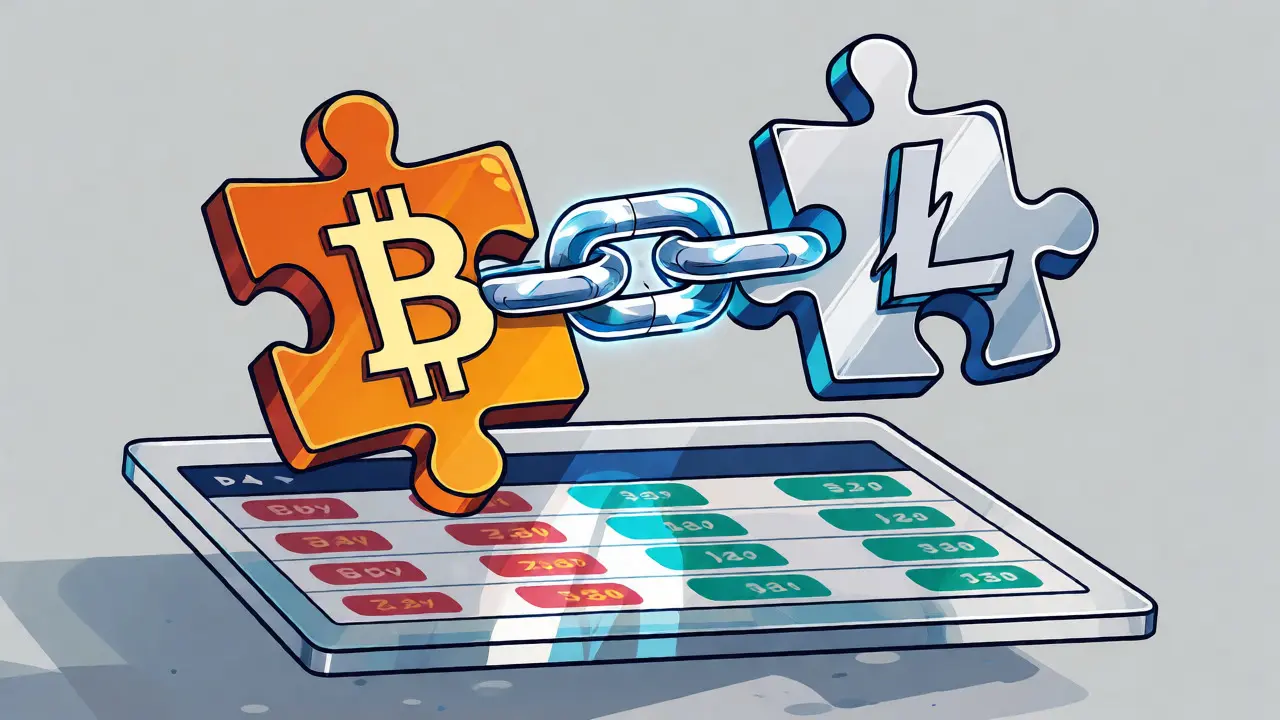
Most people misunderstand decentralized exchanges (DEXs). They assume every DEX works like Uniswap, relying on liquidity pools and automated market makers (AMMs). BarterDEX was different. It used an order book model but executed trades via atomic swaps. An atomic swap is a smart contract protocol that allows two parties to directly exchange one cryptocurrency for another without trusting a third party. The word "atomic" means the transaction either happens completely or not at all-there are no half-finished deals.
This approach eliminated counterparty risk. When you traded on BarterDEX, your assets never left your wallet. The platform was fully non-custodial. Your private keys stayed on your device, encrypted and untouched by any server. This stood in stark contrast to centralized exchanges (CEXs) like Kraken or Coinbase, which held user funds in hot wallets vulnerable to hacks. For privacy advocates and security-conscious traders, this was a game-changer. However, it required users to run a full node or a lightweight client, adding a layer of technical complexity that scared off casual investors.
Fees and Financial Structure
If you’re comparing costs, BarterDEX was surprisingly competitive, especially for makers. The platform implemented a taker/maker fee structure that undercut many traditional exchanges. Takers paid 0.15%, while makers paid 0.00%. Compare this to the industry average of roughly 0.25% at the time, or Coinbase’s tiered fees ranging from 0% to 3.99% depending on volume and payment method, and BarterDEX looked attractive for active traders who could place limit orders.
| Exchange Type | Taker Fee | Maker Fee | Custody Model | KYC Required? |
|---|---|---|---|---|
| BarterDEX | 0.15% | 0.00% | Non-Custodial | No |
| Coinbase (Pro) | Up to 0.40% | Up to 0.25% | Custodial | Yes |
| Kraken | Up to 0.26% | Up to 0.16% | Custodial | Yes |
| Binance US | 0.10% | 0.10% | Custodial | Yes |
One major downside? No fiat on-ramps. You couldn't deposit USD directly into BarterDEX. You needed existing crypto holdings to participate. This limited its audience to experienced crypto users who already navigated the hurdles of buying digital assets elsewhere. Withdrawal fees were minimal, typically just the standard network transaction fees, since there was no central entity taking a cut for processing withdrawals.
Liquidity Solutions: The Liquidity Nodes System
Decentralized exchanges have always struggled with liquidity. Unlike CEXs, which aggregate global order books, DEXs often suffer from thin markets, leading to high slippage and poor price discovery. BarterDEX tackled this head-on with its Liquidity Nodes system. These were specialized nodes within the Komodo ecosystem that automatically bought and sold assets to stabilize prices in the order book.
Think of Liquidity Nodes as market makers built into the infrastructure. They ensured that when you placed a buy order for Zcash (ZEC), there was likely a corresponding sell order available, even if no other human trader was online at that exact second. This innovation helped maintain tighter spreads and more reliable execution times, addressing one of the biggest complaints about early DEX platforms. While not perfect, it was a significant step forward in making decentralized trading viable for real-world use cases beyond mere experimentation.
User Experience and Technical Hurdles
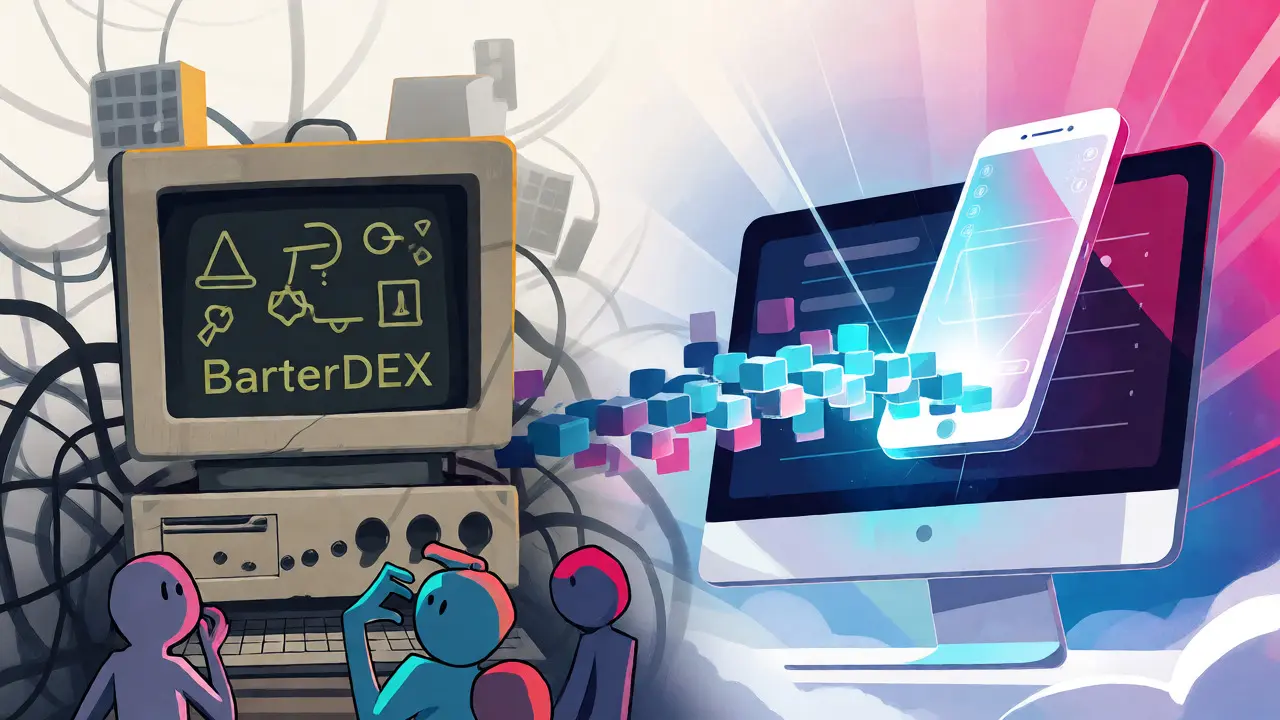
Let’s be honest: BarterDEX was not user-friendly. The interface was clunky, and the setup process was daunting for beginners. Users had to download the Komodo Wallet application, available for Windows, macOS, Linux, Android, and iOS. Setup took an average of 15-20 minutes, but mastering the atomic swap mechanics took hours. Support ticket analysis from 2017-2018 suggested that complete beginners needed 8-10 hours to become proficient, while experienced users still required 2-3 hours to understand the nuances.
Common pain points included:
- Wallet Synchronization: Users frequently reported issues syncing their local nodes with the network, causing delays in balance updates.
- Swap Failures: Approximately 23% of GitHub issues logged during 2018 related to atomic swap failures, often due to network congestion or timeouts.
- Lack of Documentation Clarity: While Komodo maintained extensive documentation, much of it was highly technical, assuming prior knowledge of blockchain protocols.
The learning curve was steep. A user named 'CryptoNewbie2018' famously noted on the Komodo forum, "Tried BarterDEX but couldn't figure out the atomic swap process - went back to Binance for simplicity." This sentiment was common. The platform prioritized security and decentralization over convenience, a trade-off that alienated mainstream users but earned loyalty from hardcore crypto enthusiasts.
The Transition to AtomicDEX
In July 2019, BarterDEX underwent a strategic rebranding to AtomicDEX. This wasn't a shutdown; it was an evolution. AtomicDEX inherited BarterDEX’s core technology but expanded its capabilities significantly. While BarterDEX supported approximately 95% of existing cryptocurrencies at its peak, AtomicDEX aimed for theoretical support of 99% of all coins, including those on Ethereum, Bitcoin, Litecoin, and Komodo chains.
The rebrand addressed several limitations. AtomicDEX introduced better mobile functionality, deeper integration with Layer-2 solutions, and improved UI/UX design. User sentiment shifted positively post-rebrand. In a January 2020 feedback thread on Reddit’s r/AtomicDEX, 78% of reviewers rated the experience as "Good" or "Excellent," though challenges remained for novices. The transition marked Komodo Platform’s commitment to refining atomic swap technology rather than abandoning it.
Why BarterDEX Matters Today
You might ask, "If BarterDEX is gone, why care?" Because it proved that cross-chain interoperability was possible without bridges or wrapped tokens. Today, as we see the rise of multi-chain ecosystems and projects like Polkadot and Cosmos, BarterDEX’s vision feels prophetic. It demonstrated that users could trade BTC for ETH directly, without converting to stablecoins first. This reduces friction and exposure to intermediate volatility.
Furthermore, BarterDEX highlighted the importance of non-custodial security. In an era where centralized exchanges continue to face regulatory scrutiny and hacking risks, the model BarterDEX championed-where users hold their own keys-is becoming increasingly relevant. With the SEC issuing cautionary statements about unregistered securities on DEXs as early as 2018, the compliance landscape has tightened. Yet, the demand for privacy-preserving, self-sovereign financial tools remains strong.
Pros and Cons Recap
To summarize the historical performance of BarterDEX:
Pros:- True Decentralization: No custody of funds, eliminating exchange hack risks.
- Competitive Fees: 0.15% taker / 0.00% maker fees were below industry averages.
- Privacy: No KYC requirements allowed anonymous trading.
- Cross-Chain Capability: Direct swaps between disparate blockchains.
- No Fiat On-Ramp: Required pre-existing crypto holdings.
- Steep Learning Curve: Complex setup and operation for non-technical users.
- Liquidity Issues: Despite Liquidity Nodes, depth was inferior to major CEXs.
- Technical Glitches: Frequent swap failures and sync errors in early versions.
Is BarterDEX still active?
No, BarterDEX is no longer actively developed. It was rebranded to AtomicDEX in July 2019. All new development efforts are focused on AtomicDEX, which offers enhanced features and broader coin support.
Did BarterDEX require KYC verification?
No, BarterDEX did not require Know Your Customer (KYC) verification. As a non-custodial, decentralized exchange, users retained control of their private keys and traded anonymously.
What were the trading fees on BarterDEX?
BarterDEX charged a taker fee of 0.15% and a maker fee of 0.00%. This structure incentivized users to place limit orders that added liquidity to the market.
Could I buy crypto with credit card on BarterDEX?
No, BarterDEX did not support fiat currency deposits. You needed to already own cryptocurrency to trade on the platform. There were no direct credit card or bank transfer options.
How does AtomicDEX differ from BarterDEX?
AtomicDEX is the successor to BarterDEX. It features a modernized user interface, improved mobile apps, faster swap speeds, and supports a wider range of cryptocurrencies (theoretically 99% of all coins) compared to BarterDEX's ~95% coverage.

Daniel Tremblay
its about time someone wrote this honestly 🙄 most people just want convenience but they forget that convenience costs your privacy 💸 we should all be ashamed for trusting centralized exchanges with our life savings 😤🔒
Ayodele Emmanuel
YES! This is the spirit of crypto! 🔥 Don't let them tell you it's too hard, you can do it! Keep pushing forward and take back your financial freedom today! You are stronger than you think! Let's goooo!
Michael DeGroat
whatever. another dead project. americans dont need kyc bs anyway. its all a scam by the way. lazy devs made bad software.
Ashley Cooke
The distinction between AMMs and order book atomic swaps is crucial here. Many newcomers conflate DEXs with Uniswap-style pools. BarterDEX proved that non-custodial trading could work without liquidity pools, albeit with higher friction. It’s a valuable historical lesson for understanding why UX matters in DeFi adoption.
sai charan
Let's be real, the liquidity nodes were a band-aid on a bullet wound. The slippage was terrible compared to CEXs. Anyone claiming otherwise wasn't actually trading significant volume. It was niche tech for niche users who enjoyed suffering through sync errors.
Gary Bryant
did u check the utxo management? because if u didnt handle the coin selection properly the swap timeout issues were inevitable lol i mean the protocol design was solid but the client implementation was messy as hell. also why did nobody talk about the dust limits? those killed small trades instantly.
Riya Adhikari
I tried it once and got lost in the menus immediately. Who designed this UI? Did they ever try using it themselves? It felt like navigating a maze blindfolded while holding hot coffee.
Rohit Singh
oh great another nostalgia trip for tech that failed to scale. sure the vision was prophetic but execution was... let's say 'creative'. love the effort though, really.
Sandy Garg
It is fascinating how the philosophical underpinning of self-sovereignty often clashes with practical usability. One wonders if the barrier to entry was a feature or a bug in their design philosophy.
Nicoletta Milanesio
i kinda miss the simplicity of just swapping coins without worrying about gas fees eating my lunch 🍕 it was clunky but at least it felt like actual peer-to-peer stuff not just interacting with smart contracts blindly ✨
Angel Bee
hey guys this is super cool info! i remember trying barterdex back in the day and loving the idea even if i messed up the setup a few times. keep up the good work sharing these histories! its helpfull for newbies like me! 🚀
Daniel Pearson
You're missing the point entirely. If you don't hold your keys you don't own your coins. Period. Stop making excuses for centralized exchanges. They are banks wearing a hoodie.
Douglas Sorocco
Actually, the atomic swap protocol used HTLCs which introduced specific race conditions that weren't fully mitigated until later versions. It's technically inaccurate to call it seamless in 2017. But yes, historically significant. :)
Joey Eden
interesting read. i wonder what happened to the komodo ecosystem after the pivot. did the community stay or did it fragment? feels like a lot of energy dissipated into etherium based dexes instead.
Donald Underwood
Why are we still talking about this? Move on. Next.
Genevieve LeMarchal
as a french person i appreciate the no kyc aspect so much!! it reminds me of cash culture before everything went digital and surveilled. sad it was so hard to use tho :(
Sayantan Bhadury
meh. too much hassle for 0.15% fee savings when you factor in time value. not worth it.
rose meechan
Love this deep dive! It's so important to remember where we came from. The evolution to AtomicDEX shows real commitment to solving the UX issues. Great post! :) 🌟