You send $10,000 in Ethereum from Mainnet to Arbitrum. It vanishes. Not because of a market crash, but because the Blockchain Bridge connecting them got hacked. This isn't rare. Since 2021, attackers have stolen over $2 billion specifically from bridges. That's nearly 40% of all value lost in Web3 history. If you use DeFi, you are likely using a bridge daily, often without realizing it's the weakest link in your portfolio.
| Risk Factor | Impact | Mitigation |
|---|---|---|
| Validator Compromise | High (e.g., Ronin) | Increase validator count; rotate keys |
| Smart Contract Bugs | Critical (e.g., Wormhole) | Formal verification; multiple audits |
| Wrapped Asset Risk | Medium-High | Use canonical assets; avoid wETH/wBTC traps |
| Single Point of Failure | Total Loss | Decentralized relayers; no CEO key control |
The Anatomy of a Bridge Hack
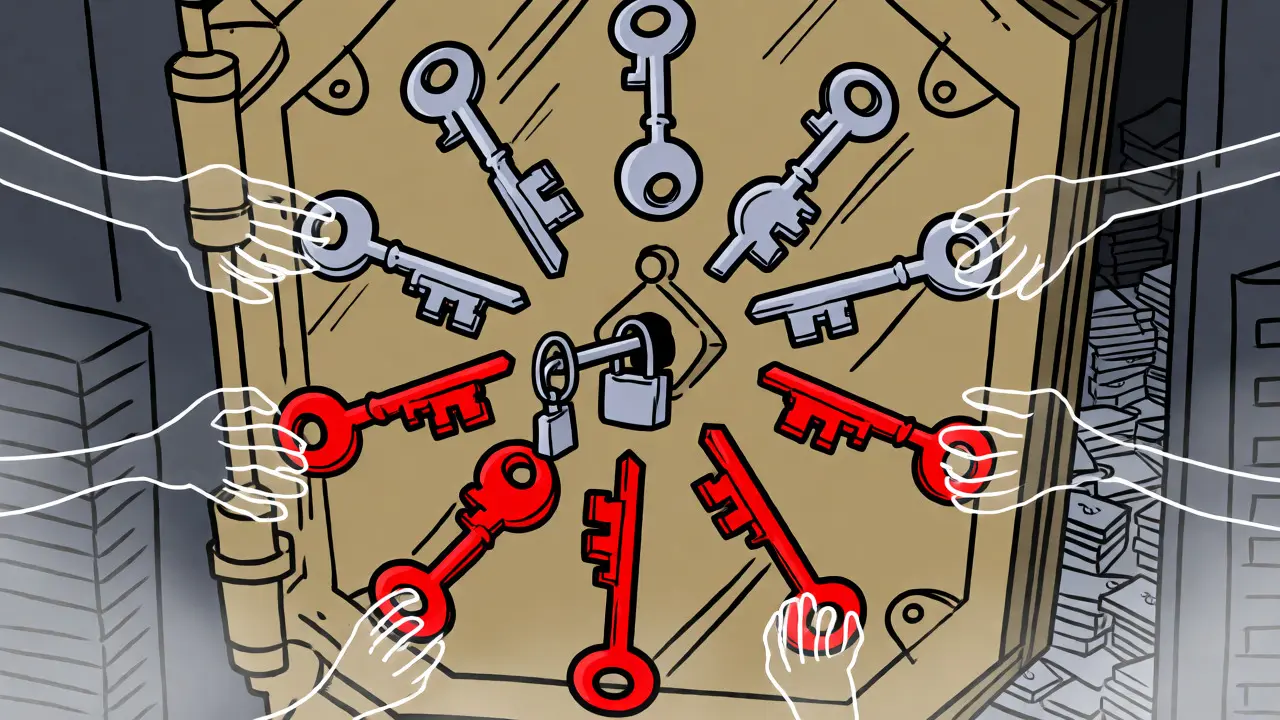
Bridges aren't just pipes for money. They are complex smart contracts that lock assets on one chain and mint equivalent tokens on another. The problem? Trust. Most early bridges relied on a small group of validators or a centralized entity to confirm transfers. If an attacker compromises those few keys, they can fake a transfer and drain the pool. Think of it like a bank vault where only three people hold the combination. If a hacker steals two combinations, they own the vault.
The Ronin Bridge is the perfect example. In March 2022, hackers didn't break the blockchain. They broke Sky Mavis's infrastructure. They compromised five out of nine validator nodes. Because the bridge required only five signatures to approve a withdrawal, the attackers forged transactions and stole $624 million. No fancy math error. Just poor operational security.
Why Bridges Are Fragile by Design
Interoperability is hard. Blockchains don't talk to each other natively. A bridge has to translate state from Chain A to Chain B. Three main models exist, and each has specific flaws:
- Validator-Based Bridges: Rely on a set of signers. Ronin and Harmony fell here. Fewer validators mean faster transactions but higher centralization risk.
- Liquidity Pool Models: Use locked liquidity on both sides. Across Protocol uses this. It's safer but capital inefficient. You need deep pools to prevent slippage.
- Wrapped Asset Models: Mint synthetic tokens (like wETH). Wormhole suffered here. If the contract allows unlimited minting due to a bug, the asset becomes worthless.
A major issue is the "Representative Asset Trap." When you bridge ETH, you often get wrapped ETH (wETH) on the destination chain. If the bridge contract has a bug allowing unauthorized minting, the supply of wETH explodes, crashing its price. Users lose their collateral backing. This happened with Wormhole in February 2022, where a hacker minted 120,000 wETH without depositing real ETH, costing over $320 million.
Major Incidents That Changed the Landscape
Let's look at the numbers. These aren't hypotheticals. They are receipts.
| Bridge | Date | Loss | Root Cause |
|---|---|---|---|
| Ronin | March 2022 | $624M | 5/9 Validators Compromised |
| Wormhole | Feb 2022 | $320M+ | Signature Verification Bug |
| Harmony Horizon | June 2022 | $100M | 2/5 Validator Keys Stolen |
| Multichain | July 2023 | $1.5B+ (frozen) | Centralized Key Control |
The Multichain incident was different. It wasn't a code exploit initially. The CEO held all private keys. When he disappeared, funds froze. It highlighted that even if code is safe, human centralization is a massive risk. Today, users check who holds the keys before bridging large amounts.
Technical Vulnerabilities Explained Simply
You don't need to be a cryptographer to spot these risks. Here are the common failure points:
- Incorrect State Verification: Bridges check Merkle proofs to verify transactions on the source chain. If the proof validation logic is flawed, attackers can forge a proof that looks valid but references non-existent events. Chainlink reports this as a top cause of unauthorized mints.
- Upgradeable Proxy Backdoors: Many bridges use proxy contracts to allow updates. If the admin key is compromised, an attacker can upgrade the logic to steal funds instantly. CertiK noted this in the ALEX bridge hack ($4.3M loss).
- Insufficient Testing: Cross-chain logic is complex. One-time audits miss edge cases. The Balancer exploit ($128M) stemmed from a rounding error that passed initial reviews. Small bugs have huge leverage in DeFi.
AI is changing the threat landscape too. Attackers now use AI tools to find zero-day vulnerabilities 37 times faster than manual methods. Google's Cybersecurity Forecast 2025 warns that sophisticated attacks are becoming accessible to less skilled actors. Your bridge might be secure today, but tomorrow's automated scanner could find a flaw no human saw.
How to Choose Safer Bridges
So, how do you protect yourself? Don't just pick the cheapest fee. Look for these signals:
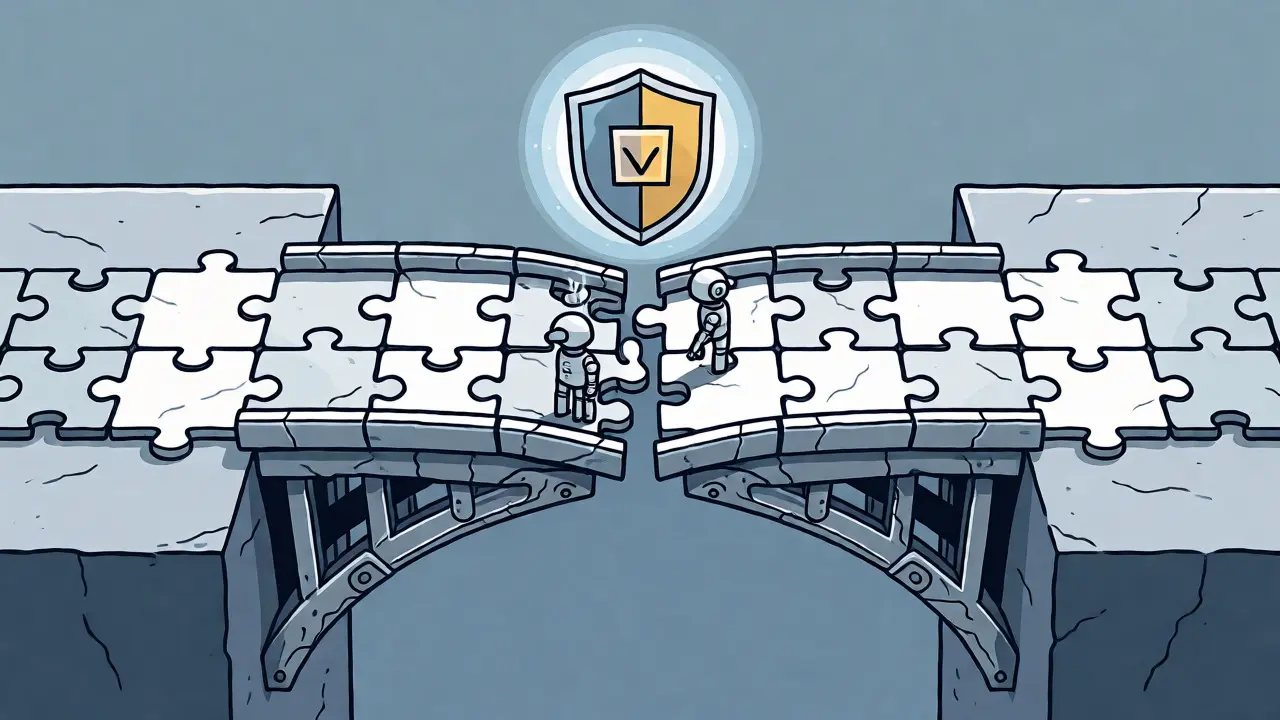
- Decentralized Validation: Does the bridge use more than 10 validators? Ronin failed with 9. Newer protocols aim for 50+.
- Canonical Assets: Prefer bridges that move native assets rather than wrapping them. Liquidity pool models like Across deliver real ETH, not IOUs.
- Multiple Audits: Has the code been audited by firms like OpenZeppelin, Trail of Bits, or CertiK? One audit isn't enough. Look for continuous monitoring.
- Transparency: Is there a public dashboard showing validator status and reserves? If you can't see the collateral, assume it's missing.
Regulatory pressure is rising. The European Securities and Markets Authority (ESMA) reported a 25% increase in successful cyberattacks since 2022. Expect stricter standards soon. Projects ignoring security will face delisting or fines.
The Future of Cross-Chain Security
We are moving away from custom, fragile bridges toward standardized protocols. Inter-Blockchain Communication (IBC) is gaining traction as a more robust alternative. Chainlink's CCIP (Cross-Chain Interoperability Protocol) uses a defense-in-depth model, combining off-chain oracles with on-chain verification. This reduces single points of failure.
Delphi Digital predicts 60% of current bridges will be replaced within five years. Formal verification-mathematically proving code correctness-is becoming standard. Only 28% of bridges currently use it. By 2026, expect security spending to triple. The era of "move fast and break things" is ending for bridges. If you're building or using one, prioritize resilience over speed.
Why are blockchain bridges so frequently hacked?
Bridges require trust assumptions between chains that don't natively communicate. Early designs relied on small sets of validators or centralized entities to approve transfers. If an attacker compromises these few keys or finds a smart contract bug in the minting logic, they can drain the entire liquidity pool. The complexity of verifying state across different blockchains creates numerous attack vectors.
What is the difference between wrapped assets and canonical assets?
Canonical assets are the native tokens of a blockchain (e.g., ETH on Ethereum). Wrapped assets are synthetic representations created by a bridge on a different chain (e.g., wETH on Solana). Wrapped assets carry additional risk because their value depends entirely on the bridge contract holding sufficient collateral. If the bridge is hacked or mismanaged, the wrapped asset may lose its peg to the underlying value.
Can I recover funds after a bridge hack?
Recovery varies. Some projects reimburse users from treasury funds (like Wormhole did), while others leave users with losses. Legal recovery is difficult due to the pseudonymous nature of crypto and jurisdictional complexities. Always check a bridge's insurance coverage or reimbursement policy before transferring large sums.
Are newer bridges safer than older ones?
Generally, yes. Newer bridges often implement decentralized validator sets, formal verification, and multi-layer security architectures learned from past failures. However, new code introduces new bugs. Safety depends on audit quality, decentralization level, and time in production, not just launch date.
How does AI impact bridge security?
AI helps attackers discover vulnerabilities faster, automating the search for zero-day exploits. Conversely, defenders use AI for continuous monitoring and anomaly detection. The net effect is a faster arms race, requiring bridges to update security measures more frequently and adopt proactive rather than reactive defenses.


Write a comment