You hire a remote developer. The resume looks solid, the interview went great, and they ask to be paid in USDC because it’s "faster." Six months later, your sensitive data is gone, and the money has vanished into a digital maze. You just got played by North Korean IT workers. This isn't just a quirky story about bad hires; it’s a state-sponsored financial engine that has generated over $1.65 billion for Pyongyang since early 2025 alone.
The Democratic People's Republic of Korea (DPRK) has shifted its strategy. While hackers stealing billions from exchanges like Bybit get the headlines, the quieter, steady stream of cash from overseas IT contractors is arguably more dangerous. These aren't random freelancers looking for gig work. They are operatives deployed by the regime to bypass UN sanctions, fund weapons programs, and launder cryptocurrency through legitimate-looking business transactions.
The Scale of the Problem
Let’s look at the numbers, because they are staggering. According to the Multilateral Sanctions Monitoring Team (MSMT), North Korean illicit activities generated at least $1.65 billion between January and September 2025. A significant chunk of this didn’t come from dramatic heists but from thousands of small, consistent salary payments. In fact, Chainalysis estimates that IT worker schemes account for roughly 43% of North Korea’s illicit crypto revenue, slightly edging out direct exchange hacks.
Why does this matter? Because these funds don't stay in crypto wallets. They are systematically funneled into the regime’s weapons of mass destruction (WMD) and ballistic missile programs. When you pay that remote developer, you might be inadvertently funding a missile test in the Sea of Japan.
How the Scheme Works
The operation is surprisingly low-tech in concept but high-tech in execution. It starts with recruitment. North Korean IT professionals, often highly skilled, are sent abroad-mostly to China, Russia, and Southeast Asia-or work remotely from within North Korea using sophisticated obfuscation tools.
- Identity Obfuscation: Operatives use stolen or fabricated identities. Names like "Joshua Palmer" or "Alex Hong" appear on resumes, backed by forged educational credentials from non-existent or misrepresented universities.
- AI-Powered Deception: During video interviews, they use AI-driven voice changers and deepfake face software to hide their true appearance and accent. This makes it nearly impossible for HR teams to spot them without specialized tools.
- Location Masking: Virtual Private Networks (VPNs) route their traffic through servers in the US, Europe, or other neutral countries, making them appear local.
Once hired, the critical step happens: payment. They almost always request stablecoins like USDC or USDT. Why? Because stablecoins offer stability against volatility and can be easily converted to fiat currency through Over-The-Counter (OTC) traders who don't ask too many questions.

The Laundering Pipeline
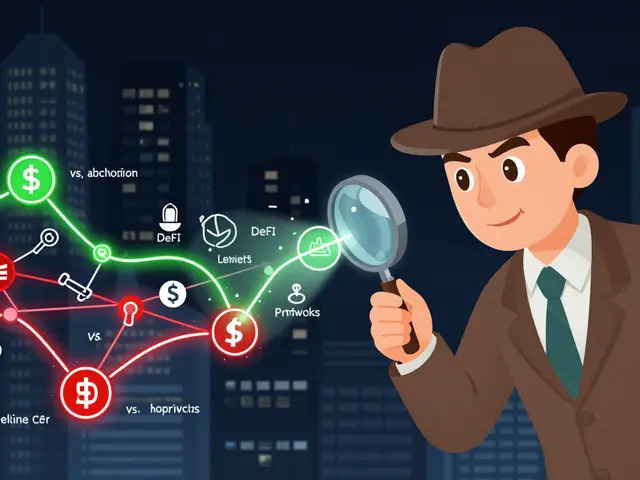
Getting the money is only half the battle. Cleaning it up so it can buy copper for munitions or luxury goods for the elite is the real challenge. The process involves a complex web of blockchain transactions designed to break the trail.
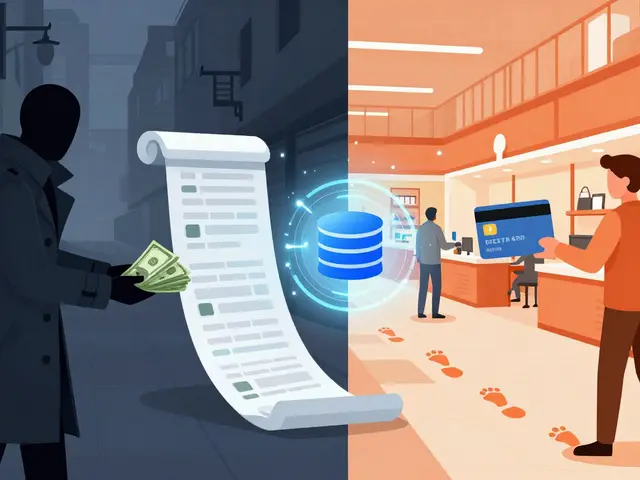
| Feature | Traditional Exchange Hacks | IT Worker Schemes |
|---|---|---|
| Average Transaction Size | Massive ($100M+) | Small ($2k - $10k monthly) |
| Detection Risk | High (Immediate alert) | Low (Blends with normal payroll) |
| Revenue Consistency | Sporadic | Steady and predictable |
| Laundering Method | Mixers, cross-chain bridges | Fragmented wallets, OTC desks |
| Primary Goal | Quick liquidity | Long-term operational funding |
According to U.S. Treasury analysis, these salaries are fragmented across dozens of new wallet addresses. This technique, known as "chain hopping," moves funds between different blockchains (like Ethereum to Tron) to confuse trackers. Eventually, the funds consolidate into accounts controlled by senior DPRK operatives like Kim Sang Man or Sim Hyon Sop. From there, they move to Russian or UAE-based infrastructure before finally hitting mainstream exchanges where they are swapped for dollars or euros.
Red Flags for Employers
If you’re hiring remote talent, how do you know if you’re dealing with a genuine freelancer or a sanctioned operative? The Royal Canadian Mounted Police (RCMP) and the FBI have identified specific behavioral patterns that should set off alarm bells.
- Crypto Payment Demands: Legitimate developers usually accept bank transfers or platforms like Deel/Wise. Insisting on USDC/USDT, especially when offered alternatives, is a major red flag.
- Inconsistent IP Logs: If your employee logs in from Tokyo today, Berlin tomorrow, and New York next week, they aren't traveling-they're routing through proxies.
- Deepfake Artifacts: Watch for slight lags in video calls, unnatural blinking patterns, or audio-video sync issues during meetings.
- Price Undercutting: DPRK operatives often bid 20-30% below market rate to win contracts quickly, knowing volume matters more than individual profit margin.
- Contract Avoidance: They may push to start work immediately without signing a detailed contract, hoping to secure payment before due diligence catches up.
A cybersecurity firm reported losing $280,000 to a single operative who used AI deepfakes to maintain the illusion of identity for six months. That’s not an anomaly; it’s the standard playbook.

Global Response and Sanctions
Governments aren't sitting idle. The U.S. Department of Justice and OFAC have ramped up enforcement significantly in 2025. On July 8, 2025, OFAC designated Chinyong Information Technology Cooperation Company, a key facilitator for deploying these workers. Later, in July 2025, they sanctioned additional individuals and entities, including Vitaliy Sergeyevich Andreyev and Shenyang Geumpungri Network Technology Co., Ltd.
The stakes are high. The State Department now offers rewards of up to $15 million for information leading to the disruption of these networks. Furthermore, fifteen Chinese banks were identified in a July 2025 report as having processed DPRK-related crypto flows, putting pressure on Asian financial institutions to tighten compliance.
Protecting Your Business
So, what should you do? Ignoring the problem is no longer an option. Here is a practical checklist for verifying remote IT hires:
- Verify Identity Independently: Don't rely on LinkedIn alone. Contact previous employers directly via verified corporate domains, not personal emails listed on the resume.
- Use Video Verification Tools: Utilize services that analyze biometric consistency across multiple platforms simultaneously. Deepfakes struggle to maintain perfect synchronization across different communication channels.
- Analyze Wallet History: Before sending the first payment, run the provided crypto address through a blockchain analytics tool. Look for connections to known DPRK-linked clusters.
- Start Small: Issue micro-payments for initial tasks. Monitor for any unusual withdrawal patterns or immediate transfers to mixing services.
- Background Check Education: Verify degrees directly with the issuing institution. Forged diplomas are common, and fake university names are frequent.
Companies implementing these strict protocols report a 63% reduction in successful infiltration attempts. It requires effort, but the cost of a breach far outweighs the administrative burden.
Why do North Korean IT workers prefer stablecoins?
They prefer stablecoins like USDC and USDT because these assets maintain a consistent value relative to the US dollar, avoiding the volatility of Bitcoin or Ethereum. More importantly, stablecoins are easily convertible to fiat currency through Over-The-Counter (OTC) traders in jurisdictions with lax anti-money laundering enforcement, such as parts of Russia and the UAE.
How much money have North Korean IT workers generated recently?
According to the Multilateral Sanctions Monitoring Team (MSMT), these operations generated at least $1.65 billion between January and September 2025. This figure includes both income from legitimate-seeming employment and larger thefts facilitated by these operatives.
Can AI detect North Korean deepfakes in interviews?
Yes, but it requires specialized tools. Standard video calls are insufficient. Advanced detection involves analyzing micro-expressions, blink rates, and audio-video synchronization anomalies. Using multiple communication platforms simultaneously helps expose inconsistencies that AI-generated avatars cannot perfectly replicate in real-time.
What happens if I accidentally hire a sanctioned North Korean worker?
You risk violating UN sanctions and U.S. laws like the International Emergency Economic Powers Act (IEEPA). Penalties can include heavy fines, seizure of assets, and reputational damage. Additionally, you may lose the funds paid to the worker, as recovery is difficult once crypto has been laundered through multiple wallets.
Are all remote crypto-paying developers North Korean spies?
No. Many legitimate freelancers prefer crypto for speed and lower fees. However, the combination of requesting crypto, using a generic online persona, and having inconsistent IP locations warrants deeper scrutiny. Context matters, so treat it as a risk factor rather than definitive proof.

Eugene McGrath
absolute trash article. you think some random hr rep is gonna spot a deepfake? give me a break. we need to ban all foreign labor and stop leaking our tech secrets to commie spies. the whole system is rigged against american workers anyway.
Sonya Kirkwood
It is not just about the money, is it? It is about control. The regime is using these workers as Trojan horses within our very own corporate infrastructure. If they can access your codebase, they can access your data, and if they have your data, they own you. Wake up!
liam & the bees
Hey everyone! Great read here. Just wanted to add that from an Irish perspective, we see this too. Many startups are hiring globally now. The key is definitely the verification step. Don't skip the background checks on education. We had a similar issue with fake degrees coming out of certain online universities. Stay safe out there!
Ferdinand Friday
The phenomenon described herein represents a fascinating intersection of geopolitical maneuvering and digital anonymity, where the ephemeral nature of cryptocurrency serves as both shield and sword for state-sponsored operatives seeking to circumvent traditional financial surveillance mechanisms.
One must consider the philosophical implications of identity in a post-truth era, where a resume is no longer a testament to skill but a carefully constructed narrative designed to deceive algorithms and humans alike, thereby transforming the act of hiring into a complex game of epistemological uncertainty.
Furthermore, the reliance on stablecoins highlights a paradoxical trust in fiat-backed digital assets while simultaneously rejecting the transparency of traditional banking systems, suggesting a desire for liquidity without accountability.
This dynamic creates a unique vulnerability for employers who prioritize speed over security, inadvertently funding their own potential disruption through the very tools they employ to streamline operations.
Ultimately, the solution lies not merely in technological countermeasures but in a fundamental reevaluation of how we define trust in a decentralized world, requiring a shift from blind faith in credentials to rigorous, continuous verification processes.
Kathy Siew
lol imagine getting scammed by a guy using a deepfake face filter. i mean yeah its scary but also kinda funny? my buddy hired a "dev" who turned out to be three guys taking shifts. total mess. just use wise or deel idk why people insist on usdc unless they hiding something obvious.
Maegan Rust
I feel for those small business owners trying to navigate this! It’s so stressful when you’re just trying to build your team and suddenly you’re playing detective.
The advice about starting small is golden. I always tell my mentees to treat that first month like a trial period, not just for skills but for behavioral patterns.
Also, checking previous employment via verified domains is such a simple step that gets overlooked so often.
We’ve all been there, thinking everything looks fine until the IP logs start looking like a pinball machine.
Hang in there, folks! You’re doing great work protecting your businesses.
Jennifer Brosnan
Frankly, most HR departments are incompetent anyway. They hire based on vibes and LinkedIn profiles that look like they were written by a bot. So yes, North Koreans are slipping in, but let's blame the lack of actual vetting standards in American corporate culture first. The conspiracy is real because nobody checks anything anymore.
Sophie Fitzgerald
this is helpful. thanks for sharing the checklist. we will try to use blockchain analytics next time.
Alexander James
Oh, the sheer audacity of it all! To think that hard-working Americans are being undermined by state-funded operatives wearing masks of normalcy. It breaks my heart to see the integrity of our job market compromised by such deceptive practices. We must stand firm and demand better verification, for the sake of justice and fairness!
Mary Burnett
Thank you for this detailed analysis. The distinction between legitimate freelance preferences for crypto and sanctioned operative behavior is crucial. I appreciate the emphasis on independent verification methods, particularly contacting previous employers directly. This approach seems far more robust than relying solely on platform-based reviews.
Stephen McElreavy
From a cultural standpoint, it is important to remember that many of these individuals are living under immense pressure from the regime.
While the deception is problematic, understanding the context helps us approach the situation with nuance rather than pure hostility.
Technologically speaking, the use of chain-hopping and OTC desks demonstrates a sophisticated understanding of blockchain forensics.
Employers should respect the technical proficiency required to maintain these identities while remaining vigilant about compliance risks.
Let us keep our boundaries clear but our minds open to the complexities of global labor dynamics.
Indu Nair
Guys, relax! This is totally manageable. I’ve seen teams handle remote hires from all over Asia without issues. Just stick to the process. Verify, verify, verify. If they ask for USDC immediately, pause and check the wallet history. It’s not rocket science, it’s just diligence. You got this!
Dominic Jones
The core issue, fundamentally, is one of information asymmetry...
Where the employer lacks visibility into the true origin of the labor force...
And the operative exploits this gap for strategic advantage...
We must bridge this gap through technology...
And policy...
To ensure fair play...
Sheryl Nelsen Hutton
It is somewhat disheartening to realize that the gig economy, which was supposed to democratize work, has become a vector for such intricate laundering schemes, forcing individual entrepreneurs to become amateur forensic accountants just to protect their livelihoods from invisible threats that operate in the shadows of the blockchain ecosystem.
The psychological toll of constantly suspecting every new hire of being a potential state asset adds a layer of anxiety to what should be a straightforward professional transaction, creating a barrier to genuine collaboration and trust.
Perhaps the answer lies not in stricter sanctions alone, but in a global standardization of identity verification protocols that transcend national borders and political affiliations.
sri harni
interesting read. we have similar cases here in india with fake freelancers. good tips.
Duncan Fisher
Hi there, lovely piece. I think the point about video artifacts is spot on. In the UK, we've seen a rise in AI-generated avatars during Zoom calls. It's quite unsettling when you realize the person you're talking to isn't actually there. Best of luck to everyone navigating this tricky landscape!
Rishi Mehta
its heartbreaking really. these poor souls are trapped in a system that forces them to lie just to survive. we judge them harshly but do we understand their reality? the moral weight of this situation crushes me. we are all complicit in this cycle of deception and exploitation. sad times indeed.
Kathryn Haber
identity is fluid man. maybe the north koreans are onto something. maybe we are all just avatars. who knows whats real anymore. just vibe check em.