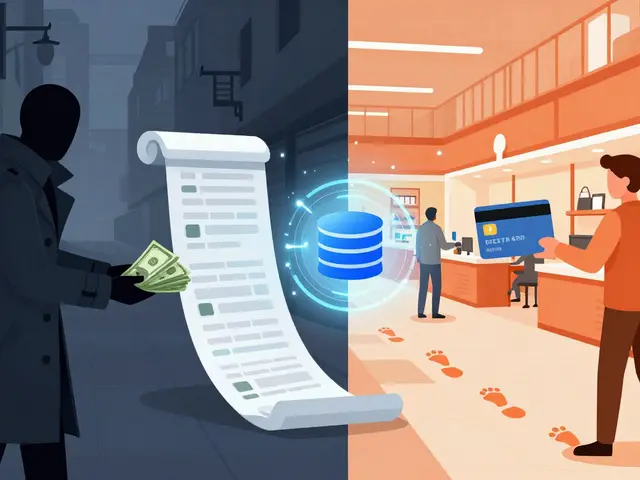
You might think that sending cryptocurrency is like handing over cash in a dark alley-anonymous and untraceable. The reality is much closer to using a debit card at a busy mall. Every move leaves a digital footprint. This is where on-chain crypto transaction tracing comes in. It is the systematic process of tracking funds across blockchain networks to identify who owns them and where they are going.
In 2026, this technology is no longer just for law enforcement. It is a critical tool for banks, exchanges, and even individual investors trying to avoid scams. With the global blockchain analytics market projected to hit $7.43 billion by 2029, understanding these techniques is essential for anyone serious about digital assets. But how exactly do investigators follow money through millions of transactions? Let’s break down the methods, tools, and limitations you need to know.
How On-Chain Tracing Works: The Core Concept
To understand tracing, you first have to understand the nature of the blockchain. Most cryptocurrencies are pseudonymous, not anonymous. Your name isn’t attached to your wallet address, but every transaction involving that address is recorded publicly forever. Think of it like a public ledger where everyone uses a unique code instead of their real name.
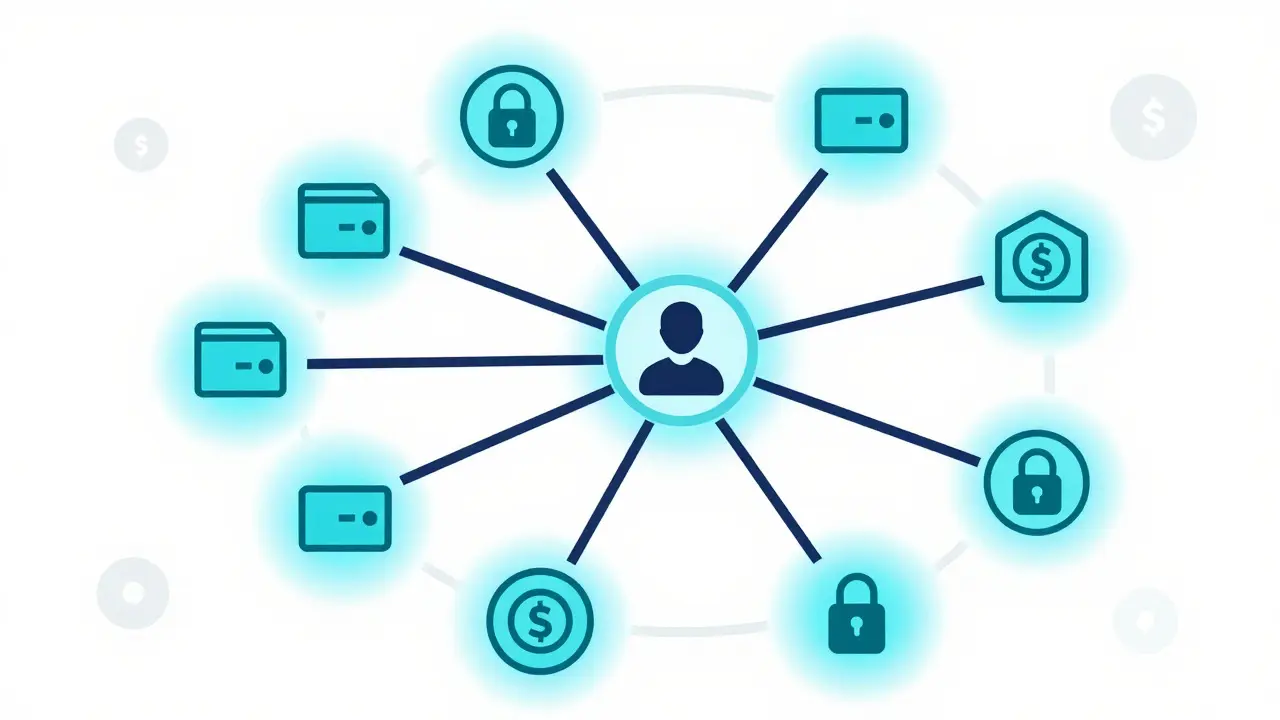
The goal of tracing is to link those codes to real-world identities. This happens primarily through wallet clustering the technique of grouping multiple wallet addresses that likely belong to the same entity. When an exchange requires Know Your Customer (KYC) verification, that user’s identity is linked to their deposit address. If that address sends funds to five other wallets, analysts can cluster those five wallets together as belonging to the same person or organization.
This basic attribution allows firms like Chainalysis a leading blockchain analytics company founded in 2014 and Elliptic a pioneer in blockchain data analytics established in 2013 to build massive databases of known entities. As of 2025, these platforms cover dozens of blockchain networks, allowing them to trace funds from Bitcoin to Ethereum to stablecoins with increasing accuracy.
Three Main Technical Approaches to Tracing
Not all tracing is created equal. Analysts use different methodologies depending on the complexity of the transaction. According to recent surveys in blockchain research, there are three primary technical approaches:
- Heuristic-Based Techniques: These rely on simple rules and patterns. For example, if Wallet A sends 9 BTC to Wallet B and 0.0001 BTC to Wallet C, heuristics assume both B and C belong to the same owner because the change (C) was returned to the sender. This method is fast and effective for single-chain tracing, with accuracy rates around 89% for straightforward Ethereum transactions. However, it struggles when criminals use complex mixing services or cross-chain bridges.
- Rule-Based Techniques: These involve setting up specific detection rules for anomalous behavior. Investigators look for patterns like "peel chains," where funds are repeatedly split into smaller amounts to obscure the trail. Rule-based systems excel at identifying known bad actors or specific laundering patterns, boasting detection rates as high as 92% for certain fraud types. The downside? Criminals evolve quickly, so these rules require constant updating.
- Graph Learning-Based Approaches: This is the cutting edge. Instead of simple rules, these systems use machine learning algorithms to analyze the entire transaction graph. They look for complex structural patterns that human analysts or simple scripts might miss. While more resource-intensive, graph learning offers the highest promise for multi-hop tracing across different chains, achieving up to 85% accuracy in complex scenarios according to industry whitepapers.
The Challenge of Cross-Chain Tracing
One of the biggest hurdles in 2026 is following money across different blockchains. In the past, staying within one network made tracing easier. Today, sophisticated launderers bounce funds through multiple networks in quick succession-for example, moving from Ethereum to Binance Smart Chain (BSC), then to Tron, and finally to a privacy coin.
Each "hop" between chains often involves a bridge protocol. Understanding these mechanics is crucial. Bridges work differently; some lock tokens on one chain and mint new ones on another, while others swap assets directly. If an investigator doesn’t understand the specific bridge mechanism, the trail goes cold.
Cross-chain tracing accuracy drops significantly compared to single-chain tracing. While single-chain accuracy might be near 90%, cross-chain accuracy can fall to 63%. This is why specialized platforms like TRM Labs a provider of enterprise-grade blockchain intelligence have expanded their coverage to nearly 50 chains. They automate the pivoting process, allowing analysts to follow common bridge hops without manually switching tools. However, if the trail becomes too convoluted-such as simultaneous hops across obscure chains-even advanced tools may struggle, requiring expert intervention.
Tools of the Trade: What Analysts Use
If you want to get into on-chain analysis, you need the right toolkit. The barrier to entry has risen, but the options vary based on your budget and expertise.
| Tool Type | Examples | Cost Estimate (2026) | Best For |
|---|---|---|---|
| Blockchain Explorers | Etherscan, Blockstream Explorer | Free | Basic transaction lookup, verifying balances |
| Professional Analytics Platforms | Nansen, Elliptic, TRM Labs | $15,000 - $50,000/year per seat | Enterprise compliance, deep forensics, cross-chain tracing |
| Open Source Tools | BlockSci, Chainalysis Reactor (limited free tier) | Free to Low Cost | Developers, researchers, custom script building |
For beginners, starting with free explorers like Etherscan is enough to see raw transaction data. You can view inputs, outputs, and timestamps. But to attribute addresses to entities, you need professional platforms. These tools integrate KYC data from exchanges and apply clustering algorithms automatically. The cost reflects the value: avoiding a single large fraud case can save a company millions, making the $27,500 average annual price tag for premium tools a reasonable investment for financial institutions.
Regulatory Pressure and Compliance
Why has this field exploded in growth? Regulation. The Financial Action Task Force (FATF) introduced the "Travel Rule" in 2019, requiring Virtual Asset Service Providers (VASPs) to share originator and beneficiary information for transactions over $1,000. This forced exchanges to adopt blockchain analytics to ensure they weren’t facilitating illicit flows.
In the European Union, the Markets in Crypto-Assets (MiCA) regulation, fully implemented in 2023, tightened these requirements further. In the U.S., Executive Order 14067 on digital assets emphasized the need for robust monitoring. As a result, 87% of cryptocurrency exchanges now use blockchain analytics tools. Even traditional banks are jumping in; Deloitte reported that 63 of the top 100 global banks had implemented blockchain monitoring solutions by late 2024.
This regulatory push means that if you run a crypto business, you likely already have these tools running in the background. They flag suspicious activity in real-time, preventing dirty money from entering the legitimate financial system.

Limitations and Privacy Concerns
Despite its power, on-chain tracing is not magic. There are significant limitations. First, definitive identity linkage remains difficult. As Dr. Sarah Meiklejohn, a cryptography professor at University College London, noted, we can cluster addresses with high confidence, but linking them to a specific human being usually requires non-blockchain evidence, such as IP logs or email records.
Second, privacy coins pose a major challenge. Coins like Monero and Zcash use cryptographic techniques to hide transaction details. In 2024, privacy coins accounted for 7.2% of illicit transaction volume. While some bridges allow converting transparent coins to privacy coins, tracing once inside the privacy network is extremely difficult.
Finally, there is the question of privacy for legitimate users. Advocacy groups like the Electronic Frontier Foundation (EFF) warn against overreach. Jeremy Gillula, an EFF technologist, argued that while catching criminals is good, we must ensure these tools aren’t used to surveil everyday financial activity. The balance between security and privacy remains a hot topic in policy debates.
The Future: AI and the Arms Race
Looking ahead, the next frontier is artificial intelligence. Gartner predicts that by 2027, 70% of enterprise blockchain analytics tools will incorporate generative AI for anomaly detection. Imagine an AI that doesn’t just follow rules but learns new laundering tactics as they emerge, adapting in real-time.
However, criminals are also innovating. Decentralized mixers, which pool funds from many users to obscure origins, accounted for 18.3% of illicit volume in 2024. David Jevans, CEO of CipherTrace, describes this as an endless arms race. Every advance in tracing technology is met with a corresponding advance in obfuscation. For now, the tracers hold the upper hand due to the transparency of most major chains, but the gap is narrowing.
Is crypto truly anonymous?
No, most cryptocurrencies are pseudonymous. Your identity isn't directly linked to your wallet, but your transaction history is public. Analysts can often link wallets to real identities through exchange KYC data and clustering techniques.
What is wallet clustering?
Wallet clustering is a forensic technique where multiple wallet addresses are grouped together because they likely belong to the same entity. This is done by analyzing common spending patterns, change addresses, and interactions with known entities like exchanges.
How accurate is cross-chain tracing?
Cross-chain tracing is less accurate than single-chain tracing. While single-chain accuracy can reach 89-90%, cross-chain accuracy often drops to around 63% due to the complexity of bridge protocols and the fragmentation of data across different networks.
Do I need expensive software to trace crypto?
For basic verification, free blockchain explorers like Etherscan are sufficient. However, for professional forensics, attribution, and cross-chain analysis, enterprise tools costing $15,000 to $50,000 annually are typically required to access clustered data and advanced analytics.
Can privacy coins be traced?
Tracing privacy coins like Monero or Zcash is significantly harder than transparent chains. While entry and exit points to exchanges can be monitored, the transactions within the privacy network are cryptographically obscured, making direct tracing nearly impossible with current mainstream tools.

Ken G
its all a big lie to control the people. they want you to think you have privacy but really its just surveillance capitalism on steroids. the elites are watching every penny you move and building a dossier on your soul for when they decide to freeze your assets. we are living in a digital panopticon and most of you are too stupid to realize it until its too late
Lorraine Surringer
oh my gosh this is so scary! i feel like im being watched right now lol. seriously though does anyone else feel like their wallet is leaking info everywhere? its just exhausting trying to stay safe out there :/
Alex Di Mango
I think there's a lot of nuance here that gets missed in the panic. While it's true that transparency has increased, it also means fraudsters have a harder time getting away with scams. It's not all doom and gloom, folks. We just need to adapt our habits. Using fresh wallets for different purposes helps maintain some semblance of privacy without needing complex tech.
Amor Jordan
Alex makes a great point but I worry about the average person who doesn't know better. The barrier to entry for these tools is high but the penalty for mistake is total loss. It feels unfair that we have to be cryptographers just to buy coffee with crypto. Someone needs to fix this UX disaster before more people get burned by their own ignorance.
Nick Darring
You guys are missing the forest for the trees because you're obsessed with 'privacy' which is just a code word for hiding crimes from the government. Let me tell you something about how bridges work that will blow your mind because apparently no one reads the whitepapers anymore. When you bridge from ETH to BSC you aren't actually moving the token you are locking it and minting a wrapped version which creates a whole new audit trail that is completely separate from the original chain meaning your heuristic clustering fails spectacularly unless you have access to proprietary oracle data that costs fifty grand a year which is why retail investors are always getting rekt while the whales sit back and laugh at your naive attempts to trace funds across chains using free explorers that haven't been updated since 2021.
Eden Tadesse
i thnik nick is rite bout teh cost tho. its crazy expensive for regular peeps. maybe we should just stick to cash? jk but seriosuly the prices for those tools are insane.
Eric Zehr
The distinction between pseudonymous and anonymous is critical here. Most users confuse the two. Just because your name isn't on the ledger doesn't mean you're invisible. If you ever interact with a KYC exchange, you've linked your identity to that cluster forever. It's important to understand that once that link is made, reversing it is nearly impossible with current technology.
Namrata Mapgaonkar
hmm interesting read :) in india we use upi mostly so crypto tracing feels far away but good to know for future investments. hope the tech gets cheaper soon so small traders can protect themselves too :)
Rita Dutta
the philosophical implication of permanent ledgers is profound. we are creating a society where forgetting is obsolete. if every transaction is recorded forever then memory becomes externalized and immutable. this changes the very nature of human error and redemption. can you truly start over if your financial past is etched in stone? it seems we are trading freedom for security in a way that platos cave would recognize instantly.
Paul Smith
Rita brings up a deep point 🤔 But practically speaking, the AI integration mentioned in the article is what keeps me up at night. If machines are learning laundering tactics faster than humans can write rules, we are entering a new era of automated financial warfare. Stay sharp everyone! 👀💸
Matthew Smith
moral decay is evident in how little people care about transparency. we demand privacy yet complain when criminals hide money. the solution is not more secrecy but better education on how graph learning works. if you understand the nodes and edges you see that anonymity was never real to begin with
Prudence Flemming
the hegemony of centralized analytics firms is concerning. when chainalysis and elliptic hold the keys to truth they become de facto regulators. this centralization of knowledge contradicts the ethos of decentralization. we need open source alternatives that don't rely on corporate goodwill to define what is illicit or legitimate activity on the blockchain.
Lance Jantz
Oh darling, let us delve into the exquisite tapestry of digital forensics shall we? It is quite simply a ballet of data points waltzing across the ether. To think that mere mortals could comprehend the intricate dance of cross-chain bridges is almost adorable in its naivety. One must possess a certain refined palate to appreciate the subtle nuances of peel chains and heuristic clustering. It is not merely tracking; it is an art form reserved for those with the intellectual fortitude to navigate the labyrinthine corridors of blockchain intelligence without losing their minds.
Don Fizy
Lance is being dramatic as usual :D But seriously, starting with Etherscan is the best advice for beginners. Don't overspend on tools until you understand the basics. Happy hunting! 🙂
Phil Babb
Folks!!! Listen up!!! The travel rule is NOT going away!!! You need to get your compliance house in order NOW!!! If you are running a business and ignoring FATF guidelines you are playing with fire!!! Get those analytics tools set up today!!! Do not wait until the SEC knocks on your door!!! Compliance is key!!! 🔑🔥