Bitcoin Halving: What It Is, Why It Matters, and What Comes Next
When you hear Bitcoin halving, a scheduled event that cuts the reward for mining new Bitcoin blocks in half. It's not just a technical update—it’s the core mechanism that makes Bitcoin deflationary. Unlike regular money that central banks can print forever, Bitcoin has a hard cap of 21 million coins. Every 210,000 blocks—roughly every four years—the reward for miners drops by 50%. That’s the halving. And it’s happened four times already: in 2012, 2016, 2020, and 2024. Each time, it reshaped the market, changed miner behavior, and triggered major price movements.
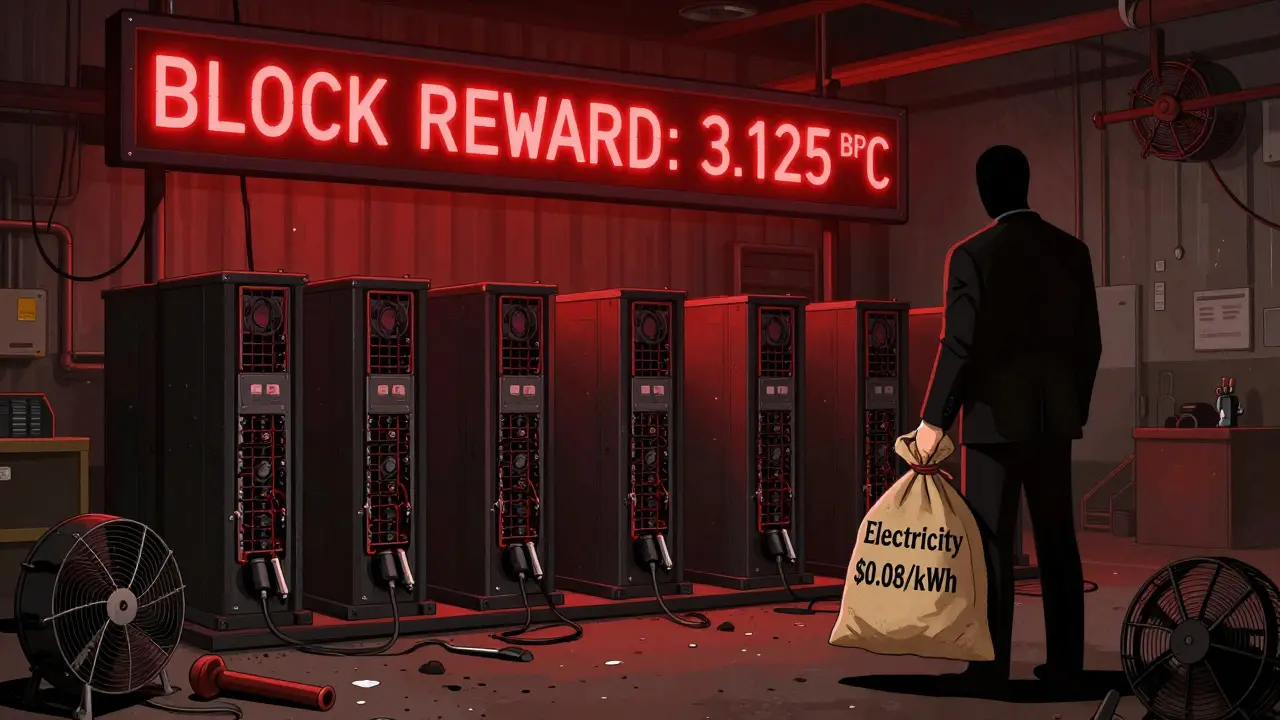
The Bitcoin supply, the total number of BTC that can ever exist. It’s fixed, predictable, and transparent is what gives Bitcoin its value story. Think of it like gold mining: the easier it is to find gold, the more gets pulled out. But as mines get deeper and harder to reach, output drops. Bitcoin’s halving does the same thing digitally. Miners used to get 50 BTC per block. Now they get 3.125. The next halving, expected around 2028, will drop it to 1.5625. That’s not just a number—it’s a slow, steady squeeze on new supply. And when supply shrinks while demand stays steady or grows, prices tend to rise. That’s not a guarantee, but it’s the pattern we’ve seen every single time.
That’s why the cryptocurrency mining, the process of validating Bitcoin transactions and securing the network. It’s how new coins enter circulation industry gets nervous before each halving. Smaller miners with old equipment often can’t afford to keep running when rewards drop. Many shut down. That leads to temporary drops in network hash rate—but the system adjusts. Difficulty resets every two weeks, so the network finds a new balance. The bigger players, with better hardware and cheaper power, survive. And they often benefit when prices climb after the halving. It’s a natural selection process built into the code.
The blockchain scarcity, the principle that digital assets can be limited in supply, unlike traditional digital files. It’s what makes Bitcoin different from any other digital token concept doesn’t just apply to Bitcoin. It’s why people trust it as a store of value. You can’t inflate Bitcoin by clicking a button. The halving is the proof. It’s automated, public, and unchangeable. No central bank, no politician, no CEO can override it. That’s why investors watch it like a calendar event. It’s not magic. It’s math. And math doesn’t lie.
What you’ll find below isn’t just theory. These are real stories—scams pretending to be halving-related airdrops, exchanges getting crushed by regulatory pressure, DeFi risks that spike when Bitcoin moves, and how people lose money chasing fake tokens while the real event happens in the background. The halving doesn’t create new coins out of thin air. But it does change how the world sees value. And that’s what matters.