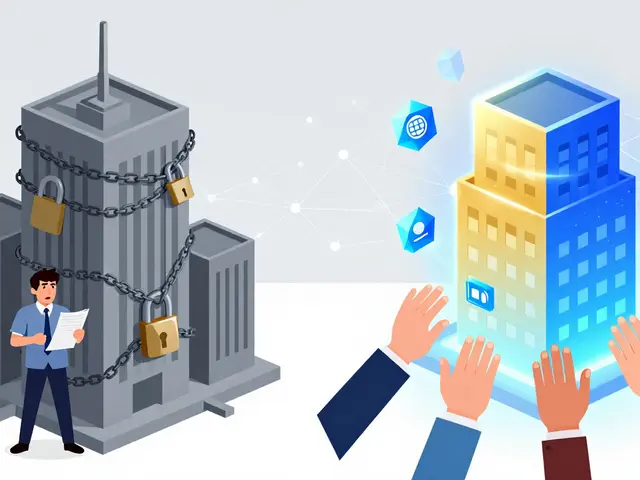
Imagine buying a slice of a luxury hotel in Aspen or a commercial building in New York with just $50. Sounds like a fantasy? Not anymore. Tokenized real estate is the process of converting physical property rights into digital tokens on a blockchain, allowing you to own a fraction of high-value assets without the headache of traditional mortgages or brokers. This shift isn't just hype; it’s reshaping how we think about wealth, liquidity, and access to global markets. By 2035, experts predict that $4 trillion worth of real estate will be tokenized, up from less than $0.3 trillion in 2024. That’s a massive leap, driven by technology that makes property investing as easy as trading stocks.
What Is Tokenized Real Estate?
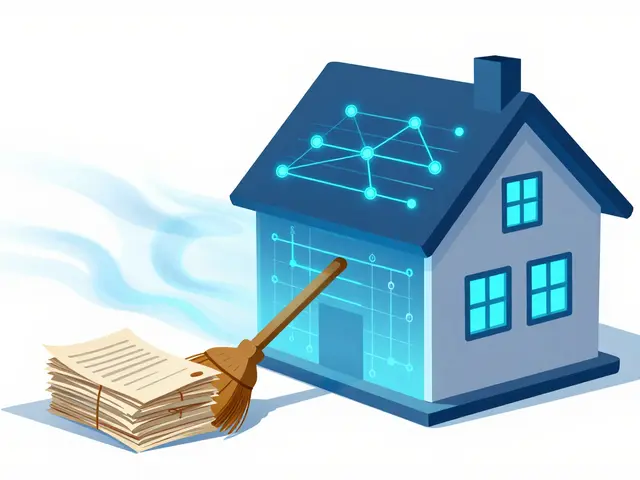
To understand why this matters, you first need to grasp what’s actually happening under the hood. Traditional real estate involves deeds, lawyers, banks, and months of paperwork. Tokenization strips all that away. Instead of signing a deed for an entire building, you buy digital tokens that represent your share of that property. These tokens live on a blockchain-a decentralized, tamper-proof ledger that records every transaction securely.
Think of it like splitting a pizza. In the old world, you had to buy the whole pie. With tokenization, you can buy one slice, eat it (collect rental income), or sell it later if you change your mind. The key difference? Each "slice" is a digital asset backed by legal ownership rights, managed automatically through smart contracts are self-executing programs on a blockchain that automate tasks like payment distribution and ownership transfers. No middlemen. No delays. Just code doing the heavy lifting.
Why Investors Are Flocking to Digital Property
The benefits of tokenized real estate aren’t theoretical-they’re already playing out in markets worldwide. Let’s break down why both everyday investors and big institutions are paying attention.
1. Lower Barrier to Entry
Traditional real estate requires significant capital. You need a down payment, closing costs, and often a hefty emergency fund. Tokenization shatters these walls. Platforms now allow investments starting at just $50. This means teachers, nurses, and students can participate in markets previously reserved for the ultra-wealthy. For example, Elevated Returns raised $18 million by tokenizing equity in the St. Regis Aspen resort, letting thousands of small investors own a piece of a luxury destination.
2. Instant Liquidity
Real estate has always been illiquid. Selling a house takes months. Tokenized properties trade 24/7 on dedicated platforms, similar to stocks. Need cash quickly? Sell your tokens instantly. This flexibility transforms real estate from a "locked-up" asset into a dynamic part of your portfolio. You can adjust your holdings based on market conditions without waiting for buyers to show up.
3. Global Access and Diversification
Geography no longer limits your investment choices. Through platforms like Propy and Maticz, you can invest in properties in London, Dubai, or Tokyo from your laptop in Madison. This global reach allows you to diversify across different currencies, economies, and property types-reducing risk and maximizing potential returns. Why put all your eggs in one local basket when you can spread them across continents?
4. Transparency and Security
Blockchain technology ensures that every transaction is recorded on an immutable ledger. There’s no room for hidden fees, forged documents, or shady deals. Every stakeholder-from developers to investors-can verify ownership and revenue distribution in real time. This transparency builds trust and reduces fraud, making the market safer for everyone involved.
5. Automated Income Distribution
Rental income used to mean chasing tenants and managing checks. Now, smart contracts handle it all. When rent is paid, the contract automatically distributes your share directly to your wallet. No accounting errors. No delays. Just consistent, predictable cash flow delivered straight to you.
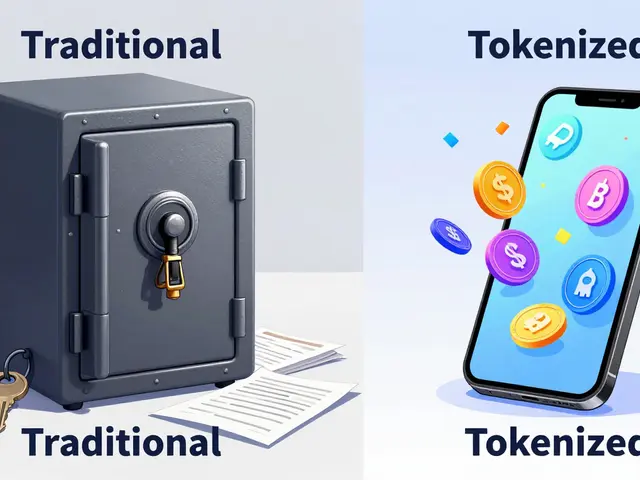
| Feature | Traditional Real Estate | Tokenized Real Estate |
|---|---|---|
| Minimum Investment | $20,000+ (down payment) | As low as $50 |
| Liquidity | Months to sell | Instant trading 24/7 |
| Transaction Costs | High (agents, lawyers, taxes) | Up to 30% lower via automation |
| Access | Local/regional only | Global markets accessible |
| Income Distribution | Manual, delayed | Automated via smart contracts |
| Transparency | Opaque processes | Immutable blockchain records |
How Does It Actually Work?
You might be wondering: "Is this legal? How do I know I really own something?" Great questions. Here’s the step-by-step process:
- Property Selection: A developer or owner chooses a property to tokenize-could be a residential apartment, commercial office, or even undeveloped land.
- Legal Structuring: The property is placed into a special purpose vehicle (SPV) or trust. This entity legally holds the title, ensuring compliance with local laws.
- Token Creation: Digital tokens are minted on a blockchain (like Ethereum or Polygon). Each token represents a percentage of ownership in the SPV.
- KYC/AML Compliance: Before buying, investors undergo Know Your Customer (KYC) and Anti-Money Laundering (AML) checks. This keeps the market clean and regulated.
- Trading: Tokens are listed on secondary marketplaces where investors can buy, sell, or hold them. Prices fluctuate based on demand, rental performance, and property value.
- Revenue Sharing: Smart contracts distribute rental income or sale proceeds proportionally to token holders.
This structure ensures that while the tech is cutting-edge, the legal foundations remain solid. You’re not just buying a crypto coin-you’re buying a legally recognized stake in real-world assets.
The Numbers Don’t Lie: Market Growth and Performance
Data supports the excitement around tokenized real estate. According to Deloitte Center for Financial Services, the sector is growing at a compound annual rate of 27%. By 2035, $4 trillion in real estate could be tokenized. That’s not a niche trend-it’s a mainstream financial revolution.
Performance metrics are equally impressive. Average yields for tokenized properties hover around 11%, significantly higher than many traditional savings accounts or bonds. Plus, transaction costs drop by up to 30% due to reduced intermediary involvement. Institutional investors are taking notice too. A 2023 EY survey revealed that 67% of institutional investors plan to allocate funds to tokenized assets, with target allocations reaching 5.6% of their portfolios by 2026. High-net-worth individuals aim even higher, targeting 8.6% allocation.
Who Is This For?
Tokenized real estate isn’t one-size-fits-all, but it appeals to several distinct groups:
- Beginner Investors: If you’ve wanted to invest in real estate but lacked the capital or knowledge, this is your entry point. Start small, learn the ropes, and scale up.
- Diversifiers: Already have stocks and bonds? Add real estate exposure without tying up large sums of cash. Spread risk across multiple properties globally.
- Developers: Raise capital faster and more efficiently. Sell fractional ownership instead of relying solely on bank loans. Retain control while accessing broader investor pools.
- Tech-Savvy Millennials/Gen Z: Comfortable with digital wallets and blockchain interfaces? This aligns perfectly with your lifestyle and values.
Potential Pitfalls to Watch Out For
No investment is perfect. While tokenized real estate offers incredible advantages, there are risks you should consider:
- Regulatory Uncertainty: Laws vary by country and evolve rapidly. Ensure the platform complies with regulations in your jurisdiction.
- Platform Risk: Choose reputable platforms with strong security measures. Hacks or technical failures can impact your assets.
- Market Volatility: Token prices can swing wildly, especially in early-stage projects. Do thorough research before buying.
- Liquidity Limits: While better than traditional real estate, some tokens may still face low trading volume during downturns.
Mitigate these risks by diversifying your holdings, using established platforms, and staying informed about regulatory changes.
Future Outlook: What’s Next?
The future looks bright for tokenized real estate. As infrastructure improves and regulations clarify, expect wider adoption across all investor segments. We’ll likely see more integration with DeFi (Decentralized Finance) protocols, enabling lending against tokenized properties or creating complex derivative products. Major cities like New York, London, and Dubai are already leading the charge, setting standards that others will follow.
For developers, tokenization opens new funding models. Imagine launching a project and raising millions within days from thousands of global backers. For investors, it means democratized access to premium assets. This isn’t just a trend-it’s a fundamental shift in how value is created, shared, and traded.
Getting Started: Your Action Plan
Ready to dive in? Follow these steps to make your first move:
- Educate Yourself: Understand blockchain basics, smart contracts, and real estate fundamentals. Knowledge is power.
- Choose a Platform: Research reputable tokenization platforms. Look for those with clear fee structures, strong security, and transparent operations.
- Complete KYC: Prepare identification documents for verification. This step ensures compliance and protects the ecosystem.
- Start Small: Begin with a modest investment. Test the waters, track performance, and gain confidence.
- Diversify: Don’t put everything into one property. Spread your investment across different locations, types, and risk levels.
- Monitor Regularly: Keep an eye on market trends, regulatory updates, and platform announcements. Stay proactive.
Is tokenized real estate safe?
Safety depends on the platform and regulatory environment. Reputable platforms use secure blockchains, undergo audits, and comply with KYC/AML rules. However, always research thoroughly and start with smaller amounts to mitigate risk.
How much money do I need to start?
Many platforms allow investments as low as $50. This low barrier makes it accessible to almost anyone, regardless of income level.
Can I lose my money?
Yes, like any investment, there’s risk. Property values can decline, rental income may drop, or market conditions could worsen. Diversification helps manage this risk.
Do I get tax benefits?
Tax treatment varies by country. In some jurisdictions, tokenized real estate may qualify for similar deductions as traditional property. Consult a tax professional for advice specific to your situation.
Which platforms are best for beginners?
Platforms like Propy and Maticz offer user-friendly interfaces and educational resources. Look for those with clear pricing, customer support, and positive reviews from other users.
How are rental payments distributed?
Smart contracts automatically calculate and send your share of rental income to your digital wallet. Payments are typically made monthly or quarterly, depending on the property terms.
Is this available worldwide?
Most platforms operate globally, but restrictions may apply based on local laws. Check if your country allows participation in tokenized securities before investing.
amy miranda
It is absolutely preposterous to think that reducing property ownership to a digital token solves anything other than the greed of developers. We are turning homes into speculative assets for day traders who have never held a hammer or painted a wall. The human element of housing is being stripped away in favor of algorithmic efficiency, and frankly, it makes me sick to my stomach.
Pernelia Wahkan
While the moral panic is understandable, one must consider the mechanics of fractionalization as a genuine democratizing force for capital allocation. If a nurse can own a slice of Aspen real estate without needing a six-figure down payment, that is not necessarily evil; it is merely efficient redistribution of access. The blockchain ledger provides an immutable audit trail that traditional deeds simply cannot match in terms of transparency and speed. It removes the opaque middlemen who have historically siphoned off value from both buyers and sellers. Consider the reduction in transaction costs alone; thirty percent savings is not trivial when scaling across global markets. The technology itself is neutral, but its application here seems to favor liquidity over stability, which is a trade-off worth examining closely rather than dismissing outright.
Subhash Kashyap Dm
smart contracts are just code written by corrupt elites to bypass local zoning laws and tax codes they hate. you think the government doesnt know? they are letting it happen to track every single transaction you make. the spv structure is a classic shell company tactic used by cartels. dont fall for the decentralization lie. its all centralized on servers owned by blackrock or some hedge fund. wake up sheeple
Ed Mitchell
The notion that this is a conspiracy is actually quite naive given the sheer scale of institutional adoption already underway. When sixty-seven percent of institutional investors plan to allocate funds to these assets, it is no longer a fringe experiment but a structural shift in global finance. The regulatory frameworks are evolving precisely because the governments want to capture the tax revenue and data trails that blockchain provides. It is not about hiding; it is about total visibility and control under the guise of freedom. The SPV structures are indeed legal vehicles, but they are designed to protect the asset from individual liability, not to hide it from the state. You are missing the forest for the trees by focusing on 'corrupt elites' when the entire banking system is migrating to this model.
Billy Cunningham
I just want my $50 back 😩📉💸
Joshua Hofford
Look, I get the skepticism, but imagine the cultural shift if people in developing nations could invest in stable US real estate easily. It’s not just about money; it’s about connecting communities through shared economic interests. My cousin in Mumbai has been looking at platforms like Propy to diversify his portfolio beyond local volatile markets. It feels like we are building a more inclusive financial web where geography doesn’t dictate your wealth potential. The tech is cool, sure, but the human connection of owning a piece of something beautiful together? That’s the real win. Let’s embrace the future instead of fighting it with old-school fears.
Marcia Albert
I’m just watching from the sidelines with a cup of tea, honestly. The whole thing looks like a shiny new toy that might break if you shake it too hard. But hey, if it works for the early adopters, maybe it’ll settle down eventually. I remember when online banking was considered risky, so who knows?
Emma Smith
the paradigm shift is undeniable yet most people sleepwalk through it because they fear the unknown variables of decentralized governance. we are essentially redefining what it means to hold title to land in a post-physical world. the smart contract becomes the new deed and the blockchain the new county recorder office. its messy now but the entropy will resolve into order eventually. stop resisting the flow of digital capital
Ed Wallace
There is a profound philosophical question lurking beneath all this talk of tokens and yields: what does it mean to truly 'own' something when that ownership is mediated entirely by code? We are moving from tangible possession to abstract representation, which changes our relationship with value itself. It is fascinating to watch humanity try to digitize the most physical of assets. Perhaps this is the next step in the evolution of trust, shifting it from institutions to mathematics. Or perhaps we are losing touch with reality. Either way, it is a captivating spectacle to observe as we stand on the precipice of this new era.
Michael Mostyn
One must carefully consider the implications of liquidity on market stability. Traditional real estate acts as a stabilizer in the economy because it is illiquid; prices adjust slowly. Tokenized real estate introduces stock-market-like volatility to property values. This could lead to rapid corrections during downturns, potentially causing widespread distress among retail investors who are not equipped to handle such swings. The regulatory uncertainty remains the largest hurdle, as jurisdictions struggle to classify these tokens. Until there is clear legal precedent, this space will remain fraught with risk for the average participant.
Erica Johnson
You’re all missing the point about KYC. They want your face, your ID, your everything. Once you’re on the chain, you’re tracked forever. 🤔
Joy Kwant
I feel like everyone here is so obsessed with the money they forget that this strips the soul out of neighborhoods. Imagine knowing your neighbor owns a fraction of your house via an app. It turns community into a spreadsheet. And don’t get me started on the environmental cost of all this blockchain processing. We are burning the planet to buy slices of hotels we’ll never visit. It’s hollow. It’s empty. And it’s making us colder. Why do we need to monetize every square inch of existence? Just let people live. Let them own their homes fully or not at all. This halfway measure feels like a betrayal of what home should be. A place of safety, not a ticker symbol. I’m tired of reading about 'yields' and 'liquidity' while the world burns. Can we please focus on human connection instead of digital fragmentation? It’s exhausting trying to keep up with this relentless push for efficiency at the cost of empathy.